
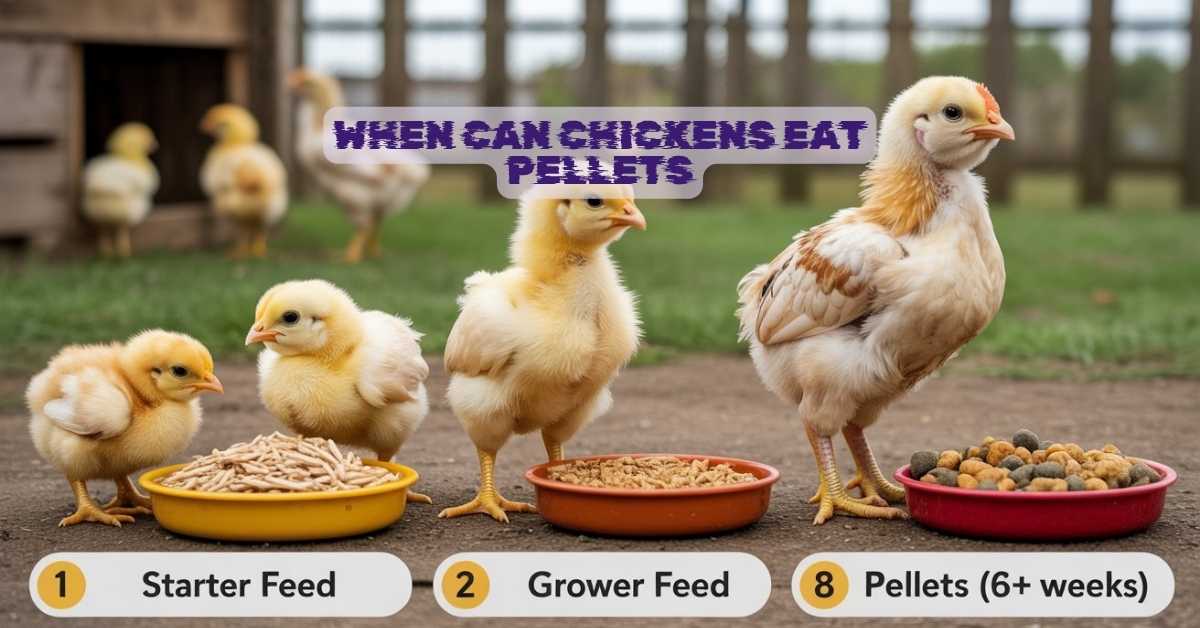
When can chickens eat pellets? Chickens can start eating pellets at around 18–20 weeks of age, when they reach the layer stage and begin laying eggs. Before that, chicks and growing birds need starter feed (0–6 weeks) and grower feed (6–16 weeks) to meet their higher protein needs. Feeding pellets too early can cause nutritional imbalance, digestive issues, and even long-term health problems, so timing matters more than most beginners realize.
This guide breaks down everything—from chicken feeding stages to a step-by-step transition plan—so you can confidently move your flock to pellets without risking their health.
Chicken Feeding Stages Explained (CRITICAL SECTION)
Understanding feeding stages is the foundation of proper poultry nutrition. Chickens don’t eat the same food their entire life because their nutritional needs change as they grow.
Feeding Chart for Chickens by Age
| Age | Feed Type | Protein % | Purpose |
|---|---|---|---|
| 0–6 weeks | Starter feed (crumbles) | 18–20% | Rapid growth |
| 6–16 weeks | Grower feed | 16–18% | Muscle & bone development |
| 16–18 weeks | Transition phase | ~16% | Prepare for laying |
| 18–20+ weeks | Layer pellets | 15–17% | Egg production |
This table is critical because it directly answers what age chickens eat pellets and why earlier feeding stages are essential.
Why Chickens Can’t Eat Pellets Too Early
Many beginners assume all chicken feed is interchangeable. It’s not. Pellets are specifically designed for laying hens, not chicks or young pullets.
Size and Texture Matter
Pellets are larger and harder than crumbles. Young chicks:
- Have smaller beaks
- Struggle to break down pellets
- Risk choking or reduced feed intake
Nutritional Mismatch
Pellets (especially layer pellets) contain:
- Higher calcium levels
- Lower protein compared to starter feed
This creates problems:
- Too much calcium → kidney damage risk
- Too little protein → poor growth
Digestive Limitations
Chicks are not fully developed to process complex feed. Feeding pellets too early can lead to:
- Poor digestion
- Reduced nutrient absorption
- Stunted development
👉 This is why feeding chickens by age is critical for flock health.
Pellet vs Crumble vs Mash (Complete Comparison)
Many poultry owners search for pellet vs crumble chicken feed, and understanding this difference improves feeding decisions.
| Feed Type | Best For | Pros | Cons |
|---|---|---|---|
| Starter Crumbles | Chicks | Easy to eat, high protein | Not for adults |
| Grower Feed | Young chickens | Balanced nutrition | No egg support |
| Pellets | Laying hens | Complete diet, less waste | Not suitable for chicks |
| Mash | All stages (optional) | Natural texture | More waste |
Pellets are efficient but only when birds are physically and nutritionally ready.
When Should You Switch Chickens to Pellets?
The ideal time to switch is when chickens reach 18–20 weeks or begin showing signs of laying.
Key Indicators of Readiness
- Age approaching 18 weeks
- Increased body size
- Reddening comb and wattles
- Nesting behavior
👉 Timing should be based on development, not just age.
How to Transition Chickens to Pellets (Step-by-Step)
Switching feed suddenly can stress your flock. A gradual transition ensures proper adaptation.
7-Day Transition Plan
| Day | Pellet Ratio | Grower Feed |
|---|---|---|
| Day 1–2 | 25% | 75% |
| Day 3–4 | 50% | 50% |
| Day 5–6 | 75% | 25% |
| Day 7 | 100% | 0% |
This 4–7 day transition period helps avoid:
- Digestive upset
- Feed rejection
- Nutritional shock
How Much Pellets Should Chickens Eat?
Once fully transitioned, chickens can be fed pellets free-choice.
Typical intake:
- Around 100–120 grams per day per hen
- Adjust based on flock size and environment
Pellets should make up 90% of the diet, with treats limited to 10% maximum.
Can Baby Chicks Eat Pellets?
This is one of the most common questions.
The answer is simple: 👉 No, baby chicks should not eat pellets.
Why?
- They require starter feed (0–6 weeks)
- Pellets are too large and nutritionally inappropriate
- Early feeding can lead to growth issues and health risks
Stick to starter feed during early development.
Risks of Feeding Pellets Too Early
Feeding pellets before the correct stage can cause serious problems.
High Calcium Risks
Layer pellets contain calcium levels designed for egg production. Early exposure can lead to:
- Kidney strain
- Organ damage
Digestive Problems
Young chickens may experience:
- Poor digestion
- Nutrient deficiencies
- Reduced growth rates
Choking Hazard
Pellet size alone makes them unsafe for small chicks.
👉 This is why proper feed timing is essential for flock health.
Signs Your Chickens Are Ready for Pellets
Not all chickens mature at the same pace. Watch for these signs:
- Around 18 weeks old
- Fully feathered
- Increased appetite
- Beginning to explore nesting areas
These signals indicate readiness for layer feed transition.
Common Mistakes When Switching to Pellets
Many poultry keepers unintentionally harm their flock by making simple mistakes.
Most Common Errors
- Switching too early
- Skipping gradual transition
- Feeding layer pellets to chicks
- Ignoring balanced diet rules
Avoiding these ensures healthy growth and egg production.
Do All Chickens Need Pellets?
Pellets are convenient, but not always mandatory.
Alternative Feeding Options
Some poultry keepers use:
- Crumbles for all stages
- Whole grain diets
- Natural forage feeding
However, pellets provide:
- Complete nutrition
- Reduced feed waste
- Consistent nutrient intake
Seasonal Feeding Adjustments for Pellets
Chickens’ feeding needs change with seasons.
Winter Feeding
- Increased energy requirements
- Slightly higher feed intake
Summer Feeding
- Reduced appetite
- Increased water consumption
Adjust feeding to maintain optimal poultry nutrition year-round.
LEARN MORE: Can Chickens Eat Wildflowers
Scientific Perspective: Nutrition Needs by Age
Chicken nutrition is based on biological development.
Protein Requirements
- Starter: 18–20%
- Grower: 16–18%
- Layer: 15–17%
Calcium Requirements
- Low for chicks
- High for laying hens
This explains why pellets are introduced only at the egg-laying stage.
Case Study: Real-Life Feeding Example
A backyard chicken owner switched from grower feed to pellets at 17 weeks.
Results
- Some birds adapted quickly
- Others showed reduced appetite
- Minor digestive issues occurred
After adjusting to a 7-day transition plan, the flock stabilized and egg production began at 18–19 weeks.
👉 Lesson: Proper transition timing matters as much as the feed itself.
FAQs
When should chickens start eating pellets?
At around 18–20 weeks, when they begin laying eggs.
Can chickens eat pellets instead of crumbles?
Yes, but only after they reach the layer stage.
What happens if chicks eat pellets too early?
They may experience growth issues, digestive problems, and nutrient imbalance.
How do you switch chickens to pellets?
Use a gradual 4–7 day mixing process.
What is the best feed for chickens by age?
Starter → Grower → Layer pellets, based on age and development stage.
Final Verdict: When Should Chickens Eat Pellets?
Pellets are an essential part of a chicken’s diet—but only at the right time.
To summarize:
- ✔ Start feeding pellets at 18–20 weeks
- ✔ Follow a gradual transition plan (4–7 days)
- ✔ Maintain 90% feed / 10% treats balance
- ✔ Never feed pellets to chicks under 6 weeks
When you align feeding with growth stages, protein needs, and calcium requirements, your flock stays healthy and productive.
👉 In simple terms: timing, balance, and gradual transition are the keys to successful pellet feeding.