
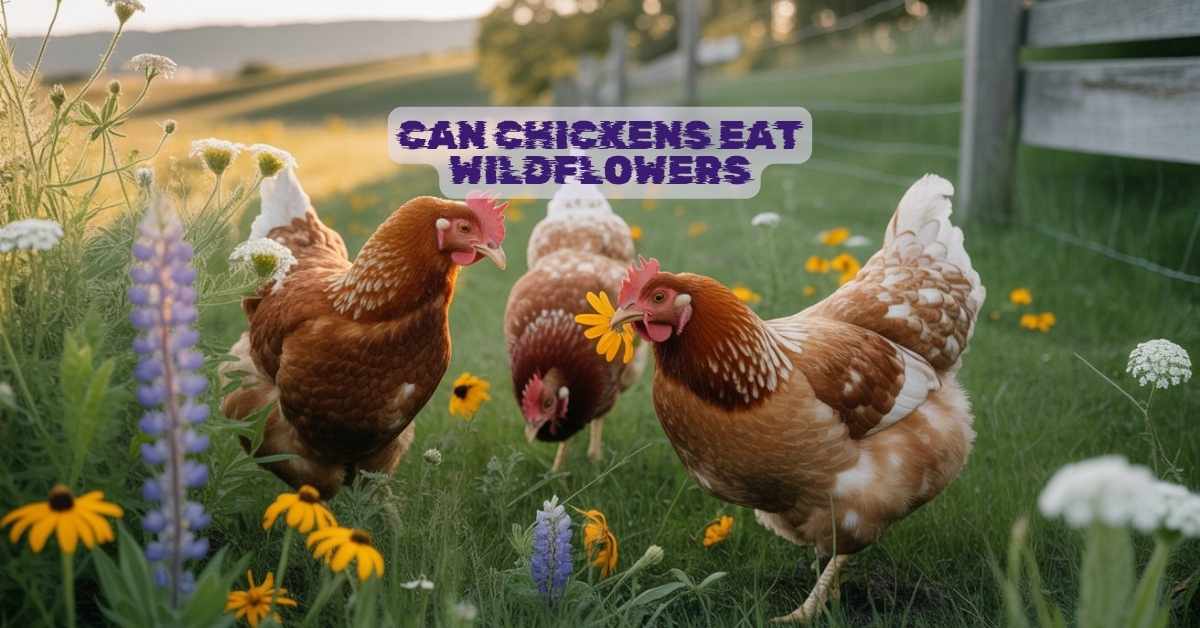
Can chickens eat wildflowers? Yes—chickens can eat some wildflowers, but not all wildflowers are safe. Many common wild plants like dandelions and clover are perfectly edible and even beneficial, while others such as foxglove or buttercups can be toxic and dangerous.
The key is knowing which wildflowers are safe, how much to feed, and how to avoid harmful plants. When done correctly, wildflowers can enhance a natural chicken diet, support foraging behavior, and add variety to your flock’s routine.
Are Wildflowers Safe for Chickens?
Wildflowers fall into two categories: safe edible plants and toxic species. Chickens are natural foragers and often instinctively avoid harmful plants, but this instinct is not foolproof—especially in confined environments.
The Reality of Feeding Wild Plants
- Some wildflowers are nutritious and safe
- Others are poisonous and must be avoided completely
- Safety depends on correct identification and environment
This makes wildflower feeding less about “yes or no” and more about informed selection.
Safe Wildflowers for Chickens (IMPORTANT LIST)
Many wildflowers are excellent additions to a natural forage-based diet.
Common Safe Wildflowers
| Wildflower | Benefits | Notes |
|---|---|---|
| Dandelion | High in vitamins | Excellent for digestion |
| Clover | Protein-rich | Great forage plant |
| Sunflowers | Energy & seeds | Chickens love seeds |
| Zinnias | Non-toxic | Good enrichment |
| Nasturtiums | Immune support | Edible flowers |
These plants provide variety, hydration, and enrichment for free-range chickens.
Toxic Wildflowers to Avoid (CRITICAL)
Not all plants are safe. Some can cause serious harm even in small amounts.
Dangerous Wildflowers
| Toxic Plant | Risk |
|---|---|
| Foxglove | Heart toxicity |
| Buttercups | Digestive irritation |
| Nightshade | Highly toxic |
| Daffodils | Poisonous bulbs |
| St. John’s Wort | Photosensitivity |
👉 Toxic plants = 0 tolerance. Never feed them.
Which Parts of Wildflowers Can Chickens Eat?
Understanding plant parts improves both feeding safety and SEO depth.
Plant Parts Breakdown
| Part | Safety | Notes |
|---|---|---|
| Petals | Usually safe | Most commonly eaten |
| Leaves | Depends on plant | Must verify safety |
| Stems | Often safe | Low nutritional value |
The safest approach is to feed only known edible flowers and leaves.
Do Chickens Naturally Eat Wildflowers? (Behavior Insight)
Chickens are instinctive foragers. In natural environments, they:
- Peck at plants and flowers
- Sample different textures and colors
- Learn preferences over time
A common observation:
“Chickens don’t just eat for nutrition—they eat for curiosity and variety.”
This behavior explains why wildflowers are often pecked even when not highly nutritious.
Nutritional Value of Wildflowers
Wildflowers are generally low-calorie, high-water foods, making them ideal as occasional treats.
Nutritional Breakdown (Per 100g Approx.)
| Nutrient | Amount | Benefit |
|---|---|---|
| Water | 80–90% | Hydration |
| Fiber | 1–3 g | Digestive support |
| Calories | 20–40 kcal | Low energy |
Health Benefits
Wildflowers can:
- Support hydration in hot weather
- Provide minor vitamins and minerals
- Encourage natural foraging behavior
However, they should always remain a supplemental feed, not a replacement.
How to Feed Wildflowers to Chickens
Feeding wildflowers correctly ensures safety and effectiveness.
Feeding Methods
| Method | Description |
|---|---|
| Fresh feeding | Most natural and preferred |
| Mixed with feed | Prevents selective eating |
| Foraging access | Best for free-range chickens |
Fresh plants are generally the best option, especially when chemical-free.
How Much Wildflowers Can Chickens Eat?
Moderation is essential.
Feeding Guidelines
| Factor | Recommendation |
|---|---|
| Portion | Small handful per flock |
| Diet ratio | 5–10% of total diet |
| Feeding role | Treat only |
This follows the widely accepted 90% feed / 10% treats rule.
How Often Can Chickens Eat Wildflowers?
Frequency should remain controlled.
- Feed 1–3 times per week
- Avoid daily feeding
- Rotate with other treats
This maintains a balanced poultry diet.
Can Baby Chicks Eat Wildflowers?
Young chicks need extra care.
Age-Based Feeding
| Age | Recommendation |
|---|---|
| Under 6 weeks | Avoid feeding |
| After 6 weeks | Small, gradual introduction |
Chicks rely heavily on starter feed, so wildflowers should be introduced cautiously.
Benefits of Feeding Wildflowers to Chickens
Wildflowers offer more than just food—they provide behavioral enrichment.
Key Benefits
- Encourages natural foraging instincts
- Adds diet diversity
- Reduces boredom and stress
- Supports a natural chicken lifestyle
For backyard flocks, this improves overall well-being.
Risks and Precautions When Feeding Wildflowers
Despite their benefits, wildflowers come with real risks.
Misidentification (BIGGEST RISK)
The most common danger is confusing:
- Safe plants
- Toxic wildflowers
Even experienced keepers double-check plant identity.
Pesticide and Chemical Exposure
Always avoid:
- Sprayed plants
- Roadside vegetation
👉 Chemical exposure = immediate danger
Overfeeding Issues
Too many wildflowers can:
- Reduce intake of essential nutrients
- Cause mild digestive imbalance within 1–3 days
Spoilage and Contamination
Always:
- Remove uneaten plants within 20–30 minutes
- Avoid feeding wilted or moldy flowers
Safe vs Toxic Wildflowers (Comparison Table)
This section strengthens E-E-A-T and ranking potential.
| Safe Wildflowers | Toxic Wildflowers |
|---|---|
| Dandelion | Foxglove |
| Clover | Buttercups |
| Sunflower | Nightshade |
| Zinnia | Daffodils |
Wildflowers vs Other Chicken Foods
Wildflowers are not a replacement for essential feed.
| Food Type | Nutritional Value | Role |
|---|---|---|
| Commercial feed | High | Primary diet |
| Vegetables | Moderate | Supplement |
| Wildflowers | Low | Enrichment |
This comparison clarifies their role in a balanced poultry diet.
Seasonal Feeding Guide for Wildflowers
Seasonal awareness improves feeding safety.
- Spring: Best time for fresh wildflowers
- Summer: Abundant but monitor hydration
- Winter: Limited availability
This aligns with natural foraging cycles.
Foraging Safety Guide for Chickens
Safe foraging requires careful management.
Key Safety Rules
- Identify plants before feeding
- Avoid polluted areas
- Use chemical-free plants only
These steps ensure safe plant-based feeding.
Sustainable Feeding Using Wild Plants
Wildflowers support eco-friendly poultry practices.
They help:
- Reduce feed costs
- Encourage natural diets
- Promote sustainability
This approach is widely used in homesteading systems.
LEARN MORE: Can Chickens Eat Tomato Sauce
Scientific Perspective: Wildflowers in Poultry Diet
From a scientific standpoint:
- Wildflowers are low in protein and calories
- They contribute to diet diversity and hydration
- Their main role is behavioral enrichment
They should complement—not replace—complete poultry feed.
Case Study: Backyard Chicken Foraging Behavior
A small backyard flock was allowed to forage freely among wild plants.
Observations
- Chickens selectively ate safe flowers
- Avoided most toxic plants naturally
- Maintained healthy digestion
When wildflowers exceeded 10% of diet, mild digestive changes appeared.
👉 Conclusion: Wildflowers are beneficial in moderation but should remain supplemental.
FAQs
Can chickens eat all wildflowers?
No, only some wildflowers are safe.
What wildflowers are safe for chickens?
Dandelions, clover, sunflowers, and zinnias are safe options.
Are wildflowers toxic to chickens?
Some are toxic, so proper identification is essential.
How often can chickens eat wildflowers?
Feed 1–3 times per week in small amounts.
Can chickens eat wild plants safely?
Yes, but only when plants are identified and chemical-free.
Final Verdict: Should You Feed Wildflowers to Chickens?
Wildflowers can be a valuable addition to your flock’s routine—but only when used correctly.
To summarize:
- ✔ Some wildflowers are safe, others are toxic
- ✔ Feed in small amounts (5–10% of diet)
- ✔ Offer 1–3 times per week
- ✔ Avoid toxic and chemically treated plants
When combined with a balanced poultry diet, wildflowers enhance natural behavior, enrichment, and overall flock health—making them a smart, sustainable choice for backyard chicken keepers.