
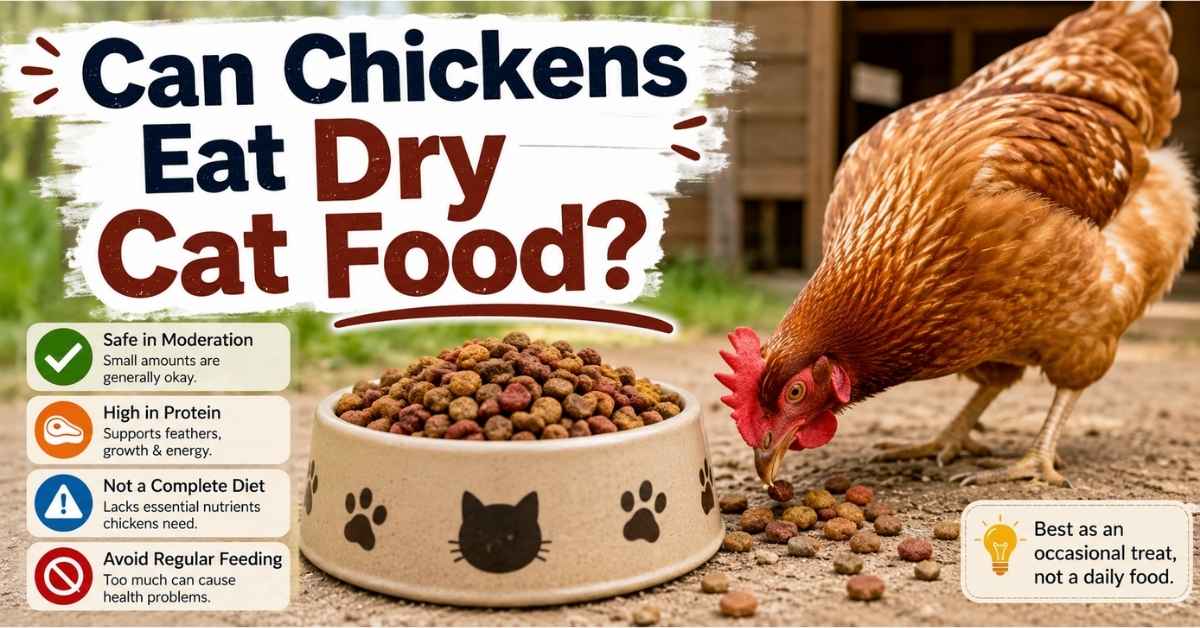
Can chickens eat dry cat food? Yes, chickens can eat dry cat food occasionally in small amounts, especially during molting or temporary feed shortages, but it should never replace a balanced poultry feed.
Dry cat food is high in protein and fat, which may help molting hens for short periods, yet excessive feeding can cause nutritional imbalance, excess sodium intake, obesity, and poor long-term flock health. If your chickens accidentally ate cat kibble, there is usually no reason to panic, but moderation is critical.
Backyard chicken owners often search this question after noticing hens stealing cat food from a barn porch, during winter feed shortages, or while trying to boost protein intake for feather regrowth. The problem is that most online advice oversimplifies the topic.
Some articles claim cat food is completely safe while others treat it like poison. The reality sits somewhere in the middle, and understanding the nutritional differences between cat food and chicken feed matters far more than a simple yes-or-no answer.
Quick Answer
Here’s the short version:
- Dry cat food is generally safe as an occasional high-protein treat for chickens.
- It can temporarily help molting chickens because feathers require large amounts of protein and amino acids.
- Cat food should never become a regular replacement for layer feed or chick starter feed.
- Too much cat food may lead to sodium overload, excessive fat intake, kidney stress, watery droppings, and nutritional imbalance.
- Small accidental amounts rarely harm healthy adult chickens.
For most backyard flocks, dry cat food works best as an emergency supplement rather than a daily feeding strategy.
Why This Question Matters More Than Most People Realize
Many chicken keepers do not search this keyword casually. Usually, something triggered concern.
Sometimes a hen sneaks into the barn and eats an entire bowl of cat kibble. Other times, flock owners run out of feed unexpectedly during bad weather or late-night emergencies. Molting season is another major reason people look for high-protein alternatives like kitten food or fish-based cat food.
There is also confusion caused by contradictory poultry advice online. One homesteading blog may recommend cat food during molt while another warns against it completely. Most of these articles fail to explain the actual nutritional science behind poultry diets, protein metabolism, or why chickens crave animal protein in the first place.
Understanding the “why” behind the behavior helps flock owners make safer feeding decisions instead of relying on random internet opinions.
Why Chickens Are Obsessed With Dry Cat Food
Chickens are opportunistic omnivores. In nature, they naturally eat insects, worms, seeds, small reptiles, and even tiny rodents if given the chance. Dry cat food contains concentrated animal protein, fat, fish meal, and strong-smelling ingredients that trigger natural foraging instincts.
The smell alone attracts many hens immediately.
Fish-based cat food formulas are especially tempting because chickens respond strongly to protein-rich scents. Some flock owners notice chickens aggressively competing for cat kibble during molting season, which is not random behavior. Feather regrowth requires substantial protein, particularly amino acids like methionine and lysine.
A sudden obsession with cat food may also reveal:
- protein deficiency
- poor-quality layer feed
- boredom
- limited free-ranging
- seasonal nutritional stress
- winter calorie demands
Chickens sometimes seek nutrients instinctively when their diet lacks variety or sufficient protein content.
Is Dry Cat Food Safe for Chickens?
Dry cat food is usually safe in small amounts for healthy adult chickens, but safety depends on frequency, quantity, and ingredient quality.
A few scattered pieces of kibble or occasional supplementation during molt generally will not harm a flock. Problems start when cat food becomes a regular dietary component instead of a temporary protein boost.
Cat food is formulated for obligate carnivores, not poultry. Cats require extremely high protein and fat concentrations along with nutrients like taurine that chickens do not need in large amounts. While chickens can digest many of these ingredients, long-term overfeeding creates imbalance.
The biggest nutritional risks include:
- excessive sodium
- too much fat
- improper calcium-phosphorus ratios
- artificial preservatives
- concentrated animal protein overload
- reduced consumption of balanced poultry feed
Many low-quality cat foods also contain flavor enhancers and additives that offer little nutritional value for backyard chickens.
The Nutrition Breakdown: Cat Food vs Chicken Feed
At first glance, dry cat food appears highly nutritious because of its impressive protein percentage. Some cat foods contain 30–40% protein, while standard layer feed usually sits around 16–18%.
However, protein percentage alone does not determine nutritional quality for chickens.
Layer feed is carefully balanced for:
- egg production
- calcium needs
- digestive health
- phosphorus control
- vitamin balance
- energy regulation
Cat food is designed for a completely different species with entirely different metabolic requirements.
| Nutrient | Dry Cat Food | Layer Feed | Why It Matters |
|---|---|---|---|
| Protein | Very High | Moderate | Excess protein can create imbalance |
| Sodium | Higher | Controlled | Too much sodium stresses chickens |
| Calcium | Lower | Optimized | Hens need calcium for eggshells |
| Fat | High | Moderate | Excess fat may cause obesity |
| Taurine | Present | Minimal | Chickens do not require high taurine |
| Fiber | Lower | Balanced | Poultry digestion needs fiber balance |
This is why experienced poultry keepers avoid using cat food as a complete feed replacement.
Can Dry Cat Food Help Molting Chickens?
Molting hens often benefit from extra protein because feathers are made primarily of keratin, a protein-rich structural material. During heavy molt cycles, chickens temporarily divert nutrients away from egg production toward feather regrowth.
This increased demand explains why many flock owners offer:
- mealworms
- black soldier fly larvae
- scrambled eggs
- fish scraps
- sunflower seeds
- dry cat food
In moderation, dry cat food may support weak feather recovery during stressful molts. High-protein kitten food is sometimes used temporarily because growing kittens require elevated protein levels similar to molting birds.
Still, more protein is not always better.
Excessive protein intake can lead to:
- unnecessary weight gain
- digestive upset
- poor feed balance
- increased water consumption
- reduced appetite for proper layer feed
Experienced chicken keepers typically use cat food only as a short-term supplement during severe molt periods rather than a permanent feeding strategy.
How Much Dry Cat Food Can Chickens Safely Eat?
Moderation is everything.
Dry cat food should remain a small occasional supplement, not a daily ration.
Safe Feeding Guidelines
| Flock Size | Safe Amount | Frequency |
|---|---|---|
| 3–5 chickens | Small handful | 1–2 times weekly |
| 6–10 chickens | 1/4 cup | 1–2 times weekly |
| 10+ chickens | 1/2 cup maximum | Occasionally only |
These amounts assume chickens already receive complete poultry feed.
If chickens begin ignoring their layer pellets in favor of cat food, the balance has already shifted too far.
Signs Your Chickens Are Eating Too Much Cat Food
Many flock owners miss early warning signs because chickens continue acting hungry even while overconsuming protein and fat.
Watch for:
- watery droppings
- unusually strong manure odor
- excessive thirst
- obesity
- reduced egg production
- soft eggshells
- lethargy
- greasy-looking feathers
- reduced appetite for balanced feed
Long-term nutritional imbalance can weaken overall flock health even if obvious symptoms are not immediately visible.
What Happens If Chickens Eat Too Much Cat Food?
A chicken stealing a few bites of dry kibble rarely causes major issues. Problems typically develop through repeated overfeeding.
Short-term effects may include:
- loose stools
- temporary digestive upset
- increased water intake
- mild lethargy
Long-term overconsumption creates bigger concerns:
- obesity
- kidney stress from excess sodium
- poor egg quality
- calcium imbalance
- fatty liver issues
- reduced nutritional diversity
In severe cases, chickens fed excessive animal protein over long periods may develop chronic health problems linked to poor diet balance.
If your flock suddenly becomes lethargic, stops eating, or develops severe diarrhea after consuming large quantities of cat food, contacting a poultry veterinarian is wise.
Can Baby Chicks Eat Dry Cat Food?
Baby chicks have very different nutritional requirements than adult hens.
While tiny amounts of softened cat food are occasionally used in emergency situations for weak chicks, regular feeding is not recommended. Chicks require carefully balanced chick starter feed designed specifically for proper skeletal growth, organ development, and digestive health.
The biggest risks for young birds include:
- excessive sodium sensitivity
- improper calcium levels
- digestive stress
- nutritional imbalance
- dehydration risk
Safer protein sources for chicks include:
- boiled egg
- starter crumble
- small insects
- chick-safe protein supplements
Young birds are far less tolerant of dietary mistakes than mature hens.
Ingredients in Cat Food That Can Cause Problems
Not all dry cat foods are equal. Some ingredients are far more problematic for chickens than others.
Excess Sodium
Many commercial cat foods contain sodium levels unsuitable for poultry when fed frequently.
Artificial Preservatives
Low-quality kibble often includes artificial flavoring agents and chemical preservatives with little benefit for chickens.
Onion and Garlic Powder
Certain pet foods contain onion or garlic derivatives, which may become problematic in larger amounts.
Fish-Based Formulas
Fish meal itself is not necessarily dangerous, but excessive fish-heavy diets may affect egg flavor and digestive balance.
Grain-Free Formulas
Some grain-free cat foods are extremely concentrated in protein and fat, making them harder for chickens to balance nutritionally.
Reading ingredient labels matters more than most flock owners realize.
What Experienced Chicken Keepers Actually Do
Experienced backyard chicken owners usually approach cat food pragmatically rather than emotionally.
Most do not panic if chickens steal cat kibble occasionally. At the same time, knowledgeable flock keepers avoid turning cat food into a routine feeding habit.
During winter or molting season, some homesteaders strategically use small amounts of dry kitten food to increase temporary protein intake. Others prefer natural alternatives like mealworms or black soldier fly larvae because they align better with poultry digestion.
The key difference between experienced keepers and beginners is balance.
Experienced flock owners understand:
- supplements are temporary
- layer feed remains the nutritional foundation
- protein excess can be just as harmful as deficiency
Better Alternatives to Dry Cat Food
If your goal is simply increasing protein safely, several better options exist.
Best High-Protein Treats for Chickens
- black soldier fly larvae
- mealworms
- cooked eggs
- fish scraps
- sunflower seeds
- peas
Budget-Friendly Protein Sources
- scrambled eggs
- plain yogurt in moderation
- leftover fish
- lentils
- oats combined with protein treats
Emergency Feed Options
If stores are closed and you run out of chicken feed temporarily, safer short-term emergency foods include:
- oats
- rice
- corn
- vegetables
- leafy greens
- sunflower seeds
These options create less sodium exposure than large amounts of cat kibble.
LEARN MORE: Can Chickens Eat Avocado Skins?
A Smarter Way to Increase Protein Without Harming Your Flock
Instead of relying heavily on cat food, experienced poultry keepers usually adjust protein strategically throughout the year.
During molting season:
- slightly increase protein
- reduce stress
- maintain hydration
- prioritize balanced poultry nutrition
During winter:
- focus on energy and calorie support
- allow controlled supplementation
- avoid excessive processed treats
Healthy flock management depends on long-term nutritional consistency rather than quick protein shortcuts.
Frequently Asked Questions About Can Chickens Eat Dry Cat Food
Can chickens eat dry kitten food?
Yes, but only occasionally. Kitten food contains even higher protein levels than adult cat food, which may help molting hens temporarily but should never replace poultry feed.
Is wet cat food safer than dry cat food?
Wet cat food is softer and easier to consume, but it still contains excessive sodium and nutrients designed for carnivores. Moderation remains important.
Why do chickens steal cat food?
Chickens are attracted to strong-smelling animal protein, fat, and fish meal ingredients. Molting hens especially crave extra protein.
Can cat food improve egg production?
Not directly. While protein supports overall health, excessive cat food may actually reduce egg quality because of nutritional imbalance.
Can chickens eat dog food too?
Occasionally, yes. However, dog food still should not replace balanced poultry feed.
Can chickens survive on cat food alone?
No. Chickens require species-specific nutrition, calcium balance, fiber, and controlled mineral intake that cat food cannot provide long term.
Final Verdict About Can Chickens Eat Dry Cat Food
Dry cat food can work as an occasional high-protein supplement for chickens, particularly during molting or temporary feed shortages, but it should never become a staple part of a poultry diet. Chickens may love cat kibble because of its concentrated protein and fat content, yet long-term feeding creates nutritional imbalance that can damage flock health over time.
For most backyard flocks, the safest approach is simple: use dry cat food sparingly, prioritize balanced layer feed, and rely on poultry-specific protein sources whenever possible. A few bites of cat food rarely cause harm, but consistent overfeeding is where problems begin.