
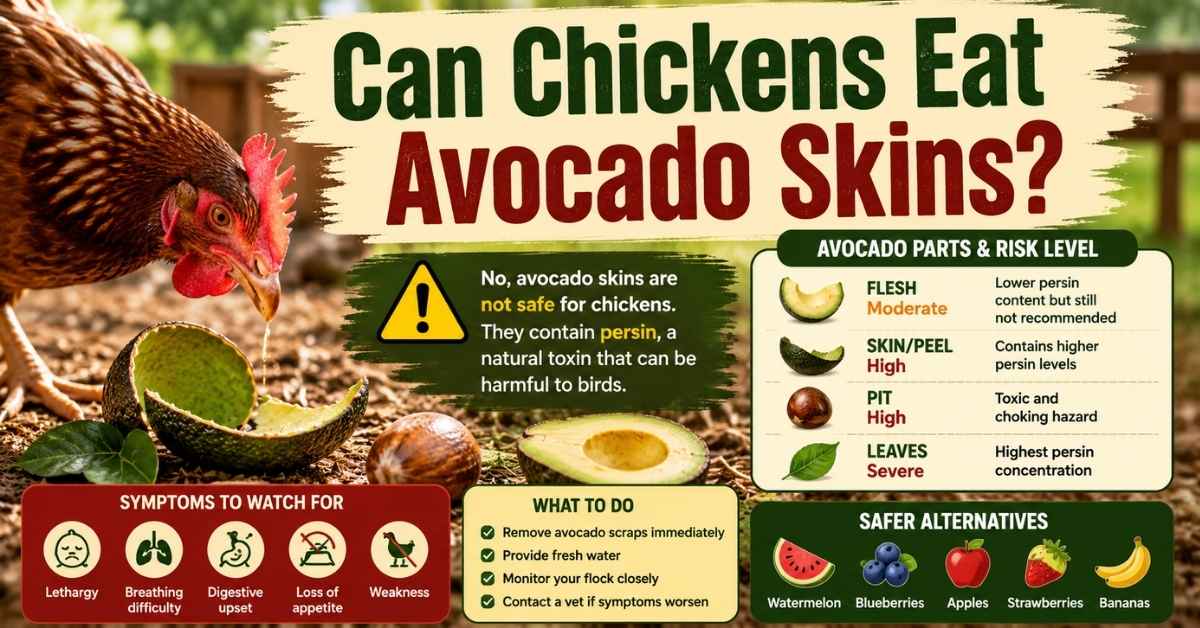
Can chickens eat avocado skins? No, avocado skins are generally considered unsafe for chickens because they contain persin, a natural fungicidal toxin found in avocados that can be harmful to many birds. While a tiny accidental peck may not always cause severe symptoms in backyard chickens, intentionally feeding avocado peels, pits, or leaves is not recommended. Most poultry experts advise keeping avocado scraps away from chickens entirely to reduce the risk of toxicity and digestive problems.
Many flock owners search this question after noticing chickens pecking at kitchen scraps or compost piles. Because avocados are healthy for humans, it is easy to assume they are safe for poultry too. Unfortunately, chickens process certain foods differently than people, and avocado toxicity in birds remains a serious concern.
Avocado Safety Chart for Chickens
| Avocado Part | Safe for Chickens? | Risk Level | Main Concern |
|---|---|---|---|
| Flesh | Limited caution | Moderate | Persin exposure |
| Skin/Peel | No | Higher | Higher persin concentration |
| Pit | No | High | Choking + toxicity |
| Leaves | No | Severe | High persin levels |
| Guacamole | No | Severe | Onion, garlic, salt |
Why Avocados Are Different From Most Fruits
Unlike many safe fruits for chickens, avocados contain persin, a compound that can be toxic to birds and several other animals. Persin acts as a natural defense mechanism within the avocado plant. Although humans can safely consume avocados, birds tend to react more sensitively to this toxin.
One reason this topic causes so much confusion is that chickens do not always react the same way as parrots or smaller pet birds. Some backyard flock owners report chickens eating tiny amounts of avocado without visible symptoms. Others prefer avoiding all avocado products completely.
That mixed experience creates conflicting information online. Some websites claim avocados instantly kill chickens, while others suggest the flesh is harmless. The reality is more nuanced. Toxicity risk varies depending on:
- avocado variety
- amount consumed
- bird size
- overall health
- which avocado part was eaten
This is why balanced, safety-first feeding advice matters.
Are Avocado Skins Toxic to Chickens?
Yes, avocado skins are generally considered the riskiest edible portion of the fruit for chickens because the peel contains higher concentrations of persin compared to the inner flesh.
The skin is also:
- fibrous
- difficult to digest
- more likely to contain concentrated plant compounds
Most poultry owners should avoid feeding avocado peels intentionally. Even though some chickens may peck at discarded skins without obvious illness, that does not make avocado skins safe for regular feeding.
A single tiny peck does not always lead to poisoning symptoms, but repeated exposure or larger amounts may increase the risk of digestive upset or more serious toxicity concerns.
What Happens If Chickens Eat Avocado Skins?
Many flock owners panic after realizing their chickens ate avocado scraps. Fortunately, small accidental exposure does not automatically mean a medical emergency. Still, chickens should be monitored carefully because toxicity symptoms can vary widely.
Possible symptoms of avocado poisoning in birds include:
- lethargy
- breathing difficulty
- swelling
- digestive upset
- weakness
- reduced appetite
Symptom Severity Guide
| Symptom | Concern Level |
|---|---|
| Mild loose droppings | Low |
| Reduced appetite | Moderate |
| Lethargy | Moderate |
| Breathing difficulty | High |
| Sudden weakness | High |
In severe avian toxicity cases, respiratory distress can become dangerous quickly. However, mild accidental ingestion may only cause temporary digestive discomfort or no visible symptoms at all.
The challenge is unpredictability. There is no universally safe dosage established for chickens.
My Chicken Ate Avocado Skin — What Should I Do?
If your chicken ate avocado skin, the first step is to stay calm. Many backyard chickens peck unfamiliar objects out of curiosity without swallowing large amounts.
Follow these practical steps:
- Remove remaining avocado scraps immediately
- Check how much may have been eaten
- Observe the flock closely for unusual symptoms
- Provide clean water and normal feed
- Separate visibly sick birds if needed
Contact a veterinarian if you notice:
- breathing problems
- severe lethargy
- collapse
- swelling
- worsening symptoms
Tiny accidental exposure is very different from repeated feeding or consuming large avocado scraps. This distinction is important because many online articles create unnecessary panic without explaining realistic risk levels.
Can Chickens Eat Avocado Flesh Instead?
Avocado flesh is considered less toxic than the peel, pit, and leaves because it contains lower persin concentrations. However, “less toxic” does not mean completely safe.
Some flock owners claim their chickens occasionally eat small amounts of avocado flesh without problems. Still, most poultry experts and avian toxicology sources recommend avoiding avocado entirely because toxicity levels vary and bird sensitivity is unpredictable.
This is why most safe feeding guides recommend choosing other healthy treats for chickens instead of experimenting with avocado.
Safer fruit options provide:
- hydration
- antioxidants
- enrichment
- nutrition
without introducing unnecessary toxicity concerns.
Why Backyard Chickens Peck at Avocado Scraps
Chickens naturally investigate soft colorful foods because they are opportunistic foragers. Backyard flocks peck almost anything interesting inside the run, compost pile, or garden.
Avocado scraps attract chickens because:
- the flesh is soft
- the texture resembles fruit
- scraps smell appealing
- chickens instinctively explore new foods
This behavior does not mean avocado is safe. Chickens often peck harmful objects accidentally, including toxic plants or spoiled food.
Free-range chickens and backyard poultry with compost access face higher accidental exposure risks, especially in homesteading environments where kitchen scraps are common.
Common Avocado Feeding Mistakes Chicken Owners Make
One common mistake is assuming all natural foods are automatically healthy for chickens. While many vegetables and fruits are excellent poultry treats, avocados remain controversial because of persin toxicity.
Other frequent mistakes include:
Leaving avocado scraps near the coop
Open compost piles and food-prep areas create accidental access.
Feeding guacamole leftovers
Guacamole often contains:
- garlic
- onions
- salt
- spices
These ingredients can be dangerous for chickens even beyond avocado itself.
Ignoring avocado pits
The pit creates both choking hazards and potential toxin exposure.
Trusting oversimplified internet advice
Some articles exaggerate toxicity while others dismiss risks completely.
Balanced caution is more reliable than extreme opinions.
How to Keep Avocado Waste Away From Chickens
Prevention is easier than dealing with possible poisoning symptoms later.
Helpful flock-management strategies include:
- securing compost piles
- disposing of avocado scraps immediately
- avoiding food waste near free-range areas
- teaching children not to toss avocado leftovers to chickens
- keeping kitchen prep waste covered
Homesteading families and backyard flock owners often feed kitchen scraps regularly, so building safe habits matters.
The safest approach is simple: If you are unsure whether a food is toxic to chickens, avoid feeding it intentionally.
Toxic Foods Chicken Owners Commonly Overlook
| Food | Risk Reason |
|---|---|
| Avocado skins | Persin |
| Chocolate | Theobromine |
| Raw beans | Lectins |
| Moldy food | Toxins |
| Green potatoes | Solanine |
Many dangerous foods for chickens come from ordinary household leftovers rather than obvious poisons.
Understanding toxic foods helps backyard poultry owners create safer feeding routines long term.
What Poultry Experts and Avian Toxicology Sources Say
Most avian toxicology references agree that avocado poses a legitimate risk to birds because of persin exposure. However, there is less research specifically focused on chickens compared to parrots and companion birds.
This creates an important nuance: Chickens may not react identically to highly sensitive bird species, but uncertainty still supports a cautious approach.
Experts generally agree on several points:
- avocado leaves are highly dangerous
- pits and skins contain more persin
- dosage effects vary
- prevention is safer than experimentation
Because no reliable “safe amount” exists, conservative feeding practices remain the safest recommendation for backyard flocks.
LEARN MORE: Can Chickens Eat Turnip Greens?
Can Small Amounts of Avocado Kill Chickens?
Toxicity severity depends on several variables, including:
- amount eaten
- avocado variety
- chicken size
- overall health
- exposure frequency
Some chickens may show no visible symptoms after tiny accidental exposure. Others may react more strongly.
This unpredictability is exactly why many poultry keepers avoid avocados entirely. Just because one flock tolerated avocado scraps once does not guarantee future safety.
A good backyard poultry strategy focuses on minimizing unnecessary risks rather than testing toxin tolerance.
Safe Fruits Chickens Can Eat Instead
| Fruit | Safe? | Best Feeding Tip |
|---|---|---|
| Watermelon | Yes | Cooling summer treat |
| Blueberries | Yes | Antioxidant-rich snack |
| Apples | Yes | Remove seeds |
| Strawberries | Yes | Feed occasionally |
| Bananas | Yes | Soft enrichment treat |
These fruits offer safer alternatives for chickens while still supporting enrichment and natural foraging behavior.
Frequently Asked Questions About Can Chickens Eat Avocado Skins
Are avocado skins poisonous to chickens?
Yes, avocado skins are considered potentially poisonous to chickens because they contain persin, a toxin harmful to many birds.
Can chickens survive eating avocado?
Some chickens survive small accidental exposure without symptoms, but avocados are still considered unsafe for poultry.
Is avocado flesh safer than the peel?
Yes, the flesh contains lower persin levels than the peel, pit, and leaves, but most experts still recommend caution.
What is persin toxicity?
Persin is a natural fungicidal compound found in avocados that can cause toxic reactions in birds and certain animals.
How much avocado is dangerous for chickens?
There is no universally established safe dosage for chickens, which is why prevention is recommended.
Are avocado pits toxic to birds?
Yes, avocado pits pose both toxicity and choking risks.
Why do chickens peck at avocado scraps?
Chickens naturally explore soft colorful foods while foraging and scavenging.
What should I do if my hens ate guacamole?
Remove leftovers immediately and monitor for symptoms because guacamole often contains harmful ingredients like onions and garlic.
Final Verdict About Can Chickens Eat Avocado Skins
Avocado skins are not considered safe for chickens because they contain higher concentrations of persin, a toxin associated with avian toxicity. While tiny accidental pecks may not always lead to severe poisoning, intentionally feeding avocado peels, pits, or leaves to backyard chickens is not recommended.
The safest approach is prevention rather than panic. Keep avocado scraps away from your flock, monitor accidental exposure carefully, and choose safer fruits and vegetables that support healthy poultry nutrition without unnecessary risk.