
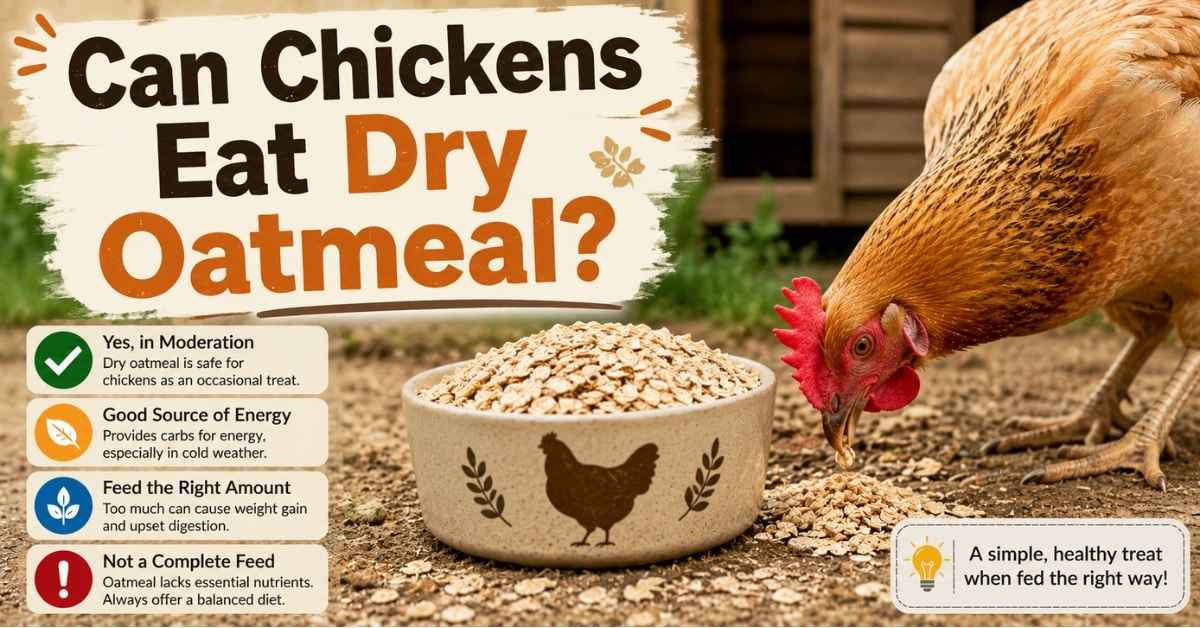
Can chickens eat dry oatmeal? Yes, chickens can safely eat dry oatmeal in moderation as an occasional treat. Plain rolled oats and uncooked oatmeal are generally safe for healthy adult chickens when served alongside a balanced poultry feed and fresh water. However, not all oats are equal. Flavored instant oatmeal, sugary packets, and excessive grain feeding can create nutritional problems for backyard flocks.
Many chicken owners worry about whether dry oatmeal swells inside the crop, causes digestive issues, or harms egg-laying hens. The good news is that plain oats are usually safe when fed correctly. The key is understanding portion sizes, oatmeal types, and proper feeding frequency.
Quick Answer
- Can chickens eat dry oatmeal safely? Yes, in small amounts.
- Can chickens eat uncooked oats? Yes, plain raw oats are safe for most adult chickens.
- Best oatmeal for chickens: Plain rolled oats.
- Worst oatmeal for chickens: Flavored instant oatmeal with sugar, salt, or additives.
- Can dry oatmeal cause crop impaction? Rarely when fed responsibly with water access.
- Should oatmeal replace chicken feed? No, oats should only be an occasional treat.
Chicken Owners Worry About Dry Oatmeal for One Reason
Most backyard flock owners search this topic because they hear conflicting advice online. One article says oats are a healthy treat while another warns that oatmeal can swell inside a chicken’s crop and cause dangerous digestive problems.
That confusion makes sense.
Chickens digest food differently than humans, and many beginners worry about accidentally harming their birds with common pantry foods. Since oatmeal expands when humans cook it with water, people naturally wonder whether the same thing happens inside a chicken’s digestive system.
The reality is more balanced than the internet makes it seem.
Can Chickens Eat Dry Oatmeal Safely?
Healthy adult chickens can safely eat plain dry oatmeal, rolled oats, and uncooked oats in moderation. Oats provide carbohydrates, fiber, plant protein, and trace minerals that chickens can digest well when included as part of a varied diet.
The biggest issue is not the oats themselves. The real problem happens when chicken owners:
- overfeed grains
- replace balanced layer feed
- use sugary flavored oatmeal
- feed moldy oats
- ignore proper treat limits
For most backyard flocks, oatmeal works best as:
- a cold-weather treat
- an enrichment snack
- a small supplemental grain
- part of a mixed treat blend
What matters most is maintaining a balanced poultry diet.
What Actually Happens When Chickens Digest Dry Oats
A chicken’s digestive system is designed to process grains. After chickens swallow food, it moves into the crop, a storage pouch where food softens before digestion continues.
Many people believe dry oatmeal instantly swells inside the crop and creates deadly blockages. In reality, moderate amounts of dry rolled oats rarely cause problems for healthy birds with constant access to water.
The bigger risk comes from:
- excessive grain feeding
- dehydration
- poor overall nutrition
- lack of grit
- feeding spoiled feed
Does Oatmeal Really Expand Dangerously?
Plain oats can absorb moisture, but chickens naturally consume water throughout the day. In most cases, the digestive process handles oats normally.
Crop impaction is more commonly linked to:
- long grass
- fibrous material
- foreign objects
- severe dehydration
- poor digestive health
Small servings of dry oatmeal are generally not dangerous for healthy adult hens.
Signs Chickens Are Eating Too Many Dry Grains
Watch for:
- reduced interest in layer feed
- weight gain
- soft eggshells
- sluggish behavior
- unusual droppings
- overly full crops
These signs usually indicate poor dietary balance rather than oatmeal toxicity.
Which Types of Oatmeal Are Safest for Chickens?
Not every oat product belongs in the coop. Some are safe while others contain ingredients that can negatively affect flock health.
Plain Rolled Oats
Plain rolled oats are the best oatmeal option for chickens. They are easy to digest, affordable, and widely used by backyard flock owners.
Steel-Cut Oats
Steel-cut oats are harder and less processed. Chickens can still eat them, but many birds prefer softer rolled oats.
Instant Oatmeal
Plain instant oatmeal may be safe occasionally, but it often contains added sodium or preservatives. Always check labels carefully.
Flavored Oatmeal
Avoid flavored oatmeal packets completely. Many contain:
- excess sugar
- artificial flavoring
- high sodium
- chocolate ingredients
- preservatives
Some flavored varieties may include unsafe ingredients for poultry.
Raw Oats vs Cooked Oatmeal
Both dry oatmeal and cooked oatmeal can be safe. Warm oatmeal mash is especially popular during winter because it provides extra calories and warmth.
However, sticky cooked oatmeal should not become overly wet or glue-like because it can create messy feeding conditions.
Quick Comparison Table
| Oatmeal Type | Safe for Chickens? | Notes |
|---|---|---|
| Plain rolled oats | Yes | Best overall option |
| Steel-cut oats | Yes | Harder texture |
| Plain instant oats | Limited | Check additives |
| Flavored oatmeal | No | Sugar and sodium risks |
| Oatmeal with raisins | No | Raisins may be unsafe |
| Organic oats | Yes | Similar nutritional value |
Why Many Chicken Owners Feed Oatmeal in Winter
Oatmeal becomes especially popular during colder months because oats provide energy-rich carbohydrates that help chickens maintain body heat.
Many experienced flock owners notice chickens become more enthusiastic about oats during winter mornings and molting season.
Warm oatmeal mash can:
- encourage eating during cold weather
- provide temporary energy support
- create enrichment opportunities
- increase water intake when mixed properly
Some poultry keepers also combine oats with:
- cracked corn
- seeds
- mealworms
- vegetable scraps
Still, balanced poultry feed should remain the foundation of the diet.
How Much Dry Oatmeal Can Chickens Eat?
Treat foods like oatmeal should stay below roughly 10% of a chicken’s overall diet.
Too many grains dilute important nutrients found in complete layer feed, including:
- calcium
- protein
- vitamins
- amino acids
Safe Serving Guidelines
| Flock Size | Safe Oatmeal Amount | Frequency |
|---|---|---|
| 3–5 chickens | Small handful | 2–3 times weekly |
| 6–10 chickens | 1–2 handfuls | 2–3 times weekly |
| Larger flocks | Small scoop | Occasional treat |
A little oatmeal goes a long way.
Can Baby Chicks Eat Dry Oatmeal?
Baby chicks can eat tiny amounts of plain oats after they are established on chick starter feed, but oats should never replace starter nutrition.
Chick starter feed contains carefully balanced nutrients needed for:
- feather growth
- immune support
- bone development
- healthy growth
Too many treats early on can create nutritional imbalances.
For young birds:
- use very small portions
- crush larger oats if necessary
- avoid flavored products entirely
- ensure clean water access
Common Oatmeal Feeding Mistakes Chicken Owners Make
Many flock nutrition problems come from feeding habits rather than oatmeal itself.
Feeding Flavored Instant Oatmeal
Sugary packets often contain ingredients chickens should not eat regularly.
Replacing Layer Feed
Some owners accidentally reduce balanced feed intake by overfeeding treats.
Feeding Moldy Oats
Mold contamination can create serious health risks for poultry.
Ignoring Water Availability
Dry grains should always be paired with fresh water access.
Overfeeding During Hot Weather
Heavy carbohydrate treats are usually more beneficial during colder seasons.
Forgetting Grit
Chickens need grit to help grind and process grains effectively.
Signs Your Chickens Are Handling Oatmeal Well
Healthy chickens typically:
- remain active
- maintain normal droppings
- continue eating balanced feed
- produce consistent eggs
- show normal crop emptying
Most flocks eagerly peck rolled oats without digestive trouble.
Dominant hens often rush toward treats first, so spreading oats around the coop can help reduce competition.
Is Dry Oatmeal Healthier Than Other Chicken Treats?
Compared to processed scraps like bread or sugary leftovers, plain oatmeal is often a better treat choice.
Oatmeal vs Cracked Corn
Cracked corn provides quick energy but less fiber.
Oatmeal vs Bread
The Oatmeal is generally less processed and nutritionally superior.
Oatmeal vs Scratch Grains
Scratch grains vary widely in nutrition. Oats can provide more fiber and balanced carbohydrates.
Nutritional Comparison Table
| Treat | Nutritional Value | Best Use |
|---|---|---|
| Rolled oats | Moderate | Occasional treat |
| Bread scraps | Low | Rarely |
| Cracked corn | Energy-rich | Winter feeding |
| Commercial treats | Variable | Controlled use |
What Nutrients Do Oats Provide Chickens?
Plain oats contain:
- fiber
- carbohydrates
- plant protein
- manganese
- phosphorus
- antioxidants
- beta-glucans
Beta-glucans are soluble fibers associated with digestive support and immune function.
However, oats still lack the complete nutrition profile chickens need daily. They should supplement a balanced diet rather than replace it.
What Chickens Should NEVER Eat With Oatmeal
Never mix oatmeal with harmful ingredients such as:
- chocolate
- artificial sweeteners
- heavily salted foods
- sugary syrups
- spoiled grains
- moldy feed
Avoid raisin oatmeal blends and highly processed flavored packets whenever possible.
Real-World Flock Observations Most Articles Ignore
Experienced flock owners often notice:
- chickens become excited when hearing treat containers
- hens prefer rolled oats over steel-cut oats
- excessive treats reduce layer feed consumption
- winter flocks seek calorie-dense foods more aggressively
Some chickens completely ignore oatmeal at first until they learn it is edible. Others immediately peck at oats enthusiastically.
These small behavioral details matter because feeding success varies between flocks.
LEARN MORE: Can Chickens Eat Dry Cat Food?
The Biggest Myths About Feeding Oatmeal to Chickens
“Dry Oatmeal Swells and Kills Chickens”
Moderate amounts of plain oats rarely create severe issues in healthy birds with water access.
“Cooked Oatmeal Is Always Safer”
Cooked oatmeal is not automatically healthier than dry rolled oats.
“Chickens Can Eat Unlimited Grains”
Too many grains dilute essential nutrition.
“Instant Oatmeal Is the Same as Plain Oats”
Many instant packets contain additives chickens do not need.
Best Ways to Serve Oatmeal Safely
Safe feeding methods include:
- scatter feeding
- mixing oats with vegetables
- blending oats into winter mash
- combining oats with scratch grains
- using oats in enrichment treats
Avoid making oatmeal excessively sticky or wet.
When Chickens Should NOT Eat Dry Oatmeal
Limit oatmeal if chickens are:
- overweight
- ill
- recovering from digestive problems
- refusing balanced feed
- struggling in extreme heat
Balanced poultry nutrition should always come first.
Frequently Asked Questions
Can chickens eat raw rolled oats every day?
Daily oatmeal feeding is not ideal. Oats should remain an occasional treat.
Is Quaker oatmeal safe for chickens?
Plain Quaker oats are generally safe in moderation. Avoid flavored varieties.
Can dry oatmeal cause crop impaction?
Small portions rarely cause issues in healthy chickens with water access.
Can ducks eat dry oatmeal too?
Yes, plain oats are generally safe for ducks in moderation.
Are steel-cut oats too hard for chickens?
Most adult chickens can eat them, but rolled oats are easier and more popular.
Is oatmeal good for laying hens?
Plain oats can be a healthy supplemental treat but should never replace layer feed.
Should oats be soaked before feeding?
Soaking is optional. Plain dry oats are usually fine for healthy adult birds.
Final Verdict: Should You Feed Chickens Dry Oatmeal?
Yes, chickens can eat dry oatmeal safely when fed responsibly. Plain rolled oats are one of the safer grain-based treats for backyard flocks, especially during colder months. The biggest risks come from overfeeding, poor-quality oatmeal, and replacing balanced poultry feed with excessive treats.
Stick with:
- plain oats
- moderate portions
- fresh water access
- balanced nutrition
When fed correctly, dry oatmeal can become a simple, affordable, and enjoyable treat that many chickens genuinely love.