
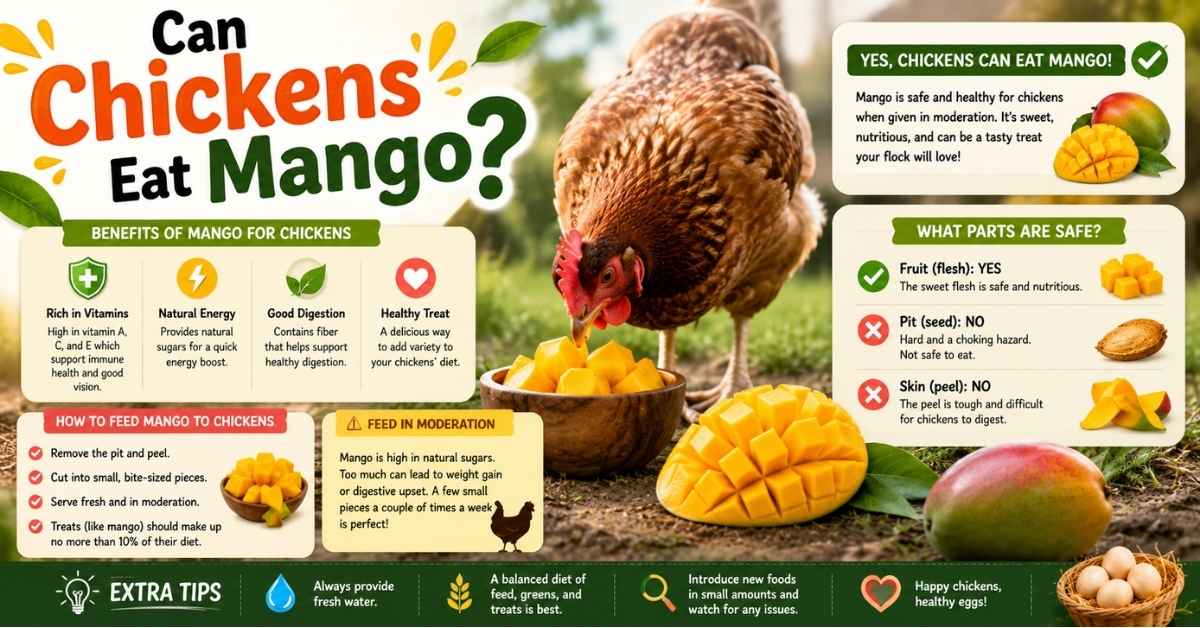
Can chickens eat mango? Yes, chickens can eat ripe mango safely in moderation. Mango is a nutritious fruit that provides vitamin A, vitamin C, antioxidants, fiber, and hydration, making it a healthy occasional treat for backyard chickens. However, chickens should only eat the flesh and properly prepared peel, while the mango pit should always be removed because it can create choking hazards. Like all treats, mango should complement a balanced poultry diet rather than replace quality chicken feed.
If you’ve recently harvested mangoes, found overripe fruit in your kitchen, or have a mango tree dropping fruit into your yard, you may wonder whether it’s safe to share some with your flock. The good news is that most chickens enjoy mango, but there are important guidelines regarding serving size, feeding frequency, and preparation methods that every chicken keeper should understand.
Quick Answer: Can Chickens Eat Mango Safely?
Yes, chickens can eat mango flesh safely.
Safe Parts of a Mango
| Mango Part | Safe for Chickens? | Notes |
|---|---|---|
| Mango Flesh | Yes | Best option |
| Mango Skin | Usually Yes | Wash thoroughly first |
| Mango Pit | No | Choking hazard |
| Frozen Mango | Yes | Excellent summer treat |
| Dried Mango | Limited | High sugar content |
| Overripe Mango | Sometimes | Only if mold-free |
For the healthiest results, offer fresh ripe mango as an occasional treat while ensuring that complete poultry feed remains the foundation of your flock’s nutrition.
Why Chicken Owners Ask About Mango
Most people don’t search this question because they’re interested in mango nutrition alone.
They’re usually standing in the kitchen with extra fruit wondering:
“Can I give this to my chickens?”
Reducing Food Waste
Many backyard chicken keepers use their flocks to help manage food scraps.
Common situations include:
- Leftover mango slices
- Overripe mangoes
- Fallen fruit from backyard trees
- Excess fruit from harvest season
Rather than throwing fruit away, owners naturally look for safe feeding options.
The Real Concern Behind the Question
Most flock owners are actually asking:
- Will mango hurt my chickens?
- Can mango cause digestive problems?
- Is mango healthier than other fruits?
- How much mango is too much?
The goal isn’t simply feeding fruit. The goal is protecting flock health.
What Happens When Chickens Eat Mango?
Chickens are natural omnivores that enjoy a wide variety of foods, including fruits.
Why Chickens Love Sweet Fruits
Wild birds are naturally attracted to sweet foods because they provide quick energy.
Mango contains natural sugars that make it highly appealing to chickens.
Many flock owners notice that chickens eagerly peck at mango chunks before trying vegetables.
How the Chicken Digestive System Handles Mango
A chicken’s digestive system processes fruit relatively well when offered in moderation.
The fruit provides:
- Moisture
- Fiber
- Vitamins
- Plant compounds
However, excessive fruit consumption can create nutritional imbalances if treats begin replacing complete feed.
What Mango Contributes to a Balanced Diet
Mango works best as a supplemental treat.
It supports:
- Hydration
- Dietary variety
- Natural foraging behavior
- Nutrient diversity
But it cannot replace formulated poultry feed designed to meet protein, calcium, and energy requirements.
Mango Nutrition: Is It Actually Good for Chickens?
Mango contains several nutrients that can benefit backyard flocks.
Key Nutrients Found in Mango
| Nutrient | Potential Benefit for Chickens |
|---|---|
| Vitamin A | Supports vision and immunity |
| Vitamin C | Helps during periods of stress |
| Fiber | Supports digestion |
| Antioxidants | Promote overall health |
| Water | Supports hydration |
Vitamin A and Flock Health
Vitamin A plays an important role in:
- Vision
- Skin health
- Immune system function
Laying hens require adequate nutrition to maintain productive health, making vitamin-rich treats useful when offered responsibly.
Vitamin C During Heat Stress
Although chickens produce their own vitamin C, additional dietary sources may be beneficial during:
- Hot weather
- Transportation stress
- Environmental changes
Mango naturally contains vitamin C and water, making it a refreshing summer snack.
Antioxidants and Overall Wellness
Mango contains antioxidants that help protect cells from oxidative stress.
While chickens don’t require mango specifically, antioxidant-rich foods contribute to dietary diversity.
Why Mango Cannot Replace Chicken Feed
This is where many new chicken keepers make mistakes.
Even nutritious fruits lack:
- Sufficient protein
- Essential amino acid balance
- Proper calcium levels
- Complete vitamin profiles
A healthy chicken diet should consist primarily of:
- Layer feed
- Grower feed
- Chick starter feed
- Appropriate poultry rations
Treats should remain a small percentage of total intake.
Mango Benefits for Chickens
When fed correctly, mango offers several advantages.
A Hydrating Summer Treat
During hot weather, chickens often appreciate foods with high water content.
Fresh mango provides:
- Moisture
- Cooling effects
- Increased treat appeal
Many backyard flock owners freeze small mango cubes for summer enrichment.
Supports Natural Foraging Behavior
Chickens enjoy pecking and exploring foods.
Offering mango pieces encourages:
- Curiosity
- Activity
- Mental stimulation
This is especially useful for confined flocks.
Adds Variety to the Diet
Variety can enrich a chicken’s feeding experience.
Although feed remains the primary food source, occasional fruits help prevent dietary monotony.
May Support Immune Function
The combination of vitamins and antioxidants contributes to overall wellness when incorporated into a balanced feeding program.
Helps Reduce Household Food Waste
One of the most practical benefits is waste reduction.
Many homesteaders and backyard chicken keepers use chickens to responsibly consume excess produce that would otherwise be discarded.
The Risks of Feeding Mango to Chickens
Although mango is generally safe, there are some important considerations.
Natural Sugar Content
Mango contains more sugar than many vegetables.
Too much fruit may:
- Encourage selective eating
- Reduce feed consumption
- Contribute to nutritional imbalance
Moderation remains essential.
Digestive Upset
Large quantities of mango can sometimes cause:
- Loose droppings
- Mild digestive disturbances
- Temporary changes in manure consistency
Introducing new foods gradually helps minimize these issues.
Mold and Spoilage Risks
Never feed moldy mango.
Mold can produce harmful substances that pose health risks to poultry.
Signs of spoilage include:
- Visible mold growth
- Fermentation smell
- Slimy texture
- Significant discoloration
Why Treats Should Stay Below 10%
Many poultry nutrition experts recommend keeping treats below approximately 10% of the overall diet.
This ensures chickens continue consuming the balanced nutrients found in quality poultry feed.
Which Parts of a Mango Can Chickens Eat?
Not every part of the fruit is equally suitable.
Mango Flesh
The flesh is the safest and most nutritious part.
Benefits include:
- Easy digestion
- High palatability
- Valuable nutrients
- Good hydration
Small diced pieces work best.
Mango Skin
Many chickens can eat mango peel without problems.
However, the skin should be:
- Thoroughly washed
- Free of pesticides
- Free of wax coatings
Some owners prefer removing the peel entirely.
Mango Pit
The pit should never be intentionally fed.
Potential issues include:
- Choking hazards
- Obstruction risks
- Difficulty consuming safely
Always remove the pit before serving mango to chickens.
Mango Leaves
Mango leaves are generally not a necessary part of a chicken’s diet.
Most poultry keepers focus on feeding the fruit rather than the foliage.
Fresh, Frozen, Dried, or Overripe: Which Type of Mango Is Best?
Not all forms of mango are equally beneficial for chickens. Understanding the differences helps you choose the safest option for your flock.
Fresh Mango
Fresh ripe mango is the gold standard.
Benefits include:
- Maximum hydration
- Natural vitamins
- Soft texture
- Easy digestion
For most backyard chickens, fresh mango is the best choice.
Frozen Mango
Frozen mango can be an excellent summer treat.
Advantages include:
- Cooling effect during heat waves
- Longer storage life
- Convenient serving
Simply thaw slightly before feeding or offer small frozen chunks during extremely hot weather.
Dried Mango
Dried mango requires caution.
Although chickens can eat dried mango, the drying process concentrates natural sugars.
Potential concerns:
- Higher sugar intake
- Smaller portions needed
- Risk of additives in commercial products
Always choose unsweetened dried mango if you decide to offer it.
Freeze-Dried Mango
Freeze-dried mango retains much of its nutritional value while remaining lightweight and shelf-stable.
It can work as an occasional treat but should still be offered in moderation.
Overripe Mango
Many chicken owners wonder:
Can chickens eat overripe mango?
Yes, provided it remains:
- Fresh-smelling
- Mold-free
- Non-fermented
Overripe fruit often becomes a favorite flock treat.
Fermented Mango
Avoid fermented mango.
Signs include:
- Alcohol-like smell
- Bubbling
- Sour odor
Fermented fruit can cause digestive issues and should not be offered to poultry.
LEARN MORE: Can Chickens Eat Slugs and Snails?
How Much Mango Can Chickens Eat?
One of the most important questions isn’t whether chickens can eat mango.
It’s how much.
Portion Sizes for Backyard Flocks
For a small flock:
- A few diced mango slices shared among birds is usually sufficient.
- Treats should remain supplemental rather than dietary staples.
Portion Guide Per Chicken
| Chicken Type | Suggested Portion |
|---|---|
| Adult Layer | 1–2 small chunks |
| Large Breeds | 2–3 small chunks |
| Bantams | 1 small chunk |
| Chicks | Tiny pieces occasionally |
The 90/10 Feeding Rule
A simple rule used by many experienced poultry keepers:
- 90% complete feed
- 10% treats and extras
This prevents nutritional deficiencies while allowing dietary variety.
Signs You’re Feeding Too Much Mango
Watch for:
- Loose droppings
- Reduced feed consumption
- Excessive treat-seeking behavior
- Weight gain
These signals suggest it’s time to reduce fruit intake.
A Practical Weekly Schedule
A reasonable feeding schedule may include:
| Day | Mango Treat |
|---|---|
| Monday | Small serving |
| Tuesday | None |
| Wednesday | None |
| Thursday | Small serving |
| Friday | None |
| Weekend | Optional small treat |
This approach maintains balance.
Can Baby Chicks Eat Mango?
Many new poultry owners ask whether chicks can enjoy fruit.
Age Considerations
Young chicks require:
- High-protein starter feed
- Carefully balanced nutrition
- Easy-to-digest foods
Treats should not be introduced too early.
When to Introduce Mango
Most keepers wait until chicks are several weeks old before offering tiny amounts of fruit.
Introducing foods gradually helps avoid digestive disturbances.
Serving Mango to Chicks
If offering mango:
- Dice into tiny pieces
- Use very small quantities
- Observe behavior afterward
When to Avoid Fruit
Avoid fruit when chicks are:
- Very young
- Recovering from illness
- Experiencing digestive issues
Starter feed should remain the priority.
Can Laying Hens Eat Mango?
Yes, laying hens can safely enjoy mango.
Benefits for Layers
Mango provides:
- Hydration
- Vitamins
- Dietary enrichment
These benefits may support overall wellness.
Does Mango Affect Egg Production?
Mango itself does not directly increase egg production.
However, a healthy, low-stress flock tends to produce more consistently.
Does Mango Change Egg Flavor?
Most chicken keepers notice no significant changes in egg flavor when mango is fed occasionally.
Best Practices for Layers
Keep mango as a treat rather than a major food source.
Balanced layer feed remains essential for:
- Calcium intake
- Eggshell quality
- Consistent laying performance
Can Broiler Chickens Eat Mango?
Broilers can also eat mango safely.
Growth Considerations
Broilers require carefully managed nutrition to support healthy growth.
Excessive treats may:
- Dilute protein intake
- Reduce feed efficiency
Recommended Approach
Offer mango:
- Occasionally
- In small portions
- Alongside a complete ration
This provides enrichment without compromising nutritional goals.
The Best Ways to Feed Mango to Chickens
Presentation matters more than many people realize.
Small Diced Pieces
This is the simplest method.
Benefits include:
- Easy consumption
- Less waste
- Reduced competition among birds
Mixed Fruit Treat Bowls
Combine mango with:
- Watermelon
- Papaya
- Apples
- Berries
This creates variety while encouraging natural foraging.
Frozen Summer Treats
Frozen mango cubes can help birds stay comfortable during hot weather.
Hanging Fruit Enrichment
Some flock owners suspend fruit from a string or holder.
Benefits include:
- Mental stimulation
- Pecking activity
- Reduced boredom
Scatter Feeding
Tossing small mango pieces around the run encourages natural scratching and foraging behavior.
Common Mango Feeding Mistakes Chicken Owners Make
Feeding Too Much at Once
Even healthy foods can become problematic in excess.
Leaving the Pit Attached
The mango pit creates unnecessary risk.
Always remove it first.
Feeding Moldy Fruit
This is one of the most serious mistakes.
If mold appears, discard the fruit.
Replacing Feed With Treats
Mango should complement feed, not replace it.
Assuming Every Chicken Will Like Mango
Chickens have preferences.
Some birds eagerly consume mango while others ignore it.
What Experienced Chicken Keepers Notice About Mango
Practical flock observations often reveal details that generic feeding guides miss.
Chickens Usually Prefer Ripe Mango
Most flocks show greater interest in sweet, fully ripe fruit.
Dominant Birds Often Eat First
As with most treats, flock hierarchy may influence access.
Scatter feeding can help distribute food more evenly.
Hot Weather Increases Interest
Many chicken keepers notice stronger interest in juicy fruits during summer months.
New Foods May Require Time
Some chickens initially ignore unfamiliar foods.
Repeated exposure often increases acceptance.
Mango Compared to Other Fruits for Chickens
Mango vs Watermelon
| Feature | Mango | Watermelon |
|---|---|---|
| Hydration | Good | Excellent |
| Sugar Content | Higher | Lower |
| Vitamins | Excellent | Moderate |
The Mango vs Banana
Bananas provide potassium, while mango offers more vitamin A.
Mango vs Apples
Apples contain less sugar but provide different nutrients.
Mango vs Papaya
Papaya and mango are both nutritious tropical fruits commonly enjoyed by chickens.
Mango vs Pineapple
Pineapple can be fed occasionally but tends to be more acidic.
Fruits Chickens Can Eat Safely
Healthy options include:
- Mango
- Watermelon
- Papaya
- Apples
- Pears
- Berries
- Grapes
- Bananas
These fruits can add variety when offered responsibly.
Fruits Chickens Should Avoid
Certain foods require caution.
Avocado
Contains compounds that may be harmful to poultry.
Moldy Fruit
Always discard spoiled produce.
Sugary Canned Fruit
Often contains excess sugar and preservatives.
Highly Processed Fruit Products
Fresh foods are generally preferable.
LEARN MORE: Sapphire Gem Chicken
How to Build a Safe Treat Plan for Your Flock
Follow the 90/10 Rule
Keep treats limited.
Rotate Treat Options
Variety prevents overreliance on a single food source.
Monitor Flock Health
Observe:
- Appetite
- Droppings
- Energy levels
- Egg production
Adjust by Season
Hydrating fruits often become more valuable during hot weather.
Real-Life Feeding Scenarios
You Have Overripe Mangoes
If they’re mold-free and fresh-smelling, chickens can usually enjoy them safely.
A Mango Falls From Your Tree
Remove the pit and inspect for spoilage before feeding.
You Have Frozen Mango Chunks
These can become refreshing summer treats.
Your Chickens Have Never Eaten Fruit
Introduce mango gradually and observe their reaction.
You Accidentally Fed Too Much Mango
Reduce treats for several days and return to a balanced feeding routine.
Signs Your Chickens Are Enjoying Mango Responsibly
Healthy responses include:
- Active behavior
- Normal droppings
- Continued feed consumption
- Good feather condition
When to Pause Mango Feeding
Consider reducing fruit if you observe:
- Persistent digestive upset
- Reduced feed intake
- Unusual behavior
Quick Mango Safety Checklist
Safe Practices
- ✔ Feed ripe mango flesh
- ✔ Wash mango skin thoroughly
- ✔ Remove the pit
- ✔ Feed in moderation
- ✔ Store fruit properly
Unsafe Practices
- ✘ Feed moldy mango
- ✘ Leave pits attached
- ✘ Replace complete feed with fruit
- ✘ Offer excessive amounts
Frequently Asked Questions
Can chickens eat mango skin?
Yes, most chickens can eat mango peel if it has been thoroughly washed and is free from chemicals or wax coatings.
Can chickens eat mango pits?
No. Mango pits create choking and obstruction risks and should always be removed.
Can chickens eat dried mango?
Yes, but only occasionally because dried mango contains concentrated sugars.
Can chickens eat frozen mango?
Yes. Frozen mango can be a refreshing treat during hot weather.
Can baby chicks eat mango?
Older chicks can enjoy tiny amounts occasionally, but starter feed should remain the primary food source.
Is mango good for laying hens?
Yes, when offered in moderation as part of a balanced diet.
How often can chickens eat mango?
Most flocks do well with mango once or twice per week.
Can chickens eat overripe mango?
Yes, provided it is not moldy or fermented.
What happens if a chicken eats a mango pit?
Monitor the bird closely and contact a poultry veterinarian if signs of distress appear.
What fruits are healthier than mango for chickens?
Watermelon, berries, papaya, and apples are also excellent fruit choices depending on nutritional goals.
Final Verdict: Should Mango Be Part of Your Chickens’ Diet?
Can chickens eat mango? Absolutely. Ripe mango flesh can be a safe, nutritious, and enjoyable treat for backyard chickens when offered in moderation. It provides vitamin A, vitamin C, antioxidants, hydration, and dietary variety, making it a valuable addition to a balanced feeding program.
The key is moderation. Remove the pit, inspect the fruit carefully, avoid mold, and keep treats below approximately 10% of the overall diet. When used responsibly, mango can become a healthy seasonal snack that supports flock enrichment while helping reduce household food waste.
For most chicken keepers, the safest approach is simple: feed small amounts of ripe mango occasionally while allowing complete poultry feed to remain the foundation of long-term flock health.