
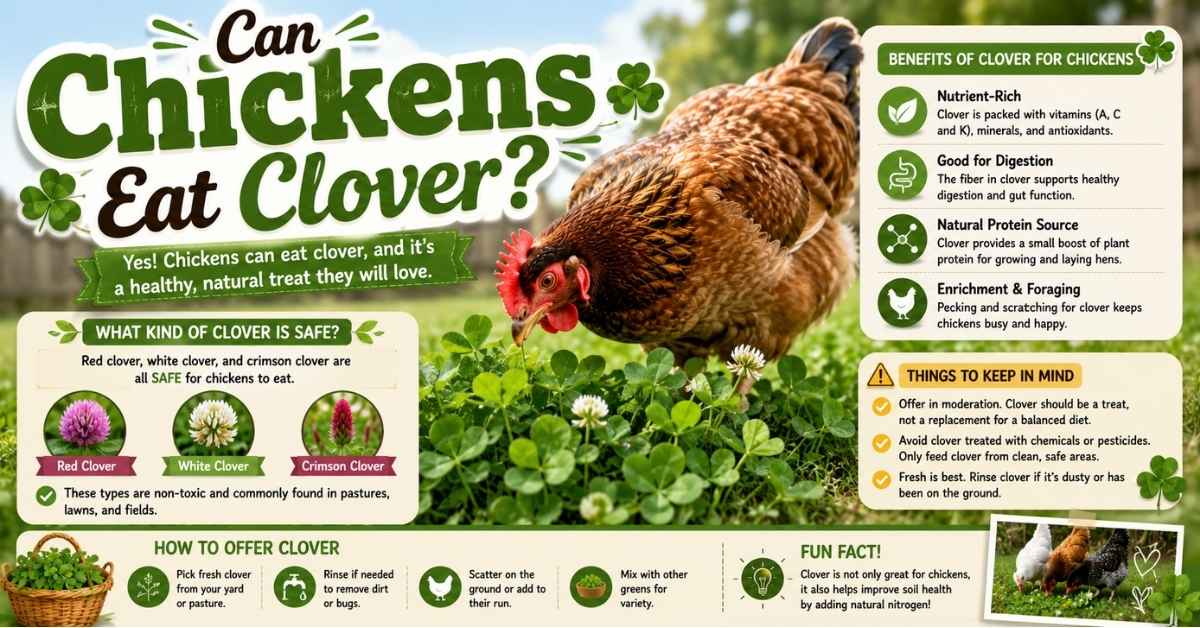
Can chickens eat clover? Yes, chickens can safely eat clover, and many backyard flocks actively seek it out while foraging. Clover is a nutritious forage plant that contains protein, vitamins, minerals, and fiber that can support overall flock health. White clover, red clover, and crimson clover are all generally safe for chickens when grown without herbicides or harmful chemicals. While clover should not replace a complete poultry feed, it can be an excellent supplement to a balanced diet and a valuable addition to a chicken pasture or free-range system.
For many chicken keepers, spotting birds pecking at patches of clover raises an important question: is it actually good for them, or could it cause harm? The good news is that clover has long been recognized as one of the most beneficial forage crops for poultry. It supports natural foraging behavior, provides nutritional value, and helps create healthier outdoor environments for chickens.
Whether you raise a small backyard flock, manage free-range laying hens, or are exploring ways to reduce feed costs through pasture management, understanding how clover fits into a chicken’s diet can help you make better decisions for your birds.
At a Glance: Is Clover Good for Chickens?
| Question | Quick Answer |
|---|---|
| Is clover safe for chickens? | Yes |
| Is clover poisonous to chickens? | No, when untreated and properly grown |
| Can baby chicks eat clover? | Yes, in small chopped pieces |
| Is clover nutritious? | Yes, it contains protein, vitamins, and minerals |
| Can clover replace chicken feed? | No |
| Best clover type for chickens? | White clover and red clover |
| Should you plant clover in a chicken run? | Often yes |
| Main risk? | Herbicides, pesticides, and mold contamination |
Why Chickens Naturally Seek Out Clover
What Makes Clover So Appealing to Chickens
Chickens are natural foragers. In the wild and in free-range environments, they spend much of their day searching for edible plants, seeds, insects, and other food sources. Clover is highly attractive because its tender leaves are easy to peck, digest, and consume.
Unlike many lawn grasses, clover remains relatively soft and nutrient-dense throughout the growing season. Chickens instinctively recognize it as a desirable food source, often choosing it before surrounding vegetation.
How Clover Fits Into a Chicken’s Natural Foraging Behavior
Foraging is more than feeding. It provides mental stimulation, encourages movement, and reduces boredom-related behaviors such as feather pecking.
When chickens forage on clover-rich pasture, they naturally engage in:
- Scratching
- Pecking
- Grazing
- Exploring
- Insect hunting
This combination supports both physical and behavioral health.
What Free-Range Flocks Teach Us About Clover Consumption
Many free-range poultry systems intentionally include white clover, red clover, and other legumes because chickens repeatedly demonstrate a preference for these plants. Experienced poultry keepers often observe birds returning to clover patches throughout the day.
This repeated grazing behavior is one reason clover is frequently included in poultry pasture seed mixes and rotational grazing systems.
Is Clover Safe for Chickens to Eat Every Day?
What Happens When Chickens Regularly Graze Clover
For most healthy chickens, daily access to clover is perfectly acceptable. In fact, pasture-raised flocks often consume clover regularly during the growing season.
Regular grazing may provide:
- Additional protein
- Natural vitamins
- Dietary variety
- Improved forage opportunities
- Increased exercise
Because clover is a legume, it generally contains more nutritional value than common lawn grass.
When Clover Becomes a Problem
While clover itself is not toxic, problems can arise when the plant is contaminated.
Potential risks include:
- Herbicide residue
- Pesticide exposure
- Chemical lawn treatments
- Mold growth
- Rotting vegetation
These factors pose a greater threat than the clover itself.
Signs Your Flock Is Consuming Too Much Fresh Forage
Although chickens rarely overconsume clover to a dangerous degree, excessive forage intake can sometimes lead to:
- Reduced feed consumption
- Loose droppings
- Temporary digestive upset
A quality commercial poultry ration should remain the primary source of nutrition.
Nutritional Value of Clover for Chickens
One reason poultry nutritionists and pasture-management specialists value clover is its impressive nutrient profile.
Protein Content and Why It Matters
Compared to ordinary grass, clover typically provides higher levels of plant protein.
Protein helps support:
- Muscle development
- Feather growth
- Molting recovery
- Egg production
This is particularly valuable for laying hens and growing birds.
Vitamins Found in Clover
Fresh clover contains several beneficial vitamins, including:
- Vitamin A
- Vitamin K
- Various B vitamins
Vitamin A supports vision and immune function, while Vitamin K contributes to normal blood clotting and overall health.
Minerals That Support Egg Production and Overall Health
Clover also provides important minerals such as:
- Calcium
- Magnesium
- Potassium
- Phosphorus
These nutrients contribute to strong bones, eggshell quality, and healthy body function.
How Clover Supports Feather Growth and Molting Birds
Molting places significant nutritional demands on chickens. During this period, birds require additional protein to replace lost feathers.
Because clover contributes supplemental protein and amino acids, it can serve as a useful forage source during seasonal molts.
Can Clover Improve Yolk Color and Egg Quality?
Many chicken keepers notice richer yolk color when hens consume diverse pasture plants, including clover.
While clover alone will not transform egg production, a varied forage diet may contribute to:
- Improved yolk pigmentation
- Better nutrient diversity
- Enhanced overall flock condition
White Clover vs Red Clover vs Crimson Clover
Not all clover species are identical. Understanding the differences can help poultry owners select the best option for their chicken pasture.
White Clover
White clover (Trifolium repens) is one of the most popular choices for poultry pasture.
Benefits include:
- Excellent grazing tolerance
- Fast recovery after feeding
- Long growing season
- High chicken preference
White clover is often considered the best all-around choice for backyard flocks.
Red Clover
Red clover (Trifolium pratense) typically grows taller and contains slightly higher protein levels than white clover.
Advantages include:
- Strong forage production
- Deep root systems
- Excellent soil improvement
- High nutritional value
Many poultry keepers combine red and white clover for balanced pasture performance.
Crimson Clover
Crimson clover is often used as a seasonal cover crop.
Benefits include:
- Attractive flowers
- Soil-building properties
- Good forage production
- Pollinator support
Although chickens eat crimson clover, they generally show stronger preference for white and red varieties.
Which Clover Variety Is Best for Backyard Chickens?
| Clover Type | Protein Level | Grazing Tolerance | Chicken Preference | Best Use |
|---|---|---|---|---|
| White Clover | Moderate | Excellent | Very High | Chicken runs |
| Red Clover | High | Good | High | Poultry pasture |
| Crimson Clover | Moderate | Moderate | Medium | Seasonal forage |
For most backyard flocks, white clover provides the best combination of durability, nutrition, and grazing resistance.
Can Baby Chicks Eat Clover?
The Right Age to Introduce Fresh Greens
Many new poultry owners ask, “Can baby chicks eat clover?” The answer is yes, but timing matters.
Once chicks are a few weeks old and eating chick starter feed consistently, small amounts of fresh greens can be introduced. Clover can be a healthy addition because it provides natural nutrients and encourages early foraging behavior.
However, commercial chick starter should remain the primary food source during the first weeks of life because it contains the precise protein and nutrient balance required for proper growth.
How to Prepare Clover for Young Birds
Young chicks have smaller beaks and digestive systems than adult chickens.
To make clover easier to consume:
- Finely chop leaves and flowers
- Offer only small portions
- Introduce gradually
- Remove uneaten greens after a few hours
This helps prevent waste and ensures chicks continue eating their nutritionally complete feed.
Common Mistakes New Chicken Owners Make
Avoid these common errors:
- Feeding excessive fresh greens too early
- Replacing chick starter with forage
- Offering chemically treated clover
- Feeding moldy or wilted vegetation
Moderation is key when introducing any new food.
How Clover Benefits Laying Hens
Supporting Egg Production Naturally
Laying hens require consistent nutrition to maintain egg production. While clover cannot replace a quality layer feed, it can contribute valuable supplemental nutrients.
The protein, vitamins, and minerals found in clover help support:
- Healthy egg formation
- Feather maintenance
- Immune function
- Daily activity levels
Pasture-raised hens often benefit from access to diverse forage crops, including clover.
Clover’s Role in a Balanced Layer Diet
A balanced layer diet should still include:
- Complete layer feed
- Calcium sources
- Fresh water
- Supplemental forage
Clover works best as part of a broader nutrition strategy rather than as a standalone feed source.
What Clover Can and Cannot Do for Egg Quality
Clover may contribute to:
- Improved nutrient diversity
- Richer yolk color
- Increased foraging opportunities
However, clover alone will not:
- Dramatically increase egg production
- Replace dietary calcium
- Correct nutritional deficiencies
Healthy eggs depend on overall diet quality.
Can Meat Chickens Benefit From Clover?
Growth and Nutrition Considerations
Broiler chickens can also benefit from clover grazing.
Access to forage may provide:
- Additional nutrients
- Environmental enrichment
- Natural exercise
- Improved pasture utilization
Some pasture-based poultry systems intentionally include clover because of its relatively high protein content compared to grass.
Why Forage Should Never Replace a Complete Feed
Even though clover contains beneficial nutrients, broilers grow rapidly and require concentrated nutrition.
Forage should supplement—not replace—a complete broiler ration.
Attempting to raise meat birds primarily on pasture can result in:
- Slower growth
- Reduced weight gain
- Nutritional imbalances
Can Chickens Eat Clover Flowers, Leaves, and Seeds?
Clover Leaves
Leaves are the most commonly consumed portion of the plant.
They contain:
- Protein
- Fiber
- Vitamins
- Minerals
Most chickens eagerly eat fresh clover leaves.
Clover Flowers
Many chickens enjoy pecking at clover flowers.
Flowers provide:
- Additional plant nutrients
- Foraging enrichment
- Variety within the diet
White and red clover blossoms are generally safe for chickens.
Clover Seed Heads
Seed heads can also be consumed occasionally. Chickens naturally peck at seeds while foraging and usually handle them without difficulty.
Which Parts Chickens Prefer Most
Most flocks show the strongest preference for:
- Tender leaves
- Young shoots
- Fresh flowers
- Seed heads
Young growth is typically the most attractive and nutritious.
Risks Most Articles Never Mention
Herbicides and Lawn Treatments
The biggest danger is rarely the clover itself.
Many residential lawns contain:
- Weed killers
- Herbicides
- Chemical fertilizers
- Insecticides
These substances may remain on clover leaves and pose risks to chickens.
Never allow chickens to consume clover from recently treated lawns.
Fertilizer Contamination
Certain fertilizers may contain compounds unsuitable for poultry consumption.
Before allowing chickens to graze, verify that the area is free from potentially harmful treatments.
Moldy or Decaying Clover
Fresh clover is generally safe.
Moldy vegetation is not.
Discard any forage that shows:
- Visible mold
- Slimy texture
- Unpleasant odor
- Advanced decay
Wet Pasture Concerns and Digestive Upset
Heavy consumption of wet forage may occasionally contribute to temporary digestive upset.
Although serious problems are uncommon, it is wise to maintain dietary balance and avoid sudden changes in feeding patterns.
Toxic Plants Often Mistaken for Clover
Some weeds resemble clover but may not be safe.
Always correctly identify plants before allowing unrestricted grazing.
When in doubt, consult local agricultural extension resources or experienced poultry professionals.
LEARN MORE: Can Chickens Eat Slugs?
Clover vs Grass: Which Is Better for Chickens?
Nutritional Differences
One reason many poultry keepers prefer clover is its superior nutrient profile.
As a legume, clover typically contains:
- More protein
- More minerals
- Greater forage value
Compared to common turf grasses.
Foraging Value
Chickens often show greater interest in clover than ordinary grass.
Clover supports:
- Grazing behavior
- Insect attraction
- Nutritional diversity
Making it highly valuable within free-range systems.
Durability Under Heavy Grazing
White clover is especially resilient and often recovers quickly after grazing pressure.
This makes it a practical choice for active chicken runs.
Which One Creates a Healthier Chicken Run?
| Factor | Clover | Grass |
|---|---|---|
| Protein Content | Higher | Lower |
| Chicken Preference | Higher | Moderate |
| Nitrogen Fixation | Yes | No |
| Soil Improvement | Excellent | Moderate |
| Regrowth Potential | Strong | Moderate |
For many poultry owners, a mixed pasture containing both grass and clover provides the best results.
Should You Plant Clover in a Chicken Run?
Benefits of Growing Clover Instead of Bare Dirt
Bare runs frequently become:
- Muddy
- Compacted
- Dusty
Clover helps create a more productive and visually appealing environment.
Benefits include:
- Improved ground cover
- Reduced erosion
- Better moisture retention
- Enhanced forage availability
How Clover Improves Soil Health
Clover belongs to the legume family and naturally fixes nitrogen within the soil.
This process helps:
- Improve soil fertility
- Support surrounding plants
- Encourage healthier pasture growth
Reducing Mud and Erosion Around the Coop
A dense clover stand can significantly reduce mud formation during wet weather.
This improves both flock hygiene and pasture appearance.
Why Many Chicken Owners Switch to Clover-Based Runs
Many experienced poultry keepers favor clover because it combines:
- Nutrition
- Durability
- Soil improvement
- Grazing value
Few pasture plants deliver all four benefits simultaneously.
How Much Clover Should Chickens Eat?
Clover as a Treat vs Daily Forage
Clover is best viewed as a forage supplement rather than a replacement feed.
Healthy chickens can safely graze clover daily as part of a balanced diet.
Balancing Clover With Commercial Feed
Even free-range chickens require access to:
- Complete poultry feed
- Fresh water
- Appropriate minerals
Commercial feed should remain the nutritional foundation.
A Practical Feeding Framework for Backyard Flocks
| Flock Type | Clover Use | Feed Priority |
|---|---|---|
| Chicks | Small amounts | Chick starter |
| Pullets | Moderate forage | Grower feed |
| Laying Hens | Regular forage | Layer feed |
| Broilers | Supplemental forage | Broiler ration |
Can Clover Reduce Chicken Feed Costs?
What Many Chicken Keepers Hope
Many flock owners plant clover hoping to lower feed expenses.
While clover can contribute nutrition, expectations should remain realistic.
What Actually Happens in Real Flocks
In established pasture systems, chickens often obtain:
- Greens
- Seeds
- Insects
- Additional nutrients
From the environment.
This may slightly reduce feed consumption during active growing seasons.
Realistic Expectations for Savings
Clover should not be viewed as a replacement for purchased feed.
Instead, it serves as:
- Nutritional supplementation
- Environmental enrichment
- Pasture improvement
Any feed savings are generally modest rather than dramatic.
Why Clover Works Best as a Supplement
The greatest value of clover comes from improving overall flock health and pasture quality rather than eliminating feed costs.
When combined with proper poultry nutrition, rotational grazing, and sound management practices, clover becomes one of the most useful forage crops available to backyard chicken keepers.
Best Forage Plants to Grow Alongside Clover
Although clover is one of the best forage crops for chickens, combining it with other pasture plants creates a more balanced and resilient grazing system.
A diverse poultry pasture provides:
- Better nutrition
- Extended growing seasons
- Improved soil health
- Greater resistance to drought and overgrazing
Alfalfa
Alfalfa is another protein-rich legume frequently used in poultry forage systems.
Benefits include:
- High protein content
- Deep roots
- Excellent drought tolerance
- Valuable vitamins and minerals
Many chicken keepers use alfalfa alongside clover to increase forage diversity.
Chicory
Chicory develops deep roots and remains productive during hot weather.
Advantages include:
- Drought resistance
- Mineral-rich foliage
- Improved pasture resilience
Chickens often peck at young chicory leaves while foraging.
Plantain
Plantain is a hardy pasture plant that tolerates foot traffic and grazing pressure.
Benefits include:
- Good regrowth ability
- Valuable minerals
- Easy establishment
It works particularly well in mixed poultry pasture systems.
Ryegrass
Ryegrass provides excellent ground cover and complements clover’s nutritional profile.
Benefits include:
- Fast growth
- Strong erosion control
- Reliable forage production
A combination of ryegrass and white clover is common in many grazing systems.
Mixed Poultry Pasture Systems
The most productive chicken pasture often includes multiple plant species rather than a single crop.
| Forage Plant | Nutrition Value | Chicken Preference | Ease of Growth |
|---|---|---|---|
| White Clover | High | Very High | Easy |
| Red Clover | High | High | Easy |
| Alfalfa | Very High | High | Moderate |
| Chicory | Moderate | Moderate | Moderate |
| Plantain | Moderate | Moderate | Easy |
| Ryegrass | Moderate | High | Easy |
A mixed pasture helps maintain forage availability throughout the year while improving flock nutrition.
LEARN MORE: Can Chickens Eat Mango?
Common Clover Feeding Mistakes to Avoid
Assuming All Lawn Clover Is Safe
One of the biggest mistakes is assuming every patch of clover is safe.
Always consider:
- Herbicide applications
- Lawn treatments
- Nearby chemical use
Untreated clover is generally safe. Chemically treated clover may not be.
Letting Chickens Overgraze New Growth
Young clover plants can be damaged quickly by aggressive grazing.
Allow new plantings to establish strong root systems before granting full flock access.
Ignoring Chemical Treatments
Even products labeled safe for lawns may not be appropriate for areas used by poultry.
Always follow product restrictions and waiting periods.
Relying Too Heavily on Forage
Forage should supplement a balanced diet, not replace it.
Commercial poultry feed remains essential because it provides:
- Balanced amino acids
- Energy
- Vitamins
- Minerals
That pasture alone cannot consistently supply.
Confusing Clover With Similar-Looking Weeds
Several weeds resemble clover at first glance.
Proper plant identification helps prevent accidental exposure to potentially harmful species.
How to Tell if Your Chickens Are Thriving on a Clover-Rich Diet
Physical Signs of Good Health
Healthy chickens generally display:
- Bright eyes
- Smooth feathers
- Strong appetite
- Consistent activity
These indicators suggest their overall nutrition is adequate.
Feather Condition
Protein-rich forage such as clover may help support healthy feather growth.
Look for:
- Full feather coverage
- Reduced breakage
- Healthy appearance during molting
Activity Levels
Well-nourished chickens tend to be:
- Alert
- Curious
- Active foragers
A flock that spends time exploring and grazing often benefits from environmental enrichment.
Egg Production Indicators
For laying hens, signs of good nutrition include:
- Consistent laying patterns
- Strong eggshells
- Healthy yolk color
Remember that overall diet quality influences production more than any single forage plant.
Body Condition Checks
Regularly assess body condition by gently feeling the breast area.
Chickens should maintain healthy muscle coverage without becoming excessively thin or overweight.
A Simple Clover Safety Checklist for Chicken Owners
Before Feeding
- Confirm plant identification
- Ensure clover is free from chemicals
- Remove moldy or decaying material
- Introduce gradually if feeding harvested clover
Before Planting
- ✔ Select poultry-friendly clover varieties
- ✔ Choose untreated seed
- ✔ Consider local climate conditions
- ✔ Plan for grazing management
Allowing Free Grazing
- ✔ Inspect the area for toxic plants
- ✔ Check for recent lawn treatments
- ✔ Provide access to complete feed
- ✔ Ensure clean water is available
Seasonal Safety Considerations
- ✔ Monitor pasture conditions during drought
- ✔ Avoid heavily moldy vegetation
- ✔ Rotate grazing areas when possible
- ✔ Reseed damaged pasture sections as needed
Frequently Asked Questions
Can chickens eat white clover?
Yes. White clover is one of the safest and most popular forage plants for chickens. It tolerates grazing well and provides valuable nutrition.
Can chickens eat red clover?
Yes. Red clover is safe for chickens and often contains slightly higher protein levels than white clover.
Can chickens eat crimson clover?
Yes. Crimson clover is generally safe and can be included in poultry pasture systems.
Is clover poisonous to chickens?
No. Clover is not considered poisonous to chickens when it is properly identified and free from pesticides, herbicides, and contamination.
Can baby chicks eat clover?
Yes. Chicks can eat small amounts of finely chopped clover once they are old enough to consume fresh greens safely.
Can chickens eat clover flowers?
Yes. Chickens commonly eat clover flowers along with the leaves and stems.
Can chickens survive on clover alone?
No. Clover should supplement a complete poultry diet rather than replace commercial feed.
Does clover improve egg production?
Clover can contribute beneficial nutrients that support overall flock health, but it will not dramatically increase egg production by itself.
How much clover can chickens eat daily?
Chickens can graze clover freely as part of a balanced diet. Commercial feed should still remain their primary nutrition source.
What is the best clover variety for chickens?
White clover is often considered the best choice because it combines strong grazing tolerance, good nutrition, and rapid regrowth.
Can chickens eat clover that has been sprayed?
No. Avoid allowing chickens to consume clover that has been treated with herbicides, pesticides, or other lawn chemicals.
Will chickens destroy a clover patch?
They can if stocking density is too high. Rotational grazing and allowing recovery periods help maintain healthy clover stands.
Final Verdict: Should Chicken Owners Encourage Clover?
When Clover Is an Excellent Addition to a Chicken Diet
Clover is one of the most beneficial forage plants available for backyard chickens. It provides supplemental protein, vitamins, minerals, and natural grazing opportunities while helping improve pasture quality.
Whether you raise free-range layers, broilers, or a small backyard flock, clover can be a valuable part of a healthy outdoor environment.
Situations Where Caution Is Needed
The primary concerns involve contamination rather than the plant itself.
Avoid:
- Herbicide-treated clover
- Pesticide-treated areas
- Moldy forage
- Overreliance on pasture as a feed replacement
The Best Way to Use Clover for a Healthier, More Productive Flock
The most effective approach is to treat clover as a high-quality forage supplement within a balanced poultry management program.
When combined with complete feed, clean water, proper housing, and good pasture management, clover can help support healthier chickens, more productive laying hens, improved foraging behavior, and a more sustainable backyard poultry system.
For most chicken keepers, the answer is simple: yes, chickens can eat clover, and encouraging healthy clover growth is often one of the best improvements you can make to a chicken pasture.