
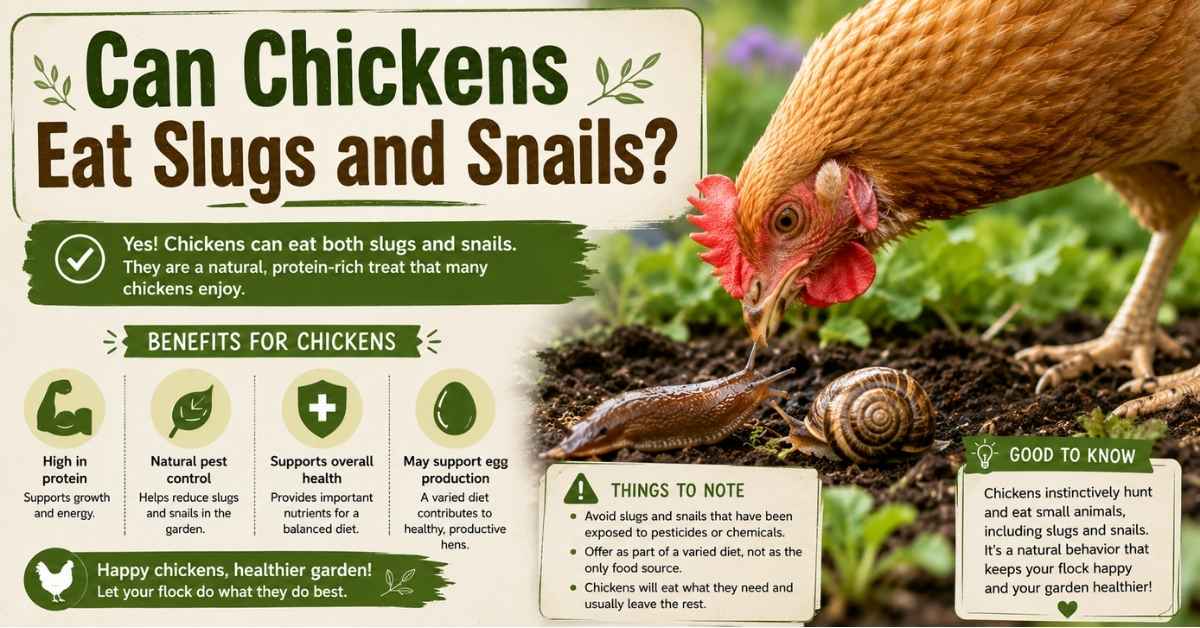
Can chickens eat slugs and snails? Yes, chickens naturally eat slugs and snails during free-ranging, and most healthy adult birds can consume them without immediate problems. In fact, many backyard chickens actively hunt these slow-moving garden pests after rain or during damp weather. However, while occasional slug and snail eating is usually harmless, there are still important concerns involving parasites, slug bait poisoning, contaminated garden environments, and excessive exposure in wet conditions.
If you recently watched your hens swallow garden slugs or crack open snail shells, you are not alone. Many flock owners search this topic because they suddenly worry about:
- worms
- parasite transmission
- poisoning
- choking hazards
- long-term flock health
The good news is that chickens are natural omnivores with strong foraging instincts. They regularly eat insects, worms, beetles, larvae, slugs, and snails in outdoor environments. The key is understanding when this behavior is normal and when environmental risks make it dangerous.
Quick Answer
| Question | Short Answer |
|---|---|
| Can chickens eat slugs and snails? | Yes, they naturally forage for them. |
| Are slugs poisonous to chickens? | Usually no, but poisoned slugs can be dangerous. |
| Can chickens digest snail shells? | Small shells are usually manageable. |
| Can slugs and snails carry parasites? | Yes, some may carry parasites or worms. |
| What is the biggest risk? | Slug bait poisoning and parasite exposure. |
Why Chickens Love Eating Slugs and Snails
Free-range chickens instinctively hunt moving prey. Slugs and snails are easy targets because they:
- move slowly
- contain moisture
- provide protein
- appear frequently in damp gardens
After rainfall, many backyard flock owners notice chickens aggressively searching for slugs in:
- wet grass
- muddy areas
- raised garden beds
- compost piles
- shaded corners
This behavior is completely natural. Chickens evolved to spend much of their day scratching and hunting for small creatures hidden in soil and vegetation.
Why Rainy Weather Increases Slug Hunting
Rain creates ideal conditions for gastropods like slugs and snails because moisture prevents dehydration. Damp weather also softens soil and encourages more visible movement.
Chickens quickly learn that rainy mornings provide easy access to protein-rich prey.
Many experienced poultry keepers notice that hens become especially active hunters during:
- spring rain
- humid weather
- cool mornings
- wet autumn days
Are Slugs and Snails Dangerous for Chickens?
In most cases, occasional slug or snail consumption is not dangerous for healthy adult chickens. However, the real risk depends on:
- environmental conditions
- parasite exposure
- slug bait contamination
- flock health
- frequency of consumption
The slug or snail itself is not usually the primary problem. Instead, the danger often comes from what the animal may have encountered before the chicken ate it.
Situations Where Slugs and Snails Are Usually Safe
Most backyard chickens tolerate:
- occasional garden slugs
- small snails
- natural outdoor foraging
without major health problems.
Healthy free-range flocks living in clean outdoor environments often experience no noticeable issues at all.
Situations That Increase Risk
Problems become more likely when:
- slugs were exposed to chemical bait
- chickens forage in wet muddy runs
- parasite levels are high
- drainage is poor
- overcrowding exists
- snails are extremely abundant
This is why some flock owners never experience problems while others eventually deal with parasite-related illness.
The Biggest Hidden Danger: Poisoned Slugs and Snails
One of the most overlooked risks involves secondary poisoning.
Many garden owners use slug pellets to control pests. If a chicken eats a poisoned slug or snail, the chemicals can also affect the bird.
Metaldehyde Poisoning
Some slug bait products contain metaldehyde, which is highly toxic to:
- chickens
- ducks
- dogs
- cats
- wildlife
Even small exposure can cause:
- tremors
- muscle twitching
- seizures
- breathing problems
- weakness
- death in severe cases
Iron Phosphate Slug Pellets
Iron phosphate products are sometimes considered safer alternatives, but excessive exposure can still create digestive stress in poultry.
Symptoms of Slug Bait Poisoning in Chickens
Watch for:
- sudden lethargy
- loss of coordination
- tremors
- diarrhea
- drooling
- unusual breathing
- appetite loss
If symptoms appear after chickens free-range in treated areas, contact a poultry veterinarian immediately.
Can Chickens Get Parasites From Slugs and Snails?
Yes, slugs and snails can sometimes act as intermediate hosts for parasites.
This is one of the biggest reasons chicken keepers worry after seeing their hens eat garden pests.
How Parasite Transmission Works
Certain parasites use gastropods during part of their lifecycle before entering another host animal.
When chickens eat infected slugs or snails, they may accidentally consume parasite larvae as well.
Common Parasite Concerns
Gapeworm
Gapeworm is one of the most discussed parasite risks in backyard poultry communities.
Possible symptoms include:
- gasping
- coughing
- wheezing
- stretching the neck while breathing
Roundworms and Tapeworms
Slugs and snails may also contribute to exposure involving:
- roundworms
- tapeworms
- intestinal parasites
How Common Is This Problem Really?
Many chickens eat slugs and snails for years without becoming visibly sick. The overall risk depends heavily on:
- climate
- hygiene
- drainage
- stocking density
- flock immunity
- environmental moisture
Wet environments dramatically increase parasite survival rates.
Can Chickens Digest Snail Shells?
Yes, chickens can usually digest small snail shells without serious problems.
The chicken digestive system is surprisingly strong. Inside the gizzard, food gets ground using:
- grit
- muscular contractions
- digestive acids
Small shells are often crushed during digestion.
When Snail Shells Become Risky
Very large shells may:
- create choking hazards
- cause digestive blockage in chicks
- irritate smaller birds
Most experienced keepers avoid allowing tiny chicks to consume large snails.
Are Baby Chicks More Vulnerable?
Yes, baby chicks are more sensitive than adult chickens.
Young birds have:
- weaker immune systems
- smaller digestive systems
- lower parasite resistance
Large slugs or hard shells can become problematic for small chicks.
Many flock owners avoid intentionally feeding slugs or snails to chicks until they are older and stronger.
What Happens After Chickens Eat Slugs or Snails?
In many situations, nothing unusual happens at all. Chickens simply digest the prey and continue normal behavior.
Healthy hens often:
- continue scratching
- maintain appetite
- keep laying eggs
- forage normally
Warning Signs To Watch For
Monitor your flock carefully if you notice:
- wheezing
- coughing
- diarrhea
- weakness
- pale combs
- reduced appetite
- weight loss
- tremors
These symptoms do not automatically mean slugs or snails caused the issue, but they may signal:
- poisoning
- parasites
- bacterial illness
- digestive stress
Do Slugs and Snails Provide Nutritional Benefits?
Slugs and snails contain:
- protein
- moisture
- trace minerals
Natural foraging also supports:
- behavioral enrichment
- mental stimulation
- exercise
- instinctive hunting activity
However, slugs and snails should never replace balanced poultry feed.
Chickens still require:
- complete layer feed
- calcium
- vitamins
- proper nutrition
Natural treats work best as occasional supplements rather than dietary staples.
Can Chickens Help Control Slugs and Snails Naturally?
Yes, chickens can reduce slug and snail populations in gardens.
Many homesteaders intentionally use chickens as part of:
- organic gardening
- permaculture systems
- natural pest management
- sustainable farming
Free-range hens often patrol:
- vegetable beds
- damp pathways
- compost areas
- shaded corners
However, chickens rarely eliminate slug infestations completely because gastropods reproduce rapidly in wet conditions.
Best Times for Natural Pest Hunting
Chickens usually find the most slugs and snails:
- early morning
- after rainfall
- during humid weather
- in cool shaded environments
Safe Gardening Practices for Chicken Owners
Creating a safer outdoor environment matters more than preventing every slug encounter.
Chicken-Safe Slug Control Methods
Copper Barriers
Copper naturally discourages slugs without toxic chemicals.
Beer Traps
Beer traps attract and trap slugs safely.
Hand Removal
Manual removal works well in smaller gardens.
Dry Mulching
Reducing moisture lowers slug populations naturally.
Gardening Mistakes That Increase Risk
Avoid:
- toxic slug pellets
- standing water
- wet muddy runs
- overcrowded ranging areas
- poor drainage
LEARN MORE: Can Chickens Eat Slugs?
Seasonal Risks Most Flock Owners Ignore
Slug and snail activity increases dramatically during:
- spring rain
- autumn moisture
- humid climates
- cool wet weather
This means parasite exposure may also rise seasonally.
Why Rainy Weather Changes Everything
After rain:
- gastropods become more active
- chickens forage more aggressively
- parasites survive longer in damp soil
Backyard flock owners in wet climates should pay extra attention to:
- coop drainage
- muddy ground
- standing water
- excessive shade
Common Myths About Chickens Eating Slugs and Snails
“Slugs Are Poisonous to Chickens”
Most natural garden slugs are not directly poisonous.
“Snail Shells Always Harm Chickens”
Small shells are usually crushed and digested safely.
“Natural Foraging Means Zero Risk”
Even natural behavior can carry some risk in contaminated environments.
“One Slug Will Kill a Chicken”
Healthy adult chickens usually tolerate occasional slug consumption well.
“Slug Pellets Become Harmless Once Dry”
Many slug baits remain dangerous even after drying.
What Experienced Chicken Keepers Usually Do
Most experienced flock owners do not panic when chickens eat slugs or snails occasionally.
Instead, they focus on:
- reducing environmental risks
- avoiding toxic garden chemicals
- improving drainage
- monitoring flock health
- maintaining clean ranging areas
Experienced poultry keepers understand that completely preventing natural foraging is unrealistic in outdoor systems.
The smarter strategy is managing exposure safely.
Practical Slug and Snail Safety Checklist
| Situation | Risk Level | Recommended Action |
|---|---|---|
| Chicken ate one garden slug | Low | Monitor normally |
| Chickens eating snails daily | Moderate | Reduce exposure |
| Poisoned slug exposure | High | Remove access immediately |
| Wet muddy free-range area | Moderate-High | Improve drainage |
| Neurological symptoms appear | Emergency | Contact veterinarian |
Signs Your Backyard Environment May Increase Risk
Certain outdoor conditions attract larger slug and snail populations.
Higher-Risk Conditions Include:
- standing water
- wet compost
- overgrown vegetation
- damp shaded soil
- muddy runs
- crowded flocks
- poor drainage
Improving outdoor sanitation often reduces both parasite pressure and slug density.
How To Encourage Safer Free-Range Foraging
You do not need to eliminate natural foraging completely.
Instead:
- rotate free-range areas
- improve drainage
- reduce standing moisture
- remove toxic chemicals
- maintain clean bedding
- encourage diverse insect hunting
Balanced ecosystems usually create healthier flocks over time.
Frequently Asked Questions
Can chickens die from eating poisoned slugs or snails?
Yes, slug bait poisoning can become life-threatening if toxic chemicals like metaldehyde are involved.
Are slugs or snails worse for chickens?
Both may carry parasites, although environmental conditions matter more than the specific pest.
Can chickens choke on snail shells?
Small shells are usually manageable, but large shells may create choking concerns for chicks.
Should I stop chickens from eating slugs completely?
Not necessarily. Occasional slug eating is natural for free-range chickens in healthy outdoor environments.
Do slugs and snails affect egg safety?
Normal slug consumption rarely affects eggs directly, although severe illness may impact egg production temporarily.
Can chickens naturally control garden slugs?
Yes, chickens can reduce slug populations naturally as part of integrated pest management systems.
Final Thoughts
Can chickens eat slugs and snails? Yes, they can, and many free-range chickens naturally hunt them during outdoor foraging. In most situations, occasional slug and snail consumption is harmless for healthy adult birds. The real dangers come from parasites, poisoned slug bait, damp unsanitary environments, and unmanaged outdoor conditions.
Instead of panicking every time your chickens catch a slug or crush a snail shell, focus on creating a cleaner and safer ranging environment. Proper drainage, chemical-free gardening, regular flock monitoring, and smart outdoor management matter far more than occasional natural foraging behavior. When handled responsibly, chickens can safely enjoy outdoor hunting while also helping control common garden pests naturally.