
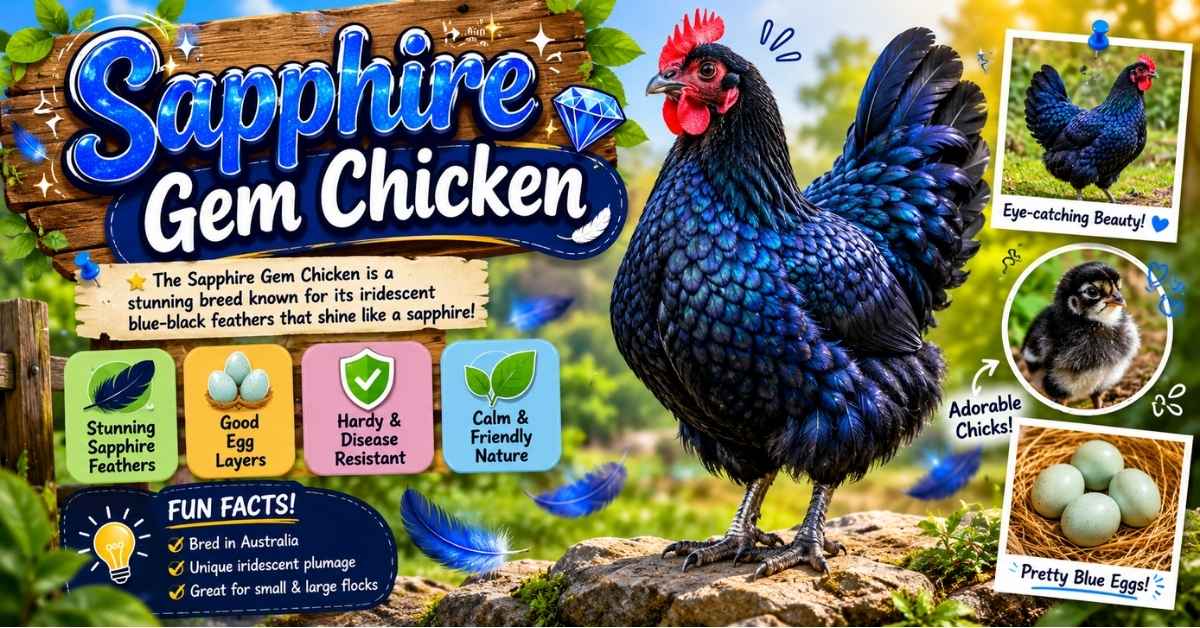
Sapphire Gem chicken owners often describe this breed as one of the best choices for backyard flocks because it combines excellent egg production, friendly temperament, cold hardiness, and beautiful blue-gray plumage. If you’re wondering whether a Sapphire Gem chicken is worth raising, the short answer is yes. These hybrid laying hens are productive, beginner-friendly, adaptable to various climates, and capable of producing around 250–300 brown eggs per year under ideal conditions.
However, there is much more to this breed than egg numbers. Understanding temperament, flock behavior, housing needs, long-term productivity, and ownership expectations can help you decide whether Sapphire Gems are the right fit for your homestead, family flock, or small farm.
Quick Answer: Is the Sapphire Gem Chicken Worth Raising?
For most backyard chicken keepers, the answer is yes.
Sapphire Gems are especially well-suited for:
- First-time chicken owners
- Families with children
- Homesteaders focused on egg production
- Cold-climate poultry keepers
- Mixed backyard flocks
They may not be the best choice for:
- Exhibition breeders
- Heritage breed enthusiasts
- Owners seeking highly broody hens
Sapphire Gem Chicken Breed Snapshot
| Trait | Sapphire Gem Chicken |
|---|---|
| Breed Type | Hybrid Layer |
| Egg Color | Brown |
| Annual Egg Production | 250–300 Eggs |
| Temperament | Friendly and Calm |
| Weight | 5–7 Pounds |
| Lifespan | 5–8 Years |
| Broodiness | Low |
| Cold Hardiness | Excellent |
| Heat Tolerance | Good |
| Beginner Friendly | Excellent |
Before You Buy Sapphire Gems: What Most Breed Guides Don’t Tell You
Many articles simply repeat hatchery descriptions.
What prospective owners really need is practical insight.
Sapphire Gems Are Hybrid Chickens
Unlike heritage breeds, Sapphire Gems are intentionally developed hybrids.
This means:
- Excellent productivity
- Strong hybrid vigor
- Consistent laying performance
However, they do not breed true like traditional heritage breeds.
Realistic Expectations Matter
Many advertisements emphasize maximum egg production.
In reality, factors such as:
- Feed quality
- Daylight hours
- Climate
- Stress levels
- Predator pressure
all influence laying performance.
A well-managed flock generally achieves the best results.
The Origins of the Sapphire Gem Chicken
The Sapphire Gem is a relatively modern hybrid developed to combine attractive appearance with strong egg-laying ability.
Parent Breed Influence
The exact breeding combinations may vary among hatcheries, but Sapphire Gems often trace their genetics to blue-feathered production breeds and high-performing laying lines.
Why They’re Called Sapphire Gems
The breed is named for its distinctive:
- Blue-gray feathers
- Slate-colored plumage
- Attractive appearance
Their unique coloring makes them stand out in backyard flocks.
Are Sapphire Gems an Official Breed?
No.
The Sapphire Gem chicken is generally considered a hybrid rather than a standardized breed recognized by poultry associations.
This distinction matters for breeders but usually has little impact on backyard flock owners.
What Sapphire Gem Chickens Look Like at Different Ages
Day-Old Chicks
Sapphire Gem chicks often display:
- Gray tones
- Blue coloration
- Dark feather markings
Color patterns become more apparent as they mature.
Juvenile Birds
During adolescence, feather colors deepen.
Owners begin noticing:
- Slate blue plumage
- Gray highlights
- Distinctive feather patterns
Adult Hens
Adult hens typically feature:
- Blue-gray feathers
- Soft appearance
- Compact body structure
- Bright combs
Their unique coloration contributes significantly to their popularity.
Adult Roosters
Roosters often display:
- Darker coloration
- More pronounced feather contrast
- Larger combs
- Stronger body structure
Sapphire Gem Chicken Temperament: What They’re Really Like
Temperament is one of the breed’s strongest selling points.
Friendly Around Humans
Many owners describe Sapphire Gems as:
- Curious
- Calm
- Easy to handle
This makes them particularly appealing to beginners.
Interactions With Children
Because of their generally docile nature, they often perform well in family environments.
Young chicken keepers frequently find them approachable.
Mixed-Flock Behavior
Sapphire Gems usually integrate well with:
- Rhode Island Reds
- Barred Rocks
- Easter Eggers
- Plymouth Rocks
They rarely dominate the flock aggressively.
Pecking-Order Tendencies
Like all chickens, Sapphire Gems establish social hierarchies.
However, they are not commonly known as overly aggressive birds.
Egg Production: What You Can Realistically Expect
Egg production is one of the primary reasons people choose this breed.
Annual Egg Production
Most Sapphire Gem hens produce approximately:
250–300 eggs annually
under favorable conditions.
Weekly Egg Production
Many hens average:
- 4–6 eggs per week
during peak laying periods.
When Do Sapphire Gems Start Laying?
Most pullets begin laying between:
18–24 weeks of age
depending on management and genetics.
Peak Production Years
The most productive years are typically:
- Year 1
- Year 2
Egg production gradually declines afterward.
Factors That Affect Egg Output
Several variables influence production:
- Nutrition
- Lighting
- Weather
- Stress
- Parasite pressure
Proper flock management significantly improves consistency.
Sapphire Gem Egg Characteristics
Egg Color
Sapphire Gem chickens lay:
Brown eggs
This surprises some owners who assume blue-gray chickens produce blue eggs.
Egg Size
Most eggs fall into the:
- Medium
- Large
categories.
Shell Quality
With proper calcium intake, shell quality is generally strong.
Winter Egg Production
Compared with many breeds, Sapphire Gems maintain respectable production during colder months.
This contributes to their popularity in northern climates.
First-Year Ownership Timeline
Weeks 1–8
The brooder stage focuses on:
- Warmth
- Nutrition
- Growth
Weeks 8–16
Rapid feather development occurs.
Birds become increasingly independent.
Weeks 16–24
Pullets approach sexual maturity.
Owners often begin watching for nesting behavior.
First Eggs
Expect smaller eggs initially.
Egg size increases over time.
The First Winter
Many owners are pleasantly surprised by winter laying performance compared to less productive breeds.
Raising Sapphire Gem Chicks Successfully
Brooder Setup
Provide:
- Appropriate heat source
- Dry bedding
- Clean water
- Starter feed
Temperature Management
Young chicks require gradually decreasing temperatures as they grow.
Growth Milestones
Healthy chicks should display:
- Consistent feather development
- Steady weight gain
- Active behavior
Common Health Concerns
Monitor for:
- Pasty vent
- Respiratory symptoms
- Weakness
- Poor growth
Early intervention improves outcomes.
Feeding Sapphire Gem Chickens for Maximum Health and Production
Chick Starter Feed
Young birds require protein-rich starter feed to support development.
Layer Feed
Once laying begins, quality layer feed becomes essential.
Calcium Supplementation
Additional calcium supports:
- Eggshell strength
- Long-term laying health
Water Requirements
Fresh water should always be available.
Hydration directly affects productivity.
Feed Mistakes That Reduce Egg Production
Common errors include:
- Too many treats
- Poor-quality feed
- Inconsistent feeding schedules
- Nutritional deficiencies
Maintaining a balanced poultry nutrition program is critical.
LEARN MORE: Can Chickens Eat Pistachios?
Housing and Coop Requirements
One reason the Sapphire Gem chicken remains popular among backyard chicken keepers is its adaptability. These birds do not require unusual housing conditions, but proper coop design plays a major role in health, egg production, and flock behavior.
Recommended Coop Space
As a general guideline:
- 4 square feet per bird inside the coop
- 8–10 square feet per bird in the run
More space reduces:
- Pecking-order conflicts
- Stress
- Feather picking
- Disease transmission
Roosting Preferences
Sapphire Gems enjoy elevated roosts similar to most laying breeds.
Provide:
- Smooth wooden roost bars
- Adequate spacing between birds
- Easy access for heavier hens
Nesting Box Requirements
A good rule is:
- One nesting box for every 3–4 hens
Because Sapphire Gems are productive layers, clean nesting boxes help maintain egg quality and encourage consistent laying.
Ventilation Matters
Many flock owners focus on warmth and forget airflow.
Proper ventilation:
- Removes moisture
- Reduces ammonia buildup
- Helps prevent respiratory issues
Good airflow is especially important during winter.
Predator Protection
Even calm, productive hens need protection from:
- Foxes
- Raccoons
- Hawks
- Stray dogs
- Weasels
Secure housing remains one of the best investments for long-term flock success.
Free-Ranging vs Confinement: Which Works Better?
Natural Foraging Ability
Sapphire Gems generally enjoy free-ranging.
When allowed to forage, they actively search for:
- Seeds
- Insects
- Grasses
- Small vegetation
This behavior supports enrichment and dietary variety.
Predator Awareness
While reasonably alert, Sapphire Gems are not among the most predator-savvy breeds.
Owners in high-predator areas should supervise free-ranging whenever possible.
Garden Impact
Like most chickens, Sapphire Gems may scratch:
- Flower beds
- Vegetable gardens
- Mulched areas
Protecting valuable plants is often necessary.
Suburban Backyard Management
Their calm temperament makes them suitable for many suburban settings, particularly when local regulations permit backyard poultry.
How Sapphire Gems Perform in Different Climates
Cold Hardiness
One of the breed’s strongest traits is its ability to handle cold weather.
Benefits include:
- Reliable winter laying
- Good feather coverage
- Strong adaptation to northern climates
Many owners report that Sapphire Gems continue producing eggs when other breeds slow down significantly.
Heat Tolerance
Although known for cold hardiness, Sapphire Gems can also adapt to warmer regions.
During summer, provide:
- Shade
- Fresh water
- Adequate airflow
Rain and Humidity
Like most chickens, prolonged damp conditions can increase health challenges.
Dry bedding and proper coop management remain essential.
Molting, Seasonal Changes, and Egg Production
What Molting Looks Like
Molting occurs when chickens shed old feathers and grow new ones.
Owners often notice:
- Feather loss
- Reduced egg production
- Temporary changes in appearance
How Long Molting Lasts
Most molts last several weeks, though duration varies.
Nutrition During Molt
Birds require additional nutrients while growing feathers.
Many keepers increase dietary protein during this period.
When Egg Production Returns
Once molting ends, hens typically resume laying.
Patience is important because temporary production declines are completely normal.
Common Health Issues and Preventive Care
One advantage of hybrid chickens is generally strong vigor.
However, no breed is immune to health challenges.
Parasite Management
Monitor for:
- Mites
- Lice
- Internal parasites
Routine flock inspections help prevent serious infestations.
Respiratory Concerns
Warning signs include:
- Sneezing
- Wheezing
- Nasal discharge
Prompt attention often prevents larger problems.
Obesity Risks
Because Sapphire Gems are productive layers, excessive treats can lead to unnecessary weight gain.
Balanced feeding remains important.
Signs You Should Never Ignore
Contact a poultry veterinarian if you notice:
- Severe lethargy
- Significant weight loss
- Refusal to eat
- Persistent respiratory symptoms
Preventive care is almost always easier than treatment.
Introducing Sapphire Gems Into an Existing Flock
Best Age for Introduction
Young birds often integrate more successfully when introduced carefully.
Reducing Pecking-Order Conflicts
Helpful strategies include:
- Neutral territory introductions
- Gradual visual contact
- Multiple feeding stations
Common Mistakes
Avoid:
- Immediate full integration
- Overcrowding
- Insufficient supervision
Successful introductions reduce stress for both new and existing birds.
Sapphire Gem Roosters: What Owners Should Know
Most online articles focus almost entirely on hens.
However, roosters deserve attention too.
Appearance
Sapphire Gem roosters often display:
- Darker plumage
- More pronounced feather patterns
- Larger combs and wattles
Temperament
Temperament varies by individual bird, but many owners report relatively manageable behavior.
Protective Instincts
Roosters frequently:
- Alert hens to danger
- Watch for predators
- Maintain flock order
Noise Levels
Like all roosters, crowing should be expected.
Urban and suburban owners should check local regulations before keeping roosters.
Sapphire Gem Chicken Pros and Cons
Advantages
- ✔ Excellent egg production
- ✔ Friendly temperament
- ✔ Cold-hardy performance
- ✔ Beautiful blue-gray plumage
- ✔ Beginner-friendly management
- ✔ Strong hybrid vigor
- ✔ Good flock compatibility
Disadvantages
- ✘ Hybrid genetics do not breed true
- ✘ Limited broodiness
- ✘ Availability varies by hatchery
- ✘ Less suitable for exhibition breeding
Sapphire Gem vs Other Popular Chicken Breeds
Sapphire Gem vs Rhode Island Red
| Trait | Sapphire Gem | Rhode Island Red |
|---|---|---|
| Egg Production | Excellent | Excellent |
| Temperament | Calm | More assertive |
| Appearance | Blue-gray | Deep red |
| Beginner Friendly | Excellent | Very Good |
The Sapphire Gem vs Easter Egger
| Trait | Sapphire Gem | Easter Egger |
|---|---|---|
| Egg Color | Brown | Blue/Green |
| Consistency | High | Variable |
| Appearance | Uniform | Diverse |
Sapphire Gem vs Barred Rock
Barred Rocks offer:
- Heritage genetics
- Excellent temperament
Sapphire Gems often provide:
- Higher egg production
- More modern hybrid performance
Sapphire Gem vs Blue Plymouth Rock
These breeds share visual similarities, but Sapphire Gems are generally selected more heavily for laying productivity.
Sapphire Gem vs Sapphire Splash
Many owners compare these two because of their names and coloration.
The best choice depends on your flock goals and hatchery availability.
How Much Does It Cost to Raise Sapphire Gem Chickens?
Chick Costs
Prices vary by region and hatchery, but Sapphire Gem chicks often cost more than common production breeds.
Pullets vs Chicks
Started pullets cost more upfront but eliminate brooding requirements.
Feed Costs
Feed remains the largest long-term expense.
Annual costs depend on:
- Feed quality
- Flock size
- Local pricing
Housing Expenses
Initial investments may include:
- Coop
- Run
- Feeders
- Waterers
- Nesting boxes
Cost Per Egg
Highly productive hens often provide excellent value over time because of their strong laying performance.
Are Sapphire Gem Chickens Good for Beginners?
For many first-time chicken keepers, Sapphire Gems are among the best choices available.
Why Beginners Like Them
They combine:
- Reliable laying
- Calm personalities
- Easy management
- Climate adaptability
Common Beginner Mistakes
New owners often:
- Overfeed treats
- Underestimate coop space needs
- Neglect predator protection
When Another Breed Might Be Better
If your primary goal is:
- Exhibition showing
- Heritage breeding
- Natural brooding
another breed may be more appropriate.
LEARN MORE: Can Chickens Eat Pistachios Shells?
Real-Life Ownership Scenarios
Best Choice for Egg-Focused Flocks
Sapphire Gems excel when egg production is a priority.
Best Choice for Families
Their generally calm temperament makes them appealing around children.
Best Choice for Cold Climates
Winter performance is one of the breed’s strongest advantages.
Situations Where Sapphire Gems May Not Be Ideal
Owners seeking:
- Rare heritage breeds
- Strong broody instincts
- Exhibition birds
may prefer alternatives.
Is the Sapphire Gem Chicken Right for You?
Choose Sapphire Gems If You Want:
- High egg production
- Friendly hens
- Attractive birds
- Reliable winter laying
- Easy flock management
Consider Another Breed If You Want:
- Heritage breeding projects
- Broody hens
- Exhibition-quality standards
Quick Decision Framework
| Category | Rating |
|---|---|
| Egg Production | 10/10 |
| Beginner Friendly | 10/10 |
| Temperament | 9/10 |
| Cold Hardiness | 9/10 |
| Free-Range Ability | 8/10 |
| Broodiness | 3/10 |
Sapphire Gem Chicken Quick Reference Guide
Egg Production Summary
Approximately 250–300 eggs annually
Egg Color
Brown
Temperament
Friendly, calm, and beginner-friendly
Lifespan
Typically 5–8 years
Overall Suitability
Excellent for:
- Backyard flocks
- Families
- Homesteaders
- First-time poultry keepers
Frequently Asked Questions
How many eggs do Sapphire Gem chickens lay?
Most hens lay approximately 250–300 eggs per year under favorable conditions.
What color eggs do Sapphire Gems lay?
They lay brown eggs.
Are Sapphire Gem chickens friendly?
Yes. They are generally considered calm and easy to manage.
Are Sapphire Gems noisy?
Hens are typically moderate in noise levels, while roosters crow normally.
Are Sapphire Gems cold hardy?
Yes. Cold-weather performance is one of their strongest traits.
Do Sapphire Gems go broody?
They are not known for strong broodiness.
How long do Sapphire Gem chickens live?
Most live between 5 and 8 years with proper care.
Are Sapphire Gem chickens hybrid birds?
Yes. Sapphire Gems are hybrid chickens developed for productivity and performance.
Are Sapphire Gems good free-range chickens?
Yes. They enjoy foraging and adapt well to supervised free-ranging.
How much do Sapphire Gem chicks cost?
Pricing varies by hatchery, location, and demand.
Can Sapphire Gems live with other breeds?
Yes. They generally integrate well into mixed flocks.
Are Sapphire Gems good for first-time chicken owners?
Absolutely. Their temperament and productivity make them one of the most beginner-friendly chicken breeds available.
Final Verdict: Should You Raise Sapphire Gem Chickens?
The Sapphire Gem chicken has earned its growing popularity for good reason. It combines high egg production, attractive blue-gray plumage, calm temperament, cold hardiness, and easy management in a single package. Few breeds balance productivity and personality as effectively.
For backyard chicken keepers focused on reliable brown eggs, family-friendly birds, and long-term flock performance, Sapphire Gems are often an outstanding choice. While they may not satisfy breeders seeking heritage genetics or exhibition standards, they excel where most homesteaders and backyard poultry owners need them most: consistent egg production, manageable care requirements, and enjoyable day-to-day ownership.
If your goal is building a productive, beginner-friendly flock that performs well throughout the year, Sapphire Gems deserve a place near the top of your shortlist.