
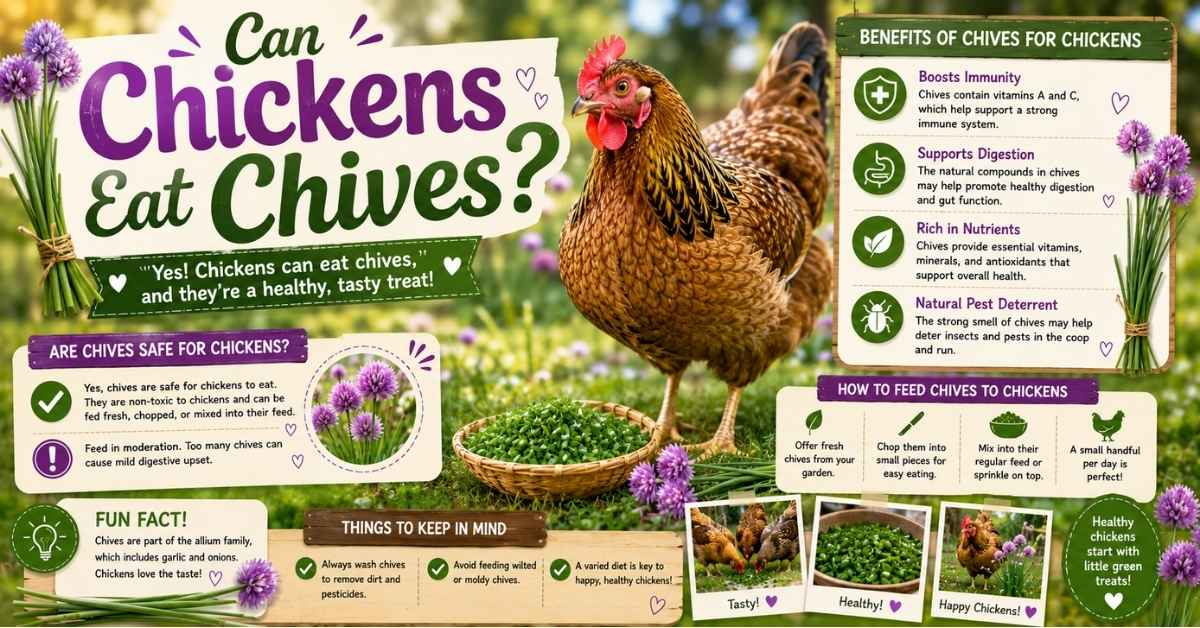
Can chickens eat chives? Yes, chickens can eat small amounts of chives occasionally, but they are not the best herb for regular feeding. Chives belong to the allium family, which also includes onions, garlic, leeks, and scallions. While a few bites are unlikely to harm a healthy backyard flock, excessive consumption may expose chickens to sulfur-containing compounds that can affect red blood cells and potentially lead to health problems over time. For most poultry keepers, chives should be treated as an occasional garden nibble rather than a routine chicken treat.
If you’ve discovered your chickens pecking at chives in the garden, don’t panic. Most cases of accidental ingestion involve very small amounts and rarely cause immediate issues. However, understanding the potential risks, benefits, and safer alternatives can help you make informed decisions about your flock’s diet.
Quick Answer: Can Chickens Eat Chives?
Yes, chickens can eat chives in small quantities, but they should not be fed regularly.
Safety Overview
| Factor | Verdict |
|---|---|
| Fresh chives | Safe in small amounts |
| Dried chives | Occasional use only |
| Cooked chives | Small amounts acceptable |
| Chive flowers | Generally low risk |
| Garlic chives | Use caution |
| Baby chicks | Not recommended |
| Laying hens | Limited quantities |
| Daily feeding | Not recommended |
| Occasional nibbling | Usually acceptable |
Key Takeaway
The biggest concern isn’t a chicken eating a single chive leaf. The concern is repeated exposure to allium plants over time. Chickens thrive on balanced poultry feed, and herbs should remain a small supplement rather than a major dietary component.
Why Chicken Owners Worry About Chives
Backyard poultry owners often encounter conflicting information online.
One article says:
Chives are perfectly safe for chickens.
Another claims:
Chives are toxic and should never be fed.
It’s no surprise that flock owners become confused.
The reality lies somewhere between these extremes. Chives contain beneficial nutrients, but they also belong to the same botanical family as onions and garlic. This relationship raises legitimate questions about allium toxicity, especially when consumed in large amounts.
The Confusion Surrounding Chives and the Allium Family
Chives are members of the Allium genus, which includes:
- Onions
- Garlic
- Leeks
- Shallots
- Scallions
- Garlic chives
Many allium plants contain compounds capable of causing oxidative stress in animals. These compounds can damage red blood cells and contribute to hemolysis or Heinz body anemia under certain circumstances.
The problem is that most online articles fail to explain that toxicity depends heavily on:
- Species
- Quantity consumed
- Frequency of consumption
- Individual animal sensitivity
This creates the misleading impression that chives are either completely harmless or highly poisonous.
What Most Articles Get Wrong
Many chicken-feeding guides oversimplify the issue.
They rarely discuss:
- Dose-dependent toxicity
- Poultry-specific responses
- Long-term exposure risks
- Practical flock management
Instead, they provide generic answers that leave readers with more questions than answers.
What Are Chives?
Chives are perennial herbs grown for their slender green leaves and edible purple flowers. They are popular in kitchen gardens because they are easy to grow and add mild onion-like flavor to foods.
How Chives Differ From Onions, Garlic, Leeks, and Scallions
Although all these plants belong to the allium family, they vary in concentration of sulfur compounds.
| Plant | Allium Family | Relative Risk |
|---|---|---|
| Chives | Yes | Lower |
| Garlic | Yes | Moderate |
| Leeks | Yes | Moderate |
| Scallions | Yes | Moderate |
| Onions | Yes | Higher |
This distinction is important because many studies on allium toxicity focus primarily on onions rather than chives specifically.
Nutritional Profile of Chives
Chives contain several beneficial nutrients, including:
- Vitamin A
- Vitamin C
- Vitamin K
- Calcium
- Potassium
- Antioxidants
- Plant flavonoids
These nutrients contribute to the herb’s reputation as a healthy garden plant.
However, chickens generally obtain these nutrients more efficiently through a complete poultry ration and a varied diet.
Can Chickens Safely Eat Chives?
The answer depends largely on quantity.
The Short-Term Risk of Eating Chives
A chicken that pecks a few leaves from a garden bed is unlikely to experience serious problems.
Many backyard flock owners report seeing chickens sample chives without noticeable symptoms.
In these situations:
- Consumption is limited
- Exposure is infrequent
- Overall risk remains low
This explains why some poultry keepers consider chives harmless.
The Long-Term Risk of Regular Chive Consumption
Problems arise when chives become a frequent dietary component.
Repeated exposure to sulfur-containing compounds may increase the risk of:
- Digestive upset
- Reduced feed intake
- Nutritional imbalance
- Oxidative damage to red blood cells
While chickens appear more tolerant than some animals, moderation remains essential.
Does the Amount Eaten Matter?
Absolutely.
The difference between a single peck and daily feeding is significant.
| Amount Consumed | Risk Level |
|---|---|
| Single nibble | Very low |
| Few leaves | Low |
| Small handful occasionally | Low to moderate |
| Large servings frequently | Moderate |
| Regular dietary inclusion | Higher concern |
Most accidental garden consumption falls into the lowest-risk category.
Understanding Allium Toxicity in Chickens
To understand why chives are controversial, it helps to understand how allium plants affect the body.
What Makes Allium Plants Potentially Problematic?
Allium plants contain naturally occurring sulfur compounds.
When consumed in excessive amounts, these compounds can contribute to:
- Oxidative stress
- Red blood cell damage
- Reduced oxygen transport
- Anemia-like symptoms
This process is better documented in dogs and cats but remains relevant when evaluating poultry diets.
Are Chickens More Resistant Than Other Animals?
Evidence suggests chickens may tolerate small quantities of allium plants better than many mammals.
However, that doesn’t mean unlimited consumption is safe.
Responsible poultry nutrition focuses on minimizing unnecessary risks rather than testing tolerance limits.
Can Chives Cause Heinz Body Anemia?
Heinz body anemia occurs when oxidative damage affects red blood cells.
Potential signs include:
- Weakness
- Fatigue
- Pale combs
- Reduced activity
- Poor appetite
Although severe cases related specifically to chives are uncommon in backyard chickens, the possibility explains why many poultry experts recommend caution.
My Chicken Ate Chives: Should I Be Worried?
This is often the real reason people search for this topic.
The good news is that most situations are not emergencies.
When You Can Relax
If your chicken:
- Ate a few leaves
- Pecked at garden plants
- Sampled a small amount from kitchen scraps
The risk is generally low.
Monitor your bird but avoid unnecessary panic.
Signs That Require Closer Monitoring
Watch for:
- Lethargy
- Weakness
- Pale comb or wattles
- Loss of appetite
- Unusual droppings
- Reduced activity
These signs do not automatically indicate toxicity, but they warrant closer observation.
When to Contact a Poultry Veterinarian
Seek professional guidance if:
- Large quantities were consumed
- Multiple birds show symptoms
- Symptoms worsen over time
- Birds appear distressed
Prompt veterinary advice is always the safest option when uncertainty exists.
Can Chickens Eat Different Types of Chives?
Not all chive products are identical.
Can Chickens Eat Fresh Chives?
Fresh chives are the most common form encountered in gardens.
A few leaves are usually not problematic, but regular feeding is discouraged.
Can Chickens Eat Dried Chives?
Dried chives may contain concentrated plant compounds due to water removal.
For this reason, they should only be offered sparingly if at all.
Can Chickens Eat Cooked Chives?
Cooked chives lose some potency but remain part of the allium family.
Small amounts mixed into food scraps generally present low risk.
Can Chickens Eat Garlic Chives?
Garlic chives contain stronger allium characteristics than standard chives.
Extra caution is recommended.
Can Chickens Eat Chive Flowers?
Chive flowers are edible and usually attract curious chickens.
Occasional pecking is generally considered lower risk than heavy consumption of leaves.
Can Chickens Eat Chive Stems?
The stems contain similar compounds to the leaves and should follow the same moderation guidelines.
Can Baby Chicks Eat Chives?
Young chicks have unique nutritional requirements.
Their rapidly developing bodies need:
- Balanced starter feed
- High-quality protein
- Essential vitamins and minerals
Because of their smaller size and developing digestive systems, chives offer little nutritional advantage compared with proper chick feed.
For this reason, most poultry keepers avoid feeding chives to baby chicks.
Better Alternatives for Chicks
Safer options include:
- Finely chopped lettuce
- Small amounts of spinach
- Tender grass
- Chick-approved greens
These foods pose fewer concerns than allium plants.
Can Laying Hens Eat Chives?
Laying hens can eat small amounts of chives, but poultry keepers should avoid making them a regular part of the diet. Egg-producing birds require consistent nutrition to maintain shell quality, egg production, and overall health.
A balanced layer feed should always provide the majority of nutrients. Herbs such as chives should remain occasional supplements rather than dietary staples.
Effects on Egg-Laying Birds
Small amounts of chives are unlikely to affect healthy hens significantly. However, excessive treats can reduce consumption of nutritionally complete feed.
Potential concerns include:
- Reduced feed intake
- Nutritional imbalance
- Lower calcium consumption
- Decreased overall dietary quality
The goal is to support egg production, not replace essential nutrition with garden treats.
Could Chives Affect Egg Flavor?
Some poultry keepers believe strong-smelling plants from the allium family may occasionally influence egg flavor when consumed in large quantities.
While occasional nibbling is unlikely to create noticeable changes, regular consumption of highly aromatic plants may contribute to subtle flavor differences.
Most backyard flock owners never encounter this issue because chickens rarely consume enough chives to create a measurable effect.
LEARN MORE: Can Chickens Eat Moldy Food?
Why Chickens Sometimes Avoid Chives Naturally
One fascinating aspect of chicken behavior is that many birds naturally limit their intake of strong-smelling herbs.
The Role of Taste and Smell
Chives contain aromatic compounds that create their distinctive onion-like scent.
Many chickens prefer:
- Grass
- Clover
- Weeds
- Insects
- Tender greens
As a result, chives are often ignored when more appealing food sources are available.
Do Free-Range Chickens Know What to Avoid?
Free-range chickens frequently display selective foraging behavior.
They often choose:
- Nutrient-rich plants
- Seeds
- Insects
- Safe vegetation
However, instinct is not perfect. Chickens occasionally consume plants that are not ideal for them. This is why flock owners should not rely solely on natural foraging behavior to determine safety.
Potential Benefits of Chives for Chickens
Despite concerns surrounding allium plants, chives do provide certain nutritional compounds.
Vitamins and Antioxidants
Chives contain:
- Vitamin A
- Vitamin C
- Vitamin K
- Potassium
- Calcium
- Antioxidants
These nutrients support general health and cellular function.
Natural Plant Compounds
Chives contain beneficial plant compounds that may contribute to:
- Immune support
- Antioxidant activity
- Overall wellness
However, chickens can obtain these nutrients from many safer foods and herbs.
What Evidence Supports These Claims?
Many claims surrounding herbs and poultry originate from:
- Traditional homesteading practices
- Backyard flock observations
- Poultry nutrition discussions
While herbs can be valuable dietary additions, scientific evidence supporting specific health benefits from chives remains limited.
This is one reason many poultry experts recommend focusing on a balanced diet first.
Risks of Feeding Chives Too Often
The biggest issue isn’t a single bite.
The concern is regular exposure over time.
Nutritional Imbalance
When chickens consume too many treats, they often eat less complete feed.
This creates a nutritional gap that may affect:
- Growth
- Egg production
- Feather quality
- Overall health
Reduced Feed Intake
Chickens that fill up on garden plants and treats may consume fewer essential nutrients from formulated poultry feed.
Overreliance on Garden Treats
Many flock owners unintentionally create dietary imbalances by offering excessive scraps and herbs.
Treats should remain a small percentage of the total diet.
Hidden Problems With Excessive Supplementation
Even healthy foods can become problematic when fed excessively.
The safest approach is moderation and variety.
Chives vs Other Allium Plants
Many chicken keepers wonder how chives compare with other members of the allium family.
Chives vs Onions
Onions contain higher concentrations of compounds associated with allium toxicity.
For chickens, onions generally present greater concern than chives.
Chives vs Garlic
Garlic remains controversial in poultry nutrition.
Some flock owners intentionally feed garlic, while others avoid it entirely.
Both garlic and chives belong to the allium family, but garlic is typically consumed in larger quantities when used as a supplement.
Chives vs Leeks
Leeks share similar characteristics with onions and garlic.
Their risk profile is generally comparable to other allium plants.
Chives vs Scallions
Scallions contain stronger onion characteristics and may present a higher risk when consumed in large amounts.
Which Allium Plant Presents the Greatest Risk?
| Allium Plant | Relative Risk for Chickens |
|---|---|
| Chives | Low to Moderate |
| Garlic | Moderate |
| Leeks | Moderate |
| Scallions | Moderate |
| Onions | Highest |
This comparison helps explain why most poultry keepers exercise caution with the entire allium family.
Can You Grow Chives Around a Chicken Coop?
This is one of the most overlooked questions online.
Many searches occur because chickens already have access to chive plants.
Will Chickens Eat Chive Plants?
Some chickens will sample them.
Others completely ignore them.
Individual flock behavior varies widely.
Are Chives Safe in a Chicken-Friendly Garden?
Many gardeners successfully grow chives near chicken runs without problems.
Because chickens often prefer other foods, chive plants frequently survive untouched.
Protecting Herbs From Curious Birds
If your flock enjoys digging:
- Use raised beds
- Install garden fencing
- Separate herb areas
- Rotate access to garden spaces
Companion Planting Around Chicken Runs
Popular chicken-friendly herbs include:
- Oregano
- Basil
- Mint
- Dill
- Parsley
Many poultry keepers prefer these herbs because they generate less controversy than allium plants.
LEARN MORE: Can Chickens Eat Clover?
Safer Herbs That Chickens Generally Enjoy
If your goal is providing healthy treats, several herbs are often considered safer choices.
Parsley
Rich in vitamins and commonly enjoyed by backyard flocks.
Basil
Aromatic, nutritious, and easy to grow.
Oregano
Popular among homesteaders and frequently used in poultry gardens.
Mint
Hardy and generally well tolerated.
Dill
Provides variety and grows easily in many climates.
Cilantro
Offers additional dietary diversity.
Herb Comparison Table
| Herb | Chicken-Friendly | Commonly Fed |
|---|---|---|
| Oregano | Yes | Frequently |
| Basil | Yes | Frequently |
| Mint | Yes | Frequently |
| Parsley | Yes | Frequently |
| Dill | Yes | Occasionally |
| Cilantro | Yes | Occasionally |
| Chives | Limited Use | Sparingly |
A Simple Rule for Feeding Herbs to Chickens
Many poultry nutrition problems disappear when flock owners follow one simple guideline.
The 90/10 Feeding Principle
Approximately:
- 90% complete poultry feed
- 10% treats, forage, and supplements
This helps maintain nutritional balance.
How Often Should Herbs Be Offered?
Herbs work best as occasional enrichment rather than daily meals.
A small amount once or twice weekly is usually more than sufficient.
Portion Guidance for Backyard Flocks
Think of herbs as a garnish rather than a primary ingredient.
Small amounts encourage variety without disrupting the diet.
Common Mistakes Chicken Owners Make With Chives
Assuming Natural Means Safe
Many plants contain natural compounds that can cause problems when consumed excessively.
Natural does not automatically mean harmless.
Feeding Large Quantities Repeatedly
Repeated feeding creates more risk than occasional exposure.
Ignoring Allium Family Risks
Chives, garlic, onions, leeks, and scallions all belong to the same botanical family.
Understanding this relationship helps poultry keepers make informed decisions.
Replacing Balanced Feed With Treats
Complete feed should remain the foundation of every chicken diet.
Following Unverified Online Advice
Online forums can be helpful, but evidence-based poultry care should guide important feeding decisions.
Expert Recommendations for Backyard Flocks
If Chives Grow in Your Garden
Allowing occasional access is usually not a major concern.
Monitor flock behavior and prevent excessive consumption.
If Chickens Accidentally Eat Chives
Stay calm.
Observe the birds and watch for unusual symptoms.
Most accidental exposures involve very small amounts.
If You Want to Offer Herbs as Treats
Choose variety over quantity.
Rotate different herbs instead of feeding large amounts of one plant.
If You Raise Chicks
Stick with nutritionally complete starter feed and avoid unnecessary experimentation.
Frequently Asked Questions
Are Chives Toxic to Chickens?
Chives belong to the allium family and contain compounds that may become problematic in excessive amounts. Small accidental consumption is generally considered low risk.
How Much Chive Is Too Much for a Chicken?
There is no universally accepted toxic dose for chickens. However, regular feeding of large quantities should be avoided.
Can Chickens Eat Chive Flowers?
Yes, occasional pecking at chive flowers is generally considered low risk.
Can Chickens Eat Garlic Chives?
Garlic chives belong to the allium family and should be treated with the same caution as regular chives.
Can Baby Chicks Eat Chives?
Most poultry keepers avoid feeding chives to chicks due to their developing digestive systems.
Can Chickens Eat Onion Leaves?
Onion leaves contain similar compounds to onions and should not be offered routinely.
Will Chickens Naturally Avoid Chives?
Many chickens show little interest in chives, though behavior varies between flocks.
What Herbs Are Better Than Chives for Chickens?
Oregano, basil, parsley, mint, dill, and cilantro are commonly preferred alternatives.
Can Chives Kill Chickens?
A few bites are unlikely to cause severe harm. Problems become more concerning with excessive or repeated consumption.
Can Chickens Eat Herbs Every Day?
Herbs should supplement a balanced diet rather than replace complete poultry feed.
Key Takeaways
Can chickens eat chives? Yes, chickens can eat small amounts of chives occasionally, but they are not the ideal herb for regular feeding. Because chives belong to the allium family, they contain sulfur-containing compounds that may contribute to health concerns when consumed excessively.
For most backyard flocks:
- Occasional nibbling is usually low risk
- Regular feeding is not recommended
- Balanced poultry feed should remain the primary diet
- Safer herbs such as oregano, basil, parsley, and mint are often better choices
- Monitor chickens if they consume unusually large amounts
When in doubt, moderation is the safest approach. A healthy flock thrives on quality poultry feed, diverse forage opportunities, and sensible treat management rather than large quantities of any single herb.