
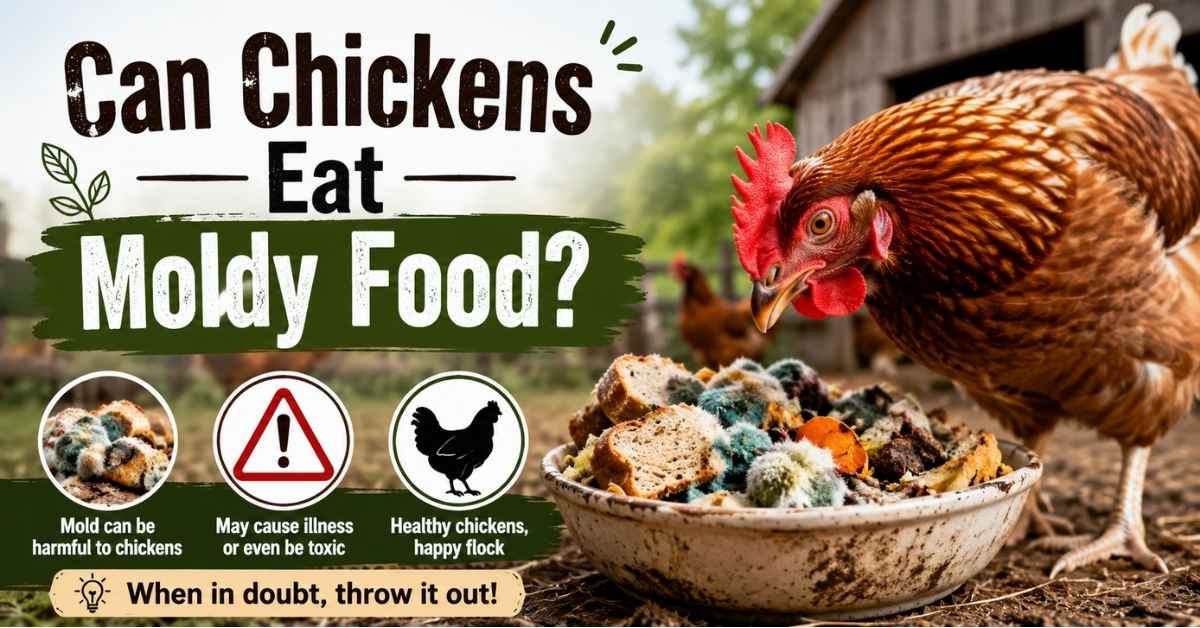
Can chickens eat moldy food? No, chickens should not eat moldy food because mold may contain dangerous fungal toxins called mycotoxins that can harm a chicken’s digestion, breathing, immune system, and overall flock health. While a tiny accidental exposure does not always cause severe poisoning, heavily contaminated feed or spoiled scraps may become extremely dangerous for backyard chickens. The biggest risks usually come from moldy chicken feed, damp grain, spoiled bread, wet corn, and rotting kitchen scraps.
Many flock owners discover moldy feed after rain, humidity, or forgotten food storage and immediately panic. Others wonder whether slightly spoiled food is still safe because chickens seem willing to eat almost anything. The truth is more nuanced than many articles explain.
Understanding:
- the difference between stale food and moldy food
- how mold develops
- what symptoms to watch for
- and how to prevent contamination
can help protect your flock from serious health problems.
Quick Answer: Is Moldy Food Dangerous for Chickens?
Here is the short answer backyard flock owners are searching for:
| Question | Answer |
|---|---|
| Can chickens eat moldy food? | No |
| Is moldy bread dangerous for chickens? | Yes |
| Can mold kill chickens? | In severe cases, yes |
| What is the biggest danger? | Mycotoxins and fungal contamination |
| Is stale food the same as moldy food? | No |
| Can chickens recover from mold exposure? | Sometimes, depending on severity |
| What should you do after exposure? | Remove food and monitor symptoms |
Why Mold Is More Dangerous for Chickens Than Many Owners Realize
Many people assume mold only affects taste or smell, but mold can create serious health risks for poultry.
Mold Does More Than Spoil Food
Certain molds produce toxic compounds known as mycotoxins. These fungal toxins may affect:
- digestion
- liver function
- respiratory health
- immune response
- egg production
Some toxins develop deep inside damp food long before visible fuzzy mold appears on the surface.
This means feed that looks “slightly bad” may already contain harmful contamination.
Backyard Flocks Face Higher Mold Exposure Risks
Backyard chickens are especially vulnerable because their food is often exposed to:
- rain
- humidity
- wet feeders
- outdoor storage
- compost piles
- damp bedding
Warm temperatures combined with moisture create ideal conditions for fungal growth.
During humid weather, chicken feed can spoil surprisingly fast.
Common Ways Chickens Accidentally Eat Moldy Food
Many exposure situations happen accidentally:
- forgotten feed bags
- moldy bread scraps
- wet kitchen leftovers
- spoiled fruit
- rain-soaked grain
- damp scratch feed
Some flock owners unknowingly mix fresh feed with old contaminated feed, which spreads mold throughout the container.
Stale Food vs Moldy Food: The Difference Many Chicken Owners Miss
One of the biggest misconceptions involves confusing stale food with moldy food.
Dry Stale Bread Is Not Always Moldy
Stale bread simply means the bread has dried out and lost moisture. Moldy bread contains active fungal growth.
Dry stale bread may sometimes be safer than visibly moldy bread, though fresh healthy treats are still preferable.
How to Spot Dangerous Mold Growth
Warning signs include:
- fuzzy patches
- green mold
- black mold
- white fuzzy growth
- strange smells
- moisture buildup
- feed clumping
- discoloration
Mold can also hide underneath soft or wet food.
Safe vs Unsafe Food Comparison
| Food Condition | Safe or Unsafe | Risk Level |
|---|---|---|
| Dry stale bread | Sometimes acceptable | Low |
| Damp feed | Risky | Moderate |
| Moldy bread | Unsafe | High |
| Fuzzy grain | Unsafe | High |
| Sour wet scraps | Unsafe | Moderate-High |
If you are unsure whether food is contaminated, throwing it away is usually safer than risking flock health.
What Happens If Chickens Eat Moldy Food?
One of the most common emergency searches is:
“My chickens ate moldy food — what should I do?”
The answer depends on:
- how much was eaten
- mold severity
- exposure frequency
- chicken age
- overall health
Small Exposure vs Serious Contamination
A healthy adult chicken that accidentally pecks a tiny amount of mildly contaminated food may not become seriously ill.
However, repeated exposure to:
- moldy chicken feed
- damp grain
- spoiled bread
- contaminated scraps
can create far more serious problems.
Common Symptoms of Mold Exposure in Chickens
Possible symptoms include:
- diarrhea
- lethargy
- weakness
- appetite loss
- breathing issues
- watery droppings
- reduced activity
Some chickens may appear unusually quiet or isolate themselves from the flock.
Severe Warning Signs
Severe contamination may lead to:
- tremors
- neurological symptoms
- respiratory distress
- collapse
- dehydration
- sudden weakness
These symptoms require immediate attention.
What to Do Immediately After Exposure
If your chickens eat moldy food:
- Remove all contaminated food immediately
- Provide clean fresh water
- Clean feeders and containers
- Monitor droppings and behavior
- Separate visibly sick birds if necessary
Quick action often reduces the severity of exposure.
Understanding Mycotoxins: The Hidden Danger in Moldy Feed
Most SERP articles barely explain why mold becomes dangerous. The real problem is often not the mold itself but the toxins it produces.
What Are Mycotoxins?
Mycotoxins are toxic compounds created by certain molds and fungi.
One of the best-known examples is aflatoxins, which may damage:
- the liver
- digestion
- immunity
- respiratory systems
Even small amounts over time may weaken flock health gradually.
How Mold Toxins Affect Chickens
Mycotoxins may contribute to:
- digestive distress
- poor nutrient absorption
- immune suppression
- respiratory problems
- lower egg production
Laying hens can become especially vulnerable because egg production requires balanced nutrition and strong metabolic health.
Why Damp Feed Is Especially Dangerous
Moisture accelerates fungal growth rapidly.
Warm humid conditions combined with:
- sealed damp feed
- poor ventilation
- wet storage bins
can create ideal conditions for contamination.
This is why experienced flock owners pay close attention to feed storage systems.
Which Moldy Foods Are Most Dangerous for Chickens?
Some foods spoil much faster than others.
Moldy Bread
Moldy bread is one of the most common backyard feeding mistakes.
Bread absorbs moisture quickly, making it a perfect environment for fungal growth.
Moldy Chicken Feed
Contaminated poultry feed is often more dangerous because chickens consume it repeatedly over time.
Spoiled feed may expose the flock to continuous toxin intake.
Spoiled Fruits and Vegetables
Soft produce can hide mold beneath the surface.
Watch carefully for:
- fermentation
- sour smells
- fuzzy growth
- soft wet spots
Wet Scratch Grain and Corn
Corn and grain stored in humid environments may develop deep fungal contamination.
Wet grain can become dangerous surprisingly quickly during summer humidity.
High-Risk Moldy Foods
| Food | Mold Risk | Main Concern |
|---|---|---|
| Bread | High | Fast fungal growth |
| Feed pellets | Very High | Mycotoxins |
| Wet corn | High | Deep contamination |
| Fruit scraps | Moderate | Fermentation + mold |
Can Chickens Recover After Eating Moldy Food?
Recovery depends on:
- toxin exposure level
- age of the chicken
- hydration
- immune health
- speed of intervention
Mild Cases vs Severe Toxicity
Some mild cases improve quickly once contaminated food is removed.
More severe poisoning cases may cause:
- long-term weakness
- organ damage
- chronic health problems
Chicks Are More Vulnerable
Young chicks are much more sensitive to mold toxins because they have:
- smaller bodies
- weaker immune systems
- developing digestion
Even limited contamination may affect chicks more severely than adult hens.
When Veterinary Help Matters Most
Seek veterinary help if:
- multiple birds become sick
- symptoms worsen quickly
- breathing problems appear
- neurological signs develop
Fast intervention matters most in severe toxin exposure situations.
LEARN MORE: Can Chickens Eat Green Tomatoes?
Why Moldy Feed Can Hurt Egg Production
Many flock owners focus only on visible illness, but poor feed quality may quietly affect productivity too.
Nutritional Damage
Spoiled feed often loses nutritional value while increasing toxin exposure.
This may weaken:
- feather condition
- energy levels
- immune response
Long-Term Flock Problems
Repeated mold exposure may contribute to:
- reduced egg production
- thin eggshells
- lower feed efficiency
- chronic digestive problems
Healthy laying hens depend on consistent high-quality feed.
Why Chickens Sometimes Eat Moldy Food Anyway
Many owners wonder:
“Why would chickens eat something dangerous?”
Chickens Are Opportunistic Feeders
Chickens naturally peck at:
- grain
- scraps
- insects
- compost
- leftovers
They do not always recognize contamination.
Hunger Changes Feeding Behavior
Underfed or overcrowded chickens are more likely to eat questionable food.
Competition inside the flock may encourage risky feeding behavior.
Mold Is Not Always Obvious to Chickens
Some contaminated food smells normal to chickens even when fungal toxins are present.
This is why flock owners should never rely on chickens to identify safe food automatically.
How Experienced Flock Owners Prevent Mold Problems
Long-time poultry keepers focus heavily on prevention.
Proper Chicken Feed Storage
Good storage practices include:
- airtight containers
- cool dry locations
- sealed feed bins
- feed rotation systems
Buying excessive feed that sits too long often increases mold risk.
Humidity Control Matters
High humidity encourages fungal growth quickly.
Experienced flock owners improve airflow through:
- coop ventilation
- dry bedding
- moisture control
- feeder placement
Cleaning Feeders Properly
Feeders should be:
- emptied regularly
- dried completely
- cleaned before refilling
Wet feed residue can contaminate fresh feed rapidly.
Seasonal Mold Prevention Tips
Summer humidity and rainy seasons create the highest contamination risk.
During wet weather:
- inspect feed more often
- avoid overfilling feeders
- protect storage areas from leaks
Signs Your Chicken Feed May Already Be Unsafe
Physical Warning Signs
Watch for:
- clumping
- strange odors
- visible spores
- damp texture
- unusual discoloration
Environmental Warning Signs
Unsafe conditions include:
- leaking roofs
- damp feed rooms
- wet bedding
- poor airflow
Feed Inspection Checklist
Before feeding chickens:
- smell the feed
- check for moisture
- inspect corners of bins
- look for clumps
- watch for fuzzy growth
Regular inspection prevents many contamination problems.
Better Alternatives to Risky Kitchen Scraps
Instead of feeding questionable leftovers, healthier options include:
| Healthy Treat | Benefit |
|---|---|
| Pumpkin | Fiber and nutrients |
| Cucumbers | Hydration |
| Watermelon | Cooling summer treat |
| Oats | Energy source |
| Leafy greens | Vitamins |
| Mealworms | Protein |
Healthy treats support:
- flock health
- egg production
- feather quality
- healthy digestion
without exposing chickens to fungal toxins.
Common Mistakes Chicken Owners Make With Moldy Food
Assuming “A Little Mold” Is Harmless
Even limited contamination may spread deeper into food than expected.
Mixing Fresh Feed With Old Feed
This often contaminates the entire container.
Ignoring Humidity
Warm damp conditions rapidly accelerate spoilage.
Keeping Feed Too Long
Old feed loses freshness and becomes more vulnerable to fungal growth.
Trusting Smell Alone
Some dangerous toxins develop before strong odors appear.
Frequently Asked Questions
Can mold kill chickens?
Yes, severe mold contamination and mycotoxin exposure can become deadly.
Can chickens eat stale bread?
Dry stale bread is different from moldy bread, but fresh healthy treats are still better options.
What happens if chickens eat moldy feed?
They may develop digestive problems, weakness, respiratory distress, or toxin-related illness.
Can chickens recover from mold poisoning?
Some mild cases improve after contaminated feed is removed, but severe cases may require veterinary care.
How do I stop chicken feed from molding?
Store feed in airtight containers, keep storage areas dry, and inspect feed regularly.
Are chicks more sensitive to mold?
Yes. Young chicks are more vulnerable to fungal toxins than adult chickens.
Can mold affect egg production?
Yes. Poor-quality contaminated feed may reduce laying performance and weaken overall flock health.
Final Thoughts
Can chickens eat moldy food? No. Moldy food and spoiled feed may expose chickens to dangerous mycotoxins, fungal contamination, and respiratory or digestive health problems. While a tiny accidental exposure does not always lead to severe poisoning, heavily contaminated feed should never remain accessible to backyard flocks.
The safest approach is prevention:
- store feed properly
- control humidity
- inspect feeders regularly
- remove spoiled food immediately
Healthy chickens thrive on:
- clean feed
- fresh water
- dry environments
- balanced nutrition
Protecting feed quality is one of the most important steps in maintaining a strong, productive backyard flock.