
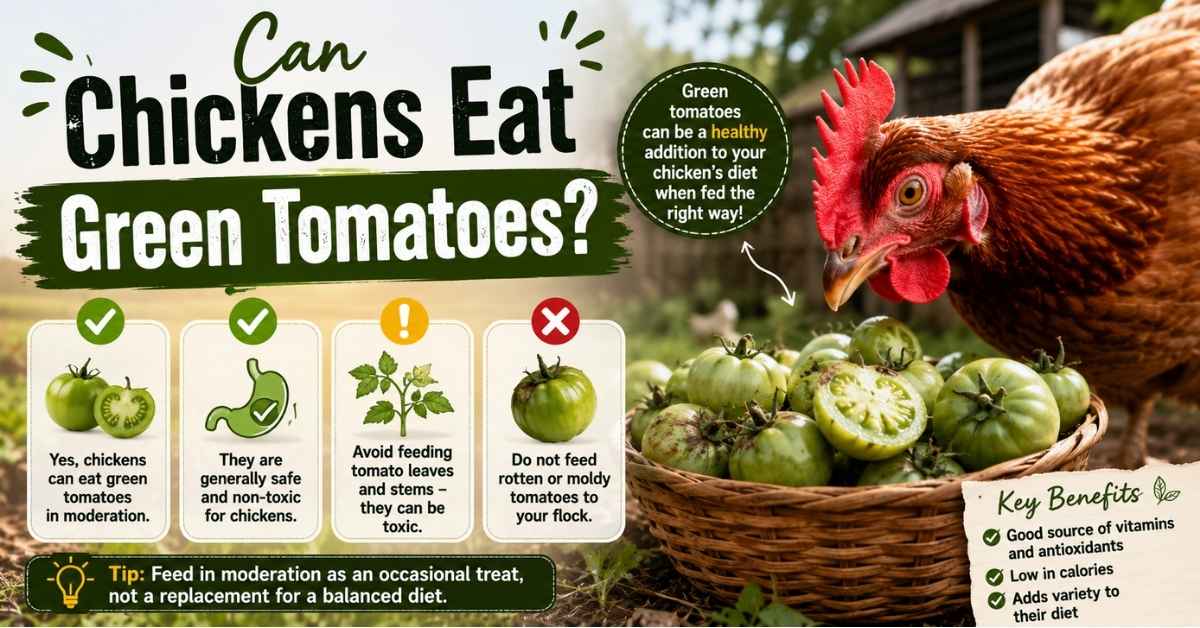
Can chickens eat green tomatoes? Chickens can eat a small accidental amount of green tomatoes, but they should not regularly consume them because unripe tomatoes contain higher levels of tomatine and other nightshade compounds that may upset chickens in larger quantities. The biggest risks usually come from tomato leaves, vines, and stems, which contain more concentrated plant toxins than ripe tomato fruit. A healthy adult chicken that pecks a tiny piece of green tomato will often be fine, but backyard flock owners should still use caution.
This topic confuses many chicken keepers because one article says green tomatoes are deadly while another claims chickens eat them without problems. The truth is far more nuanced. Risk depends on:
- how much was eaten
- which part of the tomato plant was consumed
- whether the tomatoes were ripe or green
- the age and health of the chicken
Understanding those differences helps backyard flock owners make safer feeding decisions without unnecessary panic.
Quick Answer: Are Green Tomatoes Safe for Chickens?
Here is the short version most flock owners are searching for:
| Question | Answer |
|---|---|
| Can chickens eat green tomatoes? | Only in very small accidental amounts |
| Are green tomatoes toxic to chickens? | Potentially harmful in larger quantities |
| Are ripe tomatoes safer? | Yes |
| Are tomato leaves dangerous? | Yes, avoid them |
| Can chickens eat tomato vines? | Not recommended |
| What is the biggest concern? | Tomatine and nightshade compounds |
| Will one bite hurt a chicken? | Usually not |
| Can baby chicks eat green tomatoes? | No |
Why Backyard Chicken Owners Worry About Green Tomatoes
Many chicken keepers become concerned after seeing their flock wander into a tomato garden or peck at compost scraps. Tomatoes belong to the nightshade family, which also includes plants known for containing natural toxic compounds.
The problem is that internet advice often lacks context. Some articles make green tomatoes sound instantly deadly while forum discussions sometimes dismiss all risks entirely.
Most flock owners are really asking:
“Should I panic if my chickens ate green tomatoes?”
In most situations, the answer is no. Small accidental exposure is usually far less dangerous than many people fear. The greater concern comes from repeated feeding or heavy exposure to tomato leaves and vines.
What Makes Green Tomatoes Different From Ripe Tomatoes?
The difference between green and ripe tomatoes matters because the plant changes chemically as it ripens.
Ripening Changes the Plant Chemistry
Green tomatoes contain higher levels of:
- tomatine
- natural nightshade compounds
- bitter defensive chemicals
As tomatoes ripen, those compounds gradually decrease. That is why ripe red tomatoes are generally considered safer for chickens than hard unripe green ones.
Tomatoes naturally produce these compounds to protect themselves from insects and predators during early growth stages.
Are Green Tomatoes Actually Poisonous to Chickens?
Green tomatoes are not automatically deadly, but they are not ideal treats either.
Risk depends on:
- quantity consumed
- frequency of exposure
- size of the chicken
- overall diet quality
- which tomato parts were eaten
A single accidental peck usually causes little or no harm in healthy adult chickens. Problems become more likely when chickens consume:
- large amounts of green tomatoes
- tomato leaves
- tomato vines
- stems and plant material
Ripe vs Green Tomatoes Comparison
| Factor | Green Tomatoes | Ripe Tomatoes |
|---|---|---|
| Tomatine level | Higher | Lower |
| Digestibility | Harder | Easier |
| Risk level | Moderate | Lower |
| Safe occasionally? | Limited | Yes in moderation |
| Ideal for regular feeding? | No | Still moderate only |
Which Parts of the Tomato Plant Are Most Dangerous?
Many backyard flock owners focus only on the tomato fruit while forgetting that the plant itself creates the bigger risk.
Tomato Leaves and Vines Are More Dangerous
Tomato leaves, stems, and vines contain higher concentrations of natural toxic compounds than ripe fruit.
These parts are more concerning because chickens may accidentally consume them while:
- free-ranging in gardens
- scratching compost piles
- eating fallen plants
The highest-risk tomato plant parts include:
- leaves
- stems
- vines
- flowers
Can Chickens Eat Tomato Plants at All?
Chickens often peck tomato plants out of curiosity. Some flocks ignore them completely while others destroy entire garden beds within hours.
People sometimes assume chickens instinctively avoid harmful plants, but that is not always true. Hunger, boredom, and curiosity can cause chickens to consume foods they normally would avoid.
Free-range chickens are especially likely to sample:
- hanging tomatoes
- damaged fruit
- low leaves
- garden scraps
Safe vs Unsafe Tomato Parts
| Tomato Plant Part | Safety Level | Risk |
|---|---|---|
| Ripe tomato fruit | Safer in moderation | Low |
| Green tomatoes | Limited only | Moderate |
| Leaves | Avoid | High |
| Stems | Avoid | High |
| Vines | Avoid | High |
| Flowers | Avoid | Moderate |
What Happens If Chickens Eat Green Tomatoes?
One of the biggest fears backyard flock owners have is sudden poisoning after accidental exposure.
Fortunately, tiny amounts are often less severe than people imagine.
Small Accidental Pecks vs Heavy Exposure
If a healthy adult chicken eats:
- one small green tomato piece
- a few accidental pecks
- minor garden scraps
serious problems are unlikely.
Risk rises when chickens repeatedly consume:
- large quantities
- leaves and vines
- spoiled tomato plants
- concentrated garden waste
Symptoms to Watch For
Potential symptoms may include:
- diarrhea
- lethargy
- weakness
- appetite loss
- digestive upset
- unusual droppings
More serious exposure may contribute to:
- dehydration
- coordination problems
- severe digestive distress
When Should You Call a Veterinarian?
Contact a poultry veterinarian if chickens show:
- severe weakness
- inability to stand
- persistent diarrhea
- neurological symptoms
- multiple birds becoming sick
Fast action matters more when:
- chicks are involved
- large amounts were consumed
- leaves and vines were eaten
Emergency Response Checklist
If your chickens ate green tomatoes:
- Remove remaining tomato material
- Provide fresh clean water
- Watch droppings closely
- Monitor behavior for 24–48 hours
- Separate visibly sick birds if needed
Many mild cases improve naturally once exposure stops.
Can Baby Chicks Eat Green Tomatoes?
Baby chicks should not eat green tomatoes.
Young chicks are far more sensitive because they have:
- smaller bodies
- immature digestive systems
- developing immune systems
Even small amounts may upset chick digestion.
Starter feed should remain the primary food source during early development. Healthy chick treats are much safer than experimental garden scraps.
Why Chickens Peck Green Tomatoes in the First Place
Many flock owners are surprised that chickens willingly peck potentially harmful foods.
Natural Curiosity and Foraging Behavior
Chickens investigate the world through pecking. They sample:
- insects
- plants
- seeds
- fruits
- garden scraps
Bright colors and unusual textures naturally attract them.
Green tomatoes hanging low on vines often become easy targets for curious birds.
Garden Access Changes Feeding Behavior
Free-range chickens are opportunistic eaters. They may explore tomato beds because:
- they are bored
- they are searching for moisture
- insects are nearby
- tomatoes smell appealing
Some chickens repeatedly peck tomato plants simply because they enjoy destroying soft vegetation.
Do Chickens Instinctively Avoid Toxic Plants?
Not reliably.
While chickens sometimes avoid bitter plants naturally, they do not always recognize harmful foods. This is why backyard flock owners should not rely on instinct alone to protect chickens from toxic garden plants.
Can Cooked Green Tomatoes Be Safer?
Cooking may slightly reduce certain plant compounds, but it does not magically make green tomatoes ideal chicken treats.
Does Cooking Reduce Toxic Compounds?
Heat can lower some compound levels, but:
- green tomatoes still contain nightshade compounds
- nutritional value remains limited
- other ingredients may create new problems
Can Chickens Eat Fried Green Tomatoes?
Fried green tomatoes are even less suitable because they often contain:
- oil
- breading
- salt
- seasoning
Processed fried foods may contribute to:
- obesity
- digestive issues
- poor poultry nutrition
The healthiest chicken diets rely on balanced feed rather than heavily processed table scraps.
LEARN MORE: Can Chickens Eat French Fries?
How Experienced Homesteaders Handle Tomato Plants Around Chickens
Long-time chicken keepers usually take practical precautions rather than panicking about every tomato plant.
Keeping Chickens Out of Tomato Beds
Common strategies include:
- fencing garden areas
- raised beds
- temporary netting
- supervised free-ranging
Tomatoes are one of the most commonly protected garden crops because chickens often damage plants even when they are not eating them heavily.
Safe Composting Practices
Tomato scraps frequently end up in compost piles. Experienced homesteaders often:
- remove thick vines
- avoid moldy tomatoes
- monitor compost access
- limit large quantities of green tomato waste
Seasonal Garden Cleanup Tips
At the end of tomato season:
- remove dying vines quickly
- avoid leaving large green tomato piles
- supervise chickens during cleanup
This reduces accidental overconsumption.
Better Alternatives to Green Tomatoes for Chickens
There are far safer garden treats for backyard flocks.
Healthy Treats Chickens Usually Enjoy
| Healthy Treat | Benefit |
|---|---|
| Pumpkin | Fiber and nutrients |
| Cucumbers | Hydration |
| Watermelon | Cooling summer treat |
| Zucchini | Easy digestion |
| Leafy greens | Vitamins |
| Berries | Antioxidants |
| Oats | Energy source |
| Mealworms | Protein boost |
These foods support:
- flock health
- egg production
- feather quality
- healthy digestion
without the risks linked to tomato plant toxicity.
Common Mistakes Chicken Owners Make With Garden Scraps
Assuming Natural Foods Are Always Safe
Many toxic foods are completely natural. Backyard flock owners sometimes underestimate:
- nightshade plants
- moldy produce
- spoiled scraps
Natural does not always mean safe.
Feeding Too Many Treats
Treats should generally remain below 10% of a chicken’s total diet.
Too many scraps may reduce:
- balanced nutrition
- calcium intake
- egg quality
Ignoring Toxic Plant Parts
Many people remove the tomato fruit but accidentally leave:
- vines
- stems
- leaves
These are often the most concerning parts.
Signs Your Chickens Need a Better Diet
Poor nutrition often appears gradually.
Behavioral Warning Signs
- low energy
- excessive scavenging
- feather pecking
- poor appetite
Physical Warning Signs
- messy droppings
- weak eggshells
- obesity
- poor feather condition
Balanced poultry feed should always remain the foundation of a healthy flock diet.
Frequently Asked Questions
Can chickens eat green cherry tomatoes?
Small accidental amounts are usually less dangerous than large quantities, but green cherry tomatoes should still not become regular treats.
Are tomato leaves poisonous to chickens?
Tomato leaves contain higher concentrations of nightshade compounds and are considered unsafe for chickens.
Can chickens eat tomato vines?
Tomato vines are not recommended because they contain potentially harmful plant compounds.
What vegetables are toxic to chickens?
Some potentially harmful foods include raw beans, green potato peels, moldy food, and certain nightshade plant parts.
Will one green tomato hurt a chicken?
A single small piece is unlikely to seriously harm a healthy adult chicken in most cases.
Can chickens safely roam near tomato plants?
Yes, but garden supervision and protective barriers are still recommended.
Can chickens eat cooked green tomatoes?
Cooked green tomatoes may be slightly safer than raw ones, but they should still only be offered cautiously and rarely.
Final Thoughts
Can chickens eat green tomatoes? Technically, chickens can survive tiny accidental amounts, but green tomatoes are not considered a safe regular treat for backyard flocks. The real concerns come from tomatine, nightshade compounds, tomato leaves, stems, and vines, which may cause digestive upset or other health problems when consumed heavily.
Healthy adult chickens that peck a small piece of green tomato are often fine, especially when exposure is limited. Still, experienced flock owners usually focus on:
- balanced poultry feed
- safer garden treats
- careful garden management
- moderation with scraps
When it comes to backyard chicken nutrition, natural whole foods and safe vegetables are always better choices than risky plant material.