
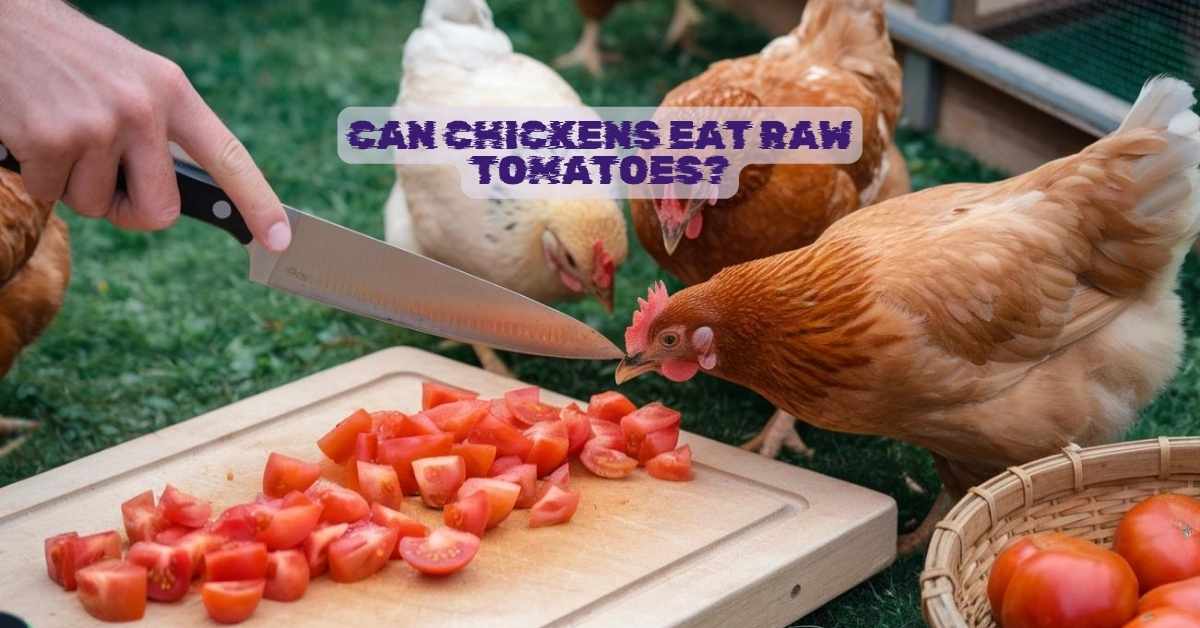
Can chickens eat raw tomatoes? Yes—chickens can eat raw tomatoes, but only when they are fully ripe and fed in moderation.
The juicy red fruit is safe and nutritious, while the leaves, stems, and unripe (green) tomatoes must be avoided due to toxic compounds. Understanding this difference is the key to feeding tomatoes safely.
Are Raw Tomatoes Safe for Chickens?
Raw tomatoes are commonly used as healthy treats for chickens, especially in backyard flocks. Chickens are omnivorous birds, meaning they naturally eat fruits, vegetables, and insects.
Can Chickens Eat Raw Tomatoes Safely?
Yes, can chickens eat raw tomatoes safely is true—but only under specific conditions:
- Tomatoes must be ripe (red)
- Only the fruit and seeds should be fed
- Portions must remain small
Why Ripe Tomatoes Are Safe
Ripe tomatoes contain:
- 93–95% water content → excellent hydration
- 15–25 mg vitamin C per 100g → immune support
- 3–7 mg lycopene → antioxidant protection
Safe vs Toxic Parts of Tomato Plants
| Tomato Part | Safe for Chickens | Reason |
|---|---|---|
| Ripe fruit | ✅ Safe | Nutrient-rich and hydrating |
| Seeds | ✅ Safe | Non-toxic |
| Leaves | ❌ Toxic | Contains solanine |
| Stems | ❌ Toxic | Harmful compounds |
| Green tomatoes | ⚠️ Risky | Higher toxin levels |
Why Leaves and Stems Are Dangerous
Tomato plants belong to the nightshade family, which produces solanine, a natural toxin. While the ripe fruit contains <0.01% solanine, leaves and stems have much higher concentrations.
Can Chickens Eat Green Tomatoes?
Green tomatoes are:
- Not fully ripe
- Higher in toxins
They may cause:
- Digestive upset
- Reduced appetite
Understanding Nightshade Plants and Chickens
What Are Nightshade Vegetables?
Tomatoes belong to the nightshade plant family, which includes:
- Potatoes
- Eggplants
- Peppers
Solanine Toxicity Explained Simply
- Solanine is a plant defense toxin
- Found in green parts of plants
- Can cause mild to severe symptoms in animals
Why Ripe Tomatoes Are Safe
The fruit becomes safe when:
- Fully ripened
- Toxin levels drop significantly
Nutritional Value of Raw Tomatoes for Chickens
Tomatoes are more than just safe—they are beneficial when fed correctly.
| Nutrient | Amount | Benefit |
|---|---|---|
| Water | 93–95% | Hydration |
| Calories | 18–22 per 100g | Low energy |
| Vitamin C | 15–25 mg | Immunity |
| Lycopene | 3–7 mg | Antioxidant |
Key Benefits
- Supports hydration during hot weather
- Improves immune system health
- Adds natural dietary variety
How Much Raw Tomato Can Chickens Eat?
Proper feeding is critical to avoid health issues.
Recommended Portion
- 1–2 tablespoons per serving
Feeding Frequency
- 2–3 times per week
Treat Rule
- Tomatoes should make up only 5–10% of total diet
A chicken consumes 120–150 grams of feed daily, so tomatoes must remain a supplement.
Raw vs Cooked Tomatoes: Which Is Better?
Raw Tomatoes
- Retain full nutritional value
- Provide hydration
Cooked Tomatoes
- Slightly easier to digest
- May lose some nutrients
Best Choice
Raw tomatoes are generally better for chickens, as long as they are:
- Ripe
- Fresh
- Properly prepared
What Happens If Chickens Eat Toxic Tomato Parts?
Symptoms of Solanine Exposure
- Digestive upset
- Lethargy
- Reduced activity
Severe Symptoms (Rare Cases)
- Neurological issues
- Breathing difficulty
What to Do
- Remove access immediately
- Provide clean water
- Monitor behavior
What Age Can Chickens Eat Tomatoes?
This is a high-value question for chicken owners.
Age-Based Feeding Guidelines
| Age | Recommendation |
|---|---|
| 0–6 weeks | Avoid tomatoes |
| 6–12 weeks | Introduce slowly |
| 12+ weeks | Safe in moderation |
Why Chicks Need Caution
Young chickens:
- Have developing digestive systems
- Are more sensitive to acidic foods (pH ~4.0–4.6)
Do Chickens Like Tomatoes?
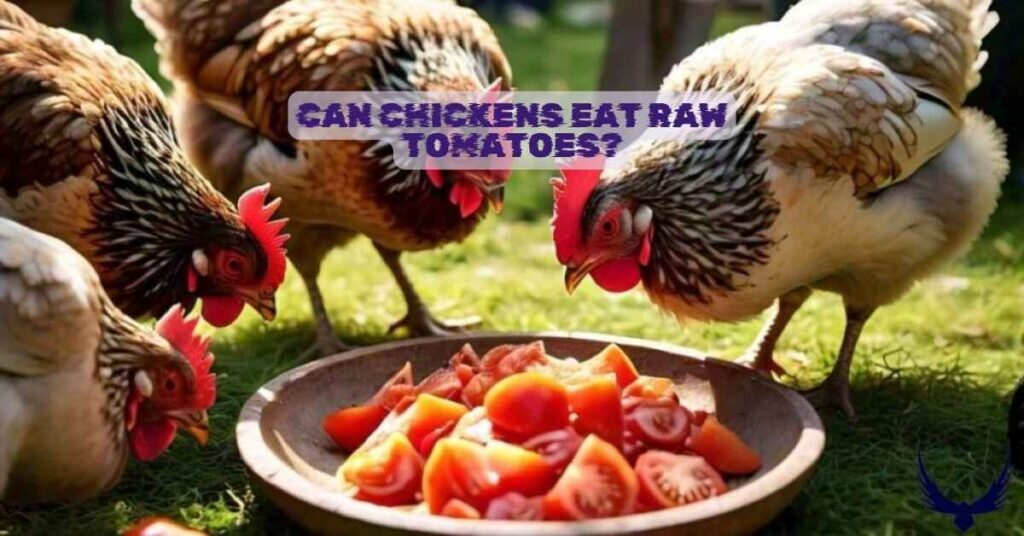
Chickens are naturally attracted to:
- Bright colors
- Soft textures
- Juicy foods
Tomatoes meet all these criteria, making them:
- Highly appealing
- Easily consumed
Benefits of Feeding Raw Tomatoes to Chickens
Tomatoes provide multiple advantages:
- Hydration (93–95% water)
- Rich in antioxidants
- Supports immune system
- Enhances diet diversity
Risks of Feeding Raw Tomatoes to Chickens
Even safe foods carry risks if misused.
Overfeeding
- Leads to digestive imbalance
- Causes loose droppings within 1–2 days
Acidic Impact
- Tomatoes are mildly acidic
- Excess can irritate digestion
Feeding Toxic Parts
- Leaves and stems are dangerous
LEARN MORE: Can Chickens Eat Radish Tops?
Best Fruits and Vegetables for Chickens (Comparison)
| Food | Safety | Benefit |
|---|---|---|
| Tomatoes | Safe (ripe only) | Hydration |
| Cucumbers | Safe | Cooling |
| Berries | Safe | Antioxidants |
| Carrots | Safe | Vitamin A |
Common Mistakes When Feeding Tomatoes
Avoid these mistakes:
- Feeding green tomatoes
- Including leaves or stems
- Overfeeding
- Ignoring balanced diet
Expert Tips for Feeding Chickens Tomatoes
A healthy feeding strategy includes:
- Providing balanced poultry feed (120–150g daily)
- Keeping treats under 5–10%
- Monitoring chicken health
Case Study: Backyard Chicken Feeding
A flock of 10 chickens was observed over 3 weeks:
- Chickens fed ripe tomatoes:
- Showed improved hydration
- Maintained normal digestion
- Chickens exposed to green tomatoes:
- Showed mild digestive issues
👉 Conclusion: Ripe tomatoes are safe, but unripe ones pose risks
Expert Insight
“Ripe tomatoes are one of the safest fruits for chickens, but the plant itself tells a different story—avoid all green parts.”
FAQs
Can chickens eat raw tomatoes?
Yes, but only ripe tomatoes in moderation.
Are tomatoes safe for chickens?
Yes, the fruit is safe, but plant parts are toxic.
Can chickens eat tomato seeds?
Yes, seeds are completely safe.
Can chickens eat green tomatoes?
No, they contain higher toxin levels.
What age can chickens eat tomatoes?
Chickens can eat tomatoes after 6–12 weeks, with full safety at 12+ weeks.
Final Verdict: Should Chickens Eat Raw Tomatoes?
Chickens can eat raw tomatoes, and they can be a healthy, hydrating treat when fed properly. However, the difference between safe fruit and toxic plant parts is critical. Always feed ripe tomatoes only, avoid green parts, and maintain moderation.
👉 Bottom Line: Safe (ripe fruit), unsafe (leaves, stems, green tomatoes), and always feed in moderation.