
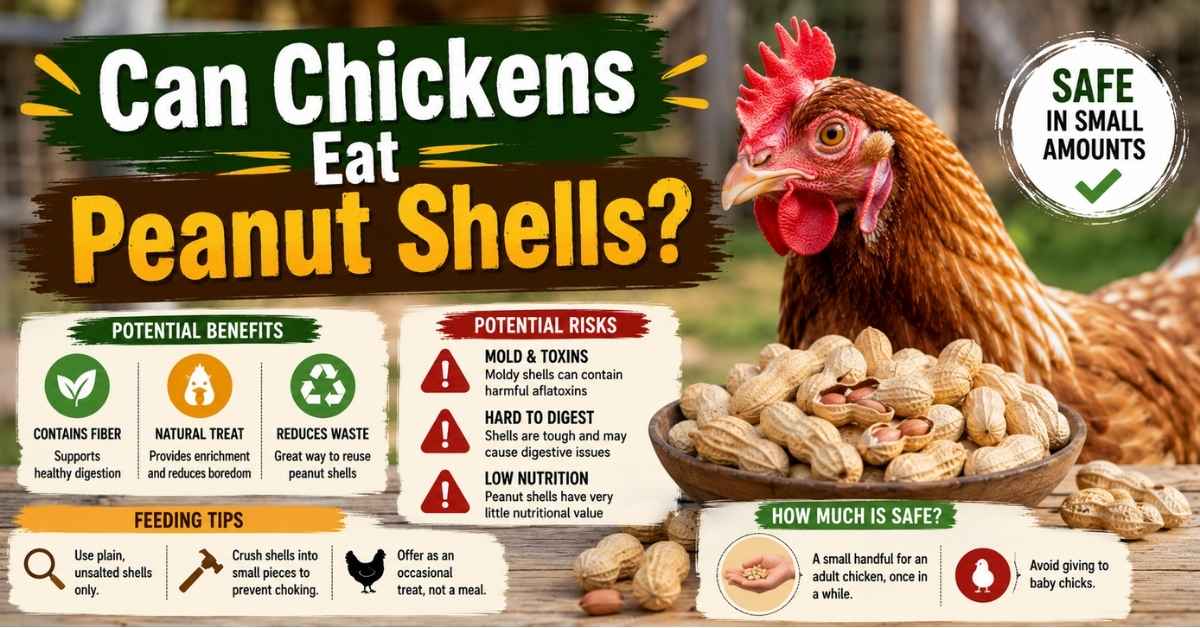
Can chickens eat peanut shells? Yes, chickens can eat peanut shells occasionally, but only in small amounts and only when the shells are plain, unsalted, unseasoned, and completely mold-free. Peanut shells are not toxic by themselves, but they can become risky because of digestive difficulty, choking hazards, salt content, and dangerous mold toxins called aflatoxins.
While some backyard chickens peck at peanut shells without problems, they offer very little nutritional value compared to healthier chicken treats. Understanding how chickens digest peanut shells and when those shells become unsafe is important for keeping your flock healthy.
Quick Answer
| Question | Short Answer |
|---|---|
| Can chickens eat peanut shells? | Yes, occasionally |
| Are peanut shells toxic to chickens? | Not naturally toxic |
| Biggest danger | Mold and aflatoxins |
| Can chickens digest peanut shells? | Only partially |
| Are salted shells safe? | No |
| Can baby chicks eat peanut shells? | Not recommended |
| Nutritional value | Very low |
| Best feeding method | Crushed and unsalted |
Why Chicken Owners Ask About Peanut Shells
Many backyard chicken keepers search for ways to reduce food waste while giving their flock interesting treats. Peanut shells often seem harmless because chickens naturally peck at rough materials during free-ranging. Some owners also wonder whether peanut shells can work as a cheap fiber source or boredom treat.
The confusion starts because online advice is inconsistent. One article may say peanut shells are perfectly fine while another warns against feeding them completely. The truth sits somewhere in the middle.
Unlike the peanut itself, the shell contains mostly insoluble fiber and cellulose. Chickens can peck at small shell pieces, but they do not gain much nutritional benefit from them. The bigger concern is whether the shells are contaminated with mold, seasoning, or excess salt.
Can Chickens Digest Peanut Shells Properly?
Chickens have a surprisingly effective digestive system, but peanut shells are still difficult for them to process.
After food enters the crop, it softens before moving into the stomach and eventually the gizzard. The gizzard acts like a grinding organ that crushes food with the help of grit. Softer foods break down easily, but peanut shells are fibrous and coarse.
Why Peanut Shells Are Hard to Digest
Peanut shells contain:
- Cellulose
- Lignin
- Insoluble fiber
These materials are tough even for many mammals to digest. Chickens can handle tiny amounts because their gizzard mechanically grinds food, but large quantities may slow digestion.
Some chickens spit out shell fragments or ignore them completely. That behavior is actually helpful because birds naturally avoid foods that are difficult to process.
What Happens if Chickens Eat Too Many Peanut Shells?
Too many peanut shells can lead to:
- reduced appetite
- slower digestion
- crop discomfort
- compacted digestive material
- lower feed intake
In severe situations, large shell pieces may contribute to crop impaction or digestive blockage, especially in younger birds or chickens without enough grit.
Are Peanut Shells Dangerous for Chickens?
Peanut shells are not automatically dangerous, but several hidden risks make them less ideal than other chicken treats.
Mold Is the Biggest Danger
Peanuts are highly vulnerable to fungal contamination. Certain molds produce aflatoxins, which are poisonous compounds linked to poultry illness.
The fungus Aspergillus flavus is one of the major concerns in peanuts and peanut shells. Even small amounts of contaminated shells can create serious health problems in chickens.
Symptoms of Aflatoxin Exposure
Watch for:
- lethargy
- pale combs
- appetite loss
- diarrhea
- poor egg production
- weakness
- sudden death in severe cases
Moldy peanut shells should never be fed to backyard chickens under any circumstances.
Salted Peanut Shells Create Another Problem
Many store-bought peanut shells contain heavy salt coatings. Chickens are sensitive to excess sodium, and too much salt may cause:
- dehydration
- kidney stress
- watery droppings
- excessive thirst
Flavored Peanut Shells Are Unsafe
Avoid:
- spicy peanut shells
- barbecue coatings
- garlic seasoning
- onion powder
- artificial flavorings
Several flavor additives commonly used in snack peanuts are not suitable for poultry digestion.
Choking and Impaction Risks
Large shell pieces may create problems for:
- baby chicks
- smaller breeds
- birds that eat aggressively
Crushing the shells into smaller fragments reduces risk significantly.
Raw vs Roasted vs Boiled Peanut Shells
Not all peanut shells carry the same risk level.
Raw Peanut Shells
Plain raw shells are usually the safest version if they are:
- dry
- clean
- mold-free
- unsalted
However, raw peanuts still carry contamination risks if stored improperly.
Roasted Peanut Shells
Roasted shells are acceptable only when:
- plain
- unsalted
- unseasoned
Most packaged roasted peanuts contain excessive sodium and flavor additives.
Boiled Peanut Shells
Boiled peanut shells become softer and easier to peck apart. However, Southern-style boiled peanuts are often loaded with salt.
Even though softened shells reduce choking risk, sodium content still makes them a poor everyday choice.
Moldy Peanut Shells
Never feed moldy peanut shells to chickens. Mold contamination is far more dangerous than the shell itself.
If the shells smell musty, damp, or discolored, throw them away immediately.
Can Baby Chicks Eat Peanut Shells?
Baby chicks should not eat peanut shells.
Young birds have:
- smaller digestive systems
- weaker gizzards
- higher choking risk
- greater sensitivity to nutritional imbalance
Even small shell fragments can become difficult for chicks to process.
Better Treats for Chicks
Safer beginner treats include:
- scrambled eggs
- oats
- finely chopped greens
- mealworms
- soft vegetables
As chickens mature, their digestive system becomes stronger and more capable of handling occasional rough-textured foods.
Do Peanut Shells Have Any Nutritional Value?
Peanut shells contain very little useful nutrition for chickens.
What Peanut Shells Actually Provide
They contain:
- insoluble fiber
- trace minerals
- tiny amounts of antioxidants
But compared to balanced poultry feed, peanut shells are nutritionally weak.
Why Peanut Shells Should Not Replace Feed
A healthy flock needs:
- protein
- calcium
- amino acids
- vitamins
- balanced energy
Peanut shells provide almost none of these essential nutrients in meaningful amounts.
LEARN MORE: Can Chickens Eat Peanut Butter?
Better Treats With Real Nutritional Benefits
If you want healthy chicken treats, better options include:
- pumpkin
- sunflower seeds
- oats
- cucumbers
- lettuce
- mealworms
- black soldier fly larvae
These foods provide actual nutritional support rather than empty filler.
How to Feed Peanut Shells Safely
If you decide to feed peanut shells, moderation matters more than anything else.
Safest Preparation Method
Always use peanut shells that are:
- plain
- dry
- unsalted
- unseasoned
- mold-free
Crushing shells into smaller pieces helps reduce choking and digestive risks.
How Much Is Safe?
Peanut shells should stay under 10% of total treats and should never replace balanced layer feed.
A small handful shared across a flock is usually enough.
Best Feeding Frequency
Peanut shells should be:
- occasional
- irregular
- supplemental only
Daily feeding is unnecessary and not beneficial.
Should You Mix Peanut Shells With Other Treats?
Yes. Mixing tiny shell fragments with healthier foods may reduce overeating and improve feeding balance.
Some owners scatter crushed shells in scratching areas for enrichment rather than direct feeding.
Signs Peanut Shells Are Not Agreeing With Your Chickens
Most chickens tolerate tiny amounts without issues, but you should still monitor the flock afterward.
Digestive Warning Signs
Watch for:
- swollen crop
- reduced droppings
- lethargy
- poor appetite
- unusual inactivity
Behavioral Changes
Birds experiencing digestive discomfort may:
- isolate themselves
- stop scratching
- drink excessively
- avoid normal feed
When to Stop Feeding Immediately
Stop feeding peanut shells if:
- droppings change suddenly
- birds become sluggish
- shell fragments appear undigested repeatedly
When to Call a Vet
Seek veterinary help if a chicken:
- stops eating completely
- shows severe weakness
- develops breathing problems
- has a hard or impacted crop
Real Backyard Flock Experience With Peanut Shells
Many backyard chicken keepers notice the same pattern after offering peanut shells.
Most chickens peck at the shells briefly, search for leftover peanut bits, then lose interest. Larger shell pieces are often ignored because they are too rough compared to softer foods like fruits or grains.
Free-range flocks usually tolerate occasional shell fragments better because they consume:
- grit
- insects
- natural forage
- varied textures
Chickens raised in confined runs may struggle more with tough scraps if their diet lacks proper grit.
Common Mistakes Owners Make
The most common feeding mistakes include:
- using salted shells
- feeding moldy peanuts
- giving too much at once
- assuming shells are nutritious
- feeding whole shell piles without crushing
Peanut Shells vs Other Nut Shells for Chickens
Some nut shells are riskier than others.
| Nut Shell | Safe or Unsafe | Main Concern |
|---|---|---|
| Peanut shells | Limited safe use | Mold & digestion |
| Pistachio shells | Mostly unsafe | Salt content |
| Walnut shells | Unsafe | Sharp fragments |
| Almond shells | Unsafe | Hard texture |
| Pecan shells | Avoid | Digestive difficulty |
Hard nut shells create greater impaction risk than softer vegetable scraps.
LEARN MORE: Can Chickens Eat Hot Dogs Raw?
Safer Alternatives to Peanut Shells
There are far better ways to enrich a chicken’s diet.
Better Boredom Treats
Try:
- hanging cabbage
- scratch grains
- seed mixes
- corn in moderation
Better Fiber Sources
Safer fiber-rich foods include:
- pumpkin
- cucumbers
- zucchini
- leafy greens
Better Protein Treats
High-protein favorites include:
- mealworms
- cooked eggs
- black soldier fly larvae
These foods provide meaningful nutrition without the digestive concerns linked to peanut hulls.
Foods Chicken Owners Commonly Mistake as Safe
Some foods look harmless but can seriously harm poultry.
Foods to Avoid
Never feed:
- chocolate
- avocado pits and skin
- moldy bread
- heavily salted snacks
- spoiled food scraps
Natural foods are not automatically safe for chickens.
Common Myths About Chickens and Peanut Shells
“If squirrels eat them, chickens can too”
Different animals digest foods differently. Chickens are not designed to process tough nut shells regularly.
“Fiber is always healthy for chickens”
Too much insoluble fiber can interfere with digestion instead of helping it.
“Organic peanut shells are automatically safe”
Even organic peanuts can develop mold and aflatoxins during storage.
“My chickens ate shells once so they’re harmless”
Occasional tolerance does not eliminate long-term risk.
Expert Recommendations on Treat Feeding
Poultry nutrition experts generally recommend keeping treats below 10% of a chicken’s total diet.
Balanced layer feed remains the most important food source for:
- egg production
- feather health
- immunity
- energy
Why Grit Matters
When chickens eat rough foods like peanut shells, access to grit becomes essential because grit helps the gizzard grind harder materials.
Without grit, digestion becomes less efficient.
Practical Peanut Shell Feeding Checklist
Safe Checklist
Before feeding peanut shells, confirm they are:
- unsalted
- unseasoned
- dry
- mold-free
- crushed into small pieces
Unsafe Checklist
Never feed:
- flavored shells
- wet shells
- moldy peanuts
- giant shell piles
- heavily salted snack peanuts
Frequently Asked Questions
Can chickens eat salted peanut shells?
Salted peanut shells are not recommended because excess sodium can harm chickens.
Can chickens digest peanut hulls?
Chickens can partially digest tiny shell fragments, but peanut hulls remain difficult to process.
Are roasted peanut shells safe?
Plain roasted shells may be safe occasionally if they are unsalted and mold-free.
Can peanut shells kill chickens?
Large amounts of moldy or contaminated peanut shells may cause serious illness due to aflatoxins.
Can chickens eat boiled peanut shells?
Boiled shells are softer but often contain too much salt.
Do peanut shells cause crop impaction?
Large or excessive shell pieces may contribute to impaction risk in some chickens.
Can hens eat peanut shells every day?
No. Peanut shells should only be occasional treats.
What should I do if my chicken ate moldy peanut shells?
Monitor the bird closely and contact a poultry veterinarian if symptoms appear.
Are peanut shells healthier than scratch grains?
No. Scratch grains usually provide more usable energy and nutrition.
Can chickens eat whole peanuts with shells?
Yes, but only in moderation and only when the peanuts are plain and mold-free.
Final Verdict
Peanut shells are not highly toxic to chickens, but they are far from an ideal treat. Chickens can safely peck at small amounts of plain, unsalted, mold-free peanut shells, especially when the shells are crushed into smaller pieces. However, peanut shells provide very little nutritional value and may create digestive or toxin-related problems if fed improperly.
For most backyard flocks, healthier treats like vegetables, oats, seeds, and protein-rich snacks are smarter options. If you choose to offer peanut shells, keep them occasional, monitor your birds carefully, and always prioritize balanced poultry feed over low-value scraps.