
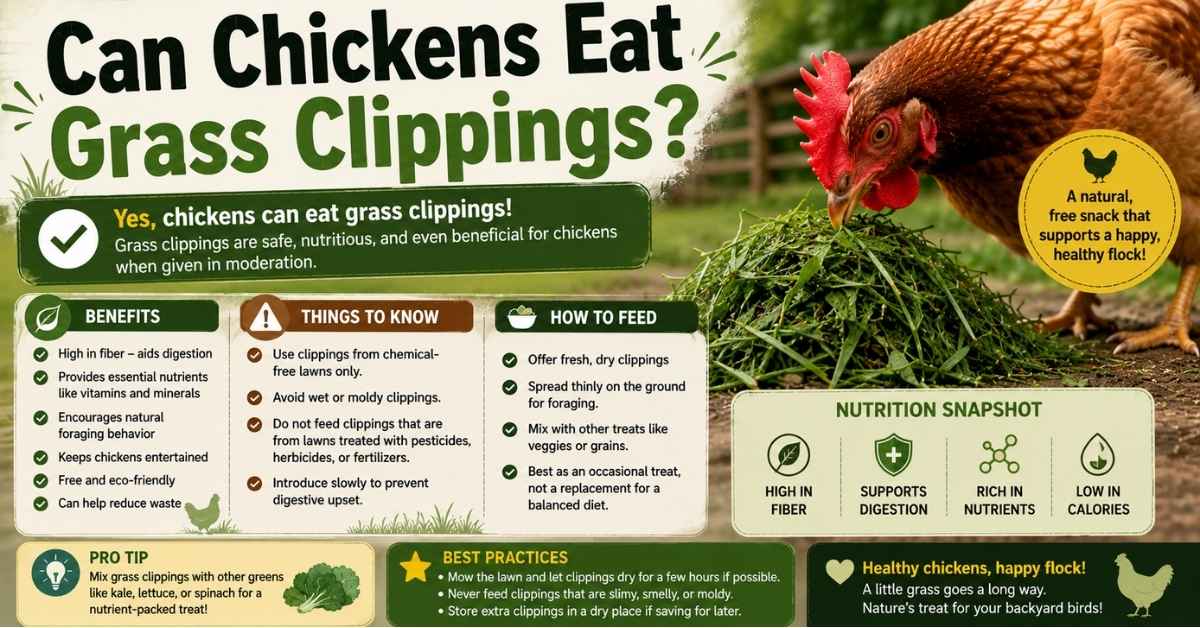
Can chickens eat grass clippings? Yes, chickens can eat grass clippings in small amounts if the grass is fresh, untreated, and finely cut. However, long or wet grass clippings can cause serious digestive problems such as crop impaction, sour crop, and digestive blockage. Backyard chicken owners should also avoid lawn clippings treated with herbicides, pesticides, fertilizers, or other lawn chemicals because these substances may harm flock health.
Many chicken keepers toss fresh lawn clippings into the chicken run without realizing the risks hidden inside large piles of wet grass. While chickens naturally love grazing behavior and pecking at healthy greens, grass clippings behave differently inside the chicken digestive tract than natural pasture grass. Understanding the difference between grazing and lawn clippings is the key to feeding your flock safely.
Quick Answer – Can Chickens Eat Grass Clippings?
| Question | Answer |
| Can chickens eat grass clippings? | Yes, in moderation |
| Are grass clippings safe for chickens? | Only if fresh, dry, short, and chemical-free |
| What is the biggest danger? | Crop impaction from long fibrous strands |
| Are wet clippings dangerous? | Yes, wet clippings may ferment and block digestion |
| Can treated grass harm chickens? | Yes, herbicides and pesticides can be toxic |
Important: Fresh grazing is much safer than feeding large piles of lawn clippings.
Why Chickens Naturally Eat Grass
Chickens are natural foragers. In free-range environments, they spend hours scratching, pecking, and exploring pasture areas for seeds, bugs, weeds, and tender grass shoots. This natural foraging behavior supports both physical health and mental stimulation.
Fresh grass contains:
- Fiber
- Chlorophyll
- Vitamin A
- Vitamin E
- Trace minerals
- Natural antioxidants
These nutrients help support chicken nutrition, digestive health, and overall poultry welfare.
Why Grazing Is Different From Eating Grass Clippings
This is where many backyard chicken owners get confused.
When chickens graze naturally, they consume tiny grass pieces gradually. Their pecking behavior limits how much fibrous material enters the crop at one time. Lawn clippings are different because chickens may swallow large tangled strands quickly.
That difference dramatically increases the risk of:
- Crop blockage
- Digestive compaction
- Sour crop
- Fermenting grass buildup
Competitors briefly mention this distinction, but it is one of the most important semantic factors connected to this keyword.
Are Grass Clippings Safe for Chickens?
Grass clippings can be safe when fed properly. The biggest issue is not the grass itself but the condition and quantity of the clippings.
Safe Grass Clippings for Chickens
The safest grass for chickens should be:
- Fresh
- Dry
- Untreated
- Short
- Soft
- Finely chopped
Tender grass from chemical-free lawns or pasture areas works best.
Unsafe Grass Clippings
Avoid feeding:
- Wet grass clippings
- Long fibrous strands
- Moldy grass
- Fermenting piles
- Grass sprayed with pesticides
- Herbicide-treated lawns
- Fertilizer-covered grass
Large mower piles create oxygen-deprived clumps that heat rapidly and begin microbial fermentation. Fermented grass may upset the chicken digestive system and increase the risk of impacted crop symptoms.
Why Grass Clippings Can Be Dangerous for Chickens
The main concern with grass clippings is crop impaction.
What Is Crop Impaction?
The crop is a small pouch inside the chicken digestive tract that stores food before digestion. Long fibrous grass strands can twist together into a compacted mass inside the crop.
Once this blockage forms, food movement slows or completely stops.
Signs of Crop Impaction in Chickens
Watch for these symptoms:
- Swollen crop
- Hard lump in crop area
- Loss of appetite
- Lethargy
- Weight loss
- Reduced egg production
- Sour smell from the beak
If untreated, impacted crop may become life-threatening.
“Many poultry keepers mistakenly assume all greens are harmless. Long wet clippings are one of the most common causes of digestive compaction in backyard flocks.”
Why Wet Grass Clippings Are Worse
Wet grass clippings stick together easily. Moisture increases fermentation and creates dense compacted fibers that chickens struggle to digest.
This combination may lead to:
- Digestive blockage
- Sour crop
- Fermenting grass buildup
- Bacterial imbalance
- Reduced gut health
Fresh dry clippings are always safer than wet piles.
Can Lawn Chemicals Harm Chickens?
Yes. Lawn treatment chemicals are one of the biggest overlooked dangers.
Dangerous Lawn Chemicals
Never feed grass treated with:
- Herbicides
- Pesticides
- Weed killers
- Chemical fertilizers
- Insecticides
Even small amounts of toxic residue may affect:
- Chicken health
- Egg quality
- Digestive function
- Liver health
- Long-term flock safety
Can Chemicals Affect Eggs?
Potentially yes.
Some lawn chemicals may contaminate:
- Egg yolks
- Meat quality
- Soil organisms
- Water sources
This is especially concerning for homestead chicken owners raising organic backyard hens.
How Long Should You Wait After Spraying?
Always follow the product label instructions. However, untreated grass remains the safest option.
If you are unsure whether the lawn is chemical-free, do not feed the clippings.
Nutritional Benefits of Grass for Chickens
Although grass clippings carry risks, fresh grass itself provides several benefits when fed correctly.
Nutrients Found in Grass
| Nutrient | Benefit |
| Fiber | Supports digestion |
| Vitamin A | Eye and immune health |
| Vitamin E | Antioxidant support |
| Chlorophyll | Natural detox support |
| Trace minerals | Overall nutrition |
Fresh greens also encourage natural grazing behavior and forage enrichment.
Can Grass Improve Egg Quality?
Many chicken keepers notice:
- Darker yolks
- Better yolk pigmentation
- More nutrient diversity
This usually happens when chickens consume varied pasture forage alongside balanced chicken feed.
However, grass should never replace a complete poultry diet.
How To Feed Grass Clippings Safely
Safe feeding practices reduce the risk of digestive issues significantly.
Best Ways To Feed Grass Clippings
| Safe Feeding Method | Why It Helps |
| Feed small amounts | Prevents overeating |
| Chop long strands | Reduces compaction risk |
| Scatter lightly | Encourages natural pecking |
| Use dry clippings | Reduces fermentation |
| Offer grit | Helps digestion |
How Much Grass Can Chickens Eat?
Grass should remain a supplemental treat, not a primary food source.
A good rule:
- Small handfuls occasionally
- Never large mower piles
- Maintain balanced commercial feed access
Overfeeding greens may reduce nutrient balance and protein intake.
Why Grit Matters
Grit helps chickens grind fibrous materials inside the gizzard. Without grit, digestion becomes more difficult.
This becomes especially important for:
- Free-range chickens
- Backyard hens
- Chickens eating forage regularly
Fresh Grazing vs Grass Clippings
This is one of the most important distinctions in poultry care.
| Fresh Grazing | Grass Clippings |
| Small bites | Large tangled strands |
| Slow eating | Fast overeating |
| Natural intake control | Compaction risk |
| Better digestion | Fermentation risk |
| Safer for crop | Higher blockage risk |
Fresh pasture access allows chickens to regulate intake naturally.
Grass clipping piles remove that natural control mechanism.
Common Mistakes Chicken Owners Make
Many flock problems come from simple feeding mistakes.
Frequent Errors
- Feeding freshly mowed wet piles
- Using chemically treated grass
- Leaving fermenting clumps overnight
- Feeding excessively long clippings
- Replacing balanced feed with greens
- Ignoring crop swelling symptoms
Can Moldy Grass Make Chickens Sick?
Yes.
Moldy grass may contain harmful toxins and bacteria that affect:
- Respiratory health
- Digestive health
- Immune function
- Poultry welfare
Always remove spoiled or fermenting grass immediately.
Can Baby Chicks Eat Grass Clippings?
Baby chicks require extra caution.
Is Grass Safe for Chicks?
Small amounts of finely chopped tender grass can be safe for older chicks, but long fibrous clippings are dangerous.
Young chicks have:
- Smaller digestive systems
- Lower fiber tolerance
- Greater choking hazards
Better Greens for Baby Chicks
Safer options include:
- Finely chopped herbs
- Soft lettuce
- Clover
- Microgreens
- Tender grass shoots
Always introduce greens gradually.
Best Alternatives to Grass Clippings
If you want safer forage enrichment, several alternatives work better.
Safer Greens for Chickens
| Alternative | Safety Level |
| Clover | Excellent |
| Kale | Excellent |
| Dandelion greens | Very good |
| Lettuce | Good |
| Herbs | Good |
| Pasture forage | Best option |
Pasture access remains the healthiest long-term solution for natural chicken feeding.
LEARN MORE: Can Chickens Eat Marshmallows?
Seasonal Feeding Considerations
Grass conditions change throughout the year.
Spring and Summer
Spring pasture grass is usually softer and richer in nutrients. However, hot summer mower piles ferment quickly and become dangerous faster.
Winter Feeding
Dry dormant grass contains fewer nutrients and more fibrous material.
Hay differs from lawn clippings because it dries properly during preparation. Still, moderation remains important.
Veterinary Perspective on Grass Clippings
Many poultry experts recommend caution with grass clippings because digestive blockages are common in backyard flocks.
When To Contact a Vet
Seek veterinary help if you notice:
- Persistent swollen crop
- Refusal to eat
- Severe lethargy
- Sour odor from mouth
- Sudden weight loss
- Breathing problems
Early intervention improves recovery chances dramatically.
Frequently Asked Questions
Can chickens eat freshly mowed grass?
Yes, but only small amounts of fresh dry grass that has not been chemically treated.
Can grass clippings kill chickens?
In severe cases, yes. Long wet clippings may cause crop impaction or digestive blockage.
Why do chickens love grass?
Grass supports natural foraging instincts and provides enrichment, fiber, and nutrients.
Can chickens eat wet grass?
Small amounts of dew-covered grass are usually fine during grazing, but wet clippings piled together are risky.
Is long grass bad for chickens?
Long fibrous strands are harder to digest and increase crop blockage risk.
Can chickens survive only on grass?
No. Chickens require balanced poultry feed for proper protein, vitamins, and minerals.
Can chickens eat chemically treated grass?
No. Grass exposed to herbicides, pesticides, or fertilizers may be toxic.
Do chickens need grit to digest grass?
Yes. Grit helps grind fibrous materials and supports healthy digestion.
Conclusion
Can chickens eat grass clippings? Yes, but only when fed carefully and in moderation. Fresh untreated grass can support natural grazing behavior, nutritional enrichment, and healthy foraging habits. However, long wet grass clippings carry serious risks including crop impaction, sour crop, digestive blockage, and chemical exposure.
The safest approach is simple:
- Use short dry clippings
- Avoid lawn chemicals completely
- Feed small amounts only
- Provide grit
- Prioritize natural pasture grazing whenever possible
For most backyard chickens, fresh grazing remains far safer than tossing large mower piles into the chicken run.