
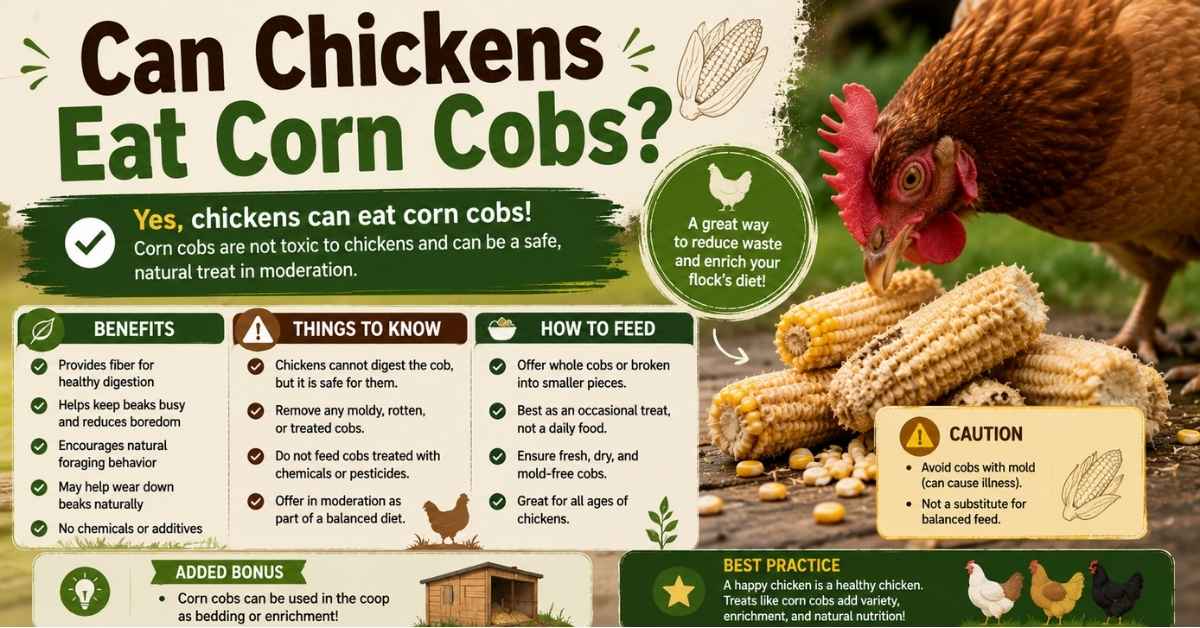
Can chickens eat corn cobs? Yes, chickens can safely peck leftover corn kernels from fresh soft corn cobs in moderation. However, the cob itself is fibrous, difficult to digest, and may create choking hazards or digestive blockage if chickens swallow large hard pieces. Backyard chicken owners should also avoid moldy corn cobs because fungal toxins and aflatoxins may seriously harm poultry health.
Many chicken keepers toss leftover corn on the cob into the chicken run as a treat without realizing that chickens mainly eat the kernels — not the cob itself. While corn is a popular energy-rich food for backyard chickens, hard dried cobs and spoiled kitchen scraps can sometimes create digestive problems, crop impaction, or mold-related illness.
Understanding the difference between corn kernels vs corn cobs is the key to feeding corn safely.
Quick Answer
| Question | Answer |
| Can chickens eat corn cobs? | Yes, cautiously |
| What part do chickens usually eat? | Mostly the kernels |
| Are hard cobs dangerous? | They can cause choking or digestive blockage |
| Are fresh cobs safer? | Yes, soft fresh cobs are safer |
| Can moldy corn hurt chickens? | Yes, mold contamination can be toxic |
Important: Chickens naturally peck the leftover kernels but usually cannot digest large fibrous cob pieces properly.
Why Chickens Like Corn
Corn is one of the most popular chicken treats because it is rich in carbohydrates and energy.
Backyard chickens naturally enjoy:
- Sweet corn
- Whole corn
- Cracked corn
- Cooked corn
- Corn kernels
The soft texture and natural sweetness trigger natural pecking behavior and foraging instincts.
Nutritional Benefits of Corn for Chickens
Corn provides:
| Nutrient | Benefit |
| Carbohydrates | Quick energy |
| Calories | Body warmth |
| Natural sugars | Palatability |
| Small protein amounts | Supplemental nutrition |
Many poultry keepers increase corn treats during winter because the extra calories help chickens maintain body heat.
Why Chickens Peck Corn Off the Cob
Chickens are instinctive peckers. When they see leftover kernels attached to a cob, they naturally peck at the soft edible parts while mostly ignoring the harder fibrous center.
This natural feeding behavior explains why many free-range chickens safely enjoy fresh corn cobs occasionally.
Corn Kernels vs Corn Cobs
This is the most important distinction for this topic.
Corn Kernels Are Usually Safe
Corn kernels are:
- Soft
- Easy to digest
- Nutrient-rich
- Safe in moderation
Most chickens digest kernels without difficulty.
Why Corn Cobs Are Harder To Digest
The cob itself contains:
- Insoluble fiber
- Hard fibrous material
- Tough plant texture
Unlike kernels, corn cobs provide very little nutritional value.
Large cob pieces may create:
- Digestive blockage
- Choking hazards
- Crop impaction
- Gastrointestinal stress
“Most chickens peck the corn off the cob naturally, but swallowing large cob pieces can create digestive problems.”
Can Chickens Digest the Cob Itself?
Chickens cannot fully digest tough corn cob material efficiently. Their digestive system works better with softer foods and smaller particles.
This is why whole cob ingestion becomes risky.
Are Corn Cobs Safe for Chickens?
Corn cobs can be safe when fed properly and in moderation.
When Corn Cobs Are Usually Safe
Fresh soft corn cobs are safest when:
- Small amounts are offered
- Kernels remain attached
- Chickens peck naturally
- Feeding is supervised
Most backyard chickens simply remove the kernels and leave behind most of the cob.
Unsafe Corn Cobs for Chickens
Avoid:
- Hard dried corn cobs
- Moldy corn
- Rotten cobs
- Fungus-covered corn
- Large broken cob chunks
- Spoiled kitchen scraps
These increase the risk of digestive blockage and mold contamination.
Fresh vs Dried Corn Cobs
| Fresh Soft Cobs | Hard Dried Cobs |
| Easier to peck | Tough fibrous texture |
| Softer material | Hard chewing surface |
| Lower choking risk | Higher digestive blockage risk |
| Safer overall | More dangerous |
Fresh cobs are significantly safer than stale or dried cobs.
Risks of Feeding Corn Cobs to Chickens
While chickens enjoy corn, there are still important feeding risks poultry owners should understand.
Digestive Blockage and Crop Impaction
Hard fibrous cob material may compact inside the digestive tract.
This can lead to:
- Impacted crop
- Digestive compaction
- Gastrointestinal blockage
- Reduced appetite
Choking Hazards
Large cob fragments may become choking hazards, especially for:
- Smaller breeds
- Young chickens
- Baby chicks
Whole cob ingestion is rare but still possible in aggressive feeders.
Why Insoluble Fiber Creates Problems
Corn cobs contain large amounts of insoluble fiber, which chickens struggle to break down efficiently.
Unlike softer vegetables, fibrous cob texture may remain partially undigested inside the poultry digestive tract.
Moldy Corn and Aflatoxin Risks
This is one of the most overlooked dangers competitors barely explain.
Can Moldy Corn Hurt Chickens?
Yes. Moldy corn may contain dangerous fungal toxins called aflatoxins.
Aflatoxin poisoning can affect:
- Liver function
- Egg production
- Immune health
- Digestion
- Overall poultry health
What Causes Mold Contamination?
Mold growth becomes more common when:
- Corn sits in damp areas
- Cobs remain outdoors too long
- Kitchen scraps spoil
- Feed storage conditions are poor
Signs of Mold-Related Illness
Watch for:
- Weakness
- Reduced appetite
- Lethargy
- Digestive stress
- Poor egg quality
Never feed spoiled corn or stale moldy cobs to chickens.
“A small amount of mold contamination can sometimes create bigger health risks than the corn cob itself.”
Can Baby Chicks Eat Corn Cobs?
Baby chicks require extra caution.
Are Corn Cobs Safe for Chicks?
Not really.
Young chicks have:
- Smaller digestive systems
- Higher choking risk
- Limited fiber tolerance
Hard cob pieces are too difficult for chicks to process safely.
Better Corn Options for Baby Chicks
Safer choices include:
- Soft corn kernels
- Finely chopped cooked corn
- Cracked corn in moderation
Avoid large fibrous material entirely.
Best Ways To Feed Corn to Chickens
Proper preparation makes feeding safer.
Safe Feeding Methods
| Feeding Method | Safety Level |
| Fresh soft corn on cob | Good |
| Loose kernels | Excellent |
| Cooked plain corn | Good |
| Hard dried cobs | Poor |
| Moldy corn | Dangerous |
Should Corn Be Raw or Cooked?
Both raw and cooked corn can be safe if:
- Plain
- Unsalted
- Unbuttered
- Fresh
Avoid heavily seasoned human food leftovers.
Can Chickens Eat Corn Husks?
Small amounts of corn husks are usually harmless, but they are also fibrous and difficult to digest in large quantities.
Moderation remains important.
How Much Corn Should Chickens Eat?
Corn should remain a treat rather than a primary poultry feed.
Why Moderation Matters
Too much corn may lead to:
- Nutritional imbalance
- Excess weight gain
- Reduced protein intake
- Lower dietary diversity
Balanced poultry nutrition always matters more than treats.
Is Corn Good for Winter Feeding?
Yes.
Many flock owners feed more corn during colder months because:
- Extra calories support body warmth
- Energy needs increase during winter
- Corn acts as a high-energy carbohydrate source
Still, excessive corn feeding should be avoided.
Corn Cobs Chickens Should Never Eat
Some corn products are unsafe for backyard flocks.
Dangerous Corn Cobs
Never feed:
- Moldy cobs
- Fungus-covered corn
- Salted corn
- Buttered corn
- Chemically treated corn
- Spoiled kitchen waste
Why Seasoned Corn Is Dangerous
Human food additives may contain:
- Excess sodium
- Oils
- Artificial flavorings
- Butter fats
These ingredients are unhealthy for poultry digestion.
Better Alternatives to Corn Cobs
There are many safer treats for chickens.
Healthy Alternatives
| Treat | Safety |
| Pumpkin | Excellent |
| Cucumbers | Excellent |
| Watermelon | Very good |
| Lettuce | Good |
| Oats | Good |
| Sunflower seeds | Good |
These foods provide enrichment with lower digestive risk.
LEARN MORE: Can Chickens Eat Grass Clippings?
Veterinary Perspective on Corn Cobs
Most poultry experts agree that chickens can enjoy corn safely in moderation.
However, veterinarians still warn against:
- Mold contamination
- Whole cob ingestion
- Hard dried cobs
- Excessive fibrous material
When To Call a Vet
Seek veterinary help if chickens show:
- Persistent crop swelling
- Severe choking
- Loss of appetite
- Weakness
- Digestive blockage symptoms
Early treatment improves recovery chances significantly.
Common Myths About Chickens and Corn
Myth: Chickens Can Digest Anything
False. Chickens still struggle with tough fibrous materials like hard cobs.
Myth: Corn Cobs Are Highly Nutritious
False. The kernels provide most of the nutrition — not the cob itself.
Myth: Moldy Corn Is Harmless
False. Aflatoxins and fungal toxins may seriously harm poultry health.
Myth: Corn Should Replace Chicken Feed
False. Corn should remain a treat alongside balanced poultry feed.
Frequently Asked Questions
Can chickens eat corn cobs safely?
Yes, chickens can safely peck kernels from fresh soft corn cobs in moderation.
Can chickens digest corn cobs?
They can digest small amounts, but large fibrous cob pieces are difficult to process.
Are dried corn cobs dangerous for chickens?
Yes, dried cobs are harder, tougher, and more likely to cause choking or digestive blockage.
Can chickens choke on corn cobs?
Large cob chunks may create choking hazards, especially for smaller birds.
Is moldy corn toxic to chickens?
Yes. Mold contamination may contain aflatoxins that damage poultry health.
Do chickens eat the cob or just the kernels?
Most chickens naturally eat the kernels while leaving behind most of the cob.
Can chickens eat cooked corn on the cob?
Yes, plain cooked corn without salt or butter is usually safe.
Conclusion
Can chickens eat corn cobs? Yes, but chickens mainly benefit from the kernels rather than the cob itself. Fresh soft corn cobs can be safe occasional treats for backyard chickens, while hard dried cobs and moldy corn create greater risks including choking hazards, digestive blockage, crop impaction, and aflatoxin exposure.
The safest approach is simple:
- Feed fresh soft cobs only
- Let chickens peck kernels naturally
- Avoid hard fibrous pieces
- Never feed moldy corn
- Maintain a balanced poultry diet
For most backyard flocks, moderation and proper preparation make all the difference when feeding corn safely.