
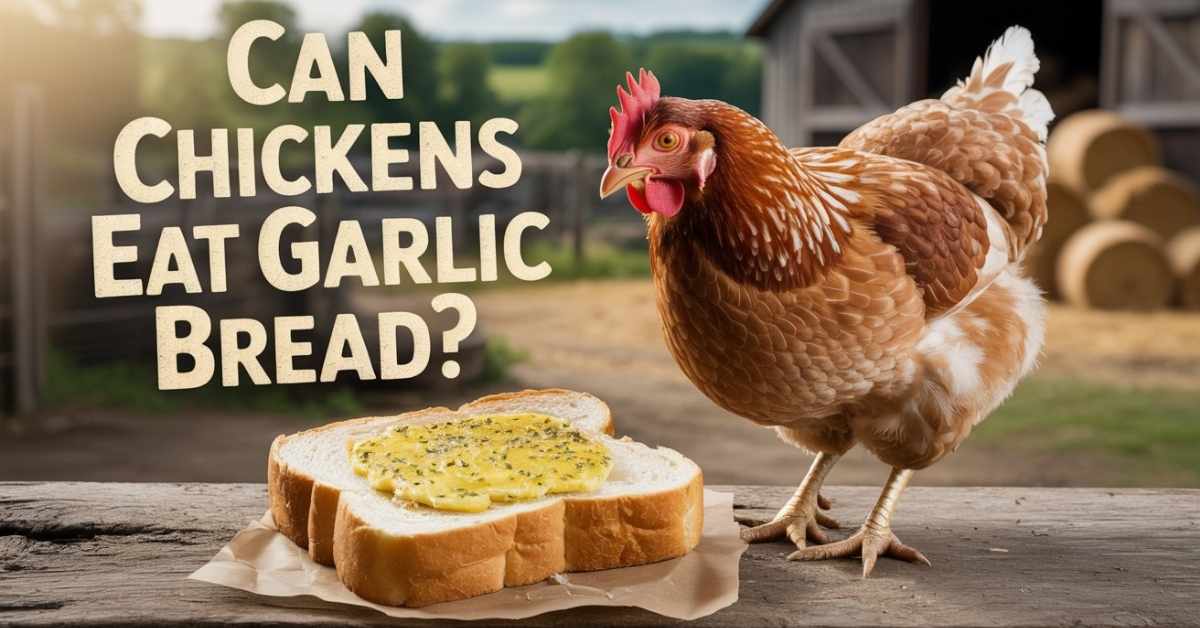
Can chickens eat garlic bread? Yes, chickens can eat small amounts of garlic bread occasionally, but it should never become a regular part of their diet. Garlic bread contains processed ingredients, sodium, butter, oils, refined carbohydrates, and seasonings that may negatively affect poultry health if overfed. While garlic itself is not usually toxic to chickens in small amounts, processed garlic bread offers very little nutritional value compared to balanced poultry feed.
Many backyard chicken owners feed leftovers and table scraps to their flocks, but understanding the risks of processed foods is important for maintaining healthy digestion, strong egg production, and long-term flock wellness. Garlic bread is safer as an occasional treat rather than a daily snack for backyard chickens or laying hens.
Can Chickens Eat Garlic Bread?
| Question | Answer |
|---|---|
| Can chickens eat garlic bread? | Yes, occasionally |
| Is garlic bread safe for chickens? | In small amounts |
| Is garlic toxic to chickens? | Usually not in moderation |
| Can chickens eat bread every day? | Not recommended |
| Can chickens eat moldy garlic bread? | No |
| Can garlic affect egg flavor? | Possibly in excess |
| Is homemade garlic bread safer? | Usually yes |
What Is Garlic Bread Made Of?
Garlic bread combines several ingredients that affect poultry health differently.
| Ingredient | Safety for Chickens |
|---|---|
| Garlic | Safe in small amounts |
| Bread | Safe occasionally |
| Butter | Limited amounts only |
| Oils | Excess may upset digestion |
| Salt | Too much is harmful |
| Preservatives | Best avoided |
Many store-bought garlic breads contain:
- Excess sodium
- Preservatives
- Refined grains
- Processed oils
- Artificial ingredients
These processed ingredients make garlic bread far less healthy than natural chicken treats such as vegetables, grains, or fruits.
Is Garlic Bread Safe for Chickens?
Garlic bread is generally safe when offered:
- In tiny portions
- Occasionally
- Without mold
- As a supplemental treat only
However, the biggest concern is not the garlic itself. The real issue comes from:
- Salt
- Butter
- Oils
- Refined carbohydrates
- Preservatives
Many poultry keepers searching “can chickens eat garlic bread safely” mainly want reassurance that garlic is not instantly toxic to chickens. Current poultry feeding practices suggest small amounts are usually tolerated, but moderation is essential.
“Healthy poultry diets should prioritize balanced feed over processed human foods.”
Nutritional Value of Garlic Bread for Chickens
Garlic bread contains calories and carbohydrates, but very limited nutritional value for poultry.
| Nutrient | Impact on Chickens |
|---|---|
| Carbohydrates | Quick energy source |
| Sodium | Excess intake risk |
| Butter and oils | Fat-heavy ingredients |
| Refined grains | Low nutritional density |
| Garlic compounds | Possible mild benefits |
Compared to balanced poultry feed, garlic bread lacks:
- Essential protein
- Balanced vitamins
- Poultry minerals
- Proper nutrient ratios
This is why processed bread should never replace complete poultry nutrition.
Risks of Feeding Garlic Bread to Chickens
This is the section most competitors oversimplify.
Excess Sodium and Salt Risks
Garlic bread often contains high sodium levels that may negatively affect flock health if consumed regularly.
Excess sodium intake may contribute to:
- Dehydration
- Digestive imbalance
- Poor flock nutrition
Greasy Foods and Poultry Digestion
Butter and oils create another issue. Chickens digest greasy processed foods less efficiently than natural grains and vegetables.
Too much greasy bread may cause:
- Digestive upset
- Loose droppings
- Nutritional imbalance
Moldy Garlic Bread Dangers
Moldy bread is extremely dangerous for chickens.
Never feed:
- Moldy garlic bread
- Spoiled bread
- Wet rotten leftovers
Mold toxins may seriously affect poultry digestion and overall flock wellness.
Refined Carbohydrates and Overfeeding
Garlic bread contains refined carbohydrates with low nutritional density. Excessive bread feeding may reduce balanced feed intake and hurt long-term poultry health.
Can Chickens Eat Garlic Safely?
Garlic itself is one of the most debated poultry feeding topics online.
Is Garlic Toxic to Chickens?
Most poultry keepers and backyard chicken owners consider small garlic amounts generally safe for chickens.
Some flock owners intentionally use garlic in moderation because they believe it may:
- Support immunity
- Improve respiratory health
- Encourage appetite
However, excessive garlic may irritate poultry digestion and should never become a major dietary ingredient.
Garlic Feeding Myths
Many myths claim garlic is either:
- Completely toxic
- Completely beneficial
The reality is more balanced.
Small amounts are usually tolerated, but overfeeding strong foods is never ideal for chickens.
Can Garlic Affect Egg Flavor?
One overlooked topic competitors rarely explain properly is egg flavor transfer.
Does Garlic Change Egg Taste?
Strong-smelling foods may slightly affect egg flavor in laying hens if consumed excessively.
Garlic contains sulfur compounds that may influence:
- Egg odor
- Egg taste
- Egg aroma
Most backyard flock owners feeding occasional tiny amounts of garlic bread will likely notice no significant change. However, frequent garlic feeding may create mild flavor differences in eggs.
Homemade vs Store-Bought Garlic Bread
Not all garlic breads are equally risky.
Can Chickens Eat Homemade Garlic Bread?
Homemade garlic bread is usually safer because owners control:
- Salt levels
- Butter quantity
- Oils
- Preservatives
Can Chickens Eat Store-Bought Garlic Bread?
Store-bought garlic bread is often more processed and may contain:
- Artificial ingredients
- Preservatives
- High sodium
- Processed oils
Homemade vs Store-Bought Comparison
| Type | Safety Level |
|---|---|
| Homemade garlic bread | Safer |
| Plain bread | Safer occasionally |
| Store-bought garlic bread | Moderate risk |
| Moldy bread | Unsafe |
Bread Safety for Backyard Chickens
Can Chickens Eat Bread Every Day?
Bread should only remain an occasional treat.
Daily bread feeding may:
- Reduce balanced feed intake
- Cause nutritional imbalance
- Increase unhealthy carbohydrate consumption
Can Chickens Eat White Bread?
White bread is safe occasionally but contains low nutritional value.
Can Chickens Eat Whole Wheat Bread?
Whole wheat bread is slightly better because it contains more fiber and nutrients.
Can Chickens Eat Stale Bread?
Dry stale bread is usually safer than moldy bread, but always inspect carefully for spoilage.
Can Chickens Eat Moldy Bread?
No. Moldy bread should never be fed to chickens.
How to Feed Garlic Bread to Chickens Safely
Proper feeding methods reduce health risks.
Best Feeding Practices
| Feeding Method | Safety |
|---|---|
| Tiny plain pieces | Safer |
| Homemade garlic bread | Better option |
| Bread with excess butter | Moderate risk |
| Greasy processed bread | Higher risk |
| Moldy bread | Unsafe |
Recommended Feeding Frequency
Garlic bread should remain:
- An occasional treat
- Less than 10% of total diet
- Fed in small controlled portions
Balanced poultry feed should always remain primary.
Safe Table Scrap Practices
Healthy backyard flock feeding includes:
- Fresh leftovers only
- No spoiled foods
- Limited processed foods
- Controlled portions
Can Baby Chicks Eat Garlic Bread?
Baby chicks should not regularly consume garlic bread.
Their digestive systems are:
- Sensitive
- Developing
- Less capable of handling processed foods
Starter feed should always remain the primary food source for chicks.
Processed bread products provide very little benefit during early growth stages.
Better Treat Alternatives for Chickens
Garlic bread is far from the healthiest poultry treat.
Healthier alternatives include:
| Treat | Main Benefit |
|---|---|
| Pumpkin | Digestive support |
| Lettuce | Hydration |
| Cucumbers | Moisture-rich snack |
| Oats | Better grain option |
| Watermelon | Hydration and enrichment |
| Blueberries | Antioxidants |
| Corn | Natural energy source |
Natural foods support healthier flock nutrition than processed bread products.
LEARN MORE: Do Chickens Eat Corn Husks?
Common Mistakes Chicken Owners Make
Feeding Too Much Bread
Excess bread creates nutritional imbalance and reduces proper feed intake.
Offering Moldy Garlic Bread
Mold toxins are dangerous for poultry health.
Ignoring Sodium Content
Salt-heavy foods are not ideal for backyard chickens.
Feeding Greasy Leftovers
Butter and processed oils may upset poultry digestion.
Replacing Balanced Feed With Scraps
Chicken feed should remain the foundation of healthy poultry nutrition.
Garlic Bread Feeding Chart for Chickens
| Factor | Recommendation |
|---|---|
| Best portion size | Tiny bite-sized pieces |
| Feeding frequency | 1–2 times weekly |
| Safe bread type | Homemade plain bread |
| Moldy bread | Never feed |
| Store-bought garlic bread | Limited amounts only |
| Main risk | Excess sodium |
| Safe for chicks | Not recommended |
| Treat ratio | Less than 10% of diet |
Frequently Asked Questions
Can Chickens Eat Garlic Bread?
Yes, chickens can eat garlic bread occasionally in small amounts.
Is Garlic Toxic to Chickens?
Garlic is generally considered safe in moderation but should not be overfed.
Can Chickens Eat Bread Every Day?
No, bread should only be an occasional treat.
Can Garlic Affect Egg Flavor?
Excessive garlic feeding may slightly influence egg taste or odor.
Can Chickens Eat Moldy Garlic Bread?
No. Moldy bread is dangerous for poultry.
Can Chickens Eat Homemade Garlic Bread?
Yes, homemade garlic bread is usually safer because it contains fewer preservatives.
Can Chickens Eat Store-Bought Garlic Bread?
Small amounts may be tolerated, but processed ingredients increase risks.
Are Processed Foods Bad for Chickens?
Highly processed foods are not ideal because they contain excess sodium, preservatives, and refined carbohydrates.
Conclusion
Can chickens eat garlic bread? Yes, chickens can safely eat small amounts of garlic bread occasionally, but it should never become a regular part of their diet. Garlic bread contains processed ingredients such as sodium, butter, oils, preservatives, and refined carbohydrates that may negatively affect poultry health when overfed.
Although garlic itself is not usually toxic to chickens in moderation, balanced poultry feed should always remain the primary nutrition source for backyard flocks and laying hens. Fresh natural treats like vegetables, grains, fruits, and healthy poultry snacks are much better long-term options than processed garlic bread.