
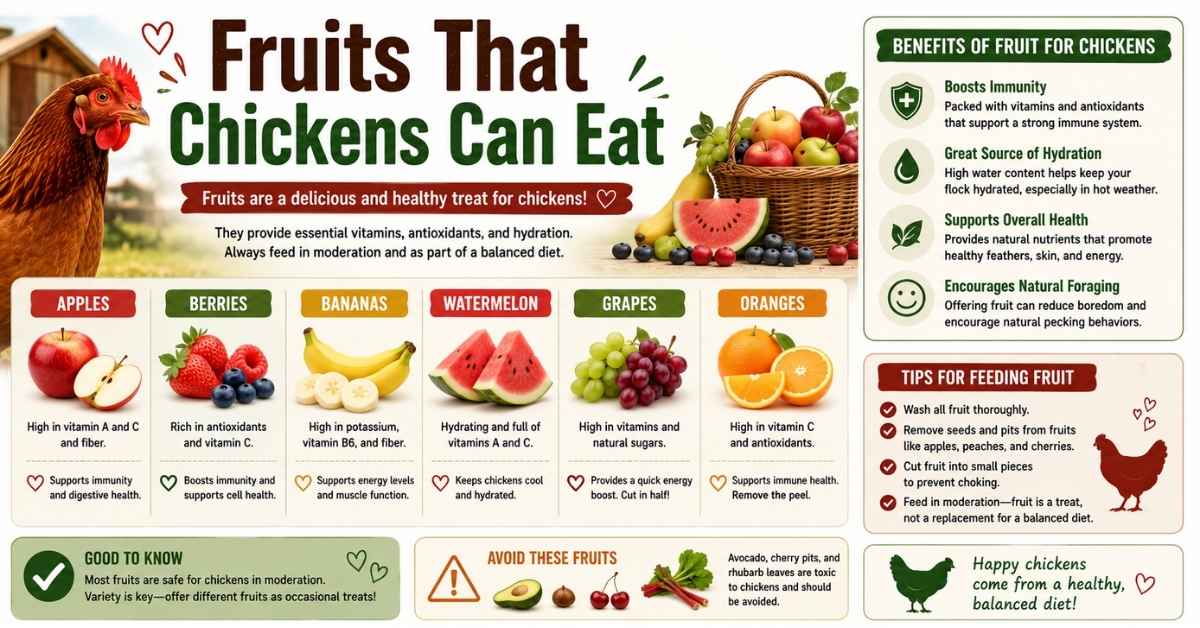
Fruits that chickens can eat include apples, bananas, watermelon, strawberries, blueberries, grapes, pears, peaches, mangoes, pineapple, and many other fresh fruits. These fruits can provide hydration, vitamins, antioxidants, and enrichment when offered as occasional treats. However, not all fruit parts are safe. Certain seeds, pits, moldy fruit, and avocado should be avoided. The key is feeding fruit in moderation as part of a balanced poultry diet rather than replacing regular chicken feed.
Whether you have a backyard flock, homestead chickens, or a few laying hens, knowing which fruits are safe can help you reduce food waste while providing healthy and enjoyable treats for your birds.
Quick Answer: What Fruits Can Chickens Eat?
Most chickens enjoy a wide variety of fruits.
Safe Fruit List at a Glance
| Fruit | Safe for Chickens? | Feeding Frequency | Special Notes |
|---|---|---|---|
| Apples | Yes | Moderate | Remove seeds |
| Bananas | Yes | Moderate | High in natural sugars |
| Watermelon | Yes | Regular Treat | Excellent hydration |
| Strawberries | Yes | Moderate | Rich in antioxidants |
| Blueberries | Yes | Moderate | Easy to serve |
| Grapes | Yes | Moderate | Whole or halved |
| Pears | Yes | Moderate | Remove seeds |
| Mango | Yes | Occasional | Remove pit |
| Pineapple | Yes | Occasional | Serve in small pieces |
| Peaches | Yes | Moderate | Remove pit |
Fruit should be viewed as a healthy chicken treat, not a replacement for a complete poultry feed.
Why Chickens Naturally Love Fruit
How Chickens Forage in Nature
Chickens are natural foragers.
When allowed to roam freely, they spend much of their day searching for:
- Seeds
- Insects
- Grasses
- Plants
- Fallen fruit
This natural behavior explains why many chickens eagerly investigate fruit treats.
Why Sweet Foods Attract Chickens
Many fruits contain natural sugars that make them attractive to poultry.
Unlike processed treats, fresh fruits also provide:
- Moisture
- Fiber
- Plant nutrients
- Antioxidants
This combination makes fruit appealing while still offering nutritional value.
The Difference Between Healthy Treats and Balanced Nutrition
A common misconception is that healthy treats can replace feed.
They cannot.
Even the healthiest fruits lack the complete balance of:
- Protein
- Amino acids
- Minerals
- Vitamins
found in quality poultry feed.
Understanding Fruit as an Enrichment Food
Fruit serves another purpose beyond nutrition.
It creates:
- Mental stimulation
- Foraging opportunities
- Activity
- Reduced boredom
Many chicken keepers use fruit as a form of environmental enrichment.
What Makes Fruit Beneficial for Chickens?
Hydration Benefits
Many fruits contain significant amounts of water.
Examples include:
- Watermelon
- Cantaloupe
- Honeydew
- Strawberries
These fruits can be especially valuable during hot weather.
Natural Vitamins and Minerals
Many safe fruits for chickens contain nutrients such as:
- Vitamin A
- Vitamin C
- Vitamin K
- Potassium
Although chickens receive most nutrients from feed, fruits can contribute additional nutritional variety.
Antioxidants and Plant Compounds
Fruits like blueberries and strawberries contain natural antioxidants.
These compounds help support overall health and cellular function.
Fiber and Digestive Support
Fruit provides dietary fiber, which can contribute to healthy digestion when fed in appropriate amounts.
Mental Stimulation and Foraging Behavior
Treats encourage chickens to:
- Explore
- Peck
- Search
- Interact with their environment
This behavioral enrichment is often overlooked but highly valuable.
The Ultimate Safe Fruit List for Chickens
Berries
Berries are among the most nutritious fruits chickens can eat.
Strawberries
Strawberries are a favorite among many flocks.
Benefits include:
- Hydration
- Vitamin C
- Antioxidants
Both the flesh and leafy tops are generally safe.
Blueberries
Blueberries are small, easy to eat, and packed with antioxidants.
Many chicken owners consider them one of the healthiest fruit treats.
Blackberries
Blackberries provide:
- Fiber
- Vitamins
- Natural enrichment
Their soft texture makes them easy to consume.
Raspberries
Raspberries are safe and often enjoyed by backyard chickens.
Cranberries
Fresh cranberries can be offered occasionally, although some chickens find them more tart than sweeter fruits.
Orchard Fruits
Apples
Can chickens eat apples? Yes.
Apples are one of the most popular fruits for chickens.
However:
- Remove seeds
- Remove heavily damaged portions
Apple flesh and skin are generally safe.
Pears
Pears provide:
- Moisture
- Fiber
- Natural sweetness
Always remove seeds before feeding.
Peaches
Peach flesh is safe.
The pit should always be discarded.
Nectarines
Nectarines can be fed similarly to peaches.
Plums
Plums are safe when the pit is removed.
Apricots
Apricot flesh can be offered in moderation.
Avoid the pit.
Melons
Melons are some of the best summer fruits for chickens.
Watermelon
Can chickens eat watermelon? Absolutely.
Watermelon provides:
- Exceptional hydration
- Cooling relief during summer
- Natural enrichment
Many chickens also enjoy watermelon rind.
Cantaloupe
Cantaloupe is another excellent hydration fruit.
Honeydew
Honeydew offers moisture and sweetness that many flocks enjoy.
Tropical Fruits
Bananas
Can chickens eat bananas? Yes.
Bananas provide:
- Potassium
- Fiber
- Energy
Because they contain more sugar than many fruits, moderation is important.
Mangoes
Mango flesh is safe and highly appealing to many chickens.
Always remove the pit.
Papayas
Papaya is a nutritious tropical fruit that chickens can enjoy.
Pineapple
Pineapple is safe when fed in small pieces.
Its acidity means moderation is wise.
Dragon Fruit
Dragon fruit is safe and provides dietary variety.
Kiwi
Kiwi can be offered occasionally, including portions of the skin if properly washed.
Citrus Fruits
Oranges
Many chickens enjoy oranges, although preferences vary.
Tangerines
Tangerines can be fed occasionally.
Mandarins
Mandarins are safe in moderation.
Clementines
Clementines provide another citrus option for poultry treats.
Other Safe Fruits
Grapes
Can chickens eat grapes? Yes.
Grapes are often a flock favorite.
They may be offered:
- Whole
- Halved
- Frozen during summer
Cherries
Cherry flesh is safe.
Always remove pits.
Figs
Figs provide fiber and natural sweetness.
Pomegranates
Many chickens enjoy pecking at pomegranate seeds.
Coconut
Fresh coconut can be offered occasionally as a special treat.
Which Parts of Fruit Are Safe and Which Should Be Avoided?
One of the biggest mistakes flock owners make is focusing only on the fruit itself.
Fruit Flesh
In most cases, the flesh is the safest part.
Fruit Peels and Skins
Many fruit peels are safe, including:
- Apple skins
- Pear skins
- Watermelon rind
Always wash produce thoroughly.
Fruit Seeds
Some seeds should be avoided.
Apple seeds, for example, are commonly removed as a precaution.
Fruit Pits
Pits from fruits such as:
- Peaches
- Plums
- Apricots
- Cherries
should never be fed.
Fruit Stems
Most stems provide little nutritional value and are often best discarded.
Fruit Leaves
Not all fruit leaves are safe.
Research specific plants before offering leaves to chickens.
Why Some Parts Are More Problematic Than the Fruit Itself
Many fruit-related risks come from:
- Seeds
- Pits
- Mold
- Rot
rather than the fruit flesh itself.
Fruits Chickens Should Never Eat
Avocado
Avocado is widely considered unsafe for poultry due to compounds found in certain parts of the fruit and plant.
Moldy Fruit
Mold can create serious health risks.
Never feed moldy fruit.
Rotten Fruit
Spoiled fruit should always be discarded.
Fermented Fruit
Fermentation can produce alcohol and other undesirable compounds.
Fruit With Toxic Additives
Avoid fruit prepared with:
- Artificial sweeteners
- Excess sugar
- Chocolate coatings
- Preservatives
Why Safety Depends on More Than the Fruit Name
Even safe fruits become unsafe when:
- Mold develops
- Chemicals are present
- Spoilage occurs
Proper storage and preparation matter.
Can Chickens Eat Fruit Every Day?
One of the most common questions backyard chicken owners ask is whether fruit can be offered daily.
The answer is yes, but in moderation.
Understanding Treat Moderation
Fruit should be considered a treat rather than a staple food.
A chicken’s primary nutrition should come from a balanced poultry feed formulated to provide:
- Protein
- Essential amino acids
- Vitamins
- Minerals
- Energy
Fruit simply complements that foundation.
The 90/10 Feeding Rule
Many poultry keepers follow a simple guideline:
- 90% complete feed
- 10% treats and extras
This helps prevent nutritional imbalances while still allowing birds to enjoy a variety of foods.
How Too Much Fruit Can Create Problems
Although fruits offer nutritional benefits, excessive amounts may contribute to:
- Reduced feed intake
- Excess sugar consumption
- Digestive upset
- Nutritional imbalance
Sugar Content and Weight Management
Certain fruits contain more natural sugars than others.
Examples include:
- Bananas
- Grapes
- Mangoes
These fruits are best offered as occasional treats rather than daily staples.
Finding the Right Balance
A varied rotation of fruits generally works better than relying on a single fruit repeatedly.
LEARN MORE: Can Chickens and Ducks Eat the Same Food?
Best Fruits for Different Seasons
Seasonal feeding is one of the easiest ways to provide variety while reducing waste.
Summer Fruits That Help Chickens Stay Cool
Hot weather often reduces activity and appetite.
Moisture-rich fruits can help support hydration.
Watermelon
Watermelon is widely considered one of the best summer fruits for chickens.
Benefits include:
- High water content
- Cooling effect
- Natural enrichment
Cantaloupe
Cantaloupe provides hydration and nutrients during warm months.
Frozen Berry Treats
Many flock owners freeze:
- Blueberries
- Strawberries
- Raspberries
to create cooling summer treats.
Fall Fruits During Harvest Season
Fall often brings an abundance of orchard fruit.
Apples
Excess apples can be shared with chickens after seeds are removed.
Pears
Pears are another excellent harvest-season treat.
Pumpkins
Technically a fruit, pumpkin provides:
- Fiber
- Seeds
- Enrichment opportunities
Winter Fruit Options
Winter fruit choices may include:
- Stored apples
- Frozen berries
- Small portions of citrus
Spring Fruit Choices
Spring often introduces:
- Strawberries
- Early berries
- Garden-grown fruits
These can add variety after winter.
Fresh, Frozen, Dried, or Overripe: Which Is Best?
Fresh Fruit
The Fresh fruit remains the best option in most situations.
Benefits include:
- Maximum moisture
- Natural texture
- High palatability
Frozen Fruit
Frozen fruit can be especially useful during summer.
Popular options include:
- Frozen grapes
- Frozen blueberries
- Frozen watermelon cubes
Dried Fruit
Dried fruit contains concentrated sugars.
Feed sparingly.
Overripe Fruit
Many chickens happily consume overripe fruit.
However, fruit should still be:
- Fresh-smelling
- Free from mold
- Free from spoilage
Garden Fruit
Homegrown fruit can be an excellent treat source.
Wash produce before feeding.
Grocery Store Fruit
Store-bought fruit is also suitable when fresh and properly prepared.
Can Chicks Eat Fruit?
When Young Chickens Can Start Trying Fruit
Young chicks should primarily consume chick starter feed.
Fruit should only be introduced gradually and in very small amounts.
Best Fruits for Chicks
Small portions of soft fruits work best.
Examples include:
- Blueberries
- Strawberries
- Watermelon
- Bananas
Fruits to Introduce Carefully
Large, fibrous, or very sugary fruits should be introduced cautiously.
Proper Portion Sizes
For chicks:
- Tiny pieces
- Occasional treats
- Supervised introduction
work best.
Common Mistakes With Young Birds
Avoid:
- Large chunks
- Excessive fruit
- Replacing starter feed
Starter feed should remain the nutritional foundation.
How to Prepare Fruit for Chickens Safely
Washing Fruit
Always wash fruit before feeding.
This helps remove:
- Dirt
- Pesticide residues
- Surface contaminants
Removing Seeds and Pits
Before serving:
- Remove peach pits
- Remove plum pits
- Remove cherry pits
- Remove apple seeds when possible
Chopping Large Fruits
Large fruits are easier to consume when cut into manageable pieces.
Serving Whole vs Cut Fruit
Some fruits may be served whole.
Others are easier for chickens when sliced.
Removing Leftovers
Unused fruit should be removed before it spoils.
Preventing Attraction of Pests
Prompt cleanup helps reduce:
- Rodents
- Insects
- Unwanted wildlife
Real-Life Fruit Feeding Situations
You Have Overripe Bananas
Overripe bananas are often a favorite treat.
As long as they are not moldy, chickens generally enjoy them.
Your Apple Tree Drops Excess Fruit
Windfall apples can be a valuable source of treats.
Remove spoiled portions and seeds when practical.
You Have Leftover Watermelon
Watermelon leftovers often become an instant flock favorite.
Birds Damaged Your Garden Berries
Partially damaged berries can often be redirected to your chickens.
You Bought Too Much Fruit at the Store
Rather than wasting produce, safe fruits can become occasional treats.
Managing Fruit Waste Responsibly
Many homesteaders use chickens as part of a broader food waste reduction strategy.
Using Fruit as Enrichment Instead of Just a Snack
Hanging Fruit Treats
Hanging fruit encourages:
- Pecking
- Exploration
- Activity
Frozen Summer Treat Blocks
Frozen fruit blocks help:
- Cool birds
- Reduce boredom
- Encourage interaction
Fruit Scavenger Hunts
Scattering fruit pieces promotes natural foraging behavior.
Pecking Stations
Dedicated treat stations create environmental enrichment.
Encouraging Natural Foraging Behavior
Foraging opportunities support both mental and physical stimulation.
Common Fruit Feeding Mistakes Chicken Owners Make
Feeding Too Much Fruit
The most common mistake.
Ignoring Seeds and Pits
Always inspect fruit before serving.
Offering Spoiled Produce
Moldy fruit should never be fed.
Replacing Feed With Treats
Treats should remain supplemental.
Assuming All Fruits Are Equally Beneficial
Some fruits provide better nutritional value than others.
Signs Your Chickens Are Responding Well to Fruit
Healthy Appetite
Birds continue consuming their regular feed.
Normal Droppings
Digestive health remains stable.
Good Feather Condition
Healthy feathers often reflect balanced nutrition.
Active Behavior
Chickens remain energetic and engaged.
Healthy Body Weight
Moderation helps maintain proper body condition.
Creating a Long-Term Fruit Feeding Strategy
Best Fruits for Routine Treats
Excellent choices include:
- Blueberries
- Strawberries
- Watermelon
- Apples
- Pears
Fruits Best Reserved for Occasional Feeding
Higher-sugar fruits include:
- Bananas
- Grapes
- Mangoes
Building Seasonal Variety
Rotate fruits throughout the year to maintain diversity.
Combining Fruit With Other Healthy Treats
Many owners combine fruit with:
- Vegetables
- Leafy greens
- Herbs
for a more balanced treat program.
Maintaining Nutritional Balance Year-Round
Remember:
Fruit supports nutrition.
Feed provides nutrition.
The difference matters.
Frequently Asked Questions
What fruits can chickens eat safely?
Chickens can safely eat many fruits, including apples, bananas, watermelon, strawberries, blueberries, grapes, pears, peaches, mangoes, and pineapple.
What fruit do chickens like most?
Watermelon, grapes, strawberries, and blueberries are among the most popular flock favorites.
Can chickens eat apples with the skin on?
Yes. Apple skin is generally safe.
Can chickens eat bananas every day?
Occasional feeding is preferable because bananas contain more natural sugars.
Can chickens eat grapes whole?
Yes, although some keepers prefer halving larger grapes.
Can chickens eat watermelon rind?
Yes. Many chickens enjoy pecking at watermelon rind.
Can chickens eat fruit peels?
Many fruit peels are safe when washed properly.
Can chickens eat fruit seeds?
Some seeds should be removed as a precaution, particularly apple seeds.
Can chickens eat frozen fruit?
Yes. Frozen fruit can make an excellent summer treat.
Can chickens eat dried fruit?
Yes, but only occasionally because sugar becomes concentrated during drying.
Can chicks eat fruit?
Yes, in very small quantities after they are established on starter feed.
What fruits should chickens avoid?
Avoid:
- Avocado
- Moldy fruit
- Rotten fruit
- Fermented fruit
How much fruit should chickens eat?
Fruit should generally remain within the treat portion of the diet rather than becoming a major food source.
Is fruit healthier than commercial treats?
Fresh fruit often provides natural nutrients and hydration, making it a healthy treat option.
What are the best summer fruits for chickens?
Watermelon, cantaloupe, honeydew, and frozen berries are among the best choices.
Final Verdict: The Best Fruits for Chickens
Safest Everyday Fruit Options
- Apples
- Pears
- Strawberries
- Blueberries
- Watermelon
Best Fruits for Hydration
- Watermelon
- Cantaloupe
- Honeydew
The Best Fruits for Nutrition
- Blueberries
- Strawberries
- Blackberries
- Raspberries
Best Fruits for Enrichment
- Grapes
- Watermelon halves
- Hanging fruit treats
Key Safety Rules to Remember
- Feed fruit in moderation
- Remove pits and problematic seeds
- Avoid moldy produce
- Prioritize complete poultry feed
Simple Feeding Plan for Backyard Chicken Owners
If you’re wondering about the best fruits that chickens can eat, focus on fresh, safe fruits such as watermelon, strawberries, blueberries, apples, pears, grapes, and bananas. Rotate treats throughout the year, use fruit to encourage natural foraging behavior, and always keep a high-quality poultry feed as the foundation of your flock’s nutrition.
When used wisely, fruit can become one of the healthiest, most enjoyable, and most enriching treats you offer your chickens.