
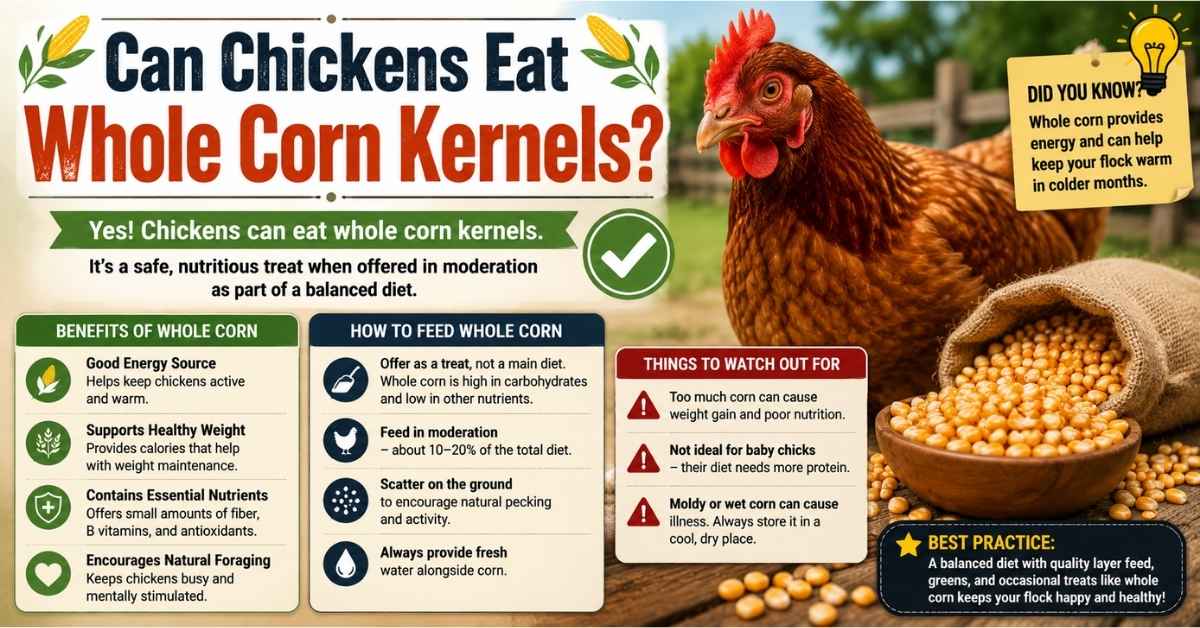
Can chickens eat whole corn kernels? Yes, adult chickens can safely eat whole corn kernels as long as they have access to grit, clean water, and a balanced poultry diet. Whole corn is a popular energy-rich treat for backyard chickens, especially during winter, but it should only make up a small part of their overall feed. Feeding too much corn can cause nutritional imbalance, obesity, and lower egg production in laying hens.
Many backyard flock owners feed whole kernel corn, cracked corn, sweet corn, and even dried field corn to chickens. However, there is a big difference between feeding corn correctly and overfeeding it. Understanding how a chicken’s crop, gizzard, and digestive tract process hard grains can help you avoid common feeding mistakes.
In this complete poultry nutrition guide, you’ll learn:
- whether chickens can digest whole corn kernels
- whole corn vs cracked corn differences
- how much corn chickens should eat
- whether chicks can eat whole corn
- winter feeding strategies
- mold and aflatoxin risks
- the safest ways to feed corn to backyard chickens
Quick Answer: Can Chickens Eat Whole Corn Kernels?
Yes, adult chickens can eat whole corn kernels safely. Their muscular gizzard is designed to grind hard grains with the help of insoluble grit. Whole corn provides carbohydrates and extra calories, making it useful during cold weather and winter feeding.
However, whole corn should only be treated as a supplemental grain, not a complete feed. Chickens still need a balanced layer ration containing:
- 16–18% protein
- calcium
- amino acids
- vitamins
- minerals
Experts generally recommend following the 90/10 feeding rule:
- 90% complete poultry feed
- 10% treats and grains, including corn
Chicken Digestive System: How Chickens Digest Whole Corn Kernels
Chickens are surprisingly efficient at digesting whole grains. Even hard dried corn kernels can be broken down naturally inside the digestive system.
What Happens After Chickens Eat Whole Corn
When a chicken eats whole corn:
- The food first enters the crop, where it softens slightly.
- It then moves into the proventriculus, which releases digestive enzymes.
- Finally, the food reaches the gizzard, a powerful muscular organ that grinds grains into smaller particles.
This grinding process is why chickens can digest hard feeds like:
- whole corn kernels
- wheat
- oats
- scratch grains
Why Grit Matters for Whole Kernel Digestion
Chickens do not have teeth. Instead, they rely on grit to crush grains inside the gizzard.
Free-range chickens usually pick up small stones naturally. Backyard chickens kept in coops often need supplemental grit measuring around 2–5 mm in size.
Without grit, chickens may struggle to process:
- whole dried corn
- tough grains
- fibrous feed
Can Chickens Choke on Whole Corn Kernels?
Healthy adult chickens rarely choke on whole corn kernels. Their feeding behavior is naturally adapted for pecking and swallowing grains.
Still, problems can happen if:
- birds eat too quickly
- water is unavailable
- kernels are moldy or swollen
- young chicks eat oversized grains
Providing clean water and grit greatly reduces digestive issues.
Whole Corn vs Cracked Corn for Chickens
One of the biggest questions poultry keepers ask is whether whole corn or cracked corn is better.
| Feature | Whole Corn | Cracked Corn |
|---|---|---|
| Digestibility | Slower | Easier |
| Storage Life | Longer | Shorter |
| Spoilage Risk | Lower | Higher |
| Best For | Adult chickens | Chicks & winter feeding |
| Feed Waste | Lower | Slightly higher |
| Processing | Natural grinding required | Pre-broken |
Which Is Better for Backyard Chickens?
Both options work well, but they serve different purposes.
Whole corn is best for:
- adult laying hens
- free-range chickens
- low-waste feeding
Cracked corn is better for:
- chicks over 6 weeks
- older chickens with weak digestion
- cold-weather calorie boosts
Many flock owners mix both together with commercial poultry feed.
Nutritional Value of Whole Corn Kernels for Chickens
Corn is an energy-dense grain rich in carbohydrates but relatively low in protein.
Corn Nutrition Breakdown
| Nutrient | Approximate Amount |
|---|---|
| Carbohydrates | 60–70% |
| Crude Protein | 8–10% |
| Fat | 2–4% |
| Fiber | 3–5% |
| Calcium | Very Low |
| Metabolizable Energy | High |
Why Chickens Love Corn
Corn is highly palatable to chickens because it:
- provides quick energy
- supports natural scratching behavior
- tastes sweet
- increases calorie intake during winter
Backyard flock owners often notice chickens become excited when corn is scattered around the coop.
“Corn acts more like an energy supplement than a complete poultry ration.”
Corn’s Biggest Nutritional Weakness
Corn lacks important amino acids like:
- methionine
- lysine
It is also low in:
- calcium
- protein
- micronutrients
This is why chickens cannot survive on corn alone long-term.
How Much Whole Corn Should Chickens Eat?
Corn should remain a treat rather than the foundation of a poultry diet.
Recommended Feeding Ratio
A healthy feeding routine usually looks like this:
| Feed Type | Recommended Percentage |
|---|---|
| Complete Feed | 85–90% |
| Treats & Grains | 10–15% |
For a flock of 10 chickens, many poultry keepers feed:
- 1–2 handfuls of corn
- 2–3 times weekly
Signs You Are Feeding Too Much Corn
Overfeeding whole corn can cause:
- obesity
- fatty liver syndrome
- reduced egg production
- protein dilution
- selective feeding behavior
If chickens fill up on corn, they may avoid nutrient-rich layer feed.
Can Baby Chicks Eat Whole Corn Kernels?
Young chicks should not eat whole corn kernels.
Their digestive systems are still developing, and they cannot efficiently grind hard grains.
Safe Age to Introduce Whole Corn
Most poultry experts recommend waiting until chicks are:
- 6–8 weeks old
- already eating grower feed
- strong enough to process grains
Better Alternatives for Chicks
Safer options include:
- chick starter
- crumbled feed
- finely cracked grains
- soft cooked corn
Chicks need higher protein levels than adult birds, often around 18–20% protein.
Best Ways to Feed Whole Corn to Chickens
There are several safe feeding methods.
Scatter Feeding
Throwing corn around the run encourages:
- exercise
- natural foraging
- boredom reduction
Mixing Corn With Layer Feed
Mixing small amounts of whole kernels into layer pellets helps maintain nutritional balance.
Feeding Corn on the Cob
Fresh corn cobs provide enrichment and entertainment for backyard flocks.
Fermented Corn Feeding
Some homesteaders ferment grains before feeding because fermentation may:
- improve digestibility
- support gut health
- soften kernels slightly
Winter Evening Feeding Strategy
Many poultry keepers feed corn in the evening during winter because digestion generates body heat overnight.
Is Whole Corn Good for Chickens in Winter?
Corn is especially popular during cold weather.
Why Poultry Owners Feed More Corn in Winter
Whole corn provides:
- extra calories
- metabolizable energy
- carbohydrate-rich fuel
This helps chickens maintain body temperature during freezing nights.
Does Corn Actually Keep Chickens Warm?
Corn does not magically “heat” chickens. Instead:
- digestion produces heat
- calorie metabolism supports warmth
- nighttime digestion slightly increases body heat
This is why evening feeding works best.
Types of Corn Chickens Can Eat
Most forms of corn are safe when fed correctly.
| Corn Type | Safe for Chickens? |
|---|---|
| Sweet Corn | Yes |
| Field Corn | Yes |
| Dent Corn | Yes |
| Cracked Corn | Yes |
| Frozen Corn | Yes |
| Fresh Corn on Cob | Yes |
| Moldy Corn | No |
Unsafe Corn Situations You Should Never Ignore
This is one area many poultry articles fail to explain properly.
Moldy Corn and Aflatoxin Risks
Mold contamination is dangerous because mold can produce aflatoxins, toxic compounds harmful to poultry.
Aflatoxin exposure may cause:
- liver damage
- poor egg production
- weakness
- reduced growth
- death in severe cases
There should be 0% tolerance for moldy grain in poultry feed.
Wet or Spoiled Corn
Never feed:
- rotten kernels
- sour-smelling grain
- damp stored corn
Improper storage encourages fungal contamination.
Pesticide-Treated Corn
Some agricultural corn is chemically treated before planting. This type should never be fed to chickens.
Deer Corn Safety Concerns
Deer corn is usually safe if:
- it is clean
- mold-free
- untreated
However, lower-quality deer feed may contain dust, spoilage, or contaminants.
Can Chickens Survive on Corn Alone?
No. Chickens cannot thrive on corn alone.
Although corn supplies calories, it lacks:
- sufficient protein
- calcium
- amino acid balance
- vitamins
- minerals
A balanced poultry ration is essential for:
- egg production
- feather quality
- immune health
- healthy growth
Whole Corn for Different Types of Chickens
Laying Hens
Laying hens can safely eat corn in moderation, but excessive corn may lower egg production due to protein dilution.
Broilers
Broilers benefit from energy-rich feeds but still require balanced amino acids for muscle growth.
Free-Range Chickens
Free-range birds often digest whole grains better because they naturally consume grit.
Bantams
Small bantam breeds may prefer cracked corn instead of large hard kernels.
Senior Chickens
Older chickens sometimes digest softer grains more comfortably.
Benefits of Feeding Whole Corn Kernels
Whole corn offers several practical advantages.
| Benefit | Why It Matters |
|---|---|
| Extra Winter Calories | Supports cold-weather energy |
| Lower Feed Waste | Whole kernels spoil slower |
| Natural Enrichment | Encourages scratching |
| Affordable Grain | Budget-friendly supplement |
| Longer Storage | Better shelf life |
Risks of Feeding Too Much Whole Corn
Even healthy treats become harmful in excess.
Potential Problems
- obesity
- fatty liver syndrome
- nutrient dilution
- low protein intake
- poor laying performance
Backyard chickens receiving excessive treats often become overweight and less productive.
Whole Corn Feeding Mistakes Backyard Chicken Owners Make
Replacing Complete Feed With Corn
Corn is not nutritionally complete.
Ignoring Grit
Without grit, digestion suffers.
Feeding Moldy Grain
Mold contamination can become deadly.
Feeding Whole Kernels to Chicks
Young birds need softer feeds.
Overfeeding Treats
Too many carbohydrates create nutritional imbalance.
LEARN MORE: Can Chickens Eat Wild Bird Seed?
Expert Tips for Feeding Corn Safely
| Tip | Reason |
|---|---|
| Use clean dry grain | Prevent mold |
| Provide fresh water | Aid digestion |
| Offer insoluble grit | Support gizzard grinding |
| Feed corn moderately | Prevent obesity |
| Store grain properly | Reduce spoilage |
Whole Corn vs Other Chicken Treats
| Treat | Protein | Calories | Best Use |
|---|---|---|---|
| Whole Corn | Low | High | Winter energy |
| Oats | Moderate | Moderate | Balanced treat |
| Wheat | Moderate | Moderate | General feeding |
| Sunflower Seeds | Higher | High | Feather support |
Corn remains one of the best cold-weather treats because of its calorie density.
Scientific Perspective: Why Chickens Can Digest Hard Grains
Modern chickens evolved from wild jungle fowl that naturally consumed:
- seeds
- grains
- fibrous plant material
Their digestive anatomy is specifically adapted for grinding hard foods through muscular gizzard action.
This evolutionary trait explains why healthy adult chickens can process whole corn kernels efficiently.
FAQs About Chickens and Whole Corn Kernels
Can chickens eat whole dried corn kernels?
Yes, adult chickens can safely eat whole dried corn kernels with proper grit access.
Can chickens digest hard corn kernels?
Yes. The gizzard grinds hard grains during digestion.
Is cracked corn better than whole corn?
Cracked corn is easier to digest, especially for younger birds.
Can chickens eat corn every day?
Yes, in moderation. Corn should stay below about 10–15% of the diet.
Can chickens eat raw corn kernels?
Yes, raw corn kernels are safe for chickens.
Does corn reduce egg laying?
Too much corn may reduce egg production if it replaces balanced feed.
Can chickens eat popcorn kernels?
Unpopped kernels are very hard and less ideal than regular feed corn.
Can chickens eat moldy corn?
No. Moldy corn may contain dangerous aflatoxins.
Conclusion
Can chickens eat whole corn kernels? Absolutely. Healthy adult chickens can safely digest whole corn kernels thanks to their powerful gizzard and natural grain-processing digestive system. Whole corn can be a valuable cold-weather treat, an affordable grain supplement, and an excellent enrichment food for backyard flocks.
The key is moderation.
Always combine corn with a high-quality poultry feed containing proper protein, vitamins, minerals, and calcium. Provide grit, clean water, and safe mold-free grain storage to keep your flock healthy.
When fed correctly, whole corn kernels can become a safe and beneficial part of a balanced chicken diet.