
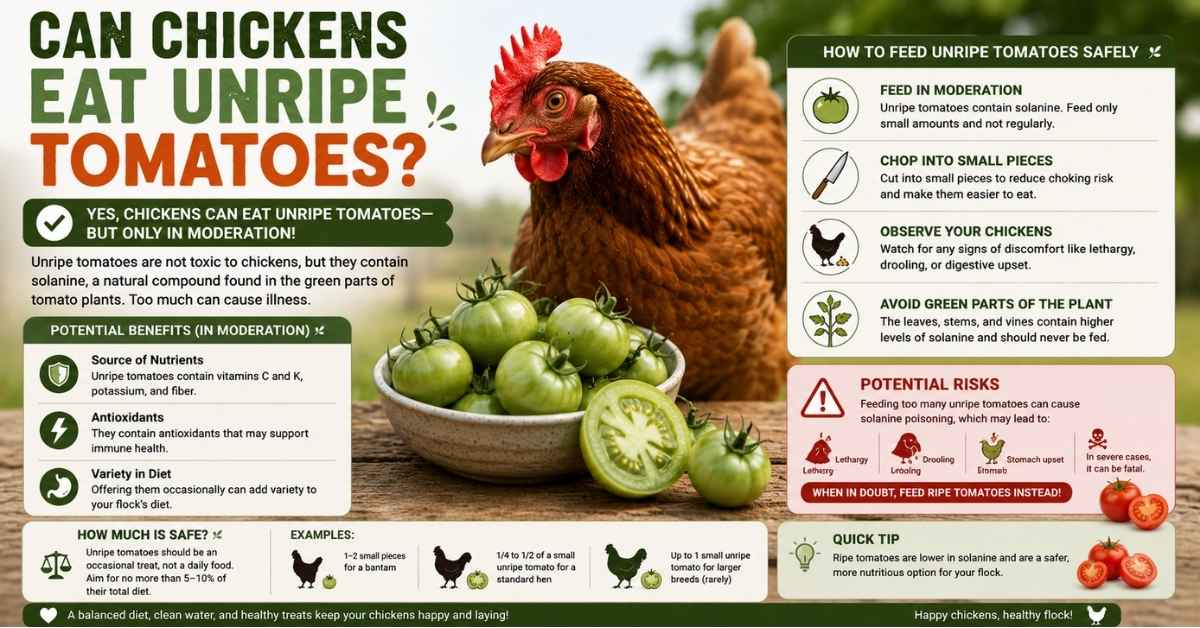
Imagine walking through your garden and finding a handful of green tomatoes that fell off the vine before ripening. If you keep backyard chickens, you might wonder: can chickens eat unripe tomatoes?
The short answer is no, chickens should not eat unripe tomatoes. While ripe red tomatoes are generally safe for chickens in moderation, green or unripe tomatoes contain higher levels of naturally occurring compounds called glycoalkaloids, particularly tomatine. These substances can be harmful to poultry when consumed in significant amounts.
Understanding the difference between ripe and unripe tomatoes can help you protect your flock from potential health problems while making better decisions about treats and garden scraps.
Why Are Unripe Tomatoes Unsafe for Chickens?
Unripe tomatoes belong to the nightshade family, which naturally produces protective chemicals to deter pests and animals.
As tomatoes ripen, the concentration of these compounds decreases. However, green tomatoes still contain relatively high levels of tomatine, making them less suitable for chickens.
What Is Tomatine?
Tomatine is a glycoalkaloid found in tomato plants, especially in:
- Green tomatoes
- Tomato leaves
- Tomato stems
- Tomato flowers
- Tomato vines
In small amounts, accidental consumption may not cause serious issues. However, larger quantities can lead to digestive upset and other health concerns.
Can a Small Amount of Unripe Tomato Hurt a Chicken?
Many chicken owners report that their birds occasionally peck at green tomatoes without showing obvious symptoms. Chickens are naturally curious and often sample various plants while foraging.
However, that does not mean unripe tomatoes are safe.
The level of risk depends on:
- The amount consumed
- The size of the chicken
- The bird’s overall health
- The ripeness of the tomato
Because there is no clear “safe” quantity, poultry experts generally recommend avoiding unripe tomatoes altogether.
Symptoms of Tomatine Toxicity in Chickens
If a chicken consumes too many green tomatoes or other parts of the tomato plant, symptoms may develop.
Common Warning Signs
Watch for:
- Reduced appetite
- Diarrhea
- Lethargy
- Weakness
- Poor coordination
- Digestive discomfort
- Decreased activity levels
In severe cases, excessive consumption may lead to more serious complications.
What Should You Do?
If you suspect your chicken has eaten a large quantity of unripe tomatoes:
- Remove access to the source immediately.
- Provide fresh water.
- Monitor the bird closely.
- Contact a poultry veterinarian if symptoms appear.
Quick action can prevent minor issues from becoming serious problems.
Can Chickens Eat Green Cherry Tomatoes?
No, green cherry tomatoes carry the same concerns as larger unripe tomatoes.
Although their smaller size may seem less risky, they still contain tomatine while unripe. Wait until cherry tomatoes turn fully red, yellow, orange, or their mature variety color before feeding them to chickens.
Ripe vs Unripe Tomatoes for Chickens
Understanding the difference helps prevent accidental feeding mistakes.
| Tomato Type | Safe for Chickens? | Notes |
|---|---|---|
| Ripe red tomatoes | Yes | Feed in moderation |
| Ripe yellow tomatoes | Yes | Safe when fully mature |
| Ripe orange tomatoes | Yes | Safe as treats |
| Green unripe tomatoes | No | Higher tomatine levels |
| Tomato leaves | No | Potentially toxic |
| Tomato stems | No | Avoid feeding |
| Tomato vines | No | Potentially harmful |
As a rule, only offer fully ripened fruit.
Why Chickens Love Tomatoes
Even though unripe tomatoes are not recommended, ripe tomatoes remain a favorite treat among many flocks.
Benefits of Ripe Tomatoes
Properly ripened tomatoes provide:
- Hydration during hot weather
- Vitamin A
- Vitamin C
- Potassium
- Antioxidants such as lycopene
Their soft texture and juicy interior also encourage natural pecking behavior.
Can Chickens Eat Tomato Plants?
No. Chickens should never have unrestricted access to tomato plants.
Many backyard chicken keepers fence off garden areas because chickens often peck at leaves, stems, and immature fruit.
Tomato Plant Parts to Avoid
Keep chickens away from:
- Leaves
- Stalks
- Vines
- Flowers
- Green fruit
Only the fully ripe fruit should be considered safe.
Safe Alternatives to Unripe Tomatoes
If you have extra produce and want healthy treats for your flock, many safer options are available.
Best Fruits for Chickens
- Watermelon
- Blueberries
- Strawberries
- Raspberries
- Apples (without seeds)
- Grapes
Best Vegetables for Chickens
- Cucumbers
- Pumpkin
- Zucchini
- Lettuce
- Cabbage
- Peas
These foods provide nutrients without the toxicity concerns associated with green tomatoes.
LEARN MORE: Can Chickens Eat Red Tomatoes?
How to Introduce New Treats to Chickens
Whenever you offer a new food:
- Start with a small amount.
- Observe your flock for 24 hours.
- Watch for digestive issues.
- Gradually increase portions if no problems occur.
Additionally, treats should make up no more than 10% of a chicken’s overall diet. Quality poultry feed should always remain the primary food source.
Common Feeding Mistakes Chicken Owners Make
Many beginners unknowingly expose their flock to unnecessary risks.
Avoid these common mistakes:
- Feeding green tomatoes
- Tossing garden waste into the chicken run
- Allowing access to tomato plants
- Offering moldy vegetables
- Replacing balanced feed with treats
Fortunately, these mistakes are easy to avoid with proper knowledge.
Frequently Asked Questions
Can chickens eat unripe tomatoes safely?
No. Unripe tomatoes contain higher levels of tomatine and are not recommended for chickens.
What happens if a chicken eats a green tomato?
A small amount may not cause noticeable issues, but larger quantities can lead to digestive upset, lethargy, and other symptoms.
Can chickens eat partially ripe tomatoes?
It is best to wait until tomatoes are fully ripe before feeding them to chickens.
Are green cherry tomatoes safe for chickens?
No. Green cherry tomatoes contain the same compounds found in larger unripe tomatoes.
Can chickens eat tomato leaves?
No. Tomato leaves contain glycoalkaloids and should not be fed to chickens.
Can chickens eat ripe red tomatoes?
Yes. Fully ripe red tomatoes are generally safe and nutritious when offered in moderation.
What fruits are safer than unripe tomatoes?
Watermelon, blueberries, strawberries, grapes, and ripe apples are excellent alternatives.
Conclusion
So, can chickens eat unripe tomatoes? The safest answer is no. Green tomatoes contain higher concentrations of tomatine, a natural compound that may cause health issues in chickens when consumed in sufficient amounts. While a small accidental bite is unlikely to be catastrophic, intentionally feeding unripe tomatoes is not worth the risk.
Instead, stick to fully ripe tomatoes and other chicken-safe fruits and vegetables. Your flock will still enjoy tasty treats while avoiding unnecessary exposure to potentially harmful compounds. If you’re growing tomatoes in your garden, consider fencing off the plants and saving only the ripe fruit for your chickens.