
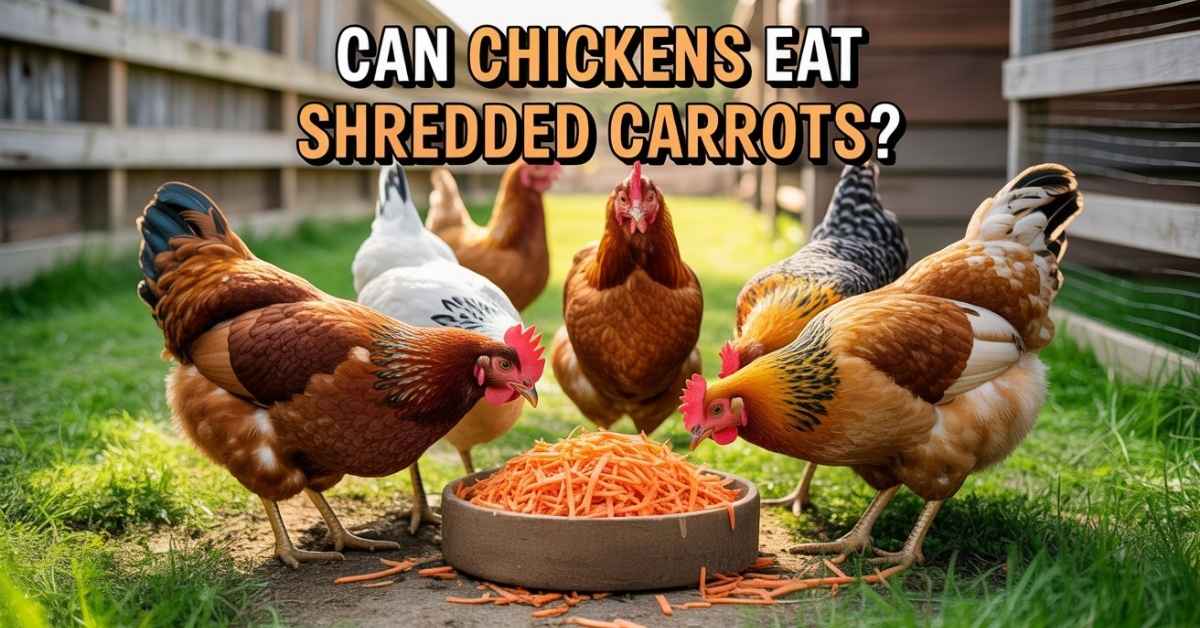
Can chickens eat shredded carrots? Yes, chickens can safely eat shredded carrots in moderation. Shredded carrots are rich in beta carotene, vitamin A, antioxidants, dietary fiber, and hydration-support nutrients that may help support feather health, immune function, healthy digestion, and overall backyard flock nutrition.
Because shredded carrots are softer and easier to peck than whole carrots, they are one of the safest and most practical vegetable treats for chickens.
Many backyard chicken owners feed shredded carrots because they are:
- easy to prepare
- low-calorie healthy treats
- naturally hydrating
- nutrient-dense vegetables
- safe for laying hens and molting chickens
Both raw shredded carrots and cooked carrots can work well for poultry feeding when offered alongside balanced poultry feed. However, moderation remains important because vegetables should supplement a chicken’s regular diet rather than replace it.
This guide explains everything you need to know about feeding shredded carrots to chickens safely, including nutrition, feeding methods, raw vs cooked carrots, hydration benefits, molting support, and common feeding mistakes.
Are Shredded Carrots Safe for Chickens?
Yes, shredded carrots are generally very safe for backyard chickens.
Chickens naturally peck at:
- vegetables
- leafy greens
- plant scraps
- soft root vegetables
Shredded carrots fit naturally into a healthy poultry diet because they are easier to eat than large carrot chunks.
Can Chickens Eat Shredded Carrots Safely?
Yes, chickens can safely eat shredded carrots in moderation.
Shredding carrots helps:
- reduce choking risks
- improve digestibility
- encourage pecking activity
- create natural flock enrichment
This is especially helpful for:
- small chicken breeds
- older hens
- baby chicks
- picky eaters
Why Shredded Carrots Are Better for Chickens
Whole carrots can sometimes be too hard for chickens to peck effectively.
Shredded or grated carrots provide:
- smaller bite sizes
- easier digestion
- softer texture
- improved feeding convenience
Many poultry owners notice chickens eat shredded carrots more eagerly than large carrot pieces.
What Parts of Carrots Can Chickens Eat?
Chickens can safely eat several carrot parts, including:
- shredded carrots
- carrot tops
- carrot greens
- carrot peels
- cooked carrots
- carrot pulp
Fresh carrot greens and tops also provide additional nutrients and natural enrichment.
Nutritional Benefits of Shredded Carrots for Chickens
Shredded carrots provide several valuable nutrients for backyard flocks.
Beta Carotene and Vitamin A Benefits
Carrots are famous for their high beta carotene content.
Beta carotene converts into vitamin A, which supports:
- vision health
- immune support
- feather condition
- skin health
Vitamin-A-rich vegetables are especially valuable for:
- laying hens
- molting chickens
- growing birds
Dietary Fiber and Healthy Digestion
Carrots also contain dietary fiber that may support:
- healthy digestion
- gut movement
- natural vegetable supplementation
Fiber-rich treats can help add variety to poultry diets while encouraging natural feeding behavior.
Hydration Support From Water-Rich Vegetables
Carrots contain natural moisture, making them useful hydration-support vegetables during warm weather.
Hydration-rich treats may help support:
- summer flock comfort
- hot-weather feeding
- healthy appetite
Many flock owners freeze shredded carrots during summer for cooling enrichment treats.
Why Carrots Are Low-Calorie Healthy Treats
Unlike processed treats, carrots are:
- low in calories
- nutrient-dense
- naturally colorful
- rich in antioxidants
This makes them excellent healthy chicken snacks for backyard poultry.
| Nutrient | Potential Benefit |
|---|---|
| Beta carotene | Vitamin A support |
| Vitamin A | Immune and feather health |
| Dietary fiber | Digestive support |
| Antioxidants | Cellular protection |
| Water content | Hydration support |
Raw vs Cooked Carrots for Chickens
Both raw and cooked carrots can be safe for chickens.
Can Chickens Eat Raw Shredded Carrots?
Yes, chickens can safely eat raw shredded carrots.
Raw carrots provide:
- crunchy texture
- natural pecking enrichment
- dietary fiber
- hydration
Many backyard chickens enjoy pecking shredded raw carrots mixed into feed or scratch areas.
Can Chickens Eat Cooked Carrots?
Yes, cooked carrots are also safe.
Cooking softens carrots, making them easier for chickens to digest and eat.
Cooked carrots may work especially well for:
- older hens
- baby chicks
- chickens recovering from illness
Are Steamed Carrots Better for Chickens?
Steamed carrots often become softer without losing as much nutrition as boiled carrots.
Soft vegetables may improve digestibility while remaining easy to peck.
Raw vs Cooked Carrots Comparison Table
| Feature | Raw Carrots | Cooked Carrots |
|---|---|---|
| Texture | Crunchy | Soft |
| Hydration | Moderate | Higher |
| Pecking enrichment | Strong | Moderate |
| Digestibility | Good | Easier |
| Best for | Active flocks | Older chickens |
Both options can fit into balanced poultry feeding plans.
Can Shredded Carrots Help Laying Hens?
Shredded carrots may provide useful nutritional support for laying hens.
Carrots for Egg Production Support
Carrots contain nutrients associated with:
- healthy digestion
- balanced nutrition
- immune function
- overall flock wellness
While carrots alone will not dramatically increase egg production, they can contribute to healthier diets.
Vitamin A and Egg Yolk Color
Beta carotene may contribute to:
- richer orange yolk pigmentation
- healthier-looking eggs
- vibrant yolk color
Many chicken keepers notice brighter yolks when hens consume colorful vegetables regularly.
Carrots During Hot Weather
Summer heat often reduces appetite and activity in backyard flocks.
Hydration-support vegetables like carrots may help:
- encourage eating
- provide moisture
- improve summer enrichment
Frozen shredded carrots can work as refreshing summer poultry treats.
Can Carrots Help Molting Chickens?
Yes, shredded carrots may help support molting chickens when combined with balanced nutrition.
Why Molting Chickens Need Nutrient Support
Molting places stress on a chicken’s body because feathers must regrow.
During molt, chickens often need:
- additional vitamins
- protein support
- antioxidants
- healthy hydration
Carrots for Feather Health
Vitamin A and antioxidants may support:
- feather regeneration
- feather condition
- skin health
Carrots work best alongside protein-rich poultry treats such as:
- sunflower seeds
- hemp hearts
- balanced layer feed
Carrots During Winter Feeding
Many poultry owners add carrots to:
- warm winter mash
- seasonal vegetable mixes
- homemade flock treats
Cooked carrots can provide soft winter enrichment during colder months.
How Much Shredded Carrot Can Chickens Eat?
Moderation remains extremely important.
The 90/10 Feeding Rule
Most poultry experts recommend:
- 90 percent balanced poultry feed
- 10 percent treats and supplements
| Food Type | Recommended Portion |
|---|---|
| Balanced poultry feed | 90% |
| Vegetables and treats | 10% |
Carrots should remain part of the treat portion only.
Safe Serving Sizes for Carrots
Small handfuls of shredded carrots are usually enough for backyard flocks.
Moderate carrot feeding helps prevent:
- nutritional imbalance
- reduced protein intake
- excessive vegetable consumption
Can Chickens Eat Shredded Carrots Every Day?
Small amounts may be safe daily for many chickens.
However, chickens still require:
- balanced poultry feed
- adequate protein
- calcium
- complete nutrition
Vegetable treats should supplement the diet rather than replace it.
Best Ways to Feed Shredded Carrots to Chickens
Preparation methods can improve both nutrition and enrichment.
Mixing Shredded Carrots With Feed
One simple method involves mixing shredded carrots into:
- layer pellets
- crumble feed
- scratch grains
- vegetable blends
This helps distribute treats evenly throughout the flock.
Combining Carrots With Other Vegetables
Carrots pair well with:
- cucumbers
- lettuce
- zucchini
- pumpkin
- spinach
Mixed vegetables provide more diverse nutrition and enrichment.
Frozen Shredded Carrots for Summer Treats
Frozen carrots work especially well during hot weather.
Cold vegetable treats may help:
- reduce heat stress
- increase hydration
- encourage pecking activity
Many flock owners freeze shredded carrots into small treat blocks.
Warm Carrot Mash for Winter Chickens
Warm vegetable mash can comfort flocks during winter.
Mixing cooked carrots with warm feed creates:
- soft textures
- seasonal enrichment
- hydration support
Can Baby Chicks Eat Shredded Carrots?
Yes, but only in very small amounts.
Are Carrots Safe for Chicks?
Baby chicks have sensitive digestive systems, so moderation is critical.
Starter feed should remain the primary nutrition source.
Best Forms of Carrots for Young Chickens
Young chicks handle:
- finely grated carrots
- soft cooked carrots
- tiny vegetable portions
better than large raw chunks.
Always introduce vegetables slowly.
Vegetables Chickens Can Eat Besides Carrots
Carrots are only one of many healthy vegetable treats.
Healthy Vegetables for Backyard Chickens
| Vegetable | Main Benefit |
|---|---|
| Carrots | Vitamin A and hydration |
| Cucumbers | Cooling hydration |
| Lettuce | Low-calorie greens |
| Pumpkin | Seasonal enrichment |
| Zucchini | Soft vegetable nutrition |
| Spinach | Mineral support |
These vegetables add healthy variety to backyard poultry diets.
Vegetables for Laying Hens
Laying hens benefit from:
- nutrient-dense vegetables
- hydration-rich foods
- colorful vegetable treats
- natural supplementation
Balanced feeding supports overall flock health.
Vegetables Chickens Should Avoid
Avoid feeding:
- moldy vegetables
- salty foods
- heavily seasoned vegetables
- spoiled scraps
Fresh produce is safest.
Common Mistakes Chicken Owners Make With Carrots
Many poultry keepers unintentionally overdo vegetable feeding.
Feeding Too Many Vegetables
Too many treats may reduce balanced feed intake.
Using Seasoned or Salted Carrots
Seasonings and salt are unsafe for poultry digestion.
Feeding Moldy Carrots
Spoiled vegetables may contain harmful bacteria or mold toxins.
Ignoring Balanced Poultry Nutrition
Vegetables should never replace:
- balanced feed
- calcium sources
- protein-rich nutrition
Offering Large Whole Carrots Without Shredding
Large hard carrots may:
- discourage eating
- create choking concerns
- reduce digestibility
Shredding improves safety significantly.
LEARN MORE: Can Chickens Eat Sunflower Heads?
Expert Tips for Feeding Shredded Carrots to Chickens
Small feeding improvements can strengthen overall flock wellness.
Build a Balanced Chicken Diet
Healthy chickens need:
- complete poultry feed
- protein
- vitamins
- calcium
- minerals
Treats should remain supplemental.
Use Carrots for Natural Enrichment
Shredded carrots encourage:
- pecking behavior
- natural scratching activity
- boredom reduction
- vegetable enrichment
This is especially useful for confined flocks.
Support Hydration During Summer
Hydration vegetables help during:
- heat waves
- summer confinement
- reduced appetite periods
Frozen shredded carrots can provide refreshing enrichment.
Monitor Chickens After New Foods
Always watch for:
- digestive changes
- loose droppings
- appetite changes
- unusual behavior
after introducing new foods.
Case Study: Frozen Shredded Carrots During Summer Heat
One backyard flock owner noticed hens becoming sluggish during extreme summer temperatures. To encourage hydration and enrichment, the owner began freezing shredded carrots with cucumbers into small treat portions several afternoons each week.
The chickens spent longer pecking the frozen vegetables and remained more active during hot afternoons. The owner also noticed improved flock engagement and less boredom-related pecking behavior.
This simple example shows why hydration-support vegetables can work well for backyard poultry during summer.
Frequently Asked Questions About Chickens and Shredded Carrots
Can chickens eat shredded carrots?
Yes, chickens can safely eat shredded carrots in moderation.
Can chickens eat raw carrots?
Yes, raw carrots are safe when shredded or chopped into manageable pieces.
Can chickens eat cooked carrots?
Yes, cooked carrots are softer and easier to digest.
Are carrots safe for laying hens?
Yes, carrots are healthy low-calorie treats for laying hens.
Can chickens eat carrot tops?
Yes, carrot tops and carrot greens are generally safe for poultry.
Can chickens eat carrot peels?
Yes, washed carrot peels are safe in moderation.
Can chickens eat shredded carrots every day?
Small portions may be safe daily, but moderation remains important.
Can baby chicks eat shredded carrots?
Tiny portions of finely grated carrots may be introduced carefully.
Are cooked carrots easier for chickens to digest?
Yes, softer cooked carrots are generally easier to eat and digest.
What vegetables are healthiest for chickens?
Carrots, cucumbers, pumpkin, lettuce, zucchini, and spinach are popular healthy vegetable options.
Conclusion
Can chickens eat shredded carrots? Yes, shredded carrots are safe, nutritious, and easy-to-feed vegetable treats for backyard chickens when offered in moderation. These nutrient-dense vegetables provide beta carotene, vitamin A, antioxidants, dietary fiber, hydration support, and natural enrichment that may help support feather health, digestion, immune function, and overall flock wellness.
Shredded carrots are especially useful because they:
- reduce choking risks
- improve digestibility
- encourage pecking activity
- provide hydration support
- work well for laying hens and molting chickens
However, carrots should only supplement balanced poultry feed rather than replace it. Avoid moldy or seasoned vegetables and feed shredded carrots responsibly as part of a healthy, balanced poultry diet.