
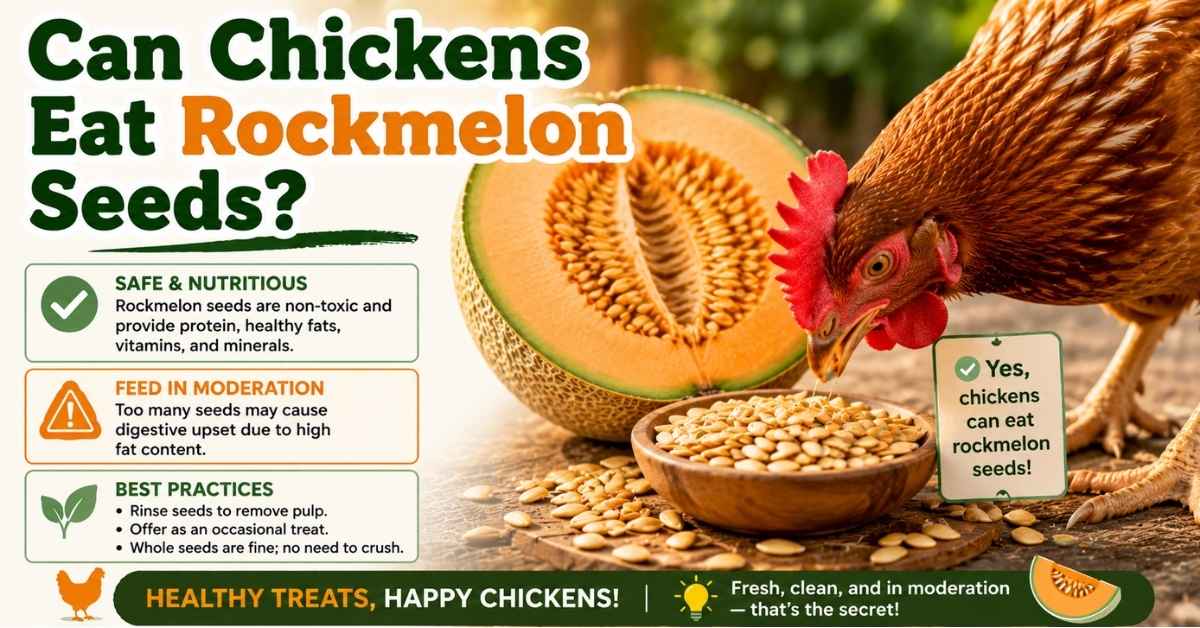
Can chickens eat rockmelon seeds? Yes, chickens can safely eat rockmelon seeds in moderation. Adult hens can usually digest fresh melon seeds without problems because their digestive system is naturally designed to handle small seeds and fibrous foods. However, baby chicks should only receive tiny crushed pieces, and moldy or fermented seeds should never be fed to poultry.
Many backyard chicken owners become nervous when feeding fruit scraps because they worry about:
- choking risks
- digestive problems
- toxic foods
- unsafe kitchen scraps
That concern is understandable. Chickens can eat many fruits safely, but the details matter. The condition of the seeds, the age of the flock, portion sizes, and feeding methods all affect whether rockmelon seeds are safe for chickens.
This guide explains everything you need to know about feeding rockmelon seeds, cantaloupe seeds, and melon scraps to backyard chickens, including digestion, chick safety, spoilage risks, proper serving methods, and the common mistakes many poultry owners make.
Quick Answer
- Yes, chickens can eat rockmelon seeds safely
- Fresh seeds are safest for adult hens
- Chicks should only eat crushed seeds in tiny amounts
- Moldy or fermented melon seeds are unsafe
- Rockmelon seeds should remain an occasional treat
| Rockmelon Seed Condition | Safe for Chickens? | Risk Level | Feeding Recommendation |
|---|---|---|---|
| Fresh seeds | Yes | Low | Feed moderately |
| Crushed seeds | Yes | Very low | Best for chicks |
| Large seed clusters | Sometimes | Moderate | Separate before feeding |
| Moldy seeds | No | High | Discard immediately |
| Fermented seeds | No | High | Unsafe for poultry |
Why Chicken Owners Worry About Melon Seeds
Most people searching this topic are not simply curious. They are trying to avoid accidentally harming their flock.
Fear of digestive problems is extremely common
Backyard chickens often eat:
- kitchen scraps
- fruit leftovers
- garden produce
- natural treats
But seeds make many poultry owners nervous because they fear:
- choking
- crop blockage
- digestive upset
- toxicity
Conflicting online advice creates confusion
Some articles claim chickens can eat almost anything while others make ordinary foods sound dangerous. That leaves beginners uncertain about what is truly safe.
Most owners simply want reassurance
The hidden question behind this search is:
“Will these rockmelon seeds hurt my chickens?”
Fortunately, fresh rockmelon seeds are generally considered safe for healthy adult chickens when fed properly.
What Happens When Chickens Eat Rockmelon Seeds?
Understanding how chickens digest food helps explain why melon seeds are usually not a problem.
Chickens naturally process small seeds
Chickens regularly peck:
- grains
- grass seeds
- weeds
- insects
- fibrous plant matter
Their digestive system is designed to handle small rough foods efficiently.
The crop temporarily stores food
After eating, food first enters the crop, where it softens before moving deeper into digestion.
The gizzard helps grind tougher foods
Chickens rely on the gizzard, a muscular digestive organ, to break down tougher materials like seeds and fibrous foods.
Why grit matters for digestion
If chickens eat treats, seeds, or scraps regularly, they need access to:
- grit
- coarse sand
- tiny stones
Grit helps chickens grind food properly inside the gizzard.
Are Rockmelon Seeds Toxic to Chickens?
No, fresh rockmelon seeds are not toxic to chickens.
Adult hens usually tolerate melon seeds well
Healthy backyard hens can generally digest melon seeds without complications.
Spoiled seeds are the real danger
The biggest risk is not the seed itself. The real danger comes from:
- mold
- fermentation
- bacterial spoilage
- rotten fruit
Spoiled melon may contain harmful toxins that upset digestion and reduce flock health.
Common myths about melon seeds
Some people assume all fruit seeds are dangerous because certain seeds contain toxic compounds. However, rockmelon seeds and cantaloupe seeds are not considered poisonous to chickens.
Nutritional Value of Rockmelon Seeds for Chickens
Rockmelon seeds contain small amounts of beneficial nutrients.
| Nutrient | Potential Benefit |
|---|---|
| Healthy fats | Energy support |
| Fiber | Digestive support |
| Trace minerals | General wellness |
| Moisture | Hydration support |
Seeds are still treats — not primary nutrition
Even though melon seeds contain nutrients, chickens still require balanced poultry feed as their main food source.
Too many fruit treats can create imbalance
Excess fruit scraps may lead to:
- watery droppings
- reduced feed intake
- selective eating
- sugar-heavy diets
Moderation remains extremely important.
Can Baby Chicks Eat Rockmelon Seeds?
Baby chicks require much more caution than adult hens.
Chicks have smaller digestive systems
Young chicks cannot process large or fibrous foods as effectively as mature birds.
Large seeds may increase choking risk
Although rockmelon seeds are soft compared to many other seeds, oversized pieces may still become difficult for tiny chicks to swallow.
The safest way to feed seeds to chicks
If you choose to feed melon seeds to baby chicks:
- crush the seeds first
- mix them with soft melon flesh
- provide chick grit
- supervise feeding carefully
Most experienced flock owners limit treats for young chicks
During early growth stages, chicks benefit most from:
- chick starter feed
- protein-rich nutrition
- balanced vitamins
Treats should remain extremely limited.
Should You Remove Rockmelon Seeds Before Feeding?
In many situations, removing the seeds is optional.
Adult chickens can usually eat seeds naturally
Most hens peck through melon flesh and seeds without issues.
When removing seeds makes sense
You may want to remove or reduce seeds if:
- feeding very young chicks
- offering large amounts of melon
- dealing with smaller chicken breeds
- introducing melon for the first time
Beginners often prefer the low-risk approach
Many new flock owners simply remove excess seeds until they feel more confident feeding treats.
Fresh vs Dried vs Moldy Rockmelon Seeds
The condition of the seeds matters more than the seeds themselves.
| Seed Type | Safe or Unsafe? | Important Notes |
|---|---|---|
| Fresh wet seeds | Safe | Best option |
| Air-dried seeds | Usually safe | Feed moderately |
| Moldy seeds | Unsafe | Potential toxin risk |
| Fermented seeds | Unsafe | Can upset digestion |
Fresh seeds are the safest option
Freshly removed seeds from ripe melon are usually safest for chickens.
Mold changes everything
Even safe foods become dangerous once mold develops.
Never feed:
- slimy seeds
- sour-smelling melon
- fermented fruit scraps
- insect-covered leftovers
Fermented melon can upset digestion
Spoiled fruit may trigger:
- diarrhea
- digestive imbalance
- poor appetite
- unhealthy droppings
How Many Rockmelon Seeds Can Chickens Eat?
Even safe treats should stay moderate.
Small amounts work best
A few seeds mixed into melon flesh are usually more than enough for backyard hens.
Treats should never replace balanced feed
The healthiest flocks still rely primarily on:
- layer feed
- grains
- protein
- calcium
- clean water
Signs chickens are getting too many fruit scraps
Watch for:
- loose droppings
- aggressive treat behavior
- reduced feed consumption
- excessive begging for snacks
Safe Ways to Feed Rockmelon Seeds to Chickens
How you serve treats can affect flock behavior and safety.
Scatter feeding reduces competition
Throwing small melon pieces across different areas helps reduce bullying.
Mixing seeds with soft melon flesh works well
Many hens naturally peck through the flesh and consume seeds gradually.
Frozen melon treats help during summer
Frozen melon scraps provide:
- enrichment
- hydration
- cooling during hot weather
Hanging melon halves encourage natural pecking
Some flock owners hang melon inside the run to encourage activity and reduce boredom.
LEARN MORE: Can Chickens Eat Rockmelon?
What Experienced Chicken Keepers Notice About Melon Seeds
Backyard flock owners often observe interesting feeding behavior around melon treats.
Hens usually eat the sweet flesh first
Many chickens prioritize the juicy melon flesh before returning to leftover seeds.
Dominant hens sometimes guard favorite treats
Sweet foods can trigger temporary food competition inside larger flocks.
Some chickens ignore seeds completely
Not every chicken enjoys the same textures. Some hens peck only the soft fruit and leave seeds behind.
Common Feeding Mistakes That Cause Problems
Feeding spoiled kitchen scraps
This is one of the biggest mistakes backyard poultry owners make.
Giving too many sugary treats
Excess fruit can reduce balanced nutrition.
Offering large seed clusters to chicks
Young birds should never struggle with oversized food pieces.
Leaving leftovers inside the coop too long
Old fruit quickly attracts:
- flies
- ants
- rodents
- bacteria
Can Rockmelon Seeds Cause Digestive Problems?
Fresh seeds rarely cause issues when fed properly.
Overfeeding fruit may create loose droppings
High-moisture treats sometimes lead to watery stools temporarily.
Chickens with digestive illness need extra caution
If a chicken already appears sick, weak, or lethargic, avoid unnecessary treats until health improves.
Temporary loose droppings are not always dangerous
A small dietary change may briefly affect droppings without indicating serious illness.
However, persistent symptoms should always be monitored carefully.
Fruits and Seeds Chickens Can Safely Eat
| Food | Safe? | Notes |
|---|---|---|
| Rockmelon seeds | Yes | Feed moderately |
| Pumpkin seeds | Yes | Popular treat |
| Watermelon seeds | Yes | Usually harmless |
| Sunflower seeds | Yes | Good occasional snack |
| Apple seeds | Limited | Avoid excessive amounts |
| Avocado pit/seeds | No | Toxic to chickens |
Best Times to Feed Rockmelon Seeds
During hot weather
Hydrating fruits help support flock comfort during summer heat.
As enrichment treats
Treat feeding encourages:
- natural pecking
- curiosity
- activity
After supervised free-ranging
Many owners use treats as a way to guide chickens back toward the coop area.
Safe Treat Rules Every Chicken Owner Should Follow
Experienced flock owners follow one simple principle:
Treats should support the diet — not replace it
Balanced poultry feed remains essential for:
- egg production
- feather health
- energy
- shell quality
- long-term flock health
Rockmelon seeds work best as:
- occasional treats
- enrichment snacks
- hydration support
not as staple nutrition.
Frequently Asked Questions
Can chickens choke on rockmelon seeds?
Adult hens usually handle fresh seeds well, but baby chicks may struggle with larger pieces.
Can chickens digest melon seeds naturally?
Yes, healthy chickens naturally digest many small seeds and fibrous foods.
Are cantaloupe seeds safe for hens?
Yes, cantaloupe seeds and rockmelon seeds are generally safe in moderation.
Can chickens eat wet melon seeds?
Fresh wet seeds are usually the safest option because they remain soft and easy to peck.
Should melon seeds be crushed first?
Crushing seeds is recommended mainly for baby chicks or smaller birds.
Can too many melon seeds upset digestion?
Too many fruit scraps may contribute to watery droppings or reduced appetite for regular feed.
Do wild birds eat melon seeds too?
Yes, many wild birds naturally consume small fruit seeds and plant matter.
Final Verdict
Can chickens eat rockmelon seeds? Absolutely. Fresh rockmelon seeds are generally safe for healthy backyard chickens when fed in moderation. Adult hens usually digest them naturally, while baby chicks require smaller crushed portions and extra supervision.
The biggest risks come from:
- moldy melon
- fermented fruit
- excessive treats
- poor feeding habits
When served properly, rockmelon seeds can become a safe, hydrating, and enjoyable snack for backyard flocks without causing harm.