
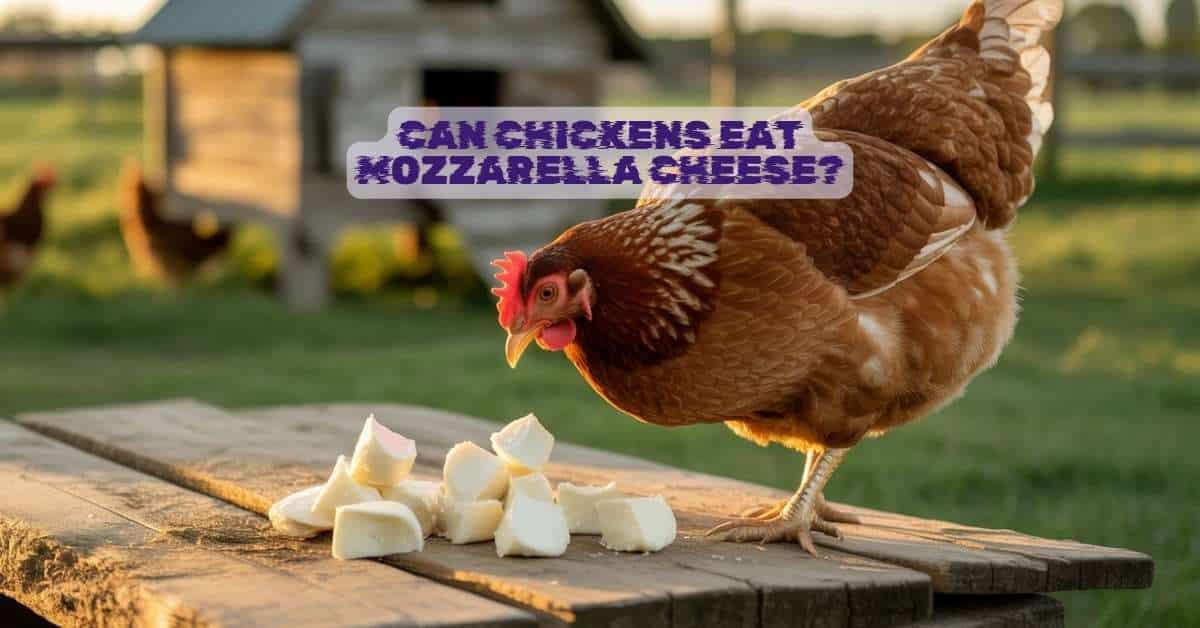
Can chickens eat mozzarella cheese? Yes—chickens can eat mozzarella cheese, but only in small amounts and as an occasional treat.
While mozzarella is not toxic and even contains protein and calcium, chickens have a limited ability to digest dairy (lactose intolerance), and the cheese’s fat and sodium content can cause problems if overfed.
This guide explains everything you need to know about feeding mozzarella cheese to chickens, including nutrition facts, digestion, risks, safe portions, and better alternatives for a balanced backyard chicken diet.
Can Chickens Eat Mozzarella Cheese? (Quick Answer First)
Yes, mozzarella cheese is safe for chickens, but it should only be fed occasionally.
To keep your flock healthy:
- Treat mozzarella as a supplemental food, not a staple
- Keep portions small
- Follow the ≤10% treat rule
This ensures chickens still receive proper nutrition from their main feed.
Is Mozzarella Cheese Safe for Chickens?
Mozzarella cheese is considered non-toxic, meaning chickens can safely eat it without immediate harm. However, safety depends on how much and how often it is fed.
There is a key difference between:
| Type | Safety | Reason |
|---|---|---|
| Fresh mozzarella | ✅ Safe | Lower salt, softer texture |
| Processed cheese | ❌ Unsafe | Additives and preservatives |
| Flavored cheese | ❌ Unsafe | High sodium and chemicals |
Mozzarella stands out as one of the safer cheese options for chickens, but moderation is critical.
Can Chickens Digest Cheese? (Lactose Explained)
Chickens are not natural dairy consumers, which means their digestive system is not designed to process lactose efficiently.
Lactose Digestion in Chickens
- Chickens have low lactose tolerance (~0–10%)
- They lack sufficient lactase enzyme
- Excess dairy can lead to digestive upset
This is why even safe dairy foods like mozzarella must be fed carefully.
“Chickens can eat cheese, but their bodies are not built to handle large amounts of dairy.”
Nutritional Value of Mozzarella Cheese for Chickens
Mozzarella cheese contains useful nutrients, but it is not a complete food.
Macronutrient Breakdown
| Nutrient | Amount (per 100g) |
|---|---|
| Calories | 280–300 kcal |
| Protein | 22–28g |
| Fat | 17–22g |
Vitamins & Minerals
| Nutrient | Value |
|---|---|
| Calcium | 500–700mg |
| Sodium | 400–700mg |
Mozzarella provides protein and calcium, but also contains high fat and sodium, which must be controlled.
Is Mozzarella Cheese Healthy for Chickens?
Mozzarella cheese offers both benefits and drawbacks.
Benefits
- Provides high-quality protein
- Supports calcium intake for laying hens
- Adds variety to diet
Drawbacks
- High fat content (17–22g per 100g)
- Sodium levels may exceed safe limits
- Low nutrient density compared to balanced feed
Mozzarella is best viewed as an occasional treat, not a regular part of the poultry feeding guide.
Risks of Feeding Mozzarella Cheese to Chickens
Even though mozzarella is safe, overfeeding can cause issues.
Lactose Intolerance
Chickens cannot digest dairy efficiently, leading to:
- Loose droppings
- Digestive discomfort
High Fat Content
Excess fat can cause:
- Weight gain
- Reduced activity
- Poor egg production
Sodium Content
Cheese often contains 400–700mg sodium per 100g, which can:
- Cause dehydration
- Disrupt electrolyte balance
Digestive Issues
Overfeeding cheese may lead to symptoms within 12–24 hours, including:
- Lethargy
- Digestive upset
How Much Mozzarella Cheese Can Chickens Eat?
Moderation is the key to safe feeding.
Recommended Feeding Limits
| Factor | Recommendation |
|---|---|
| Portion size | 1–2 small pieces per chicken |
| Frequency | 1–2 times per week |
| Treat ratio | ≤10% of total diet |
Avoid daily feeding, as it disrupts nutrient balance.
How to Feed Mozzarella Cheese Safely
Proper preparation helps reduce risks.
Safe Preparation Steps
- Cut cheese into small, bite-sized pieces
- Serve plain and fresh
- Avoid processed or flavored varieties
Feeding Methods
- Mix small amounts with regular feed
- Offer by hand as a treat
- Scatter for natural foraging
These methods help maintain healthy feeding behavior.
Types of Cheese Chickens Can Eat
Not all cheeses are equal. Some are safer than others.
| Cheese Type | Safe? | Notes |
|---|---|---|
| Mozzarella | ✅ | Best option |
| Cottage cheese | ✅ | Easier digestion |
| Cheddar | ⚠️ | Higher fat |
| Processed cheese | ❌ | Additives |
| Moldy cheese | ❌ | Toxic risk |
Mozzarella remains one of the most suitable cheeses for chickens.
Can Chickens Eat Cheese Daily?
No, chickens should not eat cheese daily.
Daily feeding can cause:
- Nutritional imbalance
- Excess fat intake
- Digestive strain
Keeping cheese as an occasional treat ensures a balanced chicken diet.
Can Baby Chicks Eat Mozzarella Cheese?
Baby chicks require a specialized diet.
| Age | Recommendation |
|---|---|
| 0–6 weeks | ❌ Avoid cheese |
| 6–18 weeks | ⚠️ Minimal exposure |
| 18+ weeks | ✅ Occasional feeding |
Chicks need 18–22% protein starter feed, which cheese cannot provide effectively.
Comparison: Cheese vs Better Treats for Chickens
| Food | Nutritional Value | Recommendation |
|---|---|---|
| Cheese | Moderate | Occasional |
| Greens | High | Best |
| Grains | Balanced | Good |
| Insects | High protein | Ideal |
This comparison highlights why cheese should not replace nutrient-dense foods.
Best Alternatives to Cheese for Chickens
Healthier options include:
- Leafy greens (spinach, lettuce)
- Fruits in moderation
- Whole grains
- Protein sources like mealworms
These foods support digestive health and nutrient balance.
Common Feeding Mistakes
Many chicken owners unintentionally harm their flock.
“Cheese is a good protein source, so more is better.” False—excess fat and lactose cause issues.
“All dairy is safe for chickens.” Incorrect—digestive limits exist.
“Treats can replace feed.” Wrong—treats must stay below 10% of diet.
What Happens If Chickens Eat Too Much Cheese?
Overfeeding mozzarella can lead to noticeable symptoms.
Effects
- Lethargy
- Digestive upset
- Reduced appetite
Symptoms may appear within 1–6 hours and typically resolve within 24–48 hours if diet is corrected.
Expert Tips for a Balanced Chicken Diet
Maintaining proper nutrition ensures long-term health.
- Keep protein levels at 16–20%
- Maintain fat intake around 3–5%
- Ensure calcium intake of 3–4%
- Limit treats to ≤10% of total diet
These practices improve feed efficiency and flock productivity.
LEARN MORE: Can Chickens Eat Horse Feed?
Case Study: Backyard Chickens and Cheese Feeding
A backyard chicken owner began feeding leftover mozzarella cheese daily. Over time, the flock showed:
- Increased weight gain
- Reduced egg production
- Digestive issues
After switching back to a balanced poultry feed and limiting cheese to once weekly, the chickens recovered within 48 hours.
Lesson: Even safe foods can become harmful when overused.
FAQ: Mozzarella Cheese and Chickens
Can chickens eat mozzarella cheese?
Yes, but only in small amounts.
Is mozzarella cheese safe for chickens?
Yes, when fed occasionally and in moderation.
Can chickens eat cheese every day?
No, daily feeding is not recommended.
Is cheese bad for chickens?
Not harmful in small amounts, but risky if overfed.
Can chickens eat dairy products?
Yes, but only limited amounts due to lactose intolerance.
Final Verdict
Mozzarella cheese is safe for chickens in moderation, but it should never become a regular part of their diet. While it provides protein and calcium, its fat content and limited digestibility make it suitable only as an occasional treat.
To keep your flock healthy:
- Limit cheese to ≤10% of total diet
- Feed small portions only
- Focus on balanced poultry nutrition
By following these guidelines, you can safely include mozzarella cheese in your chickens’ diet while maintaining optimal health and productivity.