
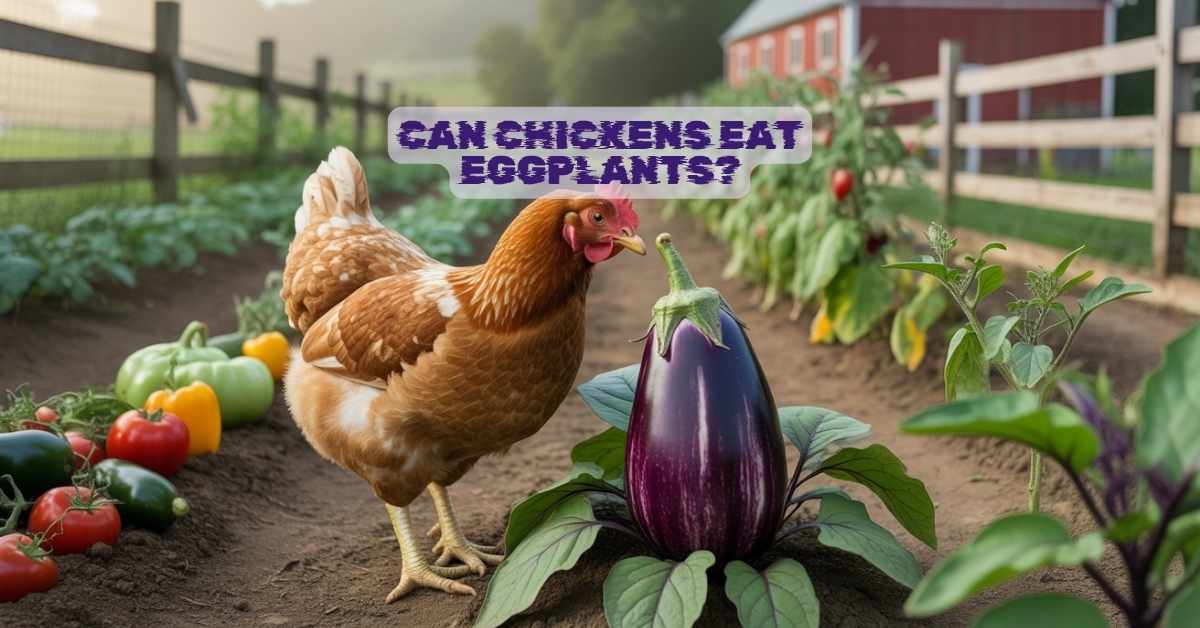
Can chickens eat eggplants? Yes—chickens can eat eggplants, but only the ripe fruit (flesh and skin) in moderation. The leaves, stems, and unripe eggplant are toxic because they contain solanine, a harmful compound found in nightshade plants. When fed correctly and within safe limits, eggplant can be a nutrient-rich vegetable treat for your flock.
Backyard chicken keepers often ask this question because eggplant belongs to the nightshade family, which includes some plants that are dangerous to poultry. This guide explains everything clearly—from toxicity risks and safe parts to feeding limits and preparation methods—so you can feed eggplant confidently without harming your chickens.
Are Eggplants Safe for Chickens?
Eggplants, also known as aubergine, can be part of a balanced chicken diet, but only under strict conditions. The key is understanding which parts are safe and which are not.
Safe vs Toxic Parts of Eggplant
| Part | Safety Level | Explanation |
|---|---|---|
| Flesh (ripe) | Safe | Rich in nutrients and easy to digest |
| Skin | Safe in moderation | Contains fiber and antioxidants |
| Leaves | Toxic | High solanine content |
| Stems | Toxic | Contains harmful alkaloids |
| Unripe fruit | Risky | Higher solanine levels |
👉 Important Rule: Only feed fully ripe eggplant, and never give leaves or stems.
Why Eggplants Are Controversial for Chickens
Eggplants belong to the nightshade family, which often raises concerns among poultry owners. This group includes plants like potatoes and tomatoes, some of which contain plant-based toxins.
The confusion comes from the presence of solanine, a natural defense compound. While safe in small amounts in ripe fruit, it becomes harmful when consumed in larger quantities or from toxic plant parts.
Nightshade Toxicity Explained (Solanine Risk)
What Is Solanine and How It Affects Chickens
Solanine is an alkaloid compound found in nightshade plants. It can interfere with a chicken’s digestive system and nervous function if consumed in high amounts.
In poultry, solanine may lead to:
- Digestive irritation
- Weakness
- Reduced appetite
Ripe vs Unripe Eggplant Safety
| Type | Solanine Level | Safety |
|---|---|---|
| Ripe eggplant | Low | Safe |
| Unripe eggplant | Higher | Risky |
This is why ripeness is a critical safety factor in feeding eggplant to chickens.
Nutritional Benefits of Eggplant for Chickens
When used correctly, eggplant offers several benefits for poultry nutrition.
Key Nutrients in Eggplant
| Nutrient | Benefit |
|---|---|
| Fiber | Supports digestion |
| Vitamin C | Boosts immune system |
| Potassium | Maintains muscle health |
| Antioxidants | Protect cells from damage |
Eggplant is considered a nutrient-rich vegetable, contributing to a healthy and natural chicken diet.
Health Benefits of Eggplant
Eggplant can improve overall flock health when fed occasionally.
“A varied diet keeps chickens active, healthy, and productive.”
Main Benefits
- Supports digestive health through fiber
- Provides immune system support
- Adds variety to prevent boredom
These benefits make eggplant a useful but occasional treat, not a staple food.
Risks of Feeding Eggplants to Chickens
Despite its benefits, eggplant must be handled carefully.
Toxicity from Leaves and Stems
Eggplant leaves and stems contain high levels of solanine, making them unsafe at any amount (0% safe level).
Overfeeding Risks
Too much eggplant can lead to:
- Digestive upset
- Loose droppings
- Reduced feed intake
Raw vs Cooked Safety Concerns
| Type | Effect |
|---|---|
| Raw | Safe in small amounts |
| Cooked | Easier to digest |
Cooking reduces bitterness and improves digestibility, but both forms are acceptable when fed properly.
What Happens If Chickens Eat Eggplant Leaves or Unripe Fruit?
Accidental ingestion can cause noticeable symptoms.
Symptoms of Solanine Toxicity
- Lethargy
- Weakness
- Digestive discomfort
- Reduced activity
Toxicity Timeline
| Time After Eating | Effects |
|---|---|
| 12–24 hours | Mild symptoms appear |
| 24–48 hours | Symptoms may worsen |
Quick action and removing the source usually prevent serious harm.
How Much Eggplant Can Chickens Eat?
Moderation is essential for safe feeding.
Safe Feeding Guidelines
| Factor | Recommendation |
|---|---|
| Diet ratio | 90% feed + 10% treats |
| Portion size | 1–2 small pieces per chicken |
| Frequency | 1–2 times per week |
A chicken typically eats 100–150 grams of feed daily, so eggplant should only be a small addition.
How to Prepare Eggplant for Chickens
Proper preparation ensures safety and digestibility.
Step-by-Step Preparation
- Select fully ripe eggplant
- Remove all leaves and stems
- Wash thoroughly
- Cut into 2–4 small pieces
- Serve fresh or lightly cooked
Eggplant vs Other Vegetables for Chickens
The Eggplant is safe, but not the best everyday vegetable.
| Vegetable | Safety | Frequency |
|---|---|---|
| Eggplant | Safe (moderation) | Occasional |
| Carrots | Very safe | Regular |
| Cucumbers | Very safe | Frequent |
| Spinach | Safe | Moderate |
Eggplant works best as part of a varied vegetable rotation.
Safe vs Toxic Eggplant Parts (Quick Comparison)
| Part | Safety |
|---|---|
| Flesh | Safe |
| Skin | Safe |
| Leaves | Toxic |
| Stems | Toxic |
| Unripe fruit | Risky |
This table is crucial for safe feeding practices.
Signs You Are Feeding Too Much Eggplant
Overfeeding can affect your flock’s health.
Warning Signs
- Reduced egg production
- Digestive issues
- Loss of appetite
These indicate an imbalance in the chicken diet.
Feeding Vegetables to Chickens the Right Way
Maintaining balance is key.
Golden Rule
👉 90% feed + 10% treats
Vegetables, including eggplant, should always remain a small part of the diet.
LEARN MORE: Can Chickens Eat Artichoke Leaves
Other Safe Vegetables Chickens Can Eat
Adding variety improves nutrition.
| Vegetable | Benefit |
|---|---|
| Carrots | Rich in vitamin A |
| Cucumbers | Hydration |
| Pumpkin | Digestive health |
| Peas | Protein boost |
Vegetables Chickens Should Avoid
Some vegetables pose real risks.
| Food | Risk |
|---|---|
| Raw potato | Solanine toxicity |
| Tomato leaves | Toxic |
| Onion | Harmful |
Backyard Case Study: Feeding Eggplant to Chickens
A backyard flock of 7 chickens was given small portions of ripe eggplant twice weekly. Over a 3-week period:
- No health issues observed
- Chickens remained active
- Egg production stable
Conclusion: Controlled feeding is safe and beneficial.
Expert Tips for Feeding Eggplant to Chickens
“Treat vegetables as supplements, not replacements.”
- Always use ripe eggplant only
- Feed in small quantities
- Monitor flock response
FAQs About Chickens and Eggplants
Can chickens eat eggplant skin?
Yes, in moderation along with the flesh.
Are eggplant leaves poisonous to chickens?
Yes, they are toxic due to solanine.
Can chickens eat cooked eggplant?
Yes, and it may be easier to digest.
How often can chickens eat eggplant?
Limit to 1–2 times per week.
Final Verdict: Should Chickens Eat Eggplants?
Eggplants can be a safe and nutritious treat when handled properly. The ripe fruit is safe, while the leaves, stems, and unripe parts are dangerous.
👉 The key rule: Feed only ripe eggplant, in small amounts, and occasionally.
Key Takeaways
- Chickens can eat eggplants safely in moderation
- Only the ripe fruit is safe
- Leaves and stems have 0% safety level
- Follow the 10% treat rule
- Feed 1–2 times per week