
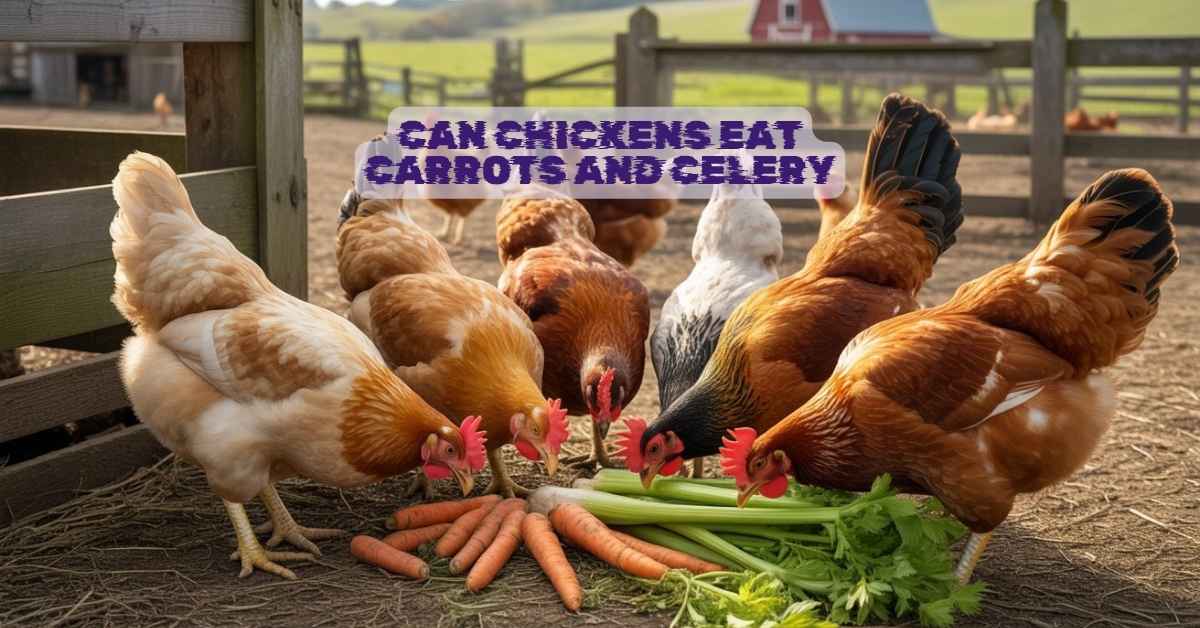
Can chickens eat carrots and celery? Yes—chickens can safely eat carrots and celery, and both vegetables can be a healthy addition to their diet when prepared properly. Carrots provide beta-carotene (a precursor to vitamin A), while celery offers hydration and fiber. However, these vegetables should only make up a small portion (5–10%) of a balanced poultry diet, and proper preparation is essential to avoid choking or digestion issues.
If you’re feeding kitchen scraps or looking to improve your flock’s nutrition, this guide explains everything in a simple, practical, and SEO-optimized way.
Are Carrots Safe for Chickens?
Carrots are one of the best vegetables you can offer chickens. They are nutrient-dense and easy to incorporate into a chicken’s diet.
Nutritional Profile of Carrots (per 100g)
| Nutrient | Value |
|---|---|
| Beta-carotene | ~8,000–9,000 mcg |
| Fiber | ~2.5–3g |
| Water | ~85–90% |
| Sugar | ~4–5g |
Carrots are especially rich in beta-carotene, which converts into vitamin A, supporting vision, immune health, and egg quality.
Important: Carrots are safe, but their hard texture means they must be cut or grated properly.
Is Celery Safe for Chickens?
Celery is also safe, but it has a very different texture compared to carrots.
Nutritional Profile of Celery (per 100g)
| Nutrient | Value |
|---|---|
| Water | ~90–95% |
| Fiber | ~1.5–2g |
| Calories | ~15–20 kcal |
Celery is:
- Highly hydrating
- Low in calories
- Moderately fibrous
However, its stringy fibers can make digestion slightly more difficult if not prepared correctly.
Carrots vs Celery for Chickens (Key Comparison)
Understanding the differences helps you feed smarter.
| Feature | Carrots | Celery |
|---|---|---|
| Texture | Hard | Fibrous |
| Main Benefit | Vitamin A | Hydration |
| Digestibility | Easy (when grated) | Moderate |
| Risk | Choking if large pieces | Stringy digestion issues |
👉 Key Insight: Carrots are more nutrient-dense, while celery is more hydrating.
Nutritional Benefits of Carrots and Celery for Chickens
Both vegetables contribute to overall health when used correctly.
Main Benefits
- Improved immune system from vitamins and antioxidants
- Better egg production and quality
- Enhanced digestion and hydration
- Increased diet variety, reducing boredom
Chickens fed a balanced diet with vegetables often show:
- Stronger feathers
- Better activity levels
- Consistent egg production (250–300 eggs/year in healthy hens)
Raw vs Cooked Carrots and Celery
Preparation makes a big difference.
Comparison Table
| Type | Raw Vegetables | Cooked Vegetables |
|---|---|---|
| Texture | Hard/Fibrous | Soft |
| Digestibility | Moderate | Easier |
| Nutrient Retention | Higher | Slightly reduced |
Key Insight
- Raw vegetables are safe but require proper cutting
- Cooked vegetables are easier to digest and reduce choking risk
👉 For beginners, lightly cooked vegetables are the safest option.
Can Chickens Eat Carrot Tops and Celery Leaves?
Yes, chickens can eat these parts too.
Plant Part Safety
| Part | Safety |
|---|---|
| Carrot tops | Safe |
| Celery leaves | Safe |
| Stalks (celery) | Safe |
These leafy parts contain:
- Additional nutrients
- Natural fiber
- Variety for foraging
How Much Carrots and Celery Can Chickens Eat? (Safe Limits)
Moderation is essential for any treat.
Recommended Intake
| Intake Level | Effect |
|---|---|
| 5–10% of diet | Safe and beneficial |
| 10–15% | Mild digestive issues |
| 20%+ | Imbalance risk |
Feeding Frequency
- Offer vegetables 1–2 times per week
👉 This ensures chickens get benefits without compromising their core nutrition.
Can Chickens Eat Carrots and Celery Daily?
Daily feeding is not recommended.
Even healthy vegetables can:
- Replace essential feed nutrients
- Cause digestive imbalance within 24–48 hours
- Reduce egg production over time
Best Way to Feed Carrots and Celery to Chickens
Preparation is critical for safety and digestion.
Recommended Preparation Methods
- Cut vegetables into <2–3 cm pieces
- Grate carrots for easier eating
- Remove tough celery strings
These steps:
- Reduce choking risk
- Improve digestion
- Encourage natural feeding behavior
Risks of Feeding Carrots and Celery ⚠️
Although safe, improper feeding can cause problems.
Potential Risks
- Choking hazard from large pieces
- Digestive difficulty from fibrous texture
- Nutritional imbalance if overfed
Signs of Overfeeding Vegetables to Chickens
Watch for these symptoms:
Warning Signs
- Loose droppings
- Reduced appetite
- Lower egg production (10–20% drop)
- Lethargy
These indicate the need to reduce vegetable intake immediately.
What Should Chickens Eat Instead? (Balanced Diet Guide)
Vegetables are supplements, not staples.
Core Diet Structure
- Layer feed (16–18% protein)
- Starter feed (18–20% protein)
- Natural foods like grains and insects
This ensures:
- Proper growth
- Strong eggshells
- Consistent production
Can Baby Chickens Eat Carrots and Celery?
Young chicks have different nutritional needs.
Key Rule
- Limit vegetables during 0–6 weeks
During this stage:
- Focus on starter feed
- Provide easily digestible nutrition
LEARN MORE: Can Chickens Eat Rhubarb Leaves and Stems
Common Feeding Mistakes with Vegetables
Many beginners make avoidable mistakes.
Typical Errors
- Feeding large chunks
- Not chopping fibrous vegetables
- Overfeeding scraps
- Ignoring diet balance
Expert Tips for Feeding Vegetables to Chickens
Experienced poultry keepers follow simple rules:
- Keep vegetables under 10% of diet
- Rotate different foods
- Observe flock health regularly
Case Study: Feeding Carrots and Celery to Chickens
A backyard flock was given carrots and celery as part of their diet.
Results
| Feeding Level | Outcome |
|---|---|
| 5–8% | Healthy, active chickens |
| 10–15% | Mild digestive changes |
| 20%+ | Reduced egg production |
👉 Conclusion: Proper portion control delivers benefits, while overfeeding causes problems.
FAQs
Can chickens eat carrots and celery?
Yes, both are safe when properly prepared.
Are carrots good for chickens?
Yes, they are rich in vitamin A and support overall health.
Is celery safe for chickens?
Yes, but it should be chopped due to its fibrous texture.
How much vegetables can chickens eat?
Keep vegetables within 5–10% of their diet.
Should vegetables be cooked before feeding?
Cooking is optional but improves digestibility.
Final Verdict: Should You Feed Carrots and Celery to Chickens?
So, can chickens eat carrots and celery? Absolutely—but only when fed correctly.
Final Recommendation
- Feed in small portions (5–10%)
- Offer 1–2 times per week
- Always cut or grate before serving
Bottom Line
Carrots and celery are safe, nutritious, and beneficial vegetables for chickens when used in moderation. Carrots provide essential vitamins, while celery supports hydration and digestion. The key is simple: prepare properly, feed moderately, and maintain a balanced diet.