
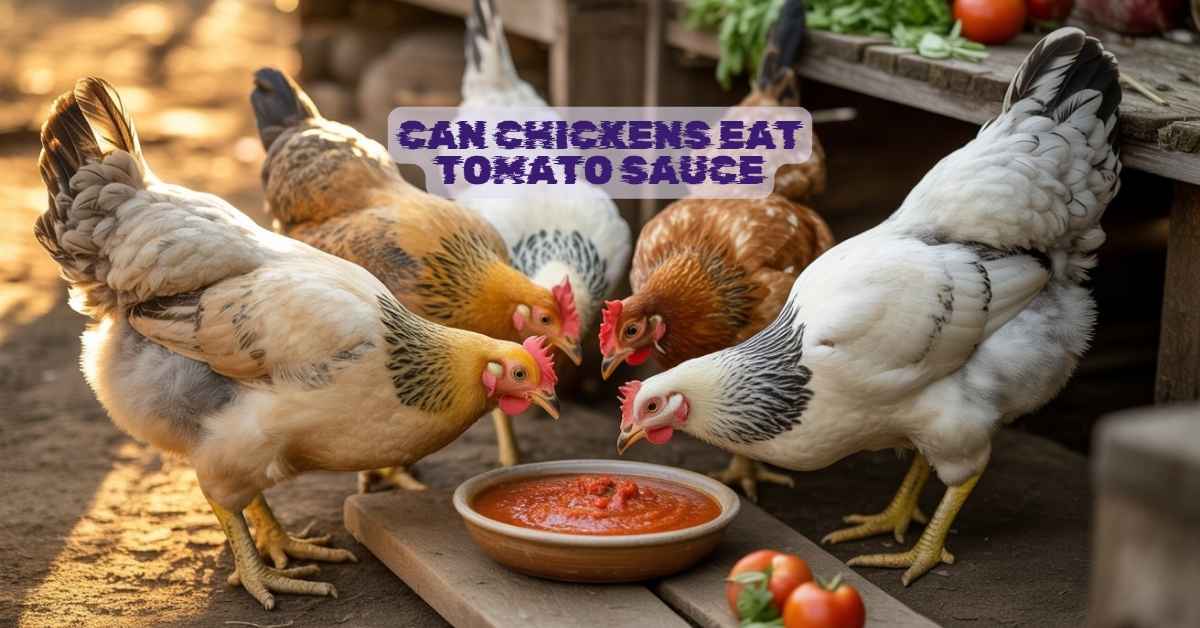
Can chickens eat tomato sauce? No—tomato sauce is not recommended for chickens, even though tomatoes themselves are safe when ripe. The problem lies in the processed ingredients commonly found in sauces, such as onions, garlic, salt, sugar, and preservatives, which can negatively affect a chicken’s health.
While a tiny accidental amount may not cause immediate harm, regular feeding can lead to digestive issues, toxicity risks, and reduced egg quality. For a healthy flock, it’s best to avoid tomato sauce entirely and stick to natural foods.
Is Tomato Sauce Safe for Chickens?
Tomato sauce may look harmless, but it’s very different from fresh tomatoes.
Chickens thrive on a balanced poultry diet consisting mostly of formulated feed, with occasional treats making up no more than 10% of total intake. Tomato sauce falls into the category of processed foods, which are generally unsuitable for chickens.
The issue isn’t the tomato itself—it’s everything added to it.
Fresh Tomatoes vs Tomato Sauce (CRITICAL COMPARISON)
Understanding the difference between natural and processed food is essential.
| Food Type | Safety | Reason |
|---|---|---|
| Fresh ripe tomatoes | Safe | Natural, no additives |
| Tomato sauce | Risky | Contains salt, onions, preservatives |
Fresh tomatoes provide hydration and nutrients, while tomato sauce introduces unnecessary and potentially harmful compounds.
What’s Inside Tomato Sauce? (Ingredient Breakdown)
The real risk comes from what’s inside the sauce.
Onions (BIGGEST RISK)
Onions are one of the most dangerous ingredients for chickens.
They contain thiosulfates, compounds that:
- Damage red blood cells
- Lead to anemia
- Affect oxygen circulation
Symptoms can appear within 24–72 hours after exposure.
Garlic
Garlic is less toxic than onions but still problematic in larger quantities.
- Can irritate digestion
- May affect blood composition over time
Salt (Sodium)
Salt is another major concern.
| Effect | Impact |
|---|---|
| High sodium intake | Dehydration |
| Imbalance | Kidney stress |
| Excess salt | Health decline |
Chickens are highly sensitive to sodium, and problems may develop within 1–3 days.
Sugar & Additives
Many sauces contain:
- Added sugar
- Preservatives
- Artificial flavoring
These offer no nutritional value and may disrupt digestion.
Why Processed Foods Are Bad for Chickens
Processed foods, including tomato sauce, differ significantly from natural foods.
They often contain:
- High sodium levels
- Artificial ingredients
- Low nutritional value
Chickens require natural, whole foods to maintain:
- Egg production
- Digestive health
- Overall vitality
Feeding processed food regularly can reduce long-term flock performance.
What Happens If Chickens Eat Tomato Sauce?
The effects vary based on amount and frequency.
Short-Term Effects (24–48 Hours)
| Symptom | Description |
|---|---|
| Digestive upset | Loose droppings |
| Reduced appetite | Less interest in feed |
Medium-Term Effects (24–72 Hours)
| Symptom | Description |
|---|---|
| Lethargy | Low energy |
| Dehydration | Due to salt |
Long-Term Effects
- Nutritional imbalance
- Reduced egg production
- Possible toxicity from onions
👉 Repeated exposure over days or weeks increases risk significantly.
How Much Tomato Sauce Is Safe? (If Any)
There is no real “safe” amount for regular feeding.
General Guidelines
| Factor | Recommendation |
|---|---|
| Portion | Very small accidental amounts only |
| Diet ratio | <10% of diet (treat limit) |
| Best practice | Avoid completely |
Even though chickens may tolerate tiny amounts, it’s not worth the risk.
Can Chickens Eat Pasta Sauce or Ketchup?
Tomato sauce is not the only concern.
Similar products include:
- Pasta sauce
- Ketchup
- Spaghetti sauce
These often contain:
- Higher salt levels
- Onion and garlic
- Sugar and preservatives
👉 All fall under processed foods and should be avoided.
Do Chickens Like Tomato Sauce? (Behavior Insight)
Chickens are curious eaters.
They may:
- Peck at tomato sauce
- Eat it due to flavor
However:
“What chickens like isn’t always what’s good for them.”
Preference does not equal safety.
Symptoms of Toxicity or Overfeeding
Recognizing symptoms early is essential.
Early Symptoms
- Reduced activity
- Digestive upset
- Lower appetite
Advanced Symptoms
- Weakness
- Pale comb (possible anemia)
- Drop in egg production
Symptoms may appear within 24–72 hours, especially if onions are involved.
Safe Alternatives to Tomato Sauce for Chickens
Instead of processed foods, choose safer options.
Better Food Choices
| Food | Benefit |
|---|---|
| Fresh ripe tomatoes | Safe and hydrating |
| Leafy greens | Nutrient-rich |
| Grains | Energy source |
| Vegetables | Balanced nutrition |
These options support a healthy, natural chicken diet.
Foods Chickens Should Never Eat (Comparison Table)
Understanding unsafe foods prevents mistakes.
| Safe Foods | Unsafe Foods |
|---|---|
| Fresh vegetables | Processed foods |
| Fruits | Salty foods |
| Grains | Onion-based foods |
This comparison highlights the importance of food quality and simplicity.
Feeding Guidelines for Kitchen Scraps
Kitchen scraps can be useful—but only when chosen carefully.
Best Practices
- Focus on natural foods
- Avoid processed meals
- Maintain balanced diet structure
Chickens should get about 90% of nutrition from complete feed and only 10% from treats.
Seasonal Feeding & Foraging Considerations
Diet can change with seasons.
- Summer: more access to fresh produce
- Winter: reliance on stored feed
During summer, chickens may naturally consume safe foods like fresh tomatoes, making processed alternatives unnecessary.
LEARN MORE: Can Chickens Eat Quinoa
Scientific Perspective: Sodium & Thiosulfates in Poultry Diet
Two key factors explain the risk.
Sodium Imbalance
- Disrupts hydration
- Affects kidney function
- Leads to stress within 24–72 hours
Thiosulfates (Onions)
- Damage red blood cells
- Cause anemia
- Effects worsen with repeated exposure
These compounds make tomato sauce unsuitable for poultry consumption.
Case Study: Chickens Eating Processed Foods
A backyard flock was occasionally fed leftover pasta with tomato sauce.
Observations
- Chickens ate it readily
- Within days, some showed:
- Reduced activity
- Slight drop in egg production
After removing processed food:
- Birds returned to normal behavior
- Egg production stabilized
👉 Lesson: Processed foods may not cause immediate harm, but long-term effects are noticeable.
FAQs
Can chickens eat tomato sauce safely?
No, it is not recommended due to added ingredients.
Is tomato sauce toxic to chickens?
It can be harmful, especially due to onions and high salt content.
Can chickens eat cooked tomatoes?
Yes, plain cooked tomatoes without additives are safe.
What foods should chickens avoid?
Processed foods, onions, salty foods, and moldy items.
Can chickens eat pasta sauce?
No, pasta sauce contains similar harmful ingredients.
Final Verdict: Should You Feed Tomato Sauce to Chickens?
Tomato sauce may seem harmless, but it doesn’t belong in a chicken’s diet.
To summarize:
- ❌ Tomato sauce is not safe for regular feeding
- ❌ Contains onions, salt, and additives
- ❌ Can cause digestive issues and health risks
- ✔ Fresh tomatoes and natural foods are better alternatives
For optimal flock health, stick to a balanced, natural poultry diet and avoid processed foods entirely.
👉 In simple terms: Keep tomato sauce off the menu and choose fresh, safe foods instead.