
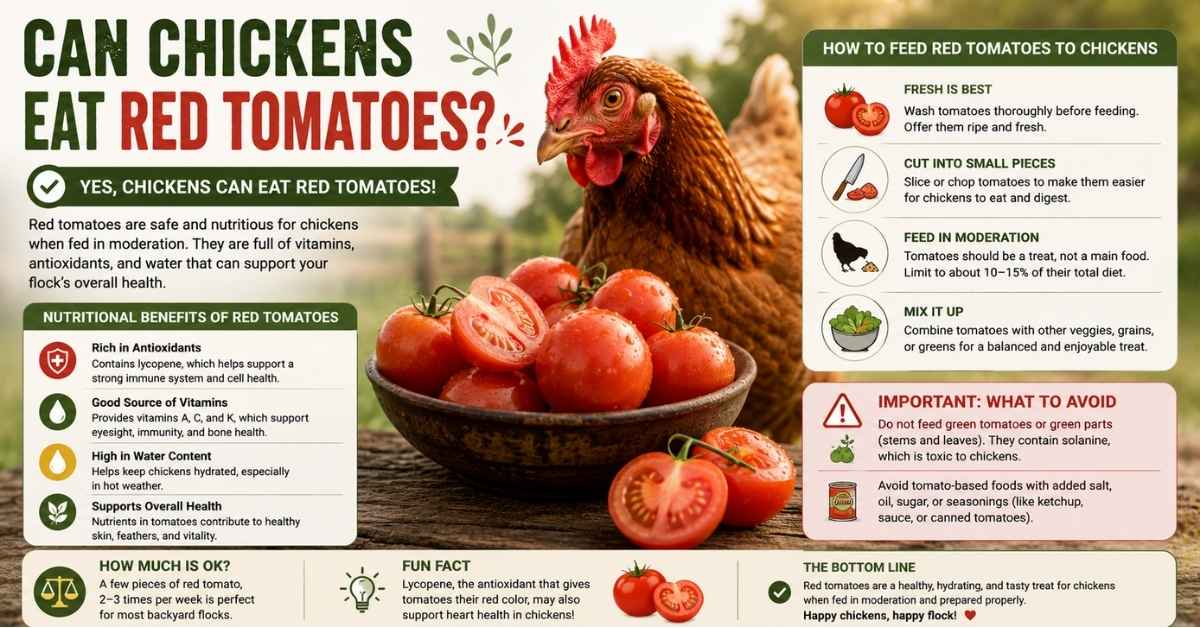
If you grow tomatoes in your garden, you may have wondered: can chickens eat red tomatoes? The short answer is yes, chickens can safely eat ripe red tomatoes in moderation. In fact, fully ripe tomatoes provide vitamins, antioxidants, and hydration that can benefit your flock. However, there are important precautions to follow because green tomatoes, tomato leaves, stems, and vines contain compounds that can be harmful to chickens.
Understanding which parts of the tomato plant are safe and how much to feed can help you keep your flock healthy while reducing food waste.
Quick Answer: Can Chickens Eat Red Tomatoes?
Yes, chickens can eat ripe red tomatoes safely.
Safe for chickens:
- Fully ripe red tomatoes
- Overripe tomatoes
- Cherry tomatoes
- Roma tomatoes
- Heirloom tomatoes
Not safe for chickens:
- Green, unripe tomatoes
- Tomato leaves
- Tomato stems
- Tomato vines
- Rotten or moldy tomatoes
As with any treat, tomatoes should complement a balanced chicken diet rather than replace quality poultry feed.
Why Red Tomatoes Are Safe for Chickens
Ripe tomatoes contain significantly lower levels of natural toxins than unripe tomatoes and the green parts of the plant. Once the fruit reaches full ripeness, it becomes a nutritious treat for backyard chickens.
Tomatoes are mostly water, making them especially refreshing during hot weather. They also contain several vitamins and minerals that support overall poultry health.
Nutritional Value of Red Tomatoes
| Nutrient | Benefit for Chickens |
|---|---|
| Vitamin A | Supports vision and immune health |
| Vitamin C | Helps overall wellness |
| Vitamin K | Supports blood clotting |
| Potassium | Aids muscle and nerve function |
| Antioxidants | Help combat cellular damage |
| Water | Supports hydration |
One of the most valuable compounds in red tomatoes is lycopene, a powerful antioxidant responsible for their bright red color.
Benefits of Feeding Red Tomatoes to Chickens
Many chicken keepers occasionally offer tomatoes because they provide several advantages.
Supports Hydration
Tomatoes contain over 90% water. During summer months, this extra moisture can help chickens stay hydrated.
Provides Natural Vitamins
Ripe tomatoes supply essential nutrients that contribute to healthy growth, feather condition, and immune system function.
Encourages Natural Foraging Behavior
Chickens enjoy pecking at soft fruits. Offering tomatoes can provide enrichment and reduce boredom within the flock.
Reduces Kitchen Waste
Instead of discarding extra ripe tomatoes, you can use them as an occasional treat for your chickens.
Are Green Tomatoes Dangerous for Chickens?
Yes, green tomatoes can pose a risk.
Unripe tomatoes contain higher concentrations of compounds known as glycoalkaloids, including tomatine. These substances are found throughout the tomato plant but are most concentrated in the green portions.
A chicken that consumes a small amount may not experience noticeable problems. However, larger quantities can potentially cause digestive upset and other health issues.
Signs of Possible Toxicity
Watch for symptoms such as:
- Reduced appetite
- Diarrhea
- Weakness
- Lethargy
- Unusual behavior
If you suspect poisoning, contact a veterinarian experienced with poultry.
Can Chickens Eat Tomato Plants?
No, chickens should not eat tomato plants.
The leaves, stems, and vines belong to the nightshade family and contain compounds that may be toxic to poultry.
Parts of the Tomato Plant to Avoid
- Leaves
- Stems
- Vines
- Flowers
- Green fruit
Many gardeners fence off tomato plants because chickens often peck at vegetation indiscriminately.
How Much Tomato Can Chickens Eat?
Moderation is important.
Treats should make up no more than approximately 10% of a chicken’s overall diet. The remaining portion should come from a complete and balanced poultry feed.
General Feeding Guidelines
For a small flock:
- 1–2 medium tomatoes occasionally
- A handful of cherry tomatoes
- Feed as a treat several times per week rather than daily
Too many tomatoes may lead to digestive upset because of their acidic nature.
Best Ways to Feed Red Tomatoes to Chickens
There are several simple methods for offering tomatoes safely.
Serve Fresh and Chopped
Cut larger tomatoes into manageable pieces so chickens can easily peck at them.
Mix With Other Fruits and Vegetables
Combine tomatoes with safe treats such as:
- Cucumbers
- Watermelon
- Pumpkin
- Zucchini
- Bell peppers
This variety provides enrichment while preventing overconsumption of any single food.
Remove Leftovers Quickly
Tomatoes spoil rapidly in warm weather. Remove uneaten portions before they attract pests or develop mold.
Can Baby Chicks Eat Red Tomatoes?
Baby chicks should primarily consume a high-quality chick starter feed.
While tiny amounts of ripe tomato are unlikely to cause harm, young chicks have sensitive digestive systems. It is best to wait until they are older before introducing fruits and vegetables regularly.
When introducing new foods, offer very small amounts and monitor their response.
Can Chickens Eat Cherry Tomatoes?
Yes, chickens can eat ripe cherry tomatoes.
Many flocks enjoy cherry tomatoes because they are naturally bite-sized and easy to consume. Some chicken keepers even toss a few into the run as a fun enrichment activity.
Just make sure the tomatoes are fully ripe and free from mold.
Common Mistakes When Feeding Tomatoes to Chickens
Avoid these common errors:
- Feeding green tomatoes.
- Allowing access to tomato vines and leaves.
- Offering moldy tomatoes.
- Feeding excessive amounts.
- Replacing balanced feed with treats.
Following these guidelines helps ensure tomatoes remain a healthy addition to your flock’s diet.
Other Safe Fruits and Vegetables for Chickens
If your chickens enjoy tomatoes, they may also like:
- Watermelon
- Strawberries
- Blueberries
- Apples (without seeds)
- Cucumbers
- Lettuce
- Pumpkin
- Cabbage
- Peas
- Corn
Offering a variety of safe foods creates a more enriching environment and provides additional nutrients.
LEARN MORE: Karol G Body Measurements
Foods Chickens Should Never Eat
Some foods should always be avoided.
Unsafe Foods for Chickens
| Food | Reason |
|---|---|
| Avocado pits and skin | Contains persin |
| Chocolate | Toxic compounds |
| Raw dried beans | Harmful lectins |
| Moldy foods | Risk of toxins |
| Green potato peels | Solanine content |
| Tomato leaves and vines | Glycoalkaloids |
| Excess salt | Can harm organs |
Always research unfamiliar foods before feeding them to your flock.
Frequently Asked Questions
Can chickens eat red tomatoes every day?
Although ripe red tomatoes are safe, daily feeding is not recommended. Offer them occasionally as part of a varied treat rotation.
Can chickens eat cooked tomatoes?
Yes, cooked tomatoes are generally safe as long as they do not contain excessive salt, spices, or harmful ingredients.
Can chickens eat tomato seeds?
Yes, the seeds inside ripe tomatoes are safe for chickens to consume.
Can chickens eat overripe tomatoes?
Yes, overripe tomatoes are usually safe if they are not moldy or rotten.
Why can’t chickens eat tomato leaves?
Tomato leaves contain naturally occurring glycoalkaloids that may be toxic to chickens when consumed in significant amounts.
Can free-range chickens eat fallen tomatoes?
Yes, chickens can eat ripe fallen tomatoes. However, remove any green, rotten, or moldy fruit from the area.
Conclusion
So, can chickens eat red tomatoes? Absolutely. Fully ripe red tomatoes are a safe and nutritious treat that can provide hydration, vitamins, and enrichment for your flock. However, it is essential to avoid green tomatoes, tomato leaves, stems, and vines because they contain compounds that may be harmful to chickens.
Feed ripe tomatoes in moderation, maintain a balanced poultry diet, and always monitor your flock when introducing new foods. By following these simple guidelines, you can safely share your garden harvest with your chickens while supporting their health and well-being.