
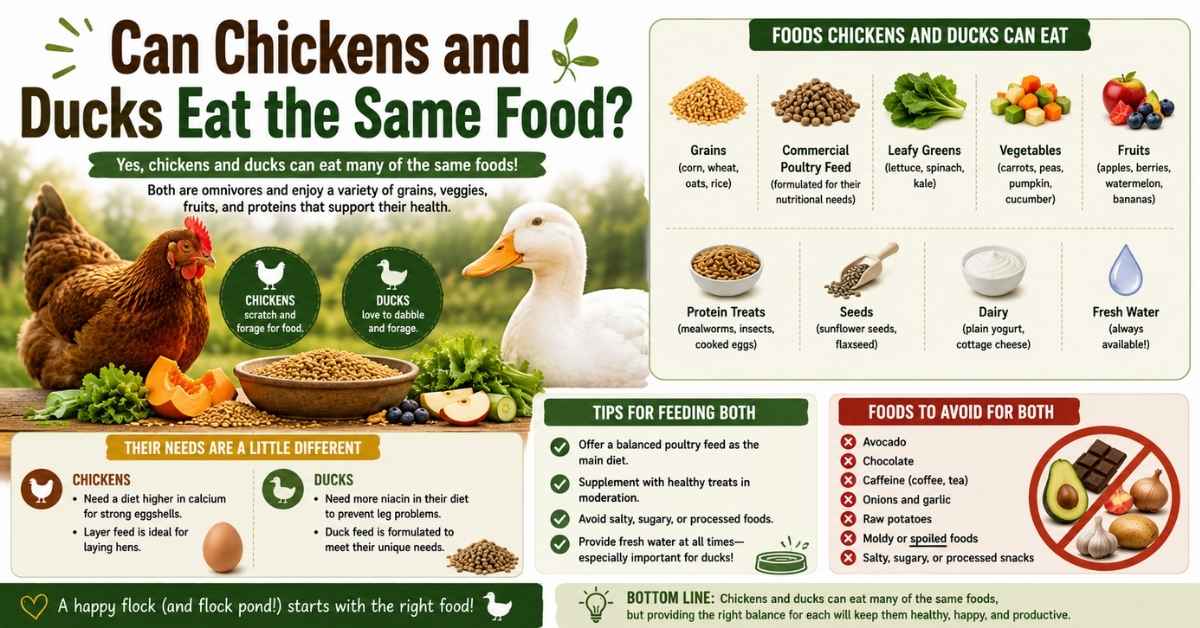
Can chickens and ducks eat the same food? Yes, chickens and ducks can eat many of the same foods, and thousands of backyard flock owners successfully raise both species together. However, while chickens and ducks can share certain feeds, their nutritional requirements are not completely identical. Ducks generally need more niacin, while laying hens often require higher levels of calcium. For most mixed flocks, the safest and simplest long-term solution is usually all-flock feed or flock raiser feed combined with separate calcium supplementation for laying birds.
If you keep chickens and ducks together, understanding these differences can help you avoid nutritional mistakes while simplifying your feeding routine.
Quick Answer: Can Chickens and Ducks Share the Same Feed?
The short answer is yes—but not every feed is ideal for every bird.
Mixed Flock Feeding Snapshot
| Bird Type | Can Eat All-Flock Feed? | Can Eat Layer Feed? | Special Considerations |
|---|---|---|---|
| Chickens | Yes | Yes | Calcium Needs During Lay |
| Ducks | Yes | Limited | Higher Niacin Needs |
| Chicks | Yes | No | Growth Nutrition |
| Ducklings | Yes | No | Higher Niacin Requirements |
For most backyard poultry keepers, all-flock feed for ducks and chickens provides one of the most practical feeding systems.
Why This Question Matters More Than Most People Realize
The Challenge of Keeping Chickens and Ducks Together
Mixed flocks sound simple in theory.
After all, chickens and ducks often:
- Share coops
- Share runs
- Share feeders
- Free-range together
But feeding becomes more complicated because different species and life stages require different nutrients.
What Most Flock Owners Are Really Worried About
Most people searching this topic are trying to answer practical questions:
- Can I use one feed for everyone?
- Will ducks eat chicken feed?
- Can chickens eat duck feed?
- Am I hurting my birds?
- How do I reduce feed costs?
Why Feeding Mistakes Often Start With Good Intentions
Many owners buy a single bag of feed hoping to simplify flock management.
Without understanding nutritional differences, this can sometimes create long-term problems.
Chickens and Ducks Eat Many of the Same Foods—But Not for the Same Reasons
Foods Both Species Naturally Consume
In a natural environment, both species commonly eat:
- Grains
- Seeds
- Insects
- Greens
- Vegetables
- Small invertebrates
This similarity explains why chickens and ducks often appear to eat the same diet.
Similar Feeding Behaviors vs Different Nutritional Needs
Although their diets overlap, their nutritional priorities differ.
Chickens and ducks process nutrients differently depending on:
- Growth stage
- Reproductive status
- Species-specific requirements
Why Appearance Can Be Misleading
A duck eating chicken feed does not automatically mean the feed is ideal.
Likewise, a chicken eating duck feed does not necessarily mean nutritional needs are being met perfectly.
The Nutritional Differences Every Mixed-Flock Owner Should Understand
Protein Requirements
Protein supports:
- Muscle growth
- Feather development
- Egg production
- Overall health
Both species require adequate protein, especially during growth.
Calcium Requirements
Calcium becomes especially important for:
- Laying hens
- Laying ducks
However, excessive calcium may be unnecessary for:
- Roosters
- Drakes
- Ducklings
- Chicks
Niacin Requirements
One of the biggest differences between chickens and ducks is niacin.
Ducks generally require more niacin than chickens, particularly during early development.
Water Consumption Differences
Ducks consume significantly more water than chickens.
This affects:
- Feed intake
- Digestion
- Nutrient utilization
Growth and Development Differences
Ducklings often grow rapidly and have different developmental needs than chicks.
Egg Production Demands
Laying birds require nutrients that non-laying birds do not.
This creates many mixed-flock feeding challenges.
The Niacin Topic Most Articles Barely Explain
Why Ducks Need More Niacin Than Chickens
Niacin plays a vital role in:
- Leg development
- Joint function
- Mobility
- Growth
Ducklings are particularly dependent on adequate niacin intake.
Why Ducklings Are Especially Vulnerable
Insufficient niacin may contribute to:
- Weak legs
- Difficulty walking
- Developmental problems
This is why many duck owners supplement niacin during early growth.
Signs of Niacin Deficiency
Potential warning signs include:
- Bowed legs
- Weakness
- Poor mobility
- Slower growth
How Feed Choices Affect Niacin Intake
Not all poultry feeds provide the same niacin levels.
Many mixed-flock owners choose feeds formulated for multiple species and monitor duckling development carefully.
Preventing Problems in Mixed Flocks
Good management often includes:
- Age-appropriate feed
- Quality nutrition
- Observation of growth
- Species-specific supplementation when needed
The Calcium Question That Creates Most Feeding Confusion
Why Layer Feed Exists
Layer feed was designed for birds producing eggs regularly.
Why Laying Hens Need More Calcium
Eggshell production requires significant calcium.
Without enough calcium, hens may produce:
- Thin shells
- Weak shells
- Poor-quality eggs
Why Non-Laying Birds Need Less
Roosters, drakes, and juvenile birds generally require lower calcium levels.
Can Ducks Eat Layer Feed?
Adult laying ducks can often consume layer feed without issues.
However, it is not always the ideal feed for every duck.
Can Drakes Eat Layer Feed?
Drakes do not benefit from the additional calcium found in layer feed.
Can Ducklings Eat Layer Feed?
No. Ducklings should not rely on layer feed as a primary diet.
Can Chickens Eat Duck Feed?
Situations Where It Works
Many chickens can safely consume duck feed temporarily.
Potential Limitations
Duck feed formulations are designed for waterfowl and may not perfectly match laying hen requirements.
When It Makes Sense
Duck feed may work in:
- Mixed flocks
- Temporary situations
- Non-laying bird groups
When It Does Not
Laying hens may eventually require additional calcium support.
Can Ducks Eat Chicken Feed?
Starter Feed
Some starter feeds work for both species depending on formulation.
Grower Feed
Grower feed is often suitable for growing birds.
Layer Feed
Layer feed creates the most debate because of its elevated calcium levels.
All-Flock Feed
All-flock feed is often considered one of the best feeds for chickens and ducks together.
Which Chicken Feeds Are Safest for Ducks?
Generally:
- All-flock feed
- Flock raiser feed
- Appropriate grower feeds
are among the safest options.
What Experienced Mixed-Flock Owners Feed Instead
Understanding All-Flock Feed
All-flock feed is designed for:
- Chickens
- Ducks
- Turkeys
- Other poultry species
Understanding Flock Raiser Feed
Flock raiser feed offers flexibility for birds of different ages and species.
Why These Feeds Are Popular
Benefits include:
- Simplicity
- Convenience
- Reduced feed storage
- Easier management
Advantages Over Layer Feed
Many mixed-flock owners prefer all-flock feed because it avoids excessive calcium exposure.
The Role of Separate Oyster Shell
Providing oyster shell separately allows laying birds to consume additional calcium as needed.
The Best Feeding System for a Mixed Flock
One Feed Strategy
Many flock owners choose:
All-flock feed + oyster shell
This remains one of the most popular systems.
Multiple Feeder Strategy
Some keepers provide separate feeds for different species.
Free-Range Strategy
Free-ranging birds often supplement their diets naturally.
Small Backyard Setup
Simplicity is often the priority.
Large Homestead Setup
Larger flocks may benefit from more customized feeding systems.
Feeding Chickens and Ducks at Different Life Stages
Chicks and Ducklings
Require growth-focused nutrition.
Growing Pullets and Juvenile Ducks
Benefit from grower-style feeds.
Adult Birds
Nutritional needs become more stable.
Laying Hens
Require additional calcium support.
Laying Ducks
May benefit from higher calcium during active laying.
Roosters and Drakes
Generally do not require layer feed.
What Happens When Birds Eat the Wrong Feed?
Short-Term Effects
Most feeding mistakes are not emergencies.
Long-Term Effects
Problems arise when nutritional imbalances continue for extended periods.
When to Be Concerned
Monitor:
- Growth
- Mobility
- Egg quality
- Feather condition
When It Is Usually Not an Emergency
Occasional access to another bird’s feed is common in mixed flocks.
Real-Life Mixed Flock Feeding Scenarios
Ducks Keep Eating Chicken Feed
This is one of the most common situations.
Chickens Keep Eating Duck Feed
Likewise, chickens frequently sample duck feed.
One Coop, One Feeder
All-flock feed often simplifies management.
Layers and Non-Layers Together
Separate oyster shell becomes especially valuable.
Feed Costs Are Rising
Many owners seek the most cost-effective feeding system possible.
You Want the Simplest Feeding System
A unified feeding strategy often reduces workload.
How to Read Poultry Feed Labels Like an Experienced Keeper
Protein Percentage
Protein influences growth and production.
Calcium Percentage
One of the most important numbers for mixed flocks.
Niacin and Vitamin Content
Particularly important when raising ducklings.
Ingredients Worth Noticing
Understanding ingredients helps evaluate feed quality.
Marketing Claims vs Nutritional Reality
Always focus on nutrition rather than packaging claims.
LEARN MORE: Can Chickens and Ducks Eat Celery?
Common Feeding Mistakes Mixed-Flock Owners Make
Using Layer Feed for Every Bird
One of the most common mistakes.
Ignoring Niacin Requirements
Especially risky for ducklings.
Feeding Too Many Treats
Treats should remain a supplement.
Switching Feeds Too Quickly
Gradual transitions often work best.
Assuming All Poultry Feed Is Identical
Different feeds serve different purposes.
Signs Your Feeding Program Is Working
Healthy Growth
Birds develop normally.
Strong Legs and Mobility
Particularly important for ducks.
Good Feather Quality
A useful indicator of overall health.
Healthy Egg Production
Egg quality often reflects nutritional balance.
Proper Body Condition
Neither excessively thin nor overweight.
Active Natural Behavior
Healthy birds remain alert and active.
Creating a Long-Term Feeding Plan That Works
Lowest-Maintenance Approach
All-flock feed plus oyster shell.
Most Cost-Effective Approach
A single-feed system often reduces expenses.
Best Approach for Small Flocks
Keep management simple.
Best Approach for Large Mixed Flocks
More specialized feeding systems may be worthwhile.
Adapting as Your Flock Changes
Nutritional needs evolve as birds age.
Frequently Asked Questions
Can chickens and ducks eat the same food every day?
Yes, many foods are safe for both species, but nutritional balance remains important.
What is the best feed for chickens and ducks together?
Many experienced owners prefer all-flock feed.
Can ducks eat chicken feed long term?
Some chicken feeds work better than others. Layer feed is usually the most controversial option.
Can chickens eat duck feed long term?
In some situations, yes, but laying hens may require additional calcium.
Do ducks need more niacin than chickens?
Yes, particularly during early development.
Can ducklings and chicks eat the same feed?
Certain starter feeds can work, but nutritional needs should always be evaluated carefully.
Is all-flock feed better than layer feed?
For mixed flocks, many owners find it more practical.
Should ducks have access to oyster shell?
Laying ducks may benefit, while non-laying birds generally do not require it.
Final Verdict: Should Chickens and Ducks Eat the Same Food?
Can chickens and ducks eat the same food? Yes, they often can. Many backyard flock owners successfully feed both species using a shared feeding system. However, ducks and chickens are not nutritionally identical. Niacin requirements, calcium needs, life stage, and egg production status all influence feed selection.
For most mixed flocks, all-flock feed combined with separate oyster shell for laying birds provides one of the safest, simplest, and most practical long-term solutions. By understanding these differences and adjusting feed accordingly, you can support healthy chickens, healthy ducks, and a thriving mixed flock.