
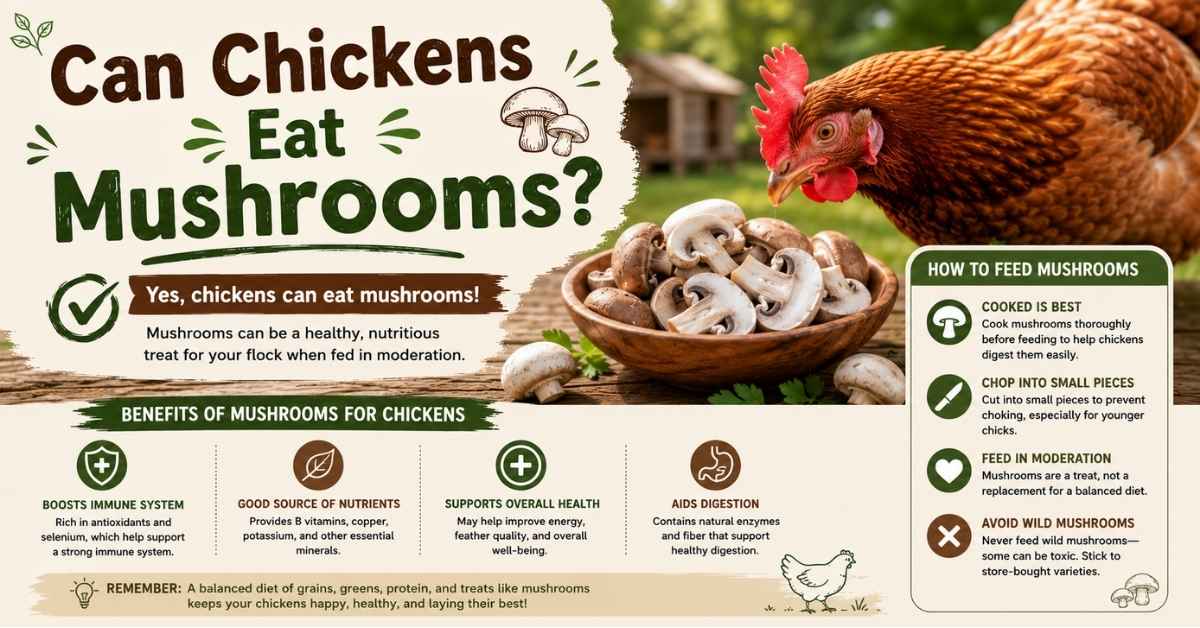
Can chickens eat mushrooms? Yes, chickens can safely eat many store-bought mushrooms, including white button, cremini, portobello, shiitake, and oyster mushrooms. However, wild mushrooms are a different story because some species can be toxic to poultry. If you cannot confidently identify a mushroom growing in your yard, chicken run, or pasture, it is safest to remove it before your flock has access to it.
Many backyard chicken owners become concerned when they discover mushrooms growing near the coop or see their chickens pecking at fungi while free-ranging. Unlike questions about fruits or vegetables, mushroom safety involves potential toxicity risks. Understanding the difference between edible mushrooms and unknown wild mushrooms is the key to protecting your flock while still allowing chickens to enjoy safe foods.
Quick Answer: Can Chickens Eat Mushrooms?
Yes, chickens can eat mushrooms when those mushrooms are known edible varieties intended for human consumption.
Safe options generally include:
- White button mushrooms
- Cremini mushrooms
- Portobello mushrooms
- Shiitake mushrooms
- Oyster mushrooms
The greatest concern comes from wild mushrooms, which may contain toxic compounds that are difficult to identify without specialized knowledge.
Quick Safety Guide
| Mushroom Type | Safe for Chickens? |
|---|---|
| White button mushrooms | Yes |
| Cremini mushrooms | Yes |
| Portobello mushrooms | Yes |
| Shiitake mushrooms | Yes |
| Oyster mushrooms | Yes |
| Unknown wild mushrooms | Avoid |
| Moldy mushrooms | Avoid |
| Chemically treated mushrooms | Avoid |
Why Mushroom Questions Make Chicken Owners Nervous
Most chicken treat questions are straightforward.
Mushrooms are different.
The Fear Isn’t About Food—It’s About Poisoning
When someone asks whether chickens can eat mushrooms, they are rarely worried about nutrition alone.
They are often worried about:
- Poisoning
- Toxic mushrooms
- Sudden illness
- Losing valuable birds
- Emergency veterinary situations
This fear is understandable because some mushroom species are genuinely dangerous.
What Most Chicken Keepers Are Actually Worried About
Many searches come from real-life situations such as:
- Mushrooms appearing after heavy rain
- Wild mushrooms growing in the chicken run
- Chickens pecking at fungi during free-range time
- Compost piles producing mushrooms
The hidden question is usually:
“Do I need to do something right now?”
The Most Important Rule: Store-Bought and Wild Mushrooms Are Not the Same
This distinction is the single most important concept in mushroom safety.
Mushrooms You Buy at the Grocery Store
Commercial mushrooms sold for human consumption undergo cultivation and quality control.
Common examples include:
- White button mushrooms
- Cremini mushrooms
- Portobello mushrooms
- Shiitake mushrooms
- Oyster mushrooms
These edible mushrooms are generally considered safe when offered occasionally as part of a balanced chicken diet.
Mushrooms Growing in Your Yard
Wild mushrooms create uncertainty.
Even experienced foragers sometimes struggle to identify mushroom species accurately.
Because toxic mushrooms can resemble edible varieties, backyard chicken owners should approach unknown mushrooms with caution.
Why Misidentification Is the Biggest Risk
Internet photos are often unreliable for mushroom identification.
Lighting, age, growth stage, and environmental conditions can dramatically change appearance.
For this reason, many poultry experts recommend treating unidentified mushrooms as potentially unsafe.
Which Mushrooms Can Chickens Safely Eat?
Not all mushrooms carry the same risk.
White Button Mushrooms
White button mushrooms are among the most common mushrooms sold in grocery stores.
They are generally safe for chickens when fed in small amounts.
Cremini Mushrooms
Cremini mushrooms are simply a more mature form of button mushrooms.
They can be offered occasionally as a treat.
Portobello Mushrooms
Portobello mushrooms are mature cremini mushrooms and are also considered safe.
Shiitake Mushrooms
Shiitake mushrooms contain beneficial nutrients and antioxidants.
Many chicken keepers successfully feed small amounts without issues.
Oyster Mushrooms
Oyster mushrooms are another cultivated edible variety commonly considered safe for poultry.
Other Cultivated Edible Mushrooms
Most commercially grown edible mushrooms can be offered occasionally as long as they are fresh and free from additives.
| Mushroom Type | Safe for Chickens? | Feeding Recommendation |
|---|---|---|
| White Button | Yes | Occasional treat |
| Cremini | Yes | Occasional treat |
| Portobello | Yes | Occasional treat |
| Shiitake | Yes | Small portions |
| Oyster | Yes | Small portions |
Which Mushrooms Should Chickens Avoid?
Understanding unsafe situations is often more important than understanding safe ones.
Unknown Wild Mushrooms
Unknown wild mushrooms should be considered high risk.
If you cannot identify them with certainty, removal is usually the safest choice.
Backyard Mushrooms You Cannot Identify
Mushrooms growing naturally in:
- Grass
- Mulch
- Compost
- Woodland edges
should not be assumed safe.
Toxic Mushroom Species
Some mushroom species contain toxins that may affect:
- The digestive system
- The nervous system
- Liver function
- Overall health
Because identification can be difficult, prevention is often easier than treatment.
Moldy or Decomposing Mushrooms
Even edible mushrooms become unsafe when spoiled.
Discard mushrooms showing:
- Mold
- Sliminess
- Foul odors
- Advanced decay
Mushrooms Treated With Chemicals
Never feed mushrooms exposed to:
- Herbicides
- Fungicides
- Pesticides
- Industrial contaminants
| Mushroom Situation | Risk Level | Recommended Action |
|---|---|---|
| Store-bought edible mushroom | Low | Safe occasionally |
| Known cultivated mushroom | Low | Feed occasionally |
| Unknown wild mushroom | High | Remove immediately |
| Toxic species suspected | Very High | Prevent access |
| Moldy mushroom | High | Discard |
Why Chickens Eat Mushrooms in the First Place
Many owners wonder why chickens seem attracted to mushrooms.
Natural Foraging Behavior
Chickens are opportunistic omnivores.
They naturally investigate:
- Insects
- Seeds
- Fruits
- Vegetation
- Fungi
Pecking at mushrooms is often simply part of their curiosity-driven foraging behavior.
Do Chickens Know Which Mushrooms Are Poisonous?
This is one of the most common myths.
Many people believe animals instinctively avoid toxic foods.
Unfortunately, chickens cannot always distinguish safe mushrooms from toxic ones.
Relying on instinct alone is not a dependable safety strategy.
Why Free-Range Chickens Encounter Mushrooms More Often
Free-range flocks spend more time exploring natural environments.
This increases exposure to:
- Damp soil
- Decaying wood
- Compost piles
- Woodland edges
- Seasonal fungal growth
Are Mushrooms Good for Chickens?
Safe edible mushrooms can provide nutritional value.
Nutritional Benefits of Edible Mushrooms
| Nutrient | Potential Benefit |
|---|---|
| Protein | Supports growth and maintenance |
| B Vitamins | Supports metabolism |
| Selenium | Antioxidant support |
| Potassium | Supports muscle function |
| Antioxidants | Cellular protection |
Although mushrooms are nutritious, they should remain a supplement rather than a primary food source.
Can Mushrooms Support Overall Flock Health?
When included occasionally, edible mushrooms may contribute to dietary variety and enrichment.
Many chickens enjoy the texture and flavor.
What Mushrooms Cannot Replace in a Chicken Diet
Mushrooms should never replace:
- Layer feed
- Starter feed
- Grower feed
- Calcium supplements
- Balanced poultry nutrition
These remain the foundation of flock health.
LEARN MORE: Mullein Look Alikes
Raw vs Cooked Mushrooms for Chickens
Chicken owners frequently ask whether mushrooms should be cooked.
Raw Mushrooms
Raw edible mushrooms are generally safe.
Simply wash them thoroughly before feeding.
Cooked Mushrooms
Cooked mushrooms are also safe if prepared plainly.
Avoid seasonings and additives.
Mushrooms Cooked With Oils, Butter, Garlic, or Onions
These ingredients may create problems.
Avoid feeding mushrooms prepared with:
- Garlic
- Onion
- Excess salt
- Rich sauces
Leftover Mushrooms From Family Meals
Many leftovers contain ingredients that are less suitable for poultry than the mushrooms themselves.
Plain preparation is always best.
| Type | Suitable? |
|---|---|
| Raw edible mushrooms | Yes |
| Plain cooked mushrooms | Yes |
| Garlic mushrooms | No |
| Onion mushrooms | No |
| Cream-based mushroom dishes | Avoid |
What Happens If a Chicken Eats a Wild Mushroom?
Discovering that a chicken has eaten a wild mushroom can be alarming. Fortunately, not every wild mushroom is poisonous, but the challenge is that identifying safe and toxic species is often difficult.
Immediate Risk Assessment
The level of risk depends on several factors:
- The mushroom species
- The amount consumed
- The age and health of the chicken
- Whether the mushroom was fresh, decaying, or contaminated
If the mushroom cannot be identified with certainty, it is safest to assume there may be some risk.
Symptoms to Watch For
After a chicken eats an unknown mushroom, monitor the flock carefully for signs of illness.
Potential symptoms include:
- Lethargy
- Weakness
- Loss of appetite
- Diarrhea
- Abnormal droppings
- Difficulty walking
- Tremors
- Disorientation
- Reduced activity
- Sudden changes in behavior
Symptoms can vary depending on the type of mushroom involved.
When to Contact a Poultry Veterinarian
Seek professional help if:
- Symptoms develop
- Multiple birds are affected
- A potentially toxic mushroom was consumed
- You are uncertain about the mushroom species
Quick action is always preferable when poisoning is suspected.
Information to Gather Before Seeking Help
Try to collect:
- Photos of the mushroom
- Location where it was found
- Approximate amount consumed
- Time of exposure
- Any observed symptoms
This information may help a poultry veterinarian make a more informed assessment.
My Chicken Ate a Mushroom: What Should I Do Now?
Many owners search this question after the event has already happened.
Step 1: Stay Calm
Most mushroom encounters do not automatically result in severe illness.
Panic often makes it harder to make good decisions.
Step 2: Remove Remaining Mushrooms
Prevent additional exposure by removing visible mushrooms from:
- The chicken run
- Free-range areas
- Compost piles
- Damp corners of the yard
Step 3: Identify the Mushroom If Possible
Without touching unknown mushrooms excessively, document them with photographs.
If identification assistance is available through local extension services or experts, use those resources.
Step 4: Monitor the Flock
Observe:
- Eating behavior
- Water intake
- Activity levels
- Egg production
- Droppings
Many healthy chickens continue behaving normally after consuming harmless fungi.
Step 5: Contact Professional Help When Needed
If concerning symptoms appear, contact a qualified poultry veterinarian immediately.
Mushrooms Growing in the Chicken Run: Should You Remove Them?
This is one of the most common backyard flock management questions.
Why Mushrooms Appear Around Coops
Mushrooms thrive in environments containing:
- Moisture
- Organic matter
- Shade
- Decaying vegetation
Chicken runs often provide ideal growing conditions.
Risk vs Reward Assessment
Even though some mushrooms may be harmless, most owners cannot confidently identify every mushroom species.
Because of that uncertainty, removal is usually the safest strategy.
When Removal Is the Safest Choice
Remove mushrooms when:
- Species identification is uncertain
- Children have access to the area
- Toxic species may be present
- Wet weather encourages rapid fungal growth
Areas That Deserve Extra Attention
Inspect regularly:
- Compost piles
- Mulched areas
- Shaded run corners
- Areas beneath trees
- Areas with poor drainage
How to Reduce Mushroom Growth Around Chickens
Eliminating every mushroom is rarely possible, but reducing growth is often achievable.
Improve Drainage
Standing water encourages fungal development.
Improve drainage where water collects after rainfall.
Reduce Excess Moisture
Excess moisture supports mushroom growth.
Consider:
- Better ventilation
- Proper grading
- Dry bedding management
Manage Organic Matter
Decaying material acts as food for fungi.
Remove:
- Rotting wood
- Excess leaf litter
- Spoiled bedding
- Decomposing vegetation
Adjust Run Conditions
Simple environmental changes can reduce fungal growth.
Examples include:
- Increasing sunlight exposure
- Improving airflow
- Rotating heavily used areas
Routine Run Inspections
Regular inspections help catch mushroom growth early.
Many experienced flock owners inspect their runs after:
- Heavy rain
- Humid weather
- Seasonal changes
Can Different Types of Chickens Eat Mushrooms?
The same general safety principles apply across most poultry groups.
Laying Hens
Laying hens can eat safe edible mushrooms occasionally.
However, mushrooms should never replace:
- Layer feed
- Calcium supplements
- Balanced nutrition
Roosters
Roosters can safely consume edible mushrooms in moderation.
Growing Pullets
Young birds require nutrient-dense feeds that support development.
Treats should remain limited.
Baby Chicks
Can baby chicks eat mushrooms?
Technically yes, but chicks should receive most nutrition from starter feed during early growth.
If mushrooms are offered, portions should be extremely small.
Senior Chickens
Older chickens often enjoy softer foods.
Small amounts of safe edible mushrooms may provide enrichment.
Common Mushroom Feeding Mistakes
Assuming All Mushrooms Are Safe
This is the most dangerous mistake.
Wild mushroom identification is complex.
Trusting Internet Photos for Identification
Photographs alone often fail to provide enough information for accurate identification.
Feeding Moldy Mushrooms
Spoiled mushrooms should never be fed.
Ignoring Environmental Mushroom Growth
Mushrooms growing around the coop deserve attention.
Using Mushrooms as a Major Food Source
Even safe mushrooms should remain occasional additions to a balanced poultry diet.
Real-Life Situations Chicken Owners Face
Mushrooms Appeared After Heavy Rain
This is extremely common.
Inspect the run and remove unknown mushrooms promptly.
Chickens Found Mushrooms During Free-Ranging
Observe what they consumed and remove additional mushrooms if identification is uncertain.
Store-Bought Mushrooms Near Expiration
Fresh mushrooms approaching expiration are usually acceptable.
Discard mushrooms showing spoilage.
Mushrooms Growing Near Compost Piles
Compost areas frequently support fungal growth.
Regular inspection is important.
Neighbor’s Yard Has Wild Mushrooms
If chickens roam near neighboring properties, monitor areas where mushrooms frequently appear.
LEARN MORE: Can Chickens Have Raisins?
A Simple Mushroom Safety Framework for Chicken Keepers
Use this practical decision guide whenever mushrooms are involved.
Safe to Feed
- White button mushrooms
- Cremini mushrooms
- Portobello mushrooms
- Shiitake mushrooms
- Oyster mushrooms
Feed With Caution
- Mushrooms of uncertain freshness
- Previously cooked mushrooms without additives
Remove Immediately
- Unknown wild mushrooms
- Toxic species
- Moldy mushrooms
- Chemically exposed mushrooms
| Situation | Action |
|---|---|
| Grocery store edible mushroom | Safe occasionally |
| Fresh cultivated mushroom | Safe occasionally |
| Unknown wild mushroom | Remove |
| Moldy mushroom | Discard |
| Toxic mushroom suspected | Prevent access immediately |
What Poultry Experts Want Owners to Understand About Mushrooms
Why Identification Matters
Most mushroom-related problems begin with uncertainty.
The inability to confidently identify a species creates unnecessary risk.
Why Prevention Is Easier Than Treatment
Preventing exposure is often simpler than dealing with potential poisoning.
Routine inspections provide significant peace of mind.
The Importance of Monitoring Free-Range Areas
Free-range chickens naturally encounter more environmental hazards.
Regular monitoring helps reduce surprises.
Building a Safe Long-Term Feeding Strategy
The healthiest flocks rely primarily on:
- Complete poultry feed
- Clean water
- Appropriate calcium sources
- Safe supplemental treats
Mushrooms should remain a minor dietary addition.
Signs Your Flock Is Healthy After Eating Mushrooms
Normal Behavior Indicators
Healthy chickens remain:
- Active
- Alert
- Curious
Healthy Appetite
Birds should continue eating normally.
Normal Droppings
Watch for consistency and appearance changes.
Consistent Egg Production
Laying hens should continue normal production patterns.
Healthy Activity Levels
Normal scratching, foraging, and social behavior are encouraging signs.
Frequently Asked Questions
Can chickens eat mushrooms safely?
Yes, many store-bought edible mushrooms are safe when fed occasionally.
Can chickens eat wild mushrooms?
Wild mushrooms present greater risk because some species are toxic.
Are mushrooms poisonous to chickens?
Some mushroom species can be poisonous, while many cultivated edible varieties are safe.
Can chickens eat button mushrooms?
Yes, white button mushrooms are generally considered safe.
Can chickens eat portobello mushrooms?
Yes, portobello mushrooms can be fed in moderation.
Can chickens eat shiitake mushrooms?
Yes, shiitake mushrooms are generally safe in small amounts.
Can chickens eat oyster mushrooms?
Yes, oyster mushrooms are commonly considered safe.
Can chickens eat cooked mushrooms?
Plain cooked mushrooms are usually safe.
Can chickens eat raw mushrooms?
Many edible mushrooms can be offered raw.
What happens if a chicken eats a poisonous mushroom?
Symptoms vary depending on the species and may require veterinary attention.
Do chickens know which mushrooms are toxic?
No. Chickens cannot reliably distinguish all toxic mushrooms.
Should I remove mushrooms from my chicken run?
If identification is uncertain, removal is the safest option.
Can baby chicks eat mushrooms?
Very small amounts of safe mushrooms may be offered, but starter feed should remain the priority.
Are mushrooms healthy for chickens?
Safe edible mushrooms contain nutrients such as protein, B vitamins, selenium, and antioxidants.
Can mushrooms affect egg production?
Occasional feeding of safe mushrooms is unlikely to negatively affect egg production.
Final Verdict: Should Chickens Eat Mushrooms?
Can chickens eat mushrooms? Yes, chickens can safely eat many edible store-bought mushrooms, including button, cremini, portobello, shiitake, and oyster mushrooms. These mushrooms can provide nutritional variety and enrichment when offered occasionally as part of a balanced poultry diet.
The real concern is wild mushrooms. Because some species contain toxic compounds and mushroom identification can be difficult, unknown mushrooms should never be assumed safe. If mushrooms appear in your chicken run, pasture, or free-range area, removing unidentified specimens is usually the most responsible approach.
For most backyard chicken owners, the simplest rule is this: feed only mushrooms that are known edible varieties intended for human consumption and remove any wild mushrooms you cannot confidently identify. This approach minimizes risk, protects flock health, and allows your chickens to enjoy safe treats without unnecessary danger.