
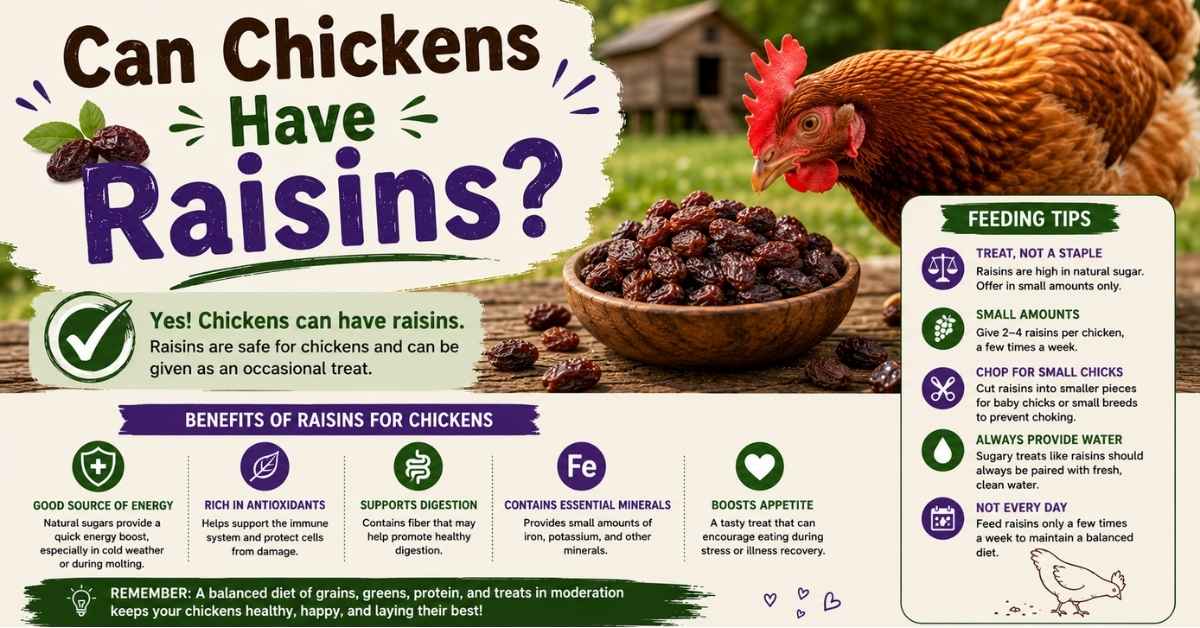
Can chickens have raisins? Yes, chickens can eat raisins safely as an occasional treat. Unlike dogs, chickens are not known to experience the same toxic reaction to grapes and raisins. However, raisins are high in natural sugars, which means they should be fed in moderation as part of a balanced diet. When offered occasionally alongside quality layer feed, raisins can be a tasty reward that many backyard chickens enjoy.
If you’ve discovered an old box of raisins in the pantry, have leftovers from baking, or simply want to share a snack with your flock, it’s natural to wonder whether raisins are safe for chickens. The good news is that raisins are not considered toxic to chickens. The key is understanding how much to feed, how often to offer them, and how raisins fit into overall poultry nutrition.
Quick Answer: Can Chickens Have Raisins?
Yes, chickens can have raisins in small amounts.
Raisins provide some beneficial nutrients, including fiber, potassium, iron, and antioxidants, but they are also much higher in sugar than fresh grapes because the drying process concentrates the fruit’s natural sugars.
Quick Safety Verdict
| Question | Answer |
|---|---|
| Can chickens eat raisins? | Yes |
| Are raisins toxic to chickens? | No |
| Can laying hens eat raisins? | Yes, in moderation |
| Can baby chicks eat raisins? | Limited amounts after starter feed is established |
| Can chickens eat raisins every day? | Not recommended |
| Best feeding frequency | 1–2 times per week |
| Better alternative? | Fresh fruits often provide more hydration |
Why So Many Chicken Owners Worry About Raisins
One of the most common concerns among backyard chicken keepers comes from something completely unrelated to poultry.
The Dog Toxicity Myth That Causes Confusion
Most people know that grapes and raisins can be dangerous for dogs. Because of this, many flock owners assume the same risk applies to chickens.
This concern drives thousands of searches every year.
The reality is that chickens process foods differently than dogs. While raisins are linked to serious health concerns in dogs, there is currently no evidence suggesting raisins cause the same toxic reaction in healthy chickens.
That distinction is important because many online articles mention dog toxicity without fully explaining why chickens are different.
Should You Be Concerned If Your Chickens Already Ate Raisins?
In most cases, no.
If your chickens accidentally ate a handful of raisins, there is usually no reason to panic. Healthy adult chickens commonly consume a wide variety of fruits and dried fruits without problems.
Instead of worrying, monitor your flock as you normally would and ensure they continue eating their regular feed and drinking water.
What Makes Raisins Appealing to Chickens?
Chickens are naturally curious foragers.
Anything sweet, colorful, or different from their usual feed often attracts their attention.
Why Chickens Love Sweet Treats
Wild and domestic chickens naturally seek out foods that provide quick energy.
Many chickens eagerly peck at:
- Grapes
- Blueberries
- Strawberries
- Watermelon
- Apples
- Raisins
The concentrated fruit sugars in raisins make them especially appealing.
This doesn’t mean raisins are necessary, but it explains why many flocks become excited whenever raisins appear.
Are Raisins Nutritious or Just Candy for Chickens?
The answer falls somewhere in between.
Raisins contain useful nutrients, but they are also concentrated sources of sugar.
Think of raisins as a treat rather than a nutritional foundation.
Your chickens should receive most of their nutrients from:
- Complete layer feed
- Quality grower feed
- Appropriate calcium sources
- Fresh water
Raisins should simply complement an already balanced diet.
Raisin Nutrition Explained for Chicken Keepers
Understanding what’s inside raisins helps explain both their benefits and limitations.
Key Nutrients Found in Raisins
| Nutrient | Potential Benefit |
|---|---|
| Fiber | Supports digestive function |
| Potassium | Supports muscle function |
| Iron | Helps oxygen transport |
| Antioxidants | Supports overall health |
| Natural Sugars | Provides quick energy |
Although raisins contain beneficial nutrients, they should not be viewed as a substitute for formulated poultry feed.
What Happens During the Drying Process?
Raisins start as grapes.
As grapes dry, most of their water content disappears.
This creates:
- Smaller fruit
- Higher sugar concentration
- Increased calorie density
- Longer shelf life
The drying process is why raisins contain much more sugar per bite than fresh grapes.
The Hidden Downside of Dried Fruit
Many articles focus only on the benefits of raisins.
Few discuss the downside.
Because raisins are concentrated fruit, chickens can consume a lot of sugar in a very small amount of food.
Excessive treats may contribute to:
- Nutritional imbalance
- Reduced feed consumption
- Unwanted weight gain
- Poor dietary habits
This is why moderation remains important.
How Many Raisins Can Chickens Safely Eat?
One of the biggest gaps in competing articles is the lack of practical feeding recommendations.
Portion Guidelines by Flock Size
| Flock Size | Suggested Amount |
|---|---|
| 2–4 Chickens | 4–8 raisins |
| 5–8 Chickens | Small handful |
| 9–15 Chickens | Medium handful |
| 15+ Chickens | Several handfuls spread across feeding areas |
The goal is to treat raisins as a reward, not a meal.
How Often Should Chickens Eat Raisins?
For most backyard flocks:
- Once or twice per week is sufficient.
- Rotate raisins with other healthy treats.
- Avoid offering large amounts daily.
Variety is generally healthier than repeatedly feeding the same treat.
Signs Your Chickens Are Getting Too Many Treats
Watch for:
- Selective eating
- Reduced interest in feed
- Excessive weight gain
- Less balanced nutrition
- Dependence on treats
These issues are usually caused by overfeeding treats in general rather than raisins specifically.
Can Different Types of Chickens Eat Raisins?
Different stages of life require different nutritional priorities.
Laying Hens
Laying hens can safely enjoy raisins occasionally.
However, egg-producing hens require:
- Protein
- Calcium
- Balanced nutrition
Raisins should never replace foods that support egg production.
Roosters
Roosters can safely consume raisins in moderation.
The same treat guidelines apply.
Growing Pullets
Young pullets need nutrition that supports growth and feather development.
Treats should remain limited.
Baby Chicks
Can baby chicks eat raisins?
Technically yes, but it is usually best to wait until chicks are established on quality starter feed.
When introducing raisins:
- Offer tiny pieces
- Monitor digestion
- Keep portions very small
Senior Chickens
Older chickens often enjoy softer treats.
Small amounts of raisins can be useful for enrichment and bonding.
Can Chickens Eat Different Types of Raisins?
Not all raisin products are created equally.
Regular Raisins
Plain raisins are generally safe.
Golden Raisins
Golden raisins are also considered safe for chickens.
Organic Raisins
Organic raisins can be fed the same way as conventional raisins.
Unsweetened Raisins
These are among the best choices because they contain no added sweeteners.
Raisins With Added Sugar
Avoid products with unnecessary sugar coatings.
Added sugar provides no real benefit to chickens.
Chocolate-Covered Raisins
Never feed chocolate-covered raisins.
Chocolate contains compounds that can be harmful to many animals.
Yogurt-Covered Raisins
These products are highly processed and often contain excess sugar.
They are not ideal chicken treats.
Raisins in Trail Mix
Trail mixes often contain ingredients that may not be appropriate for poultry.
Always inspect ingredients carefully.
Raisins in Breakfast Cereals
Some cereals contain excessive sugar, salt, and additives.
Plain raisins are always a safer choice.
LEARN MORE: Cherry Harvest Labor Shortage
Real-Life Situations Backyard Chicken Owners Face
Most chicken keepers do not search for “can chickens have raisins” while standing in a feed store. They usually search because they already have raisins and want to know if sharing them is safe.
You Found an Old Box of Raisins in the Pantry
If the raisins are still fresh, dry, and free from mold, they can be offered as an occasional treat.
Discard raisins that show signs of:
- Mold growth
- Moisture damage
- Strange odors
- Insect contamination
Moldy dried fruit should never be fed to chickens.
A Child Dropped Raisins in the Yard
This is one of the most common real-life situations.
If a few raisins fall on the ground and your chickens eat them, there is usually no reason for concern. Most backyard chickens will eagerly peck them up and continue their day without problems.
You Have Leftover Raisins After Baking
Leftover plain raisins can be shared with your flock.
However, avoid feeding:
- Cookie dough
- Cake batter
- Frosting-covered raisins
- Chocolate baking products
The raisins themselves are generally safer than the processed foods surrounding them.
Chickens Got Into a Bag of Raisins
A larger quantity of raisins is not ideal because of the concentrated sugar content.
If your flock consumes more raisins than intended:
- Provide plenty of fresh water.
- Resume normal feeding.
- Monitor behavior.
- Avoid additional treats for several days.
Most healthy chickens recover without issue.
You Want to Use Raisins for Training and Bonding
Many chicken owners use treats to build trust.
A few raisins can work well for:
- Hand feeding
- Recall training
- Positive reinforcement
- Socializing nervous birds
Used occasionally, raisins can strengthen the bond between keeper and flock.
Raisins vs Grapes: Which Is Better for Chickens?
Many owners wonder whether grapes or raisins make a better treat.
Nutritional Comparison
Raisins and grapes come from the same fruit, but the drying process changes their nutritional profile significantly.
Sugar Comparison
Raisins contain a much higher concentration of natural sugars because the water has been removed.
This means chickens can consume more sugar in fewer bites.
Hydration Benefits
Fresh grapes contain substantial water content.
This makes grapes especially useful during:
- Hot weather
- Summer months
- Periods of heat stress
Feeding Frequency Recommendations
Fresh grapes are generally the better everyday fruit treat because they provide hydration and lower sugar concentration per serving.
Raisins should remain an occasional treat.
| Factor | Raisins | Grapes |
|---|---|---|
| Water Content | Low | High |
| Sugar Concentration | High | Lower |
| Hydration Value | Low | Excellent |
| Calorie Density | Higher | Lower |
| Feeding Frequency | Occasional | More Frequent |
Raisins Compared With Other Popular Chicken Treats
A balanced flock benefits from variety.
Raisins vs Blueberries
Blueberries provide antioxidants and lower sugar concentration per serving than raisins.
Raisins vs Strawberries
Strawberries offer hydration and vitamin C while remaining lower in calories.
Raisins vs Apples
Apples are excellent treats when seeds are removed.
They contain more water and less concentrated sugar.
Raisins vs Watermelon
Watermelon is one of the best summer treats because it helps with hydration.
Raisins vs Mealworms
Mealworms provide protein rather than sugar.
For many flocks, mealworms offer greater nutritional value than raisins.
Ranking the Best Treats for Chickens
| Treat | Nutrition Score | Sugar Level | Feeding Frequency |
|---|---|---|---|
| Mealworms | Excellent | Very Low | Frequent |
| Blueberries | Excellent | Moderate | Frequent |
| Strawberries | Very Good | Moderate | Frequent |
| Watermelon | Very Good | Low | Frequent |
| Apples | Very Good | Moderate | Frequent |
| Raisins | Good | High | Occasional |
The Right Way to Feed Raisins to Chickens
Offering treats properly helps maintain flock health and encourages natural behavior.
Scatter Feeding
Scattering raisins encourages:
- Foraging
- Exercise
- Mental stimulation
This method mimics natural food-searching behavior.
Hand Feeding
Hand feeding can help build trust, especially with new chickens.
Many birds quickly learn to associate their owner with treats.
Treat Balls and Enrichment Toys
Raisins can be combined with vegetables and healthy treats inside enrichment feeders.
This provides both entertainment and nutrition.
Mixing Raisins With Healthier Foods
A smart strategy is combining raisins with:
- Leafy greens
- Chopped vegetables
- Fresh fruit
- Herbs
This reduces overall sugar intake while increasing variety.
Winter Treat Strategies
Raisins can be useful during colder months when natural foraging opportunities decline.
Small amounts provide extra energy without excessive feeding.
Summer Treat Strategies
During summer, prioritize water-rich treats such as:
- Watermelon
- Cucumbers
- Grapes
Raisins should play a smaller role because they provide little hydration.
Common Mistakes Chicken Owners Make With Raisins
Treating Raisins Like Regular Feed
This is the biggest mistake.
Raisins should supplement the diet, not replace balanced poultry feed.
Feeding Large Quantities
Even healthy foods can become problematic when overfed.
The concentrated sugar content makes portion control important.
Ignoring Sugar Content
Many owners view raisins as fruit and forget they are essentially concentrated fruit sugars.
Offering Processed Raisin Products
Products containing:
- Chocolate
- Excess sugar
- Artificial sweeteners
- High sodium levels
should be avoided.
Overlooking Balanced Nutrition
The foundation of a healthy flock remains:
- Quality layer feed
- Fresh water
- Calcium sources
- Appropriate treats
Treats should never become the nutritional foundation.
A Simple Raisin Feeding Framework
Following a simple process removes guesswork.
Step 1: Check the Product
Ask:
- Is it plain?
- Is it mold-free?
- Is it free of chocolate?
Step 2: Evaluate Ingredients
If raisins are part of another product, inspect every ingredient.
Step 3: Measure Portions
Offer only a small amount appropriate for flock size.
Step 4: Observe Flock Behavior
Watch for:
- Normal appetite
- Healthy activity
- Continued feed consumption
Step 5: Rotate Treats
Do not rely on raisins as the only snack.
Mix in:
- Blueberries
- Strawberries
- Watermelon
- Apples
- Mealworms
This supports a more balanced diet.
LEARN MORE: Can Chickens Eat Spinach?
What Poultry Nutrition Experts Want Chicken Owners to Know
Treats Should Complement Feed, Not Replace It
The vast majority of a chicken’s nutrition should come from a complete poultry ration.
Treats are supplemental.
Why Variety Matters
Different foods provide different nutrients.
A diverse treat menu often produces better nutritional balance than relying heavily on one item.
Understanding Nutritional Balance
Healthy chickens need:
- Protein
- Vitamins
- Minerals
- Calcium
- Energy
No single treat can provide all of these.
Building a Healthy Long-Term Feeding Plan
The best feeding strategy includes:
- High-quality feed
- Consistent water access
- Calcium supplementation for layers
- Rotating healthy treats
This approach supports flock health and egg production over the long term.
Signs Your Flock Has a Healthy Treat Routine
Healthy Body Condition
Birds should maintain an appropriate weight and body condition.
Consistent Egg Production
Laying hens should continue producing normally.
Good Feather Quality
Healthy feathers often reflect good nutrition.
Active Foraging Behavior
Chickens should remain curious, active, and engaged.
Strong Appetite for Feed
Birds should still prioritize their regular feed rather than waiting for treats.
Frequently Asked Questions
Can chickens have raisins every day?
It is better to offer raisins occasionally rather than daily because of their concentrated sugar content.
Are raisins toxic to chickens?
No. Raisins are not considered toxic to chickens.
Can chickens eat grapes and raisins?
Yes. Both grapes and raisins are generally safe for chickens when offered in moderation.
Can baby chicks eat raisins?
Very small amounts may be offered after chicks are established on starter feed, but treats should remain limited.
Can chickens eat golden raisins?
Yes. Golden raisins are generally safe.
Can chickens eat raisin bread?
Only in very small amounts. Bread offers limited nutritional value and often contains excess sugar.
Can chickens eat trail mix with raisins?
It depends on the ingredients. Avoid trail mixes containing chocolate or excessive salt.
What happens if chickens eat too many raisins?
They may consume excessive sugar and fewer nutrients from their balanced feed.
Can raisins affect egg production?
Moderate raisin feeding is unlikely to affect egg production. Excessive treats of any kind may contribute to nutritional imbalance.
Are raisins healthier than grapes?
Not necessarily. Grapes provide hydration and contain less concentrated sugar.
Can chickens eat dried cranberries?
Yes, although dried cranberries may also contain added sugars and should be offered sparingly.
What fruit treats are best for chickens?
Blueberries, strawberries, apples, watermelon, and grapes are among the most popular options.
Are raisins safe during winter?
Yes. Small amounts can provide extra energy during colder months.
Can raisins help chickens gain weight?
Because raisins contain concentrated calories, excessive feeding could contribute to weight gain.
Can chickens eat organic raisins?
Yes. Organic raisins are generally safe when fed in moderation.
Final Verdict: Should Raisins Be Part of a Chicken’s Diet?
Can chickens have raisins? Yes, chickens can safely eat raisins as an occasional treat. They are not toxic to chickens and can provide small amounts of fiber, potassium, iron, and antioxidants. Many backyard flocks enjoy raisins, making them useful for training, enrichment, and bonding.
However, raisins should never become a major part of a chicken’s diet. Because they are concentrated dried grapes, they contain significantly more natural sugar than fresh fruit. Feeding too many raisins can encourage poor dietary habits and reduce consumption of nutritionally balanced feed.
For most flocks, the best approach is simple: offer a few raisins once or twice a week, rotate them with healthier treats such as blueberries, strawberries, watermelon, apples, and mealworms, and always prioritize a high-quality poultry ration.
When fed responsibly, raisins can be a safe, enjoyable, and flock-friendly treat that adds variety without compromising your chickens’ health.