
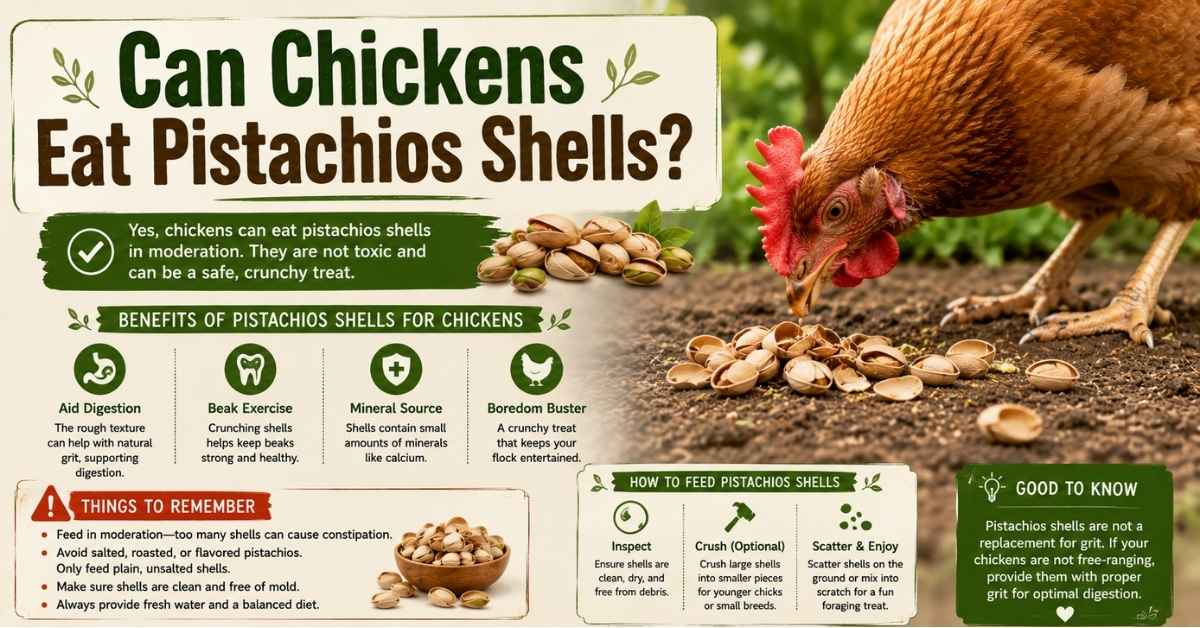
Can chickens eat pistachios shells? Pistachio shells are not toxic to chickens, but they are generally not considered safe or recommended treats. Hard shell fragments may increase the risk of choking, crop impaction, digestive irritation, or blockage, especially in chicks and smaller birds. Most healthy adult chickens that accidentally swallow one or two tiny shell pieces are usually fine, but feeding pistachio shells regularly can create unnecessary health risks for backyard flocks.
Many chicken owners search this topic after dropping pistachio shells near the coop or noticing curious hens pecking at snack leftovers. The good news is that accidental exposure is not always an emergency. However, understanding how chickens digest food and why hard shells can become problematic helps prevent avoidable digestive issues later.
Quick Answer
| Question | Short Answer |
|---|---|
| Can chickens eat pistachio shells? | They can swallow them, but shells are not recommended. |
| Are pistachio shells toxic to chickens? | No, pistachio shells are not poisonous. |
| Can pistachio shells cause crop impaction? | Yes, large or repeated shell intake may increase risk. |
| Are chicks more vulnerable? | Yes, chicks face higher choking and blockage risks. |
| What is the safest option? | Remove shells before feeding pistachios. |
Why Chickens Peck at Pistachio Shells
Chickens naturally peck at almost anything that looks edible, textured, or unusual. Free-range birds constantly investigate:
- seeds
- bugs
- leaves
- grit
- food scraps
- crunchy materials
Pistachio shells attract chickens because they:
- make noise when pecked
- resemble natural foraging material
- sometimes contain leftover nut residue
- appear interesting to curious birds
Many backyard chickens peck at pistachio shells simply because they associate snack areas with food rewards.
Why Free-Range Chickens Explore Random Objects
Chicken foraging behavior is driven by instinct. In natural outdoor environments, hens spend much of the day:
- scratching soil
- searching for insects
- testing unfamiliar objects
- pecking textured materials
This explains why chickens sometimes swallow things that are not ideal for digestion.
Are Pistachio Shells Dangerous for Chickens?
The most important distinction is this:
Pistachio Shells Are Not Toxic — But They Can Still Be Risky
Many flock owners assume that if something is not poisonous, it must automatically be safe. That is not always true for poultry digestion.
Pistachio shells may create problems involving:
- choking
- digestive blockage
- crop impaction
- digestive irritation
The danger depends heavily on:
- shell size
- quantity consumed
- chicken age
- overall flock health
Situations Where Risk Is Usually Low
Healthy adult chickens that accidentally swallow:
- one tiny shell fragment
- small crushed pieces
- occasional shell residue
often experience no visible problems.
Situations That Increase Risk
Risk rises significantly when:
- chicks swallow shell pieces
- large shells are consumed
- shell exposure happens repeatedly
- birds already have digestive weakness
- multiple shells accumulate in the crop
Can Chickens Digest Pistachio Shells?
Chicken digestion is powerful, but pistachio shells remain difficult to break down completely.
How Chicken Digestion Works
A chicken digestive system includes:
- the crop
- the proventriculus
- the gizzard
- the intestines
The gizzard uses muscular grinding action and grit to help crush food materials.
Why Pistachio Shells Are Harder To Digest
Unlike softer plant material, pistachio shells are:
- fibrous
- hard
- rough-textured
- difficult to break down
Large shell fragments may move slowly through digestion or remain trapped inside the crop.
What Is Crop Impaction?
One of the biggest concerns connected to pistachio shells is crop impaction.
Simple Crop Impaction Explanation
The crop is a storage pouch located in a chicken’s digestive tract. Food temporarily sits there before continuing through digestion.
Crop impaction happens when material becomes stuck and blocks normal food movement.
Hard indigestible items like:
- pistachio shells
- straw
- long grass
- tough fibers
may contribute to blockage problems.
Early Warning Signs of Crop Problems
Watch carefully for:
- swollen crop
- hard crop texture
- reduced appetite
- lethargy
- sour smell from the beak
- regurgitation
- digestive slowdown
When Crop Impaction Becomes Dangerous
Severe blockage can prevent:
- normal eating
- hydration
- digestion
In serious cases, veterinary treatment may become necessary.
Can Chickens Choke on Pistachio Shells?
Yes, choking is possible, especially with larger shell pieces.
Why Shell Size Matters
Whole pistachio shells are more dangerous than:
- crushed shell fragments
- tiny broken pieces
Sharp shell edges may also irritate the throat or digestive tract.
Why Chicks Face Greater Choking Risk
Baby chicks are far more vulnerable because they have:
- smaller throats
- weaker swallowing control
- immature digestion
Many experienced flock owners avoid nut shells entirely around chicks.
Are Baby Chicks and Young Pullets More Vulnerable?
Yes, younger birds face significantly higher risk.
Why Young Chickens Struggle More
Young birds have:
- developing digestive systems
- smaller crops
- weaker grinding ability
- less digestive resilience
Large shell fragments can become dangerous much faster in chicks than in adult hens.
Better Treat Alternatives for Chicks
Safer chick treats often include:
- scrambled eggs
- mealworms
- finely chopped greens
- chick-safe commercial treats
What Happens After Chickens Eat Pistachio Shells?
In many cases, healthy adult chickens show no symptoms at all after swallowing tiny shell fragments.
Normal Signs
Healthy chickens usually:
- remain active
- continue eating
- drink normally
- forage as usual
Symptoms That Deserve Attention
Monitor closely if you notice:
- swollen crop
- appetite loss
- unusual droppings
- lethargy
- regurgitation
- breathing difficulty
- isolation from flock mates
These signs may indicate:
- digestive blockage
- crop impaction
- irritation
- choking complications
One Shell vs Many Shells: Understanding the Real Risk
Not all shell exposure carries the same danger.
One Small Shell Fragment
A healthy adult chicken swallowing one tiny shell fragment is usually a low-risk situation.
Repeated Shell Consumption
The risk becomes much higher when:
- shells are regularly available
- multiple birds consume them often
- large shell pieces accumulate
Whole Shells vs Crushed Shells
Whole shells are generally riskier because they:
- occupy more crop space
- move more slowly through digestion
- create larger obstruction potential
Why Shelled Pistachios Are Much Safer
Most experienced backyard chicken keepers prefer feeding:
- plain pistachios
- unsalted pistachios
- shelled pistachios
Removing shells eliminates many digestive concerns immediately.
Benefits of Feeding Shelled Pistachios
Shelled nuts:
- reduce choking risk
- lower blockage potential
- improve portion control
- digest more easily
Can Salted Pistachio Shells Create Additional Problems?
Yes, salted shells may introduce extra sodium exposure.
Although tiny salt residue is unlikely to cause major harm alone, repeated exposure to heavily salted snack waste is not ideal for poultry health.
Why Excess Sodium Matters
Too much salt may contribute to:
- dehydration
- kidney stress
- digestive imbalance
- reduced egg production
Symptoms of Excess Salt Exposure
Watch for:
- excessive thirst
- diarrhea
- weakness
- reduced appetite
Plain unsalted foods remain the safest option for backyard chickens.
Common Feeding Mistakes Chicken Owners Make
Many digestive issues happen because owners unintentionally allow unsafe snack waste into free-range areas.
Common Mistakes Include:
- throwing snack scraps near the coop
- assuming chickens digest anything safely
- feeding large quantities of shells
- ignoring digestive symptoms
- overfeeding human snacks
Healthy flock management requires more than simply avoiding toxic foods.
Safer Alternatives to Pistachio Shells
If you want safer treats, there are much better options available.
Better Chicken Treats Include:
- mealworms
- sunflower seeds
- oats
- chopped vegetables
- plain shelled nuts
- scratch grains in moderation
Why Natural Foraging Is Usually Better
Free-range chickens naturally enjoy:
- insects
- grasses
- seeds
- worms
These foods are usually safer than processed snack leftovers.
Practical Pistachio Shell Safety Checklist
| Situation | Risk Level | Recommended Action |
|---|---|---|
| One tiny shell fragment eaten | Low | Monitor normally |
| Adult chicken ate several shells | Moderate | Watch digestion carefully |
| Chick swallowed shell pieces | Moderate-High | Remove access immediately |
| Swollen crop appears | High | Monitor closely |
| Severe blockage symptoms | Emergency | Contact veterinarian |
What Experienced Chicken Keepers Usually Do
Most experienced flock owners simply avoid feeding pistachio shells at all.
Instead, they focus on:
- safe treats
- balanced nutrition
- clean feeding areas
- proper snack preparation
Experienced keepers understand that removing shells entirely is far easier than dealing with digestive problems later.
Monitoring Instead of Panicking
Many healthy adult chickens recover perfectly fine after accidental shell ingestion. The important thing is monitoring symptoms calmly rather than assuming immediate disaster.
Signs Your Flock’s Treat Routine May Need Improvement
Digestive issues sometimes reflect broader feeding problems.
Warning Signs Include:
- excessive snack feeding
- obesity
- poor egg production
- digestive irregularities
- reduced activity
- messy droppings
Balanced poultry feed should always remain the foundation of flock nutrition.
Frequently Asked Questions
Can chickens digest pistachio shells completely?
Small fragments may pass through digestion, but large shells are difficult to break down fully.
Will one pistachio shell hurt a chicken?
Most healthy adult chickens tolerate one tiny shell fragment without major issues.
Can chickens choke on pistachio shells?
Yes, especially chicks or birds swallowing larger shell pieces.
What does crop impaction look like?
Common symptoms include a swollen crop, appetite loss, lethargy, and digestive slowdown.
Are pistachio shells toxic to chickens?
No, pistachio shells are not poisonous.
Can baby chicks eat pistachio shells?
Chicks face much higher digestive and choking risks, so shells should be avoided completely.
Should I remove pistachio shells before feeding nuts?
Yes, shelled pistachios are much safer for chickens.
How long should I monitor chickens after shell ingestion?
Most flock owners monitor behavior, appetite, and crop function for 24–48 hours.
Final Thoughts
Can chickens eat pistachios shells? Technically yes, chickens can swallow pistachio shells, but that does not mean shells are safe or recommended. Hard shell fragments may increase the risk of crop impaction, choking, digestive irritation, and blockage, especially in chicks or birds consuming larger amounts.
The safest approach is simple: remove shells before feeding pistachios and keep snack waste away from free-range areas. Most healthy adult chickens that accidentally swallow a tiny shell fragment will probably be fine, but smart flock management focuses on prevention instead of gambling with digestive health.
Balanced nutrition, proper treats, clean feeding habits, and careful monitoring always matter more than any single snack.
Can Chickens Eat Pistachios Shells? Risks, Safety, and What Flock Owners Should Know
Can chickens eat pistachios shells? Pistachio shells are not toxic to chickens, but they are generally not considered safe or recommended treats. Hard shell fragments may increase the risk of choking, crop impaction, digestive irritation, or blockage, especially in chicks and smaller birds. Most healthy adult chickens that accidentally swallow one or two tiny shell pieces are usually fine, but feeding pistachio shells regularly can create unnecessary health risks for backyard flocks.
Many chicken owners search this topic after dropping pistachio shells near the coop or noticing curious hens pecking at snack leftovers. The good news is that accidental exposure is not always an emergency. However, understanding how chickens digest food and why hard shells can become problematic helps prevent avoidable digestive issues later.
Quick Answer
| Question | Short Answer |
|---|---|
| Can chickens eat pistachio shells? | They can swallow them, but shells are not recommended. |
| Are pistachio shells toxic to chickens? | No, pistachio shells are not poisonous. |
| Can pistachio shells cause crop impaction? | Yes, large or repeated shell intake may increase risk. |
| Are chicks more vulnerable? | Yes, chicks face higher choking and blockage risks. |
| What is the safest option? | Remove shells before feeding pistachios. |
Why Chickens Peck at Pistachio Shells
Chickens naturally peck at almost anything that looks edible, textured, or unusual. Free-range birds constantly investigate:
- seeds
- bugs
- leaves
- grit
- food scraps
- crunchy materials
Pistachio shells attract chickens because they:
- make noise when pecked
- resemble natural foraging material
- sometimes contain leftover nut residue
- appear interesting to curious birds
Many backyard chickens peck at pistachio shells simply because they associate snack areas with food rewards.
Why Free-Range Chickens Explore Random Objects
Chicken foraging behavior is driven by instinct. In natural outdoor environments, hens spend much of the day:
- scratching soil
- searching for insects
- testing unfamiliar objects
- pecking textured materials
This explains why chickens sometimes swallow things that are not ideal for digestion.
Are Pistachio Shells Dangerous for Chickens?
The most important distinction is this:
Pistachio Shells Are Not Toxic — But They Can Still Be Risky
Many flock owners assume that if something is not poisonous, it must automatically be safe. That is not always true for poultry digestion.
Pistachio shells may create problems involving:
- choking
- digestive blockage
- crop impaction
- digestive irritation
The danger depends heavily on:
- shell size
- quantity consumed
- chicken age
- overall flock health
Situations Where Risk Is Usually Low
Healthy adult chickens that accidentally swallow:
- one tiny shell fragment
- small crushed pieces
- occasional shell residue
often experience no visible problems.
Situations That Increase Risk
Risk rises significantly when:
- chicks swallow shell pieces
- large shells are consumed
- shell exposure happens repeatedly
- birds already have digestive weakness
- multiple shells accumulate in the crop
Can Chickens Digest Pistachio Shells?
Chicken digestion is powerful, but pistachio shells remain difficult to break down completely.
How Chicken Digestion Works
A chicken digestive system includes:
- the crop
- the proventriculus
- the gizzard
- the intestines
The gizzard uses muscular grinding action and grit to help crush food materials.
Why Pistachio Shells Are Harder To Digest
Unlike softer plant material, pistachio shells are:
- fibrous
- hard
- rough-textured
- difficult to break down
Large shell fragments may move slowly through digestion or remain trapped inside the crop.
What Is Crop Impaction?
One of the biggest concerns connected to pistachio shells is crop impaction.
Simple Crop Impaction Explanation
The crop is a storage pouch located in a chicken’s digestive tract. Food temporarily sits there before continuing through digestion.
Crop impaction happens when material becomes stuck and blocks normal food movement.
Hard indigestible items like:
- pistachio shells
- straw
- long grass
- tough fibers
may contribute to blockage problems.
Early Warning Signs of Crop Problems
Watch carefully for:
- swollen crop
- hard crop texture
- reduced appetite
- lethargy
- sour smell from the beak
- regurgitation
- digestive slowdown
When Crop Impaction Becomes Dangerous
Severe blockage can prevent:
- normal eating
- hydration
- digestion
In serious cases, veterinary treatment may become necessary.
Can Chickens Choke on Pistachio Shells?
Yes, choking is possible, especially with larger shell pieces.
Why Shell Size Matters
Whole pistachio shells are more dangerous than:
- crushed shell fragments
- tiny broken pieces
Sharp shell edges may also irritate the throat or digestive tract.
Why Chicks Face Greater Choking Risk
Baby chicks are far more vulnerable because they have:
- smaller throats
- weaker swallowing control
- immature digestion
Many experienced flock owners avoid nut shells entirely around chicks.
LEARN MORE: Can Chickens Eat Pistachios?
Are Baby Chicks and Young Pullets More Vulnerable?
Yes, younger birds face significantly higher risk.
Why Young Chickens Struggle More
Young birds have:
- developing digestive systems
- smaller crops
- weaker grinding ability
- less digestive resilience
Large shell fragments can become dangerous much faster in chicks than in adult hens.
Better Treat Alternatives for Chicks
Safer chick treats often include:
- scrambled eggs
- mealworms
- finely chopped greens
- chick-safe commercial treats
What Happens After Chickens Eat Pistachio Shells?
In many cases, healthy adult chickens show no symptoms at all after swallowing tiny shell fragments.
Normal Signs
Healthy chickens usually:
- remain active
- continue eating
- drink normally
- forage as usual
Symptoms That Deserve Attention
Monitor closely if you notice:
- swollen crop
- appetite loss
- unusual droppings
- lethargy
- regurgitation
- breathing difficulty
- isolation from flock mates
These signs may indicate:
- digestive blockage
- crop impaction
- irritation
- choking complications
One Shell vs Many Shells: Understanding the Real Risk
Not all shell exposure carries the same danger.
One Small Shell Fragment
A healthy adult chicken swallowing one tiny shell fragment is usually a low-risk situation.
Repeated Shell Consumption
The risk becomes much higher when:
- shells are regularly available
- multiple birds consume them often
- large shell pieces accumulate
Whole Shells vs Crushed Shells
Whole shells are generally riskier because they:
- occupy more crop space
- move more slowly through digestion
- create larger obstruction potential
Why Shelled Pistachios Are Much Safer
Most experienced backyard chicken keepers prefer feeding:
- plain pistachios
- unsalted pistachios
- shelled pistachios
Removing shells eliminates many digestive concerns immediately.
Benefits of Feeding Shelled Pistachios
Shelled nuts:
- reduce choking risk
- lower blockage potential
- improve portion control
- digest more easily
Can Salted Pistachio Shells Create Additional Problems?
Yes, salted shells may introduce extra sodium exposure.
Although tiny salt residue is unlikely to cause major harm alone, repeated exposure to heavily salted snack waste is not ideal for poultry health.
Why Excess Sodium Matters
Too much salt may contribute to:
- dehydration
- kidney stress
- digestive imbalance
- reduced egg production
Symptoms of Excess Salt Exposure
Watch for:
- excessive thirst
- diarrhea
- weakness
- reduced appetite
Plain unsalted foods remain the safest option for backyard chickens.
Common Feeding Mistakes Chicken Owners Make
Many digestive issues happen because owners unintentionally allow unsafe snack waste into free-range areas.
Common Mistakes Include:
- throwing snack scraps near the coop
- assuming chickens digest anything safely
- feeding large quantities of shells
- ignoring digestive symptoms
- overfeeding human snacks
Healthy flock management requires more than simply avoiding toxic foods.
Safer Alternatives to Pistachio Shells
If you want safer treats, there are much better options available.
Better Chicken Treats Include:
- mealworms
- sunflower seeds
- oats
- chopped vegetables
- plain shelled nuts
- scratch grains in moderation
Why Natural Foraging Is Usually Better
Free-range chickens naturally enjoy:
- insects
- grasses
- seeds
- worms
These foods are usually safer than processed snack leftovers.
Practical Pistachio Shell Safety Checklist
| Situation | Risk Level | Recommended Action |
|---|---|---|
| One tiny shell fragment eaten | Low | Monitor normally |
| Adult chicken ate several shells | Moderate | Watch digestion carefully |
| Chick swallowed shell pieces | Moderate-High | Remove access immediately |
| Swollen crop appears | High | Monitor closely |
| Severe blockage symptoms | Emergency | Contact veterinarian |
What Experienced Chicken Keepers Usually Do
Most experienced flock owners simply avoid feeding pistachio shells at all.
Instead, they focus on:
- safe treats
- balanced nutrition
- clean feeding areas
- proper snack preparation
Experienced keepers understand that removing shells entirely is far easier than dealing with digestive problems later.
Monitoring Instead of Panicking
Many healthy adult chickens recover perfectly fine after accidental shell ingestion. The important thing is monitoring symptoms calmly rather than assuming immediate disaster.
Signs Your Flock’s Treat Routine May Need Improvement
Digestive issues sometimes reflect broader feeding problems.
Warning Signs Include:
- excessive snack feeding
- obesity
- poor egg production
- digestive irregularities
- reduced activity
- messy droppings
Balanced poultry feed should always remain the foundation of flock nutrition.
Frequently Asked Questions About Can Chickens Eat Pistachios Shells
Can Chickens Eat Pistachios Shells completely?
Small fragments may pass through digestion, but large shells are difficult to break down fully.
Will one pistachio shell hurt a chicken?
Most healthy adult chickens tolerate one tiny shell fragment without major issues.
Can chickens choke on pistachio shells?
Yes, especially chicks or birds swallowing larger shell pieces.
What does crop impaction look like?
Common symptoms include a swollen crop, appetite loss, lethargy, and digestive slowdown.
Are pistachio shells toxic to chickens?
No, pistachio shells are not poisonous.
Can baby chicks eat pistachio shells?
Chicks face much higher digestive and choking risks, so shells should be avoided completely.
Should I remove pistachio shells before feeding nuts?
Yes, shelled pistachios are much safer for chickens.
How long should I monitor chickens after shell ingestion?
Most flock owners monitor behavior, appetite, and crop function for 24–48 hours.
Final Thoughts About Can Chickens Eat Pistachios Shells
Can chickens eat pistachios shells? Technically yes, chickens can swallow pistachio shells, but that does not mean shells are safe or recommended. Hard shell fragments may increase the risk of crop impaction, choking, digestive irritation, and blockage, especially in chicks or birds consuming larger amounts.
The safest approach is simple: remove shells before feeding pistachios and keep snack waste away from free-range areas. Most healthy adult chickens that accidentally swallow a tiny shell fragment will probably be fine, but smart flock management focuses on prevention instead of gambling with digestive health.
Balanced nutrition, proper treats, clean feeding habits, and careful monitoring always matter more than any single snack.