
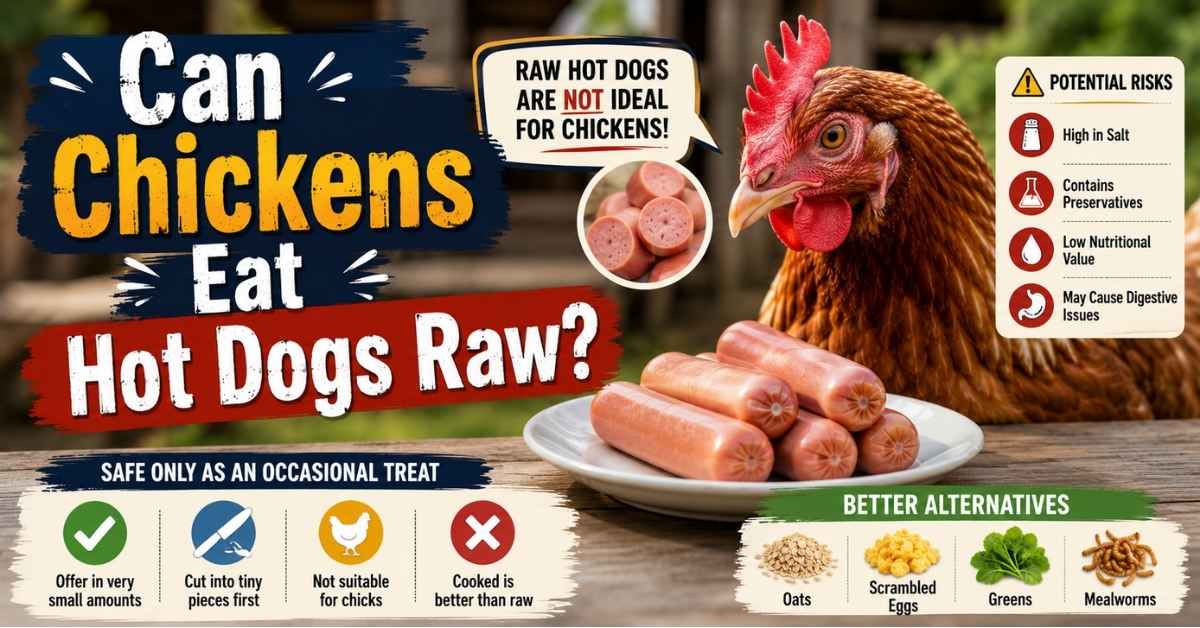
Can chickens eat hot dogs raw? Chickens can technically eat small pieces of raw hot dogs, but feeding uncooked processed meat is not recommended for backyard flocks. Raw hot dogs may contain harmful bacteria, excessive sodium, preservatives, unhealthy fats, and artificial additives that can affect your chickens’ long-term health. A tiny accidental bite usually is not an emergency for healthy adult hens, but regularly feeding raw processed meat can increase the risk of digestive upset, nutritional imbalance, dehydration, and poor flock health.
Many flock owners search this question after discovering their chickens stole leftover food from the kitchen, trash, or outdoor table. The good news is that one small piece rarely causes serious harm. However, understanding the difference between natural protein sources and processed raw meat is important if you want healthier chickens, stronger egg production, and fewer feeding mistakes.
Quick Answer: Are Raw Hot Dogs Safe for Chickens?
Here is the short answer most chicken owners actually need:
| Question | Quick Answer |
|---|---|
| Can chickens eat raw hot dogs? | Technically yes, but not recommended |
| Are raw hot dogs healthy for chickens? | No, they lack balanced nutrition |
| Can raw hot dogs make chickens sick? | Sometimes, especially in large amounts |
| Is cooked safer than raw? | Yes, cooking reduces bacterial risk |
| Can baby chicks eat raw hot dogs? | No, avoid completely |
| Best protein alternatives? | Mealworms, eggs, insects, plain cooked meat |
If your chickens accidentally ate a small amount of uncooked hot dog, there is usually no need to panic. Problems become more likely when chickens regularly consume processed foods, spoiled meat, or large amounts of salty leftovers.
Why Chickens Will Eat Almost Anything — Even Unsafe Foods
Chickens are curious omnivores that naturally peck at insects, worms, seeds, scraps, and even small animals. Because of this instinct, many beginner flock owners assume anything chickens willingly eat must be safe.
That assumption causes a lot of feeding mistakes.
Chickens are strongly attracted to foods high in fat, protein, and salt. Processed meats like hot dogs trigger those instincts even though they provide poor-quality poultry nutrition.
The Difference Between Appetite and Nutrition
One of the biggest misconceptions in backyard chicken care is confusing appetite with nutritional value.
Your flock may aggressively chase raw hot dogs, but that does not mean the food supports:
- Healthy egg production
- Strong eggshells
- Proper feather growth
- Balanced digestion
- Long-term flock health
Healthy chickens thrive on balanced commercial layer feed, not heavily processed human foods.
What Makes Raw Hot Dogs Different From Other Chicken Treats?
Many people compare raw hot dogs to natural protein sources because chickens sometimes eat mice, insects, frogs, or raw scraps in the yard.
However, raw processed meat is completely different from natural prey.
Raw Meat vs Processed Meat
Natural protein sources contain:
- Nutrients
- Natural fats
- Digestible protein
- Minimal additives
Raw hot dogs often contain:
- Excess sodium
- Sodium nitrite
- Preservatives
- Artificial flavoring
- Saturated fat
- Fillers
- Processed oils
That combination makes processed meats far less suitable for poultry diets.
Why Uncooked Processed Foods Carry Higher Risk
Cooking reduces some bacterial contamination risks. Raw hot dogs may carry bacteria like:
- Salmonella
- Listeria
- Spoilage bacteria
While chickens can tolerate some bacteria better than humans, contaminated food still increases health risks for backyard flocks.
What’s Actually Inside a Raw Hot Dog?
Most commercial hot dogs are heavily processed foods designed for long shelf life and flavor enhancement rather than nutritional quality.
Sodium Levels and Poultry Sensitivity
Chickens are much more sensitive to excess salt than humans.
Too much sodium may contribute to:
- Dehydration
- Kidney stress
- Excessive thirst
- Digestive imbalance
- Reduced egg quality
Even a single hot dog can contain very high sodium levels compared to a chicken’s nutritional needs.
Sodium Nitrite and Preservatives
Many hot dogs contain sodium nitrite, a preservative used in processed meats. While a tiny accidental amount usually is not catastrophic, repeated exposure to processed additives is not ideal for poultry health.
Artificial Flavoring and Fillers
Cheap hot dogs may include:
- Corn syrup
- Artificial smoke flavoring
- Emulsifiers
- Fillers
- Stabilizers
These ingredients provide almost no meaningful nutritional benefit for chickens.
Can Raw Hot Dogs Make Chickens Sick?
Yes, they can — especially if chickens consume:
- Large quantities
- Spoiled meat
- Highly processed brands
- Foods left in warm weather
Bacterial Risks Backyard Flock Owners Should Understand
Raw meat products can contain harmful bacteria. Warm outdoor conditions increase bacterial growth rapidly, especially during summer.
Spoiled meat creates greater risks than fresh raw hot dogs.
How Warm Weather Increases Risk
Hot temperatures accelerate bacterial contamination. Raw processed foods left outside for several hours become increasingly unsafe for poultry.
This is why experienced flock owners remove leftover scraps quickly instead of allowing chickens to graze on old food all day.
What Happens if a Chicken Eats Raw Hot Dogs?
In many cases, healthy adult chickens show no serious symptoms after eating a small amount of raw hot dog. Chickens have surprisingly resilient digestive systems.
However, excessive amounts may trigger problems.
Common Mild Reactions
You may notice:
- Loose droppings
- Increased thirst
- Mild digestive upset
- Temporary lethargy
Serious Warning Signs
Seek veterinary help if you notice:
- Severe weakness
- Difficulty standing
- Breathing problems
- Persistent diarrhea
- Swollen abdomen
These symptoms may indicate severe digestive distress, bacterial illness, or excessive sodium intake.
Emergency Scenario: My Chickens Already Ate Raw Hot Dogs
This is one of the most common hidden reasons people search this keyword.
First, do not panic.
A healthy adult chicken that steals a small piece of raw hot dog usually recovers without major problems.
What To Do Immediately
- Remove remaining scraps
- Provide clean fresh water
- Encourage balanced feed intake
- Watch behavior closely
- Monitor droppings for 24 hours
Why Hydration Matters
Excess sodium may increase dehydration risk. Fresh water helps chickens rebalance fluids naturally.
When To Contact a Poultry Vet
Call a veterinarian if:
- symptoms worsen
- multiple chickens become sick
- birds stop eating
- extreme lethargy develops
Why Baby Chicks Should Never Eat Raw Hot Dogs
Baby chicks are much more vulnerable than adult hens.
Young chicks require carefully balanced starter feed to support:
- Organ development
- Bone growth
- Feather development
- Immune health
Raw processed foods interfere with proper nutrition and may upset delicate digestive systems.
Better Protein Sources for Chicks
Safer high-protein options include:
- Scrambled eggs
- Mealworms in moderation
- Chick starter crumble
- Tiny insects
These provide healthier amino acids without excessive sodium or preservatives.
Raw Hot Dogs vs Cooked Hot Dogs for Chickens
| Factor | Raw Hot Dogs | Cooked Hot Dogs |
|---|---|---|
| Bacteria Risk | Higher | Lower |
| Sodium Content | High | High |
| Preservatives | Present | Present |
| Nutritional Quality | Poor | Poor |
| Long-Term Suitability | Not ideal | Not ideal |
Is Cooked Safer?
Cooking mainly reduces bacterial contamination risk. However, cooked hot dogs still contain:
- Sodium
- Preservatives
- Saturated fat
- Artificial additives
So cooking improves safety slightly but does not make hot dogs healthy chicken treats.
The Long-Term Risks of Feeding Processed Foods to Chickens
The biggest issue is not immediate poisoning. It is long-term nutritional imbalance.
Nutritional Dilution
Every unhealthy treat replaces space for nutrient-rich poultry feed.
Over time, this may contribute to:
- Weak eggshells
- Reduced egg production
- Feather problems
- Lower energy
- Weight gain
Obesity Risks in Backyard Hens
Many backyard chickens become overweight because owners overfeed scraps.
Obesity in chickens may increase:
- Mobility problems
- Fatty liver disease
- Reproductive issues
- Reduced lifespan
Why Too Many Treats Change Feeding Behavior
Chickens quickly learn to prefer fatty or salty foods over balanced feed. Once that habit develops, restoring healthy feeding patterns becomes harder.
Can Chickens Naturally Eat Raw Meat?
Yes, chickens naturally eat:
- Insects
- Worms
- Frogs
- Small rodents
- Small reptiles
But that does not mean processed meats belong in their regular diet.
The Major Difference Between Natural Prey and Processed Foods
Natural prey contains:
- Whole nutrients
- Natural protein
- Balanced fats
Processed meats contain:
- Chemical preservatives
- Excess sodium
- Artificial ingredients
- Processed oils
That difference matters significantly.
How Experienced Chicken Keepers Handle Kitchen Scraps
Experienced flock owners usually follow simple feeding rules.
The 90/10 Feeding Rule
Many poultry keepers aim for:
- 90% balanced feed
- 10% treats
This keeps chickens nutritionally stable while still allowing enrichment snacks occasionally.
What Experienced Keepers Usually Avoid
Most experienced owners avoid:
- Moldy food
- Excess sugar
- Salty snacks
- Heavily processed meats
- Spoiled leftovers
Safer Protein Treats Chickens Actually Benefit From
There are far healthier options than raw hot dogs.
| Healthy Treat | Main Benefit | Feeding Frequency |
|---|---|---|
| Mealworms | Lean protein | Regular |
| Scrambled eggs | Amino acids | Moderate |
| Plain cooked fish | Omega-3 fats | Occasional |
| Vegetables | Vitamins and fiber | Frequent |
| Plain cooked chicken | Natural protein | Occasional |
These foods support healthier egg production and overall flock wellbeing far better than processed meat scraps.
Foods Commonly Fed With Hot Dogs That Can Be Worse
Sometimes the side ingredients create even bigger problems.
Onion and Garlic Seasoning
Many processed meats contain onion powder and garlic flavoring, which may irritate chickens in larger amounts.
Sugary Condiments
Avoid:
- Ketchup
- Barbecue sauce
- Cheese sauces
- Spicy toppings
These add unnecessary sugar, sodium, and preservatives.
Moldy Bread and Buns
Spoiled bread may develop dangerous mold toxins harmful to poultry.
Signs Your Chickens Are Getting Too Many Unhealthy Treats
Poor nutrition often appears gradually.
Common Warning Signs
- Weight gain
- Reduced activity
- Fewer eggs
- Soft eggshells
- Loose droppings
- Chickens ignoring normal feed
- Greasy feather appearance
These symptoms often indicate excessive treats or nutritional imbalance.
LEARN MORE: Can Chickens Eat Hot Dogs?
Backyard Chicken Feeding Framework for Long-Term Flock Health
Healthy backyard flocks usually follow a simple nutritional structure.
Base Diet
High-quality commercial poultry feed
Healthy Protein Sources
Mealworms, eggs, insects, fish scraps
Hydration Support
Fresh water available daily
Treat Control
Processed foods only rarely
Seasonal Adjustments
Extra protein during molting season
Safe and Unsafe Table Scraps for Chickens
| Generally Safe | Best Limited | Avoid |
|---|---|---|
| Vegetables | Bread | Raw processed meat |
| Fruits | Pasta | Salty snacks |
| Oats | Rice | Moldy food |
| Eggs | Cheese | Sugary junk food |
| Plain meat | Crackers | Spoiled leftovers |
Common Mistakes Beginner Chicken Owners Make With Treats
Many new flock owners unintentionally overfeed unhealthy scraps.
Common Feeding Mistakes
- Giving too many leftovers
- Replacing feed with treats
- Feeding salty foods regularly
- Assuming chickens can safely eat everything humans eat
Healthy feeding routines matter more than occasional treats.
What Poultry Experts Usually Recommend About Processed Foods
Most poultry experts agree on one principle:
Balanced poultry feed should remain the foundation of a chicken’s diet.
Treats can provide enrichment, but processed human foods should remain limited.
Commercial layer feed contains carefully balanced:
- Protein
- Calcium
- Vitamins
- Minerals
- Energy levels
Processed meats simply cannot replace that nutritional balance.
Frequently Asked Questions About Can Chickens Eat Hot Dogs Raw
Can chickens digest raw hot dogs safely?
Healthy adult chickens may tolerate tiny amounts, but raw processed meat is not recommended regularly.
Will one raw hot dog hurt chickens?
One accidental hot dog usually does not harm healthy chickens, though digestive upset is possible.
Can chickens get salmonella from raw meat?
Raw meat can contain harmful bacteria, especially when left outside in warm weather.
Are uncured hot dogs safer for chickens?
Uncured hot dogs may contain fewer preservatives, but they still remain processed foods high in sodium.
Can laying hens eat processed meat?
Occasional tiny amounts are usually tolerated, but processed meat should not become a regular treat.
Why do chickens love salty foods?
Chickens naturally seek calorie-dense foods rich in fat and protein, even when those foods are unhealthy.
Can chickens eat raw sausage or deli meat?
These foods carry similar processed meat risks and should remain limited.
What treats are healthiest for backyard chickens?
Mealworms, vegetables, eggs, oats, and plain cooked meat are healthier alternatives.
Final Verdict: Should You Feed Raw Hot Dogs to Chickens?
Raw hot dogs are not the best choice for backyard chickens. While healthy adult hens can sometimes tolerate tiny accidental amounts, uncooked processed meat carries risks related to bacteria, excessive sodium, preservatives, and poor nutritional quality.
If your flock accidentally ate a small piece, there is usually no reason to panic. However, healthier treats like mealworms, eggs, vegetables, and balanced poultry feed support stronger egg production, better digestion, and long-term flock health far more effectively.
The simplest rule is this:
If a food is heavily processed for humans, it should stay only a very rare treat for chickens too.