
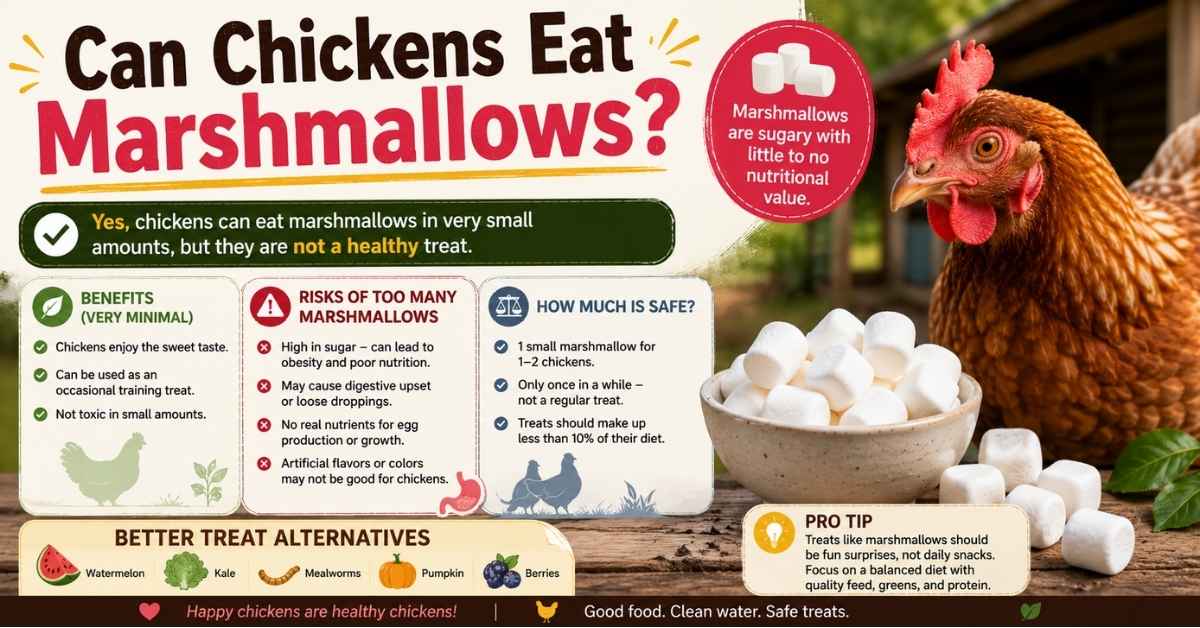
Can chickens eat marshmallows? Yes, chickens can technically eat small amounts of marshmallows without immediate toxicity, but marshmallows are highly processed sugary treats with very little nutritional value and should generally be avoided. While one or two marshmallows are unlikely to seriously harm healthy backyard chickens, feeding sugary processed foods regularly can lead to digestive imbalance, poor nutrition, obesity, and unhealthy feeding habits in your flock.
Many chicken owners search this question after a hen steals a marshmallow from the ground or a child tosses treats into the coop. The good news is that marshmallows are not considered highly toxic to chickens in tiny amounts. However, experienced poultry keepers usually avoid feeding processed human snacks because chickens thrive best on a balanced diet built around proper layer feed, healthy vegetables, grains, and natural protein sources.
This guide explains everything backyard flock owners need to know about marshmallows for chickens, including ingredient risks, sugar concerns, artificial sweeteners, digestive issues, healthier alternatives, and what to do if your chicken already ate marshmallows.
Quick Answer
| Question | Quick Answer |
|---|---|
| Can chickens eat marshmallows? | Technically yes, but not recommended |
| Are marshmallows toxic to chickens? | Usually no in small amounts |
| Are sugar-free marshmallows dangerous? | Potentially yes |
| Do marshmallows have nutritional value for chickens? | Very little |
| Can marshmallows upset digestion? | Yes, especially in large amounts |
| Better treats for chickens | Fruits, vegetables, mealworms |
Why Chickens Try to Eat Marshmallows in the First Place
Chickens are naturally curious eaters. Backyard chickens peck at almost anything colorful, soft, shiny, or sweet-smelling. That includes:
- bread
- candy
- chips
- sugary snacks
- marshmallows
One reason chickens love marshmallows is their high sugar content. Like many animals, chickens are instinctively attracted to calorie-dense foods because those foods provide quick energy.
In free-range environments, chickens constantly forage for:
- seeds
- insects
- berries
- plants
Sugary snacks trigger similar reward behavior, which is why flock members may aggressively compete for marshmallows once they discover them.
This is also why many experienced flock owners avoid introducing processed junk food into regular feeding routines.
Are Marshmallows Safe for Chickens?
The most important thing to understand is the difference between “not toxic” and “healthy.”
Marshmallows are generally not toxic to chickens in tiny amounts, but that does not make them a healthy poultry treat.
Can One Marshmallow Hurt a Chicken?
In most cases, one marshmallow will not seriously harm a healthy adult chicken. Backyard chicken owners often panic after accidental feeding, but small accidental amounts rarely create emergencies.
The bigger concern is:
- repeated feeding
- large quantities
- sugar-heavy diets
- processed ingredients
Why Marshmallows Are Still a Bad Treat Choice
Marshmallows contain:
- refined sugar
- corn syrup
- artificial flavors
- preservatives
- low-quality fillers
Unlike healthy chicken treats, marshmallows provide almost no:
- protein
- vitamins
- calcium
- fiber
- minerals
That means chickens consume calories without meaningful nutrition.
Over time, excessive sugary treats can interfere with balanced poultry nutrition and proper egg production.
What Marshmallows Are Actually Made Of
Most marshmallows contain a combination of:
- sugar
- corn syrup
- gelatin
- flavorings
- preservatives
- food coloring
Understanding these ingredients helps explain why marshmallows are poor treats for backyard chickens.
Sugar and Corn Syrup
The largest issue is the sugar content.
Chickens do not need refined sugar in their diet. Excess sugar may contribute to:
- obesity
- digestive imbalance
- reduced nutritional intake
- unhealthy feeding behavior
Sugary foods can also reduce appetite for balanced layer feed.
Can Chickens Digest Gelatin?
Gelatin itself is not highly dangerous in tiny amounts. Since gelatin is protein-based, chickens can technically digest small quantities.
However, gelatin does not make marshmallows nutritious overall.
Artificial Flavors and Preservatives
Many flavored marshmallows contain:
- dyes
- preservatives
- artificial flavoring compounds
These ingredients add unnecessary processed chemicals to a chicken’s diet.
Why Sugar-Free Marshmallows Are More Dangerous
This is where many existing articles fail badly.
Some sugar-free marshmallows contain artificial sweeteners like xylitol, which can be dangerous to animals.
Even if certain sweeteners affect chickens differently than dogs, processed sugar substitutes still create unnecessary dietary risk. Always check ingredient labels carefully before feeding any packaged food to chickens.
What Happens If Chickens Eat Too Many Marshmallows?
Occasional tiny amounts usually do not create major problems. However, repeated sugary feeding can affect flock health over time.
Digestive Problems
Too many marshmallows may contribute to:
- loose droppings
- digestive upset
- reduced appetite
- gut imbalance
Sticky sugary foods can also create messy feeding behavior inside the coop.
Obesity and Weight Gain
Backyard chickens that consume excessive processed treats may gain unhealthy body weight, especially confined flocks with limited movement.
Obesity in chickens can affect:
- egg production
- mobility
- overall flock health
Nutritional Displacement
One of the biggest hidden risks is nutritional imbalance.
If chickens fill up on marshmallows and junk food treats, they eat less:
- balanced layer feed
- protein-rich foods
- nutrient-dense vegetables
That weakens the overall quality of their diet.
Can Marshmallows Affect Egg Production?
Indirectly, yes.
Poor nutrition may eventually impact:
- laying consistency
- shell quality
- feather condition
- energy levels
Experienced poultry keepers focus heavily on nutrient balance for this reason.
What To Do If Your Chicken Already Ate Marshmallows
If your chicken accidentally ate marshmallows, there is usually no reason to panic immediately.
Healthy adult chickens often recover fine after eating small processed treats occasionally.
Monitor Your Flock for Symptoms
Watch for:
- lethargy
- refusal to eat
- unusual droppings
- bloating
- digestive distress
In most cases, mild symptoms disappear naturally.
When To Contact a Poultry Veterinarian
Seek further evaluation if chickens show:
- severe weakness
- inability to stand
- ongoing digestive problems
- breathing difficulty
- complete appetite loss
These symptoms may indicate a larger issue unrelated to the marshmallows themselves.
How To Rebalance Their Diet
After accidental feeding:
- return to balanced poultry feed
- provide fresh water
- avoid additional sugary treats
- offer healthy vegetables instead
Most chickens bounce back quickly when their normal feeding routine resumes.
Can Baby Chicks Eat Marshmallows?
No, marshmallows are especially inappropriate for baby chicks.
Young chicks need:
- high protein
- balanced starter feed
- concentrated nutrients for growth
Sugary processed foods interfere with healthy development and provide no meaningful nutritional support.
Better Treats for Chicks
Safer options include:
- tiny leafy greens
- scrambled egg
- chick-safe herbs
- small insects
Treats should remain very limited during early growth stages.
Mini Marshmallows, Flavored Marshmallows, and Sugar-Free Marshmallows
Not all marshmallows carry the same risk level.
Are Mini Marshmallows Safer?
Mini marshmallows are not healthier. They simply contain smaller portions.
Because they are tiny, chickens may accidentally consume many at once.
Flavored Marshmallows
Flavored varieties often contain:
- artificial dyes
- chocolate flavoring
- excess sugar
- chemical additives
Some ingredients may be inappropriate for poultry digestion.
Sugar-Free Marshmallows
Sugar-free marshmallows create the greatest concern due to artificial sweeteners.
Always avoid feeding products containing:
- xylitol
- unknown sweetener blends
- excessive artificial additives
Marshmallows vs Healthy Chicken Treats
| Treat | Nutritional Value | Safe Frequency | Main Concern | Best Use |
|---|---|---|---|---|
| Marshmallows | Very Low | Rarely | Excess sugar | Avoid regularly |
| Watermelon | Moderate | Occasionally | High water content | Summer hydration |
| Mealworms | High | Regularly | Overfeeding protein | Feather support |
| Kale | Very High | Frequently | None in moderation | Nutrient support |
| Pumpkin | High | Frequently | Seeds in excess | Digestive support |
Best Natural Treats for Chickens
Healthier treats include:
- leafy greens
- berries
- oats
- mealworms
- pumpkin
- cabbage
- cucumbers
These foods provide nutrients instead of empty sugar calories.
The Right Way to Give Treats to Backyard Chickens
Experienced flock owners usually follow the 90/10 feeding rule.
That means:
- 90% balanced chicken feed
- 10% treats maximum
This keeps nutrition balanced while still allowing enrichment treats occasionally.
Why Layer Feed Matters Most
Quality layer feed provides:
- protein
- calcium
- vitamins
- minerals
- amino acids
Marshmallows cannot support any of those essential nutritional needs.
Free-Range Chickens vs Confined Chickens
Free-range chickens naturally burn more calories and forage for healthier foods. Confined chickens are more likely to develop obesity if fed sugary treats too often.
Common Feeding Mistakes Chicken Owners Make
Treating Chickens Like Human Pets
Many beginners accidentally feed chickens like household pets instead of livestock with specific nutritional needs.
Letting Children Feed Random Snacks
Children often feed:
- candy
- crackers
- marshmallows
- cereal
without understanding dietary consequences.
Ignoring Ingredient Labels
Processed foods may contain:
- excessive sodium
- artificial sweeteners
- preservatives
- harmful additives
Always read labels carefully.
What Experienced Chicken Keepers Usually Avoid
Experienced poultry owners typically avoid:
- candy
- soda
- heavily salted foods
- processed desserts
- sugary snacks
- artificial sweeteners
Instead, they focus on natural foods supporting long-term flock health.
One common philosophy among seasoned flock keepers is:
Treats should provide enrichment without damaging nutrition.
Healthier Alternatives Chickens Actually Benefit From
Better chicken treats include:
- watermelon
- cucumbers
- lettuce
- kale
- mealworms
- oats
- berries
- pumpkin
These options provide:
- hydration
- vitamins
- minerals
- fiber
- natural nutrients
Many backyard chickens enjoy these foods just as much as sugary snacks.
LEARN MORE: Can Chickens Eat Iceberg Lettuce?
Practical Backyard Feeding Routine That Works
A simple treat rotation might look like this:
| Day | Healthy Treat |
|---|---|
| Monday | Kale scraps |
| Wednesday | Watermelon |
| Friday | Mealworms |
| Weekend | Mixed vegetables |
This creates variety while maintaining nutritional balance.
Signs Your Feeding Routine Is Working
Healthy chickens typically show:
- strong egg production
- active behavior
- clean feathers
- healthy droppings
- strong appetite
Balanced feeding supports long-term flock wellness far better than sugary processed treats.
Frequently Asked Questions
Can chickens eat marshmallows safely?
Small amounts are usually not toxic, but marshmallows are unhealthy processed treats.
Are marshmallows toxic to chickens?
Generally no in tiny quantities, but sugar-free ingredients may create risks.
Can chickens eat sugar-free marshmallows?
It is best to avoid them due to artificial sweeteners like xylitol.
What happens if chickens eat candy?
Too much candy may contribute to digestive upset, obesity, and poor nutrition.
Why do chickens love sugary foods?
Chickens naturally seek calorie-dense foods because they provide fast energy.
Can marshmallows affect egg production?
Indirectly, yes. Poor nutrition can reduce laying consistency over time.
Can chickens choke on marshmallows?
Large sticky pieces may increase choking risk, especially if swallowed quickly.
Are homemade marshmallows safer?
Homemade marshmallows may contain fewer additives but still offer little nutritional value.
Final Verdict
Chickens can eat marshmallows in tiny amounts without immediate toxicity, but marshmallows are not healthy treats for backyard flocks. They contain excessive sugar, processed ingredients, and almost no useful nutrition for poultry health.
The healthiest approach is simple:
- prioritize balanced layer feed
- limit processed human snacks
- choose natural treats instead
- avoid artificial sweeteners completely
Backyard chickens thrive best on nutritious foods that support digestion, egg production, feather health, and long-term flock wellness rather than sugary processed treats like marshmallows.