
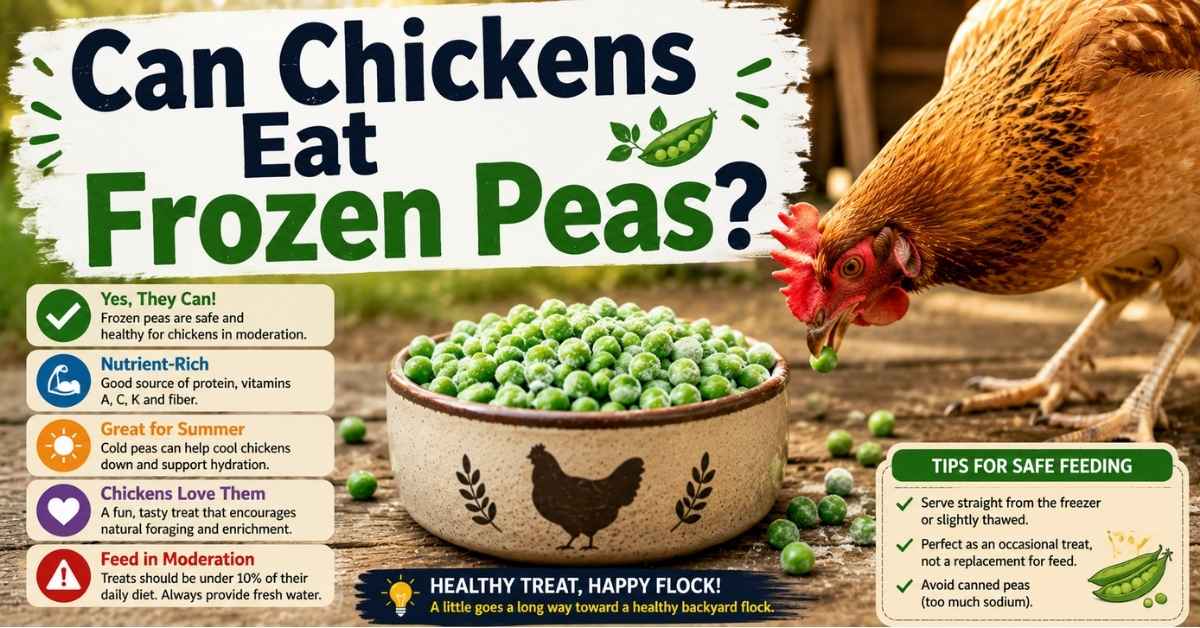
Can chickens eat frozen peas? Yes, chickens can safely eat frozen peas in moderation, and many backyard flocks absolutely love them. Frozen peas are a healthy vegetable treat packed with plant protein, fiber, vitamins, and hydration support, especially during hot weather. Most healthy adult chickens can eat frozen peas straight from the freezer, although slightly thawed peas may be easier for some birds to consume.
Many chicken owners worry about whether frozen vegetables can upset digestion, create crop issues, or become too cold for backyard flocks. The truth is that plain frozen peas are generally one of the safer treats for chickens when served responsibly alongside balanced poultry feed and fresh water.
Quick Answer
- Can chickens eat frozen peas safely? Yes, in small amounts.
- Do frozen peas need to be thawed? Usually not for healthy adult chickens.
- Are frozen peas healthy for laying hens? Yes, as an occasional treat.
- Best way to serve peas: Scatter-fed or lightly thawed.
- Can baby chicks eat frozen peas? Only carefully prepared small pieces.
- Can chickens eat canned peas? Not ideal because of added sodium.
Why Frozen Peas Confuse So Many Chicken Owners
Frozen peas sound harmless, but many beginners become nervous when feeding cold or frozen foods to chickens. Some online articles claim frozen vegetables are dangerous while others encourage them as healthy flock treats.
That conflicting advice creates confusion.
Most chicken keepers are really asking:
- Will frozen peas hurt my chickens?
- Do frozen peas need thawing first?
- Can cold vegetables damage digestion?
- Are frozen peas safe during winter?
- Will chickens even eat them?
These concerns are understandable because responsible flock owners naturally want to avoid feeding mistakes.
Can Chickens Eat Frozen Peas Safely?
Healthy adult chickens can safely eat plain frozen peas as part of a balanced diet. Peas are considered one of the healthier vegetable treats because they contain:
- protein
- fiber
- vitamins
- antioxidants
- natural carbohydrates
Frozen peas are often safer than processed table scraps like bread, chips, or sugary leftovers.
The real problem is not the peas themselves. Most feeding issues happen when owners:
- overfeed treats
- replace balanced layer feed
- use salty canned vegetables
- feed spoiled thawed vegetables
- ignore portion control
For most backyard flocks, frozen peas work best as:
- a cooling summer treat
- a healthy snack
- an enrichment activity
- part of a mixed vegetable feeding routine
Do Frozen Peas Need to Be Thawed Before Feeding Chickens?
This is one of the biggest hidden questions behind the keyword.
The good news is that most healthy adult chickens can eat frozen peas straight from the freezer without problems. Chickens peck at small frozen peas easily, especially during warm weather when cold treats become more appealing.
However, thawing peas slightly can still help in certain situations.
When Frozen Peas Are Fine Straight From the Freezer
Frozen peas usually work well:
- during hot summer weather
- for adult hens
- in small serving amounts
- when chickens have fresh water access
Many flock owners notice chickens become excited when cold peas scatter across the run.
When Thawing Makes More Sense
Lightly thaw peas if:
- temperatures are extremely cold
- chickens are very young
- birds have digestive sensitivity
- peas are unusually hard or clumped together
Slightly softened peas are easier for chicks and smaller birds to eat safely.
The Truth About Cold Foods and Chicken Digestion
There is very little evidence that small amounts of frozen peas harm healthy chickens. Backyard flocks regularly consume cold foods, insects, plants, and chilled water without digestive collapse.
Moderation and flock health matter far more than food temperature.
Why Many Chickens Absolutely Love Frozen Peas
Frozen peas often become more than just food. They turn into enrichment.
Many chickens:
- chase peas around the coop
- compete for treats
- peck enthusiastically at rolling vegetables
- become more active during feeding time
This stimulation helps reduce boredom, especially in enclosed runs.
Some backyard flock owners even use frozen peas during hot afternoons because chickens seem more interested in cool treats when temperatures rise.
Dominant hens usually rush toward peas first, so spreading treats around the run helps timid birds participate too.
Are Frozen Peas Healthy for Chickens?
Yes, plain peas offer several nutritional benefits when fed responsibly.
Protein Content
Peas contain plant-based protein, which supports:
- feather growth
- body maintenance
- egg production support
- molting recovery
Although peas are not a replacement for balanced poultry feed, they provide better nutrition than many common scraps.
Fiber and Digestion
The fiber inside peas supports healthy digestion and gut movement.
Vitamins and Minerals
Frozen peas contain nutrients such as:
- vitamin A
- vitamin C
- vitamin K
- manganese
- folate
Hydration Support During Hot Weather
Frozen peas naturally contain water, which may help chickens maintain hydration during summer heat.
This is one reason many flock owners use frozen peas as a cooling treat during extreme temperatures.
Nutritional Breakdown Table
| Nutrient | Benefit for Chickens |
|---|---|
| Protein | Supports feather and body health |
| Fiber | Helps digestion |
| Vitamins | Supports immunity and health |
| Water content | Helps hydration |
| Carbohydrates | Provides energy |
Frozen Peas vs Fresh Peas vs Canned Peas
Not all pea products are equally healthy for chickens.
Frozen Peas
Usually the best option because they retain nutrients well and contain no added sodium.
Fresh Peas
Fresh peas are also healthy but may spoil faster in hot weather.
Canned Peas
Canned peas are less ideal because they often contain:
- excess sodium
- preservatives
- additives
Too much salt can negatively affect flock health.
Comparison Chart
| Pea Type | Safe? | Notes |
|---|---|---|
| Frozen peas | Yes | Best overall option |
| Fresh peas | Yes | Healthy but perishable |
| Canned peas | Limited | Watch sodium levels |
| Seasoned peas | No | Added ingredients risky |
How Much Frozen Peas Can Chickens Eat?
Treat foods should stay below roughly 10% of a chicken’s total diet.
Too many vegetables or treats can reduce consumption of balanced layer feed, which contains essential nutrients chickens need daily.
Safe Serving Sizes
| Flock Size | Safe Serving | Frequency |
|---|---|---|
| 3–5 chickens | Small handful | 2–3 times weekly |
| 6–10 chickens | 1–2 handfuls | 2–3 times weekly |
| Large flocks | Small scoop | Occasional treat |
A little goes a long way.
Can Baby Chicks Eat Frozen Peas?
Baby chicks can eat peas carefully, but frozen peas require extra caution.
Young chicks need:
- chick starter feed
- smaller food particles
- balanced nutrition
- easier-to-swallow treats
Large frozen peas may become difficult for tiny chicks to handle safely.
If introducing peas to chicks:
- thaw them first
- cut them into smaller pieces
- offer tiny amounts
- avoid replacing starter feed
Balanced chick nutrition always matters most.
The Best Times to Feed Frozen Peas
Frozen peas work especially well during:
- summer afternoons
- heat waves
- enrichment sessions
- molting season
Frozen Peas During Hot Weather
Cold peas may encourage eating and hydration when chickens lose appetite during extreme heat.
Many flock owners observe chickens becoming noticeably more energetic around cold vegetable treats in summer.
Winter Feeding Considerations
During very cold weather, slightly thawed peas are usually a better option because icy treats may become less appealing.
Common Frozen Pea Feeding Mistakes Chicken Owners Make
Feeding Too Many Treats
Overfeeding vegetables can dilute balanced poultry nutrition.
Using Salty Canned Peas
Excess sodium is unnecessary and unhealthy for chickens.
Feeding Spoiled Thawed Vegetables
Warm spoiled vegetables can develop harmful bacteria quickly.
Ignoring Fresh Water
Treat feeding should always accompany clean water access.
Giving Large Frozen Peas to Chicks
Young birds may struggle with hard frozen foods.
Signs Your Chickens Are Handling Frozen Peas Well
Healthy chickens usually:
- stay active
- maintain normal droppings
- continue eating balanced feed
- show healthy crop emptying
- display normal flock behavior
Most birds digest peas easily when fed responsibly.
Vegetables That Pair Well With Frozen Peas
Frozen peas combine well with:
- corn
- lettuce
- cucumbers
- pumpkin
- mealworms
These combinations create enrichment opportunities while adding dietary variety.
Many flock owners create simple summer treat trays using mixed vegetables and frozen peas.
Vegetables Chickens Should Avoid Regularly
Some vegetables and ingredients should stay limited or avoided completely.
Avoid Feeding:
- moldy vegetables
- salty canned vegetables
- heavily seasoned foods
- raw green potato peels
- excessive onions
- spoiled produce
Avocado flesh is controversial, but avocado pits and skins should always stay away from chickens.
The Biggest Myths About Frozen Peas for Chickens
“Frozen Foods Are Dangerous for Chickens”
Healthy chickens regularly consume cold foods without problems.
“Frozen Vegetables Lose All Nutrition”
Frozen peas actually retain nutrients surprisingly well.
“Chickens Can Eat Unlimited Vegetables”
Too many treats can weaken nutritional balance.
“All Pea Products Are Safe”
Seasoned, canned, or salty peas can create health issues.
LEARN MORE: Can Chickens Eat Dry Oatmeal?
Real Flock Observations Most Articles Never Mention
Experienced flock owners often notice:
- chickens chase rolling peas enthusiastically
- peas reduce boredom in confined runs
- hens become more interested in cold treats during heat waves
- timid birds benefit when treats are scattered widely
Some chickens ignore peas at first simply because they are unfamiliar with the texture.
Once one bird starts pecking, the rest of the flock usually follows quickly.
Best Ways to Serve Frozen Peas Safely
Safe serving methods include:
- scatter feeding
- frozen treat bowls
- mixed vegetable trays
- pea-and-corn combinations
- enrichment feeding sessions
Avoid dumping excessive amounts into muddy areas where vegetables spoil quickly.
When Chickens Should NOT Eat Frozen Peas
Avoid or limit frozen peas when chickens are:
- recovering from digestive illness
- refusing balanced feed
- severely overweight
- extremely young
- struggling during freezing weather
Balanced poultry feed should always remain the foundation of the diet.
Frequently Asked Questions
Can chickens eat frozen peas straight from the freezer?
Yes, most healthy adult chickens can safely eat small frozen peas directly from the freezer.
Are frozen peas good for laying hens?
Yes, peas provide protein and nutrients that can support healthy hens when fed moderately.
Can chickens eat canned peas?
Canned peas are less ideal because of added sodium and preservatives.
Can frozen peas cool chickens down in summer?
Cold treats may help encourage hydration and activity during heat stress.
Can chickens choke on frozen peas?
Healthy adult chickens rarely struggle with regular peas, but smaller birds and chicks should receive softened pieces.
Are peas better than bread scraps?
Yes, plain peas are generally healthier and more nutritious than processed bread.
Final Verdict: Should You Feed Frozen Peas to Chickens?
Yes, chickens can eat frozen peas safely when fed in moderation. Plain frozen peas are one of the healthier vegetable treats for backyard flocks because they provide protein, fiber, hydration support, and enrichment benefits without the heavy processing found in many table scraps.
The safest approach is simple:
- feed plain peas
- use moderate portions
- provide fresh water
- avoid canned or seasoned varieties
- keep balanced poultry feed as the primary diet
For many backyard flock owners, frozen peas become an easy, affordable, and surprisingly entertaining treat that chickens genuinely enjoy.