
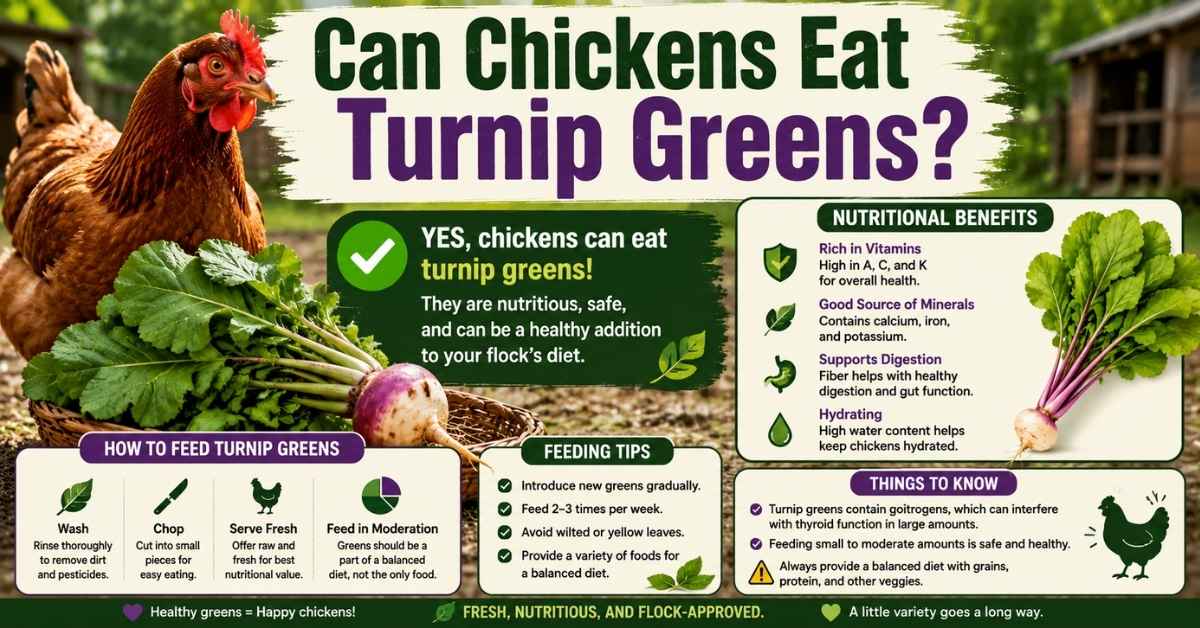
Can chickens eat turnip greens? Yes, chickens can safely eat turnip greens in moderation. These leafy greens are packed with fiber, vitamins, calcium, and antioxidants that may support healthy laying hens and backyard chickens. Fresh raw turnip greens are usually the best option, while cooked greens can also work if they are plain and free from salt, garlic, onions, or heavy seasonings. Like other healthy treats for chickens, turnip greens should supplement a balanced poultry diet rather than replace regular feed.
Many backyard chicken owners search this question while cleaning garden vegetables or sorting kitchen scraps. The good news is that turnip greens are generally considered safe vegetables for chickens when served correctly. Most flocks enjoy pecking at leafy greens because they stimulate natural foraging behavior and add variety to the diet.
Turnip Greens Safety Chart for Chickens
| Type of Turnip Greens | Safe for Chickens? | Best Way to Feed | Main Concern |
|---|---|---|---|
| Fresh raw greens | Yes | Chopped | Overfeeding |
| Cooked greens | Yes | Plain only | Added seasoning |
| Thick stems | Limited | Small pieces | Tough digestion |
| Wilted greens | Sometimes | Only fresh wilted | Spoilage risk |
| Rotten greens | No | Avoid completely | Mold and bacteria |
Why Chickens Love Leafy Greens So Much
Chickens naturally enjoy leafy vegetables because greens activate their instinct to forage and peck. In the wild, chickens spend much of their day scratching through plants, weeds, seeds, and insects. Turnip greens mimic that natural feeding behavior, especially when scattered across the run or hung in bunches for enrichment.
Many flock owners notice that hens become excited around fresh greens because the leaves create movement and texture that encourage curiosity. Hanging leafy greens inside the coop or run can also reduce boredom during rainy weather or colder seasons when chickens spend less time free ranging.
This mental stimulation matters more than many beginners realize. Bored chickens are more likely to develop stress-related pecking habits or flock aggression. Offering safe vegetables for chickens creates enrichment while supporting a more natural feeding routine.
Are Turnip Greens Actually Healthy for Chickens?
Turnip greens contain several nutrients that may support poultry health when fed as an occasional treat.
These leafy greens provide:
- fiber
- vitamin A
- vitamin K
- calcium
- antioxidants
- hydration
For laying hens, calcium-rich greens may help support normal egg production alongside quality poultry feed. Fiber can also contribute to digestive balance because chickens naturally process plant material while foraging.
The antioxidants found in cruciferous vegetables like turnip greens may support overall wellness and immune function. During hot weather, moisture-rich greens can even help chickens stay hydrated.
Still, healthy treats for chickens should remain supplemental. Backyard chickens require balanced poultry feed for proper protein, amino acids, and essential nutrients. Even nutritious vegetables should not dominate the diet.
Can Chickens Eat Raw Turnip Greens?
Yes, raw turnip greens are usually the best and safest option for chickens. Fresh greens retain more nutrients and provide the crunchy texture chickens naturally enjoy pecking.
Most backyard flocks digest raw leafy greens without difficulty, especially when the leaves are chopped into manageable pieces. Smaller cuts help reduce waste and make feeding easier for younger birds or smaller hens.
Raw greens work especially well when:
- mixed with other vegetables
- scattered across the run
- clipped to fencing for enrichment
- combined with scratch grains
However, moderation still matters. Too many raw greens can dilute balanced feed intake and occasionally lead to loose droppings.
Can Chickens Eat Cooked Turnip Greens?
Cooked turnip greens are also safe for chickens as long as they are plain and unseasoned. Many kitchen leftovers become unsafe for poultry because they contain ingredients like:
- garlic
- onions
- excess salt
- butter
- oils
- spicy seasoning
Plain cooked greens can actually help older hens during winter because softened vegetables are easier to peck and digest.
If you plan to feed cooked turnip greens to chickens:
- avoid canned vegetables
- skip heavily seasoned leftovers
- let hot greens cool completely
- serve small portions only
This allows you to reuse healthy kitchen scraps safely without creating nutritional imbalance.
What Happens If Chickens Eat Too Many Turnip Greens?
The biggest risk of overfeeding turnip greens is digestive imbalance rather than toxicity. Chickens that eat excessive treats may consume less balanced poultry feed, which can eventually affect nutrition.
Too many leafy greens may cause:
- watery droppings
- loose stool
- reduced feed intake
- mild digestive upset
- temporary imbalance in flock nutrition
Most chickens recover quickly once their regular feed intake returns to normal.
Some owners worry that cruciferous vegetables might harm chickens. In reality, moderate amounts are generally safe. Problems usually happen only when treats become excessive or replace proper feed consistently.
Signs Your Flock May Be Getting Too Many Greens
| Symptom | Possible Cause |
|---|---|
| Watery droppings | Excess greens |
| Reduced appetite for feed | Too many treats |
| Weight imbalance | Nutritional dilution |
| Uneven feeding behavior | Dominant hens overconsuming treats |
If your chickens already ate a large amount of turnip greens, there is usually no reason to panic. Monitor the flock and reduce treats temporarily if digestive symptoms appear.
Can Baby Chicks Eat Turnip Greens?
Baby chicks can eat tiny amounts of chopped leafy greens once they are old enough to handle small treats safely. However, chick starter feed should remain the primary nutrition source during early growth.
Young chicks have more delicate digestive systems than adult hens, so moderation becomes even more important.
For safest feeding:
- chop greens finely
- avoid thick fibrous stems
- introduce slowly
- monitor droppings afterward
Many experienced flock owners wait until chicks are several weeks old before introducing vegetables regularly.
Are Turnip Greens Better Than Other Leafy Greens for Chickens?
Turnip greens are one of several healthy leafy vegetables chickens commonly enjoy. They provide strong nutritional value while remaining affordable and easy to grow in home gardens.
Comparing Popular Greens for Chickens
| Green | Benefits | Main Limitation |
|---|---|---|
| Turnip greens | Calcium and fiber | Overfeeding |
| Kale | Nutrient dense | Strong flavor |
| Spinach | Rich in vitamins | Oxalates |
| Collard greens | Hardy winter green | Fibrous stems |
Rotating different greens creates better dietary variety while preventing chickens from overeating one specific vegetable.
Best Ways to Feed Turnip Greens to Chickens
One of the easiest feeding methods is simply scattering chopped greens across the run. This encourages natural pecking behavior while helping timid hens access treats more evenly.
Many backyard chicken owners also:
- hang bunches from fencing
- mix greens into scratch feed
- combine greens with vegetable scraps
- create seasonal enrichment piles
Hanging greens can be especially useful during winter months when free-ranging opportunities become limited.
Safe Serving Sizes by Flock Size
| Flock Size | Suggested Amount | Frequency |
|---|---|---|
| 2–4 hens | Small handful | 2–3x weekly |
| 5–10 hens | Medium bunch | Occasional |
| Large flocks | Hanging bundles | Treat only |
These portions help maintain balanced poultry nutrition while still giving chickens healthy enrichment.
Common Mistakes Chicken Owners Make With Leafy Greens
Many flock owners accidentally overfeed treats because chickens appear enthusiastic during feeding time. However, even healthy vegetables should stay within moderation.
Common mistakes include:
Feeding spoiled greens
Moldy or rotten vegetables can introduce harmful bacteria and digestive issues.
Ignoring flock hierarchy
Dominant hens may consume most treats unless food is spread widely.
Leaving stems too large
Thick stems can be harder for smaller birds to digest comfortably.
Replacing balanced feed with vegetables
Chickens still require proper poultry feed for protein and nutrient balance.
Assuming all vegetables are equally safe
Some vegetables and kitchen scraps are safer than others.
Avoiding these mistakes helps maintain healthier backyard flocks long term.
Can Turnip Greens Affect Egg Production or Egg Quality?
Many chicken keepers hope leafy greens will dramatically improve egg production or egg quality. While nutrient-rich vegetables can support overall wellness, they are not miracle supplements.
Healthy eggs depend mostly on:
- balanced poultry feed
- calcium intake
- hydration
- flock health
- stress reduction
- proper management
Turnip greens may contribute beneficial vitamins and minerals, but they work best as part of a varied and balanced diet.
LEARN MORE: Can Chickens Eat Pomegranate Seeds?
What Poultry Nutrition Experts Say About Treats and Greens
Most poultry nutrition recommendations suggest treats should remain below roughly 10% of a chicken’s overall diet. Chickens thrive best when quality poultry feed provides the majority of calories and nutrients.
Leafy greens can still offer valuable benefits:
- enrichment
- hydration
- dietary variety
- natural foraging stimulation
Experienced chicken owners often use greens strategically during:
- summer heat
- garden harvest season
- coop confinement periods
- boredom reduction
This balanced approach supports both physical and behavioral health.
Safe Vegetables Chickens Commonly Enjoy
| Vegetable | Safe? | Best Feeding Tip |
|---|---|---|
| Lettuce | Yes | Hydrating snack |
| Kale | Yes | Nutrient-rich treat |
| Cucumbers | Yes | Cooling summer food |
| Carrots | Yes | Chop finely |
| Pumpkin | Yes | Seasonal enrichment |
Rotating vegetables keeps feeding routines interesting while supporting a more natural flock diet.
Frequently Asked Questions
Are turnip greens toxic to chickens?
No, turnip greens are not toxic to chickens when fed in moderation.
Can chickens eat turnip greens every day?
Occasional feeding is better than daily feeding because too many treats may reduce balanced feed intake.
Can chickens eat turnip stems?
Small soft stems are usually fine, but thick fibrous stems should be limited because they are harder to digest.
Are cooked turnip greens safe for hens?
Yes, plain cooked turnip greens are safe if they contain no harmful seasonings or additives.
What leafy greens should chickens avoid?
Most leafy greens are safe in moderation, but spoiled, moldy, or heavily seasoned vegetables should always be avoided.
Can chickens eat garden scraps safely?
Yes, many garden scraps are safe for chickens if they are fresh, clean, and non-toxic.
Why do chickens enjoy leafy greens so much?
Leafy greens stimulate natural pecking and foraging instincts that chickens enjoy instinctively.
Can too many greens hurt egg production?
Excessive treats may dilute balanced nutrition over time if chickens stop eating enough poultry feed.
Final Verdict
Chickens can safely eat turnip greens as a healthy occasional treat. These leafy greens provide fiber, hydration, vitamins, and natural enrichment that many backyard flocks enjoy. Fresh raw greens are usually the best choice, while plain cooked greens can also work safely in moderation.
The key is balance. Turnip greens should complement a nutritionally complete poultry diet rather than replace proper feed. When served correctly, they can become a nutritious and enjoyable addition to your flock’s feeding routine.