
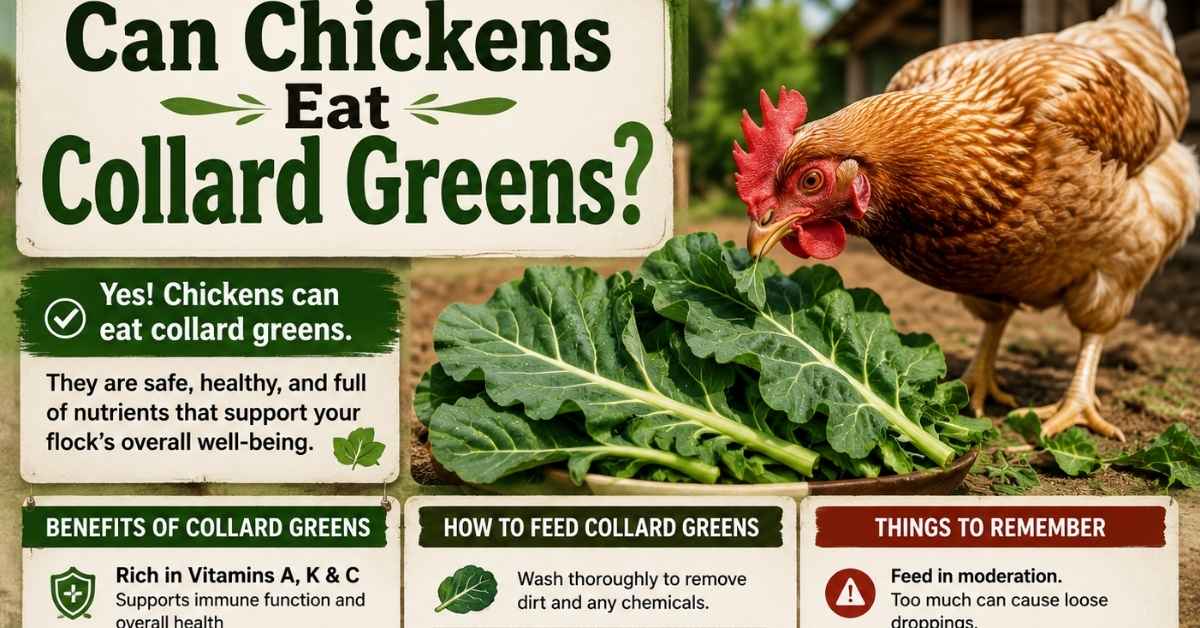
Can chickens eat collard greens? Yes, chickens can safely eat collard greens in moderation. These leafy green vegetables are packed with calcium, vitamin K, fiber, antioxidants, and hydration that can support overall flock health and laying hens. Both raw and cooked collard greens are generally safe for backyard chickens, but portion size, preparation method, and overall diet balance matter.
Many poultry keepers feed collard greens as healthy treats because chickens naturally enjoy pecking leafy vegetables. However, feeding too many brassica vegetables may create digestive imbalance, loose droppings, or nutritional issues if greens replace balanced poultry feed.
In this complete backyard chicken feeding guide, you’ll learn:
- can chickens eat collard greens raw
- can chickens eat collard greens raw or cooked
- can chickens eat collard greens stems
- nutritional benefits
- feeding frequency
- anti-nutrient concerns
- digestive safety
- best ways to feed collard greens safely
Quick Answer: Can Chickens Eat Collard Greens?
Yes, chickens can eat collard greens safely as part of a balanced poultry diet. Collard greens provide:
- calcium
- vitamin A
- vitamin K
- antioxidants
- fiber
- hydration
Both raw and cooked collard greens are safe for adult chickens when served in moderation. Most poultry experts recommend keeping vegetables and treats under the 10–15% treat guideline, while 85–90% of the diet should come from complete poultry feed.
Are Collard Greens Good for Chickens?
Collard greens are considered one of the healthier leafy vegetables for backyard chickens because they contain important nutrients that support flock health.
Nutritional Benefits of Collard Greens
| Nutrient | Benefit for Chickens |
|---|---|
| Calcium | Supports eggshell quality |
| Vitamin K | Bone and blood health |
| Vitamin A | Eye and immune support |
| Fiber | Digestive support |
| Antioxidants | Cellular protection |
| Water Content | Hydration support |
A single serving of collard greens contains:
- over 200 mg calcium per cup
- approximately 90% water
- valuable antioxidants and minerals
For laying hens, calcium and vitamin K are especially important because they contribute to stronger eggshell formation and bone health.
“Leafy greens act as nutritional supplements, not replacements for balanced poultry feed.”
Why Backyard Chickens Love Leafy Greens
Chickens naturally enjoy:
- pecking
- scratching
- foraging
Fresh collard greens stimulate these instincts and provide natural flock enrichment. Hanging leafy vegetables inside the coop also helps reduce boredom and pecking aggression.
Can Chickens Eat Collard Greens Raw?
Yes, can chickens eat collard greens raw is one of the most common poultry feeding questions, and the answer is yes. Raw collard greens are safe for healthy adult chickens.
Benefits of Raw Collard Greens
Raw greens retain:
- more vitamin content
- natural moisture
- crunchy texture
Many free-range chickens prefer fresh leafy greens because they resemble natural forage.
Potential Drawbacks of Raw Greens
Although raw greens are healthy, feeding excessive amounts may:
- upset digestion
- reduce balanced feed intake
- contribute to loose droppings
Large raw stems may also be difficult for some birds to process.
Best Ways to Serve Raw Collard Greens
The safest feeding methods include:
- finely chopped leaves
- hanging greens in the coop
- mixing greens with vegetables
- scattering chopped greens around the run
Small chopped portions reduce the risk of crop blockage.
Can Chickens Eat Collard Greens Raw or Cooked?
Yes, can chickens eat collard greens raw or cooked is another important feeding concern, and both forms are safe when prepared properly.
Raw vs Cooked Collard Greens Comparison
| Factor | Raw Greens | Cooked Greens |
|---|---|---|
| Nutrient Retention | Higher | Slightly lower |
| Digestibility | Moderate | Easier |
| Texture | Crunchy | Soft |
| Fiber Toughness | Higher | Reduced |
| Best for Chicks | Limited | Better in tiny amounts |
Which Option Is Better?
For most adult backyard chickens:
- raw greens provide better enrichment
- cooked greens are easier to digest
Steamed collard greens may work well for:
- older chickens
- birds recovering from illness
- chickens struggling with tougher vegetables
Avoid feeding collard greens cooked with:
- salt
- butter
- oils
- garlic
- onions
Seasoned vegetables can harm poultry digestion.
Can Chickens Eat Collard Greens Stems?
Yes, can chickens eat collard greens stems is another common question, and the answer is yes — but with caution.
Are Collard Green Stems Safe?
Small stems are generally safe for healthy chickens.
However, thick mature stems can become:
- fibrous
- tough
- difficult to digest
Why Large Stems Can Cause Problems
Large stems may increase the risk of:
- crop impaction
- digestive slowdown
- choking hazards in smaller birds
This risk is greater for:
- bantams
- chicks
- older chickens
Safest Ways to Feed Stems
To reduce digestive issues:
- chop stems into tiny pieces
- steam tougher stems
- mix stems with softer greens
Cooked stems become easier for chickens to process.
Chicken Digestive System and Leafy Greens
Understanding how chickens digest vegetables helps explain why moderation matters.
How Chickens Digest Collard Greens
After chickens eat leafy vegetables:
- Food enters the crop
- Digestive enzymes begin breaking down nutrients
- The gizzard grinds fibrous material
Fiber-rich greens help stimulate healthy digestion, but too much plant matter may dilute important nutrients from poultry feed.
Signs Chickens Are Eating Too Many Greens
Overfeeding leafy vegetables may cause:
- watery droppings
- reduced appetite for layer feed
- nutrient imbalance
- lower protein intake
How Much Collard Greens Should Chickens Eat?
Moderation is extremely important.
Recommended Feeding Ratio
| Feed Type | Recommended Percentage |
|---|---|
| Complete Poultry Feed | 85–90% |
| Treats and Vegetables | 10–15% |
Safe Feeding Frequency
Most backyard flock owners safely feed collard greens:
- 1–2 times weekly
- in small portions
For a flock of 5–10 chickens:
- 1 small bunch is usually enough
Portion Guidelines
A moderate serving may include:
- 2–4 leaves per chicken
- small chopped pieces
- occasional supplemental feeding
Can Baby Chicks Eat Collard Greens?
Young chicks require extra caution with leafy vegetables.
Safe Age for Feeding Greens
Most poultry keepers wait until chicks are:
- 6–8 weeks old
- already eating grower feed
Why Chicks Need Different Nutrition
Baby chicks need:
- 18–20% protein
- balanced chick starter
- controlled treats
Too many vegetables may reduce nutrient intake during growth.
Best Ways to Feed Greens to Chicks
If offering collard greens:
- chop leaves finely
- feed tiny amounts
- avoid thick stems
Risks of Feeding Too Many Collard Greens
Even healthy vegetables can become harmful when overfed.
Common Problems From Excess Greens
| Problem | Cause |
|---|---|
| Loose droppings | Excess moisture |
| Nutrient dilution | Reduced feed intake |
| Digestive upset | Too much fiber |
| Calcium imbalance | Excess brassica intake |
Leafy vegetables should supplement nutrition, not replace balanced poultry feed.
Understanding Goitrogens and Oxalates in Collard Greens
This is one of the biggest topics competitors barely explain.
What Are Goitrogens?
Collard greens belong to the brassica family, which contains natural compounds called goitrogens.
In excessive amounts, goitrogens may interfere with thyroid function.
Oxalates and Calcium Absorption
Collard greens contain fewer oxalates than spinach, but oxalic acid can still affect calcium absorption when fed excessively.
This matters most for:
- laying hens
- calcium-sensitive birds
- imbalanced diets
Are Collard Greens Dangerous?
No. Moderate feeding is generally safe.
Problems usually happen only when chickens consume excessive leafy greens daily instead of balanced poultry rations.
Best Ways to Feed Collard Greens to Chickens
Hanging Greens for Enrichment
Hanging vegetables encourages:
- exercise
- pecking behavior
- boredom reduction
Mixing Greens With Feed
Combining chopped greens with poultry feed improves balance.
Garden Scrap Feeding
Many homestead flocks enjoy:
- fresh garden scraps
- collard leaves
- turnip greens
- mustard greens
Steamed Greens for Easier Digestion
Light steaming softens fibrous material and stems.
Can Laying Hens Eat Collard Greens?
Yes, laying hens benefit from moderate leafy green supplementation.
Benefits for Egg-Laying Chickens
- calcium support
- vitamin K
- hydration
- enrichment
Important Reminder
Collard greens cannot replace:
- layer pellets
- calcium supplements
- complete feed
Laying hens still require:
- 16–18% protein
- 3.5–4% calcium
Collard Greens vs Other Leafy Greens for Chickens
| Vegetable | Calcium | Oxalates | Best Feeding Frequency |
|---|---|---|---|
| Collard Greens | High | Moderate | 1–2x weekly |
| Kale | High | Moderate | Moderate |
| Spinach | Moderate | High | Limited |
| Lettuce | Low | Low | Frequent |
| Mustard Greens | Moderate | Moderate | Moderate |
Collard greens are usually considered safer than spinach because they contain lower oxalate levels.
Unsafe Situations You Should Never Ignore
Moldy or Spoiled Greens
There should be 0% tolerance for moldy vegetables.
Spoiled greens may contain:
- bacteria
- fungal contamination
- toxins
Pesticide Residue
Always wash garden vegetables thoroughly before feeding.
Salted or Seasoned Greens
Never feed chickens vegetables prepared with:
- salt
- garlic
- onion seasoning
- sauces
Benefits of Feeding Collard Greens to Backyard Chickens
Key Advantages
| Benefit | Why It Matters |
|---|---|
| Natural enrichment | Encourages foraging |
| Hydration support | High moisture content |
| Dietary variety | Improves feeding stimulation |
| Affordable treats | Garden-friendly option |
| Vitamin support | Adds nutrients naturally |
Common Mistakes Backyard Chicken Owners Make
Feeding Too Many Greens
Too many vegetables may dilute balanced nutrition.
Ignoring Poultry Feed
Leafy vegetables should never replace complete feed.
Feeding Large Tough Stems
Large fibrous stems increase digestive risks.
Offering Moldy Vegetables
Spoiled greens can become dangerous quickly.
LEARN MORE: Can Chickens Eat Whole Corn Kernels?
Expert Tips for Feeding Collard Greens Safely
| Tip | Benefit |
|---|---|
| Wash greens thoroughly | Removes pesticides |
| Chop leaves into pieces | Easier digestion |
| Rotate vegetables | Prevents excess brassicas |
| Feed moderately | Reduces imbalance |
| Observe droppings | Monitors digestion |
Scientific Perspective: Why Chickens Naturally Eat Leafy Greens
Wild jungle fowl naturally consume:
- leaves
- seeds
- insects
- forage plants
Modern chickens still retain these feeding instincts. This explains why backyard flocks often enthusiastically peck at fresh greens and garden vegetables.
Fiber-rich greens also support:
- digestive stimulation
- natural behavior
- environmental enrichment
Seasonal Feeding Tips
Winter Greens Supplementation
Fresh greens provide nutritional variety during colder months when natural forage is limited.
Summer Hydration Benefits
High-moisture vegetables help support hydration during heat stress.
FAQs About Chickens and Collard Greens
Can chickens eat collard greens raw?
Yes, raw collard greens are safe for adult chickens in moderate amounts.
Can chickens eat collard greens raw or cooked?
Both raw and cooked collard greens are safe when served plain and unseasoned.
Can chickens eat collard greens stems?
Yes, but large tough stems should be chopped or softened before feeding.
Can baby chicks eat collard greens?
Yes, in tiny chopped amounts after 6–8 weeks old.
Can chickens eat collard greens every day?
It is better to feed collard greens occasionally instead of daily.
Are collard greens better than spinach for chickens?
Collard greens generally contain fewer oxalates than spinach, making them a better leafy option for regular feeding.
Conclusion
Can chickens eat collard greens? Absolutely. Collard greens can be a healthy and nutritious treat for backyard chickens when fed properly. They provide valuable calcium, fiber, hydration, antioxidants, and vitamins that support flock health and laying hens.
The key is moderation.
Feed collard greens as part of a balanced poultry diet, avoid overfeeding leafy vegetables, and prepare stems carefully to reduce digestive risks. Both raw and cooked collard greens are safe for chickens, making them a flexible and affordable garden treat for homestead flocks.