
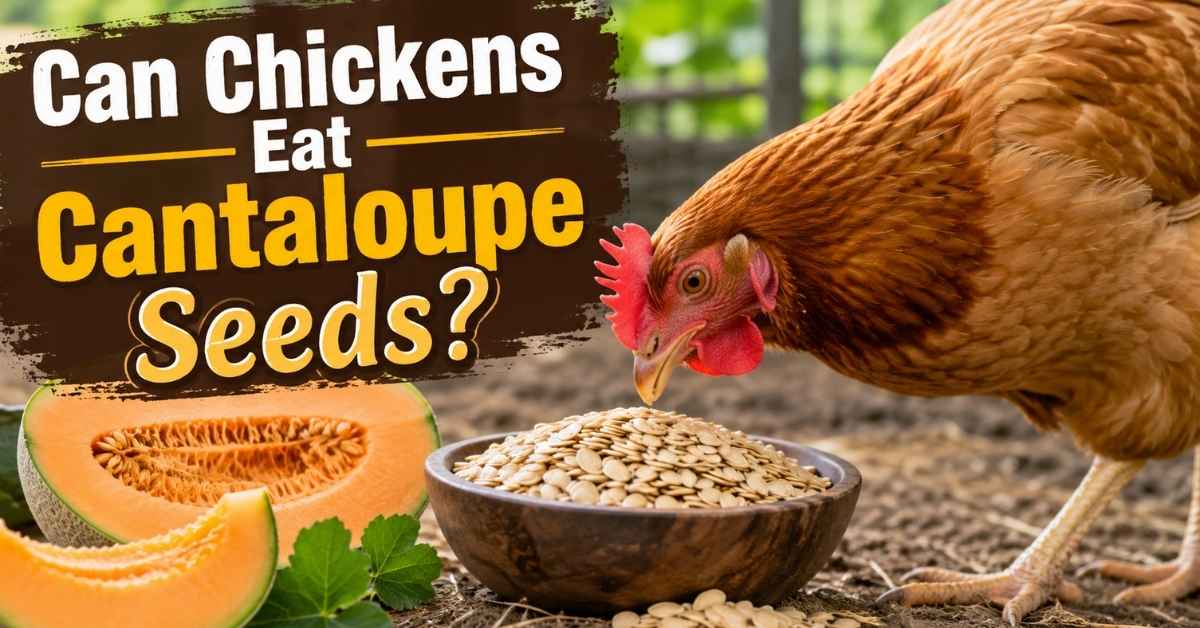
Can chickens eat cantaloupe seeds? Yes, chickens can safely eat cantaloupe seeds in moderation. These small melon seeds are generally non-toxic, easy for adult chickens to digest, and can even provide small amounts of nutrients, hydration, and natural foraging enrichment. Most backyard chickens naturally peck at seeds, fruit scraps, and soft plant material without problems.
However, there are still a few important safety rules involving moldy cantaloupe, overfeeding, baby chicks, and large rind pieces that flock owners should understand before tossing leftover melon into the coop.
If you’ve ever wondered whether can chickens eat cantaloupe seeds and rinds, the short answer is yes — both are usually safe when served properly. The key is moderation, freshness, and proper preparation.
Quick Answer
| Question | Answer |
|---|---|
| Can chickens eat cantaloupe seeds? | Yes, in moderation |
| Are cantaloupe seeds toxic to chickens? | No |
| Can chickens digest melon seeds? | Yes, adult chickens usually can |
| Can chickens eat cantaloupe seeds and rinds? | Yes, when fresh and cut safely |
| Are cantaloupe rinds safe? | Yes, but chop tough pieces |
| Can baby chicks eat cantaloupe seeds? | Only tiny amounts with grit |
| Is cantaloupe healthy for chickens? | Yes, as an occasional treat |
Important: Fruit treats should make up less than 10% of a chicken’s total diet.
Cantaloupe Nutrition Facts for Chickens
Cantaloupe is one of the most hydrating fruits you can offer backyard chickens during hot weather. Since the fruit contains around 90% water, many flock owners use it as a cooling summer treat.
Nutritional Breakdown of Cantaloupe
| Nutrient | Benefit for Chickens |
|---|---|
| Vitamin A | Supports eye health |
| Vitamin C | Helps immune function |
| Potassium | Supports hydration balance |
| Fiber | Helps digestion |
| Antioxidants | Supports overall flock health |
| Water Content | Prevents dehydration during heat |
The soft orange flesh also contains beta carotene, which contributes to healthy skin, feather quality, and immune support.
Nutritional Value of Cantaloupe Seeds
While chickens mainly enjoy the fruit itself, cantaloupe seeds contain small amounts of:
- Healthy fats
- Protein
- Trace minerals
- Fiber
These nutrients are not essential because chickens already get balanced nutrition from poultry feed, but the seeds can still work as a healthy supplemental snack.
Can Chickens Eat Cantaloupe Seeds Safely?
Yes, can chickens eat cantaloupe seeds safely is one of the most common backyard poultry questions, and the answer is generally positive for healthy adult birds.
Unlike some fruit pits and toxic seeds, melon seeds are considered non-toxic for chickens.
Why Cantaloupe Seeds Are Usually Safe
Cantaloupe seeds are:
- Soft compared to hard pits
- Small enough for adult birds to swallow
- Naturally digestible
- Similar to other safe melon seeds
Chickens naturally peck at:
- weeds
- grains
- bugs
- small seeds
- plant matter
Seed consumption is already part of natural free-range foraging behavior.
How Chickens Digest Seeds
One thing most competitor articles fail to explain is how chickens actually process seeds.
Chickens do not chew food with teeth. Instead, they rely on a muscular digestive organ called the gizzard.
The Role of the Chicken Gizzard
The gizzard acts like a natural grinder.
When chickens swallow:
- grit
- pebbles
- seeds
- grains
the gizzard crushes and breaks down tougher materials internally.
This is why adult chickens can usually digest:
- watermelon seeds
- cucumber seeds
- pumpkin seeds
- cantaloupe seeds
without trouble.
Why Grit Matters
If chickens eat treats regularly, access to poultry grit improves digestion and helps prevent digestive stress.
“Healthy chickens naturally process small seeds through muscular gizzard action.”
This biological explanation adds important context many low-quality articles completely skip.
Are Cantaloupe Seeds Toxic to Chickens?
No. Cantaloupe seeds are not toxic to chickens.
People sometimes confuse melon seeds with dangerous seeds from fruits like:
- apples
- cherries
- peaches
- avocados
Certain fruit pits contain harmful compounds or create choking hazards. Melon seeds do not contain those same toxic compounds.
That said, there is still a difference between:
- fresh cantaloupe seeds
- salted packaged melon seeds
- moldy spoiled seeds
Processed human snack seeds with excessive sodium should never be fed to chickens.
Can Chickens Eat Cantaloupe Seeds and Rinds?
Yes, can chickens eat cantaloupe seeds and rinds is another common search query because flock owners often toss leftover melon scraps into the coop.
Both the:
- flesh
- seeds
- rind
can be fed safely in moderation.
Are Cantaloupe Rinds Safe for Chickens?
The rind is tougher than the flesh, but chickens often peck at the softer inner layer.
Rinds can provide:
- fiber
- enrichment
- pecking stimulation
However, very large rind pieces may become difficult for smaller birds or chicks.
Best Ways to Serve Rinds
- Chop into manageable pieces
- Remove spoiled sections
- Avoid moldy melon
- Offer fresh only
Many flock owners simply cut the cantaloupe in half and let chickens peck directly at the inside.
Can Chickens Eat Cantaloupe Seeds and Rind Together?
Yes. If the melon is fresh, chickens can safely consume:
- seeds
- flesh
- rind
together as a natural treat.
This makes cantaloupe one of the easiest kitchen scraps for backyard flock enrichment.
Still, moderation matters because cantaloupe contains natural sugars.
Health Benefits of Cantaloupe for Chickens
Hydration During Summer Heat
One of the biggest benefits of cantaloupe is hydration.
During extreme heat, chickens may experience:
- reduced appetite
- heat stress
- lower egg production
- lethargy
Water-rich fruits help support hydration naturally.
Natural Enrichment
Chickens enjoy pecking at hanging or halved melons because it mimics natural foraging behavior.
This provides:
- environmental enrichment
- flock stimulation
- boredom reduction
Backyard flocks often become more active and engaged when treats encourage pecking and scratching.
Digestive Support
The fiber inside cantaloupe may help support healthy digestion when fed occasionally.
Too much fruit, however, may lead to:
- loose droppings
- digestive imbalance
- excess sugar intake
Potential Risks of Feeding Cantaloupe to Chickens
Although cantaloupe is considered safe, there are still several risks flock owners should understand.
Moldy or Spoiled Cantaloupe
This is the biggest danger.
Spoiled melon may contain:
- bacteria
- fungal growth
- aflatoxins
- microbial contamination
Never feed chickens:
- slimy fruit
- fermented melon
- moldy rinds
- rotten cantaloupe
Mold toxicity is far more dangerous than the seeds themselves.
Too Much Sugar
Cantaloupe contains natural sugars including:
- fructose
- glucose
Too much fruit can contribute to:
- obesity
- poor nutrition balance
- digestive upset
Fruit should remain an occasional snack, not a daily feed replacement.
Choking Hazards for Chicks
Adult chickens usually digest melon seeds easily.
Baby chicks are different.
Large:
- seeds
- rind strips
- hard chunks
can increase choking risk.
Can Baby Chicks Eat Cantaloupe Seeds?
Yes, but cautiously.
Baby chicks have immature digestive systems, so treats should be introduced carefully.
Safe Feeding Tips for Chicks
- Offer only tiny portions
- Finely chop soft fruit
- Crush larger seeds
- Provide chick grit
- Supervise feeding
Most chick nutrition should still come from quality starter feed.
Best Ways to Feed Cantaloupe to Chickens
Fresh Cantaloupe Methods
Here are the safest serving methods:
| Feeding Method | Benefits |
|---|---|
| Halved cantaloupe | Natural pecking enrichment |
| Chopped cubes | Easy digestion |
| Hanging melon | Activity stimulation |
| Frozen chunks | Summer cooling treat |
Should Seeds Be Removed?
For adult chickens, removing seeds usually is not necessary.
For chicks:
- crushing seeds is safer
- smaller portions reduce risk
How Often Can Chickens Eat Cantaloupe?
A good guideline is:
- 1–2 times weekly
- treats under 10% of diet
Balanced poultry feed should remain the primary nutrition source.
Can Chickens Eat Other Types of Melon?
Most melon varieties are also considered safe.
Safe Melons for Chickens
| Melon Type | Safe? |
|---|---|
| Watermelon | Yes |
| Honeydew | Yes |
| Cantaloupe | Yes |
| Cucumber seeds | Usually yes |
| Pumpkin seeds | Yes |
Melons are especially popular during hot weather because they support hydration naturally.
LEARN MORE: Can Chickens Eat Sourdough Discard?
Fruits Chickens Should Avoid
Not all fruits are safe for poultry.
Unsafe Fruits & Foods
| Food | Risk |
|---|---|
| Avocado | Toxic compounds |
| Moldy fruit | Bacterial contamination |
| Salty snacks | Sodium toxicity |
| Fruit pits | Choking & toxins |
| Sugary processed foods | Obesity risk |
Signs Your Chickens Ate Too Much Cantaloupe
Watch for:
- watery droppings
- sluggish behavior
- reduced appetite
- bloating
These signs usually improve once sugary treats are reduced.
If symptoms become severe or prolonged, contact an avian veterinarian.
Expert Backyard Flock Feeding Tips
Experienced flock keepers usually follow a simple rule:
“Treats supplement the diet — they should never replace balanced feed.”
Smart Feeding Practices
- Prioritize quality poultry feed
- Offer fruit occasionally
- Remove leftovers quickly
- Keep fresh water available
- Avoid spoiled scraps
Many backyard chicken owners use fruit strategically during:
- summer heat waves
- flock enrichment sessions
- free-range feeding time
Common Myths About Chickens Eating Seeds
“All Seeds Are Dangerous”
False. Many seeds are completely digestible for chickens.
“Fruit Is Bad for Chickens”
Fruit is safe in moderation and can support hydration.
“Chickens Cannot Digest Hard Foods”
Healthy adult chickens naturally process grains and seeds through the gizzard.
“Rinds Have No Value”
Rinds provide enrichment and pecking activity even if chickens do not eat every piece.
Frequently Asked Questions
Can chickens eat cantaloupe seeds?
Yes. Adult chickens can usually digest cantaloupe seeds safely in moderation.
Can chickens eat cantaloupe seeds and rind?
Yes, both are generally safe when fresh and properly prepared.
Can chickens eat cantaloupe seeds and rinds?
Yes. Most backyard chickens naturally peck at melon flesh, seeds, and softer rind portions.
Can chickens choke on cantaloupe seeds?
Adult chickens rarely choke on small melon seeds, but chicks may struggle with larger pieces.
Can chickens eat cantaloupe every day?
No. Fruit should stay under 10% of a chicken’s total diet.
Can baby chicks eat cantaloupe?
Yes, in tiny amounts with finely chopped pieces and chick grit.
Is cantaloupe good during summer?
Absolutely. Its high water content helps support hydration during hot weather.
Final Verdict
So, can chickens eat cantaloupe seeds? Yes — healthy adult chickens can safely eat cantaloupe seeds, flesh, and even rinds as an occasional treat. The seeds are generally non-toxic, naturally digestible, and can support enrichment and hydration for backyard flocks.
The biggest risks are not the seeds themselves but:
- moldy fruit
- excessive sugar
- oversized pieces for chicks
- spoiled leftovers
When fed properly, cantaloupe can become a refreshing, healthy summer snack that encourages natural pecking and foraging behavior while helping chickens stay hydrated during warm weather.