
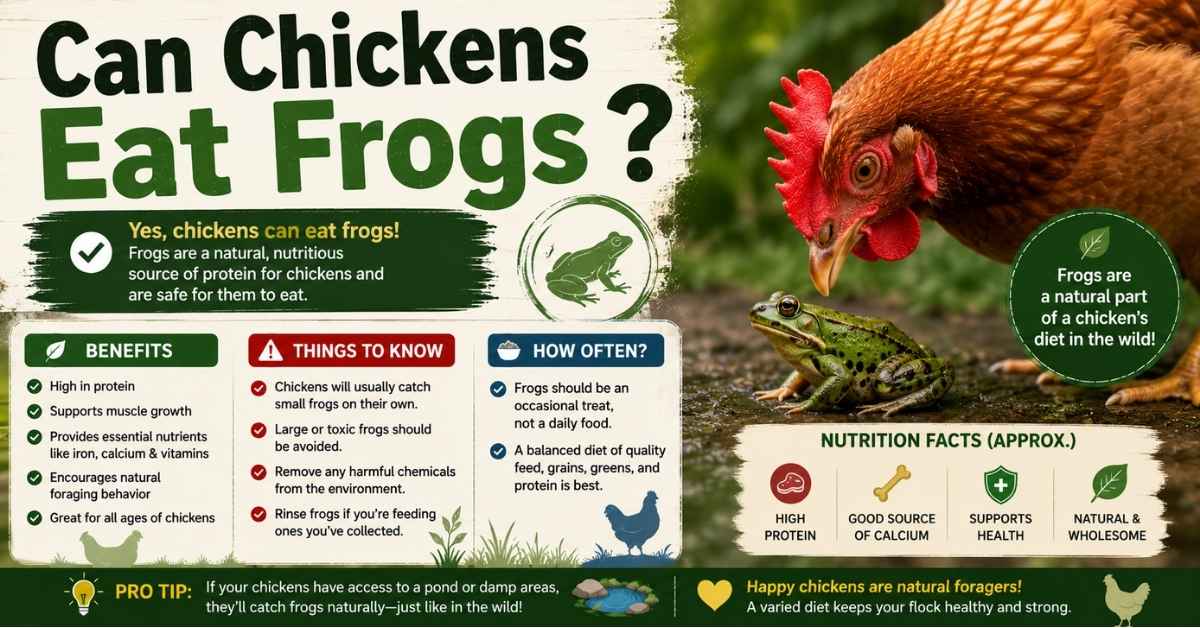
Can chickens eat frogs? Yes, chickens can eat small frogs occasionally because they are natural omnivores with strong hunting instincts. Most frogs are harmless for healthy free-range chickens, but toxic toads, poisonous amphibians, parasites, and bacterial infections can sometimes create health risks for backyard flocks. Poultry owners should understand the difference between frogs and toads before allowing chickens to hunt amphibians freely.
If you have ever seen your backyard chickens chasing a frog around the yard, you are not alone. Chickens are opportunistic feeders that naturally hunt insects, worms, lizards, mice, and even amphibians. While this predator behavior is normal, certain toxic toads and contaminated wild frogs may expose chickens to parasite transmission, toxic secretions, salmonella, and other wildlife pathogens.
Understanding when frogs are safe — and when they become dangerous — is the key to protecting flock health.
Quick Answer
| Question | Answer |
| Can chickens eat frogs? | Yes, usually in moderation |
| Are frogs safe for chickens? | Most small frogs are harmless |
| Are toads dangerous? | Some toxic toads can poison chickens |
| Biggest risks | Parasites, toxins, bacteria |
| Should chickens eat frogs often? | Occasional hunting is usually fine |
Important: Frogs are generally less dangerous than toxic toads, especially for healthy outdoor chickens.
Why Chickens Naturally Eat Frogs
Chickens are not strict herbivores. They are opportunistic omnivores with strong instinctive hunting behavior. In free-range environments, chickens naturally chase moving prey and peck at anything that looks edible.
This natural foraging behavior explains why chickens commonly eat:
- Bugs
- Worms
- Grasshoppers
- Lizards
- Snakes
- Mice
- Frogs
- Small amphibians
Why Chickens Chase Frogs
Movement triggers a chicken’s predator-prey behavior. Frogs jump quickly, which activates the flock’s hunting instinct.
Wild prey also provides:
- Animal protein
- Amino acids
- Natural enrichment
- Mental stimulation
For outdoor chickens, frog hunting is simply part of normal scavenging behavior.
“Many backyard flock owners are surprised when chickens hunt frogs, but this is completely natural free-range behavior.”
Are Frogs Safe for Chickens?
In most cases, small frogs are relatively safe for chickens.
Healthy backyard chickens can usually digest frogs without problems because their digestive system is designed to process insects, meat, seeds, and other animal-based foods.
When Frogs Are Usually Safe
Frogs are generally safer when:
- They are small
- Non-toxic species
- Eaten occasionally
- Found in clean outdoor areas
- Not exposed to pollutants
Can Chickens Digest Frogs?
Yes. Chickens can digest:
- Soft tissue
- Bones
- Internal organs
- Animal protein
Their omnivorous digestive system is surprisingly efficient at processing wild prey.
Nutritional Value of Frogs
Frogs contain:
| Nutrient | Benefit |
| Protein | Muscle support |
| Amino acids | Feather growth |
| Minerals | Overall nutrition |
| Natural fats | Energy source |
Still, frogs should never replace a balanced poultry feed.
Frogs vs Toads: The Most Important Difference
One of the biggest mistakes chicken owners make is treating frogs and toads as the same thing.
They are not.
Are Toads More Dangerous Than Frogs?
Yes. Many toads produce toxic skin secretions that may harm chickens.
Certain species, especially cane toads, release poisonous substances called bufotoxins through poison glands behind the head.
These toxins may cause:
- Drooling
- Weakness
- Neurological symptoms
- Breathing difficulty
- Poultry poisoning
Frog vs Toad Comparison
| Frogs | Toads |
| Smooth moist skin | Dry bumpy skin |
| Usually less toxic | Higher toxicity risk |
| Prefer wet habitats | Prefer drier areas |
| Long jumping legs | Shorter legs |
| Safer overall | More dangerous |
Why Toads Are Riskier
Toads rely on chemical defense systems to survive predators. When chickens peck or bite toxic toads, poisonous skin secretions may enter the mouth and digestive tract.
This is one of the strongest semantic distinctions connected to the keyword “can chickens eat frogs.”
Risks of Chickens Eating Frogs
Although most frogs are harmless, there are still important health risks poultry owners should understand.
Parasite Exposure
Wild frogs may carry:
- Frog-borne parasites
- Intestinal worms
- Protozoa
- Environmental pathogens
Parasite exposure becomes more likely near:
- Ponds
- Standing water
- Swampy areas
- Wildlife-heavy environments
Bacterial Infections
Amphibians sometimes carry harmful bacteria including:
- Salmonella
- Environmental bacteria
- Wildlife contamination pathogens
Contaminated pond frogs may expose backyard chickens to bacterial infections and disease transmission.
Choking Hazard
Large frogs can occasionally create:
- Choking risk
- Digestive distress
- Swallowing problems
This is more common in:
- Smaller chickens
- Young pullets
- Smaller breeds
What Happens if a Chicken Eats a Frog?
Most of the time, nothing serious happens.
Healthy free-range chickens often eat small frogs naturally without showing any negative symptoms.
Common Outcome
In most cases:
- The frog is digested normally
- Chickens remain healthy
- No treatment is necessary
Symptoms To Watch For
Monitor your flock for:
- Lethargy
- Weakness
- Drooling
- Loss of appetite
- Vomiting
- Diarrhea
- Difficulty breathing
- Neurological behavior
These signs may indicate toxin ingestion or disease exposure.
Emergency Warning Signs
Seek veterinary help immediately if you notice:
- Paralysis
- Seizure-like movements
- Severe breathing problems
- Sudden collapse
- Persistent drooling
These symptoms may suggest toxic amphibian exposure.
Toxic Frogs and Toads Chickens Should Avoid
Not all amphibians are safe.
Dangerous Amphibians for Chickens
Some of the most dangerous include:
- Cane toads
- Poison dart frogs
- Regional toxic toads
- Large poisonous amphibians
Why Cane Toads Are Dangerous
Cane toads contain powerful toxic secretions that may affect:
- Nervous system function
- Heart activity
- Muscle coordination
Dogs are more sensitive than chickens, but poultry poisoning can still occur.
Regional Toxicity Matters
Toxic amphibian species vary depending on location. Poultry owners in tropical or humid climates should be especially cautious.
Can Chickens Get Parasites From Frogs?
Yes, although it is not extremely common.
How Disease Transmission Happens
Wild amphibians may spread:
- Parasites
- Amphibian bacteria
- Wildlife pathogens
- Salmonella contamination
Risk increases in dirty outdoor environments with contaminated pond water.
Frogs and Salmonella
Amphibians naturally carry salmonella bacteria more often than many people realize.
Chickens exposed to contaminated frogs may experience:
- Digestive upset
- Reduced appetite
- Poultry immune stress
Good coop hygiene reduces risk significantly.
Should You Stop Chickens From Eating Frogs?
Usually, occasional frog hunting is harmless for healthy free-range chickens.
When Frog Hunting Is Normally Fine
It is generally acceptable when:
- Frogs are small
- Species are non-toxic
- Chickens appear healthy
- Hunting happens occasionally
When You Should Intervene
You should stop chickens if:
- Toxic toads are common in your area
- Frogs come from polluted water
- Chickens show illness symptoms
- Large amphibians appear frequently
How To Reduce Frog Exposure
Simple prevention methods include:
- Removing standing water
- Cleaning wet areas
- Securing pond access
- Monitoring nighttime activity
Backyard Chicken Safety Tips
Maintaining a safe outdoor environment lowers amphibian-related risks.
Best Safety Practices
| Safety Tip | Why It Helps |
| Remove standing water | Reduces frog populations |
| Keep coop clean | Limits bacteria |
| Monitor free-ranging | Prevents toxic encounters |
| Watch for toads at night | Toads are nocturnal |
| Maintain balanced feed | Reduces excessive hunting |
Can Chickens Eat Frogs Every Day?
Occasional hunting is normal, but frogs should not become a major food source.
Balanced poultry feed remains essential for:
- Protein balance
- Calcium intake
- Egg production
- Overall poultry health
LEARN MORE: Can Chickens Eat Corn Cobs?
Veterinary Perspective on Chickens Eating Frogs
Most poultry experts agree that chickens naturally consume small prey in outdoor environments.
However, veterinarians still recommend caution around:
- Toxic toads
- Contaminated wildlife
- Parasite-heavy wetlands
- Poisonous amphibian species
When To Call a Vet
Contact a veterinarian if symptoms persist longer than 24 hours or worsen rapidly.
Watch for:
- Persistent weakness
- Neurological symptoms
- Severe drooling
- Respiratory distress
- Refusal to eat
Early treatment greatly improves recovery chances.
Common Myths About Chickens and Frogs
Myth: All Frogs Are Dangerous
False. Most small frogs are harmless to healthy chickens.
Myth: Chickens Only Eat Plants
False. Chickens are omnivores and naturally consume insects and small animals.
Myth: Frogs Always Poison Chickens
False. Toxic toads are usually more dangerous than frogs.
Myth: Free-Range Chickens Never Get Sick
False. Outdoor chickens still face parasite exposure and bacterial contamination risks.
Frequently Asked Questions
Can chickens eat frogs safely?
Yes, most healthy chickens can safely eat small non-toxic frogs occasionally.
Can chickens eat toads?
Some toads contain toxic skin secretions and should be avoided.
Are frogs poisonous to chickens?
Most frogs are harmless, but poisonous amphibians may create health risks.
Can chickens die from eating frogs?
Rarely, but toxic toads or severe poisoning cases may become dangerous.
Why do chickens chase frogs?
Movement activates their instinctive hunting and predator behavior.
Can frogs spread diseases to chickens?
Yes, frogs may carry parasites, salmonella, and environmental bacteria.
Are pond frogs dangerous to chickens?
Frogs from contaminated pond water may carry bacteria or parasites.
Can baby chicks eat frogs?
Small chicks should not eat frogs because of choking hazards and digestive sensitivity.
Conclusion
Can chickens eat frogs? Yes, chickens naturally hunt and eat small frogs occasionally, and most frogs are harmless for healthy backyard flocks. However, poultry owners should understand the real risks connected to toxic toads, poisonous skin secretions, parasites, salmonella, and disease transmission.
The safest approach is simple:
- Monitor free-range behavior
- Keep chickens away from toxic toads
- Reduce standing water
- Watch for poisoning symptoms
- Maintain clean outdoor environments
For most backyard chickens, occasional frog hunting is simply part of their natural omnivore behavior — but understanding the difference between harmless frogs and dangerous toads can help protect your flock from unnecessary risks.