
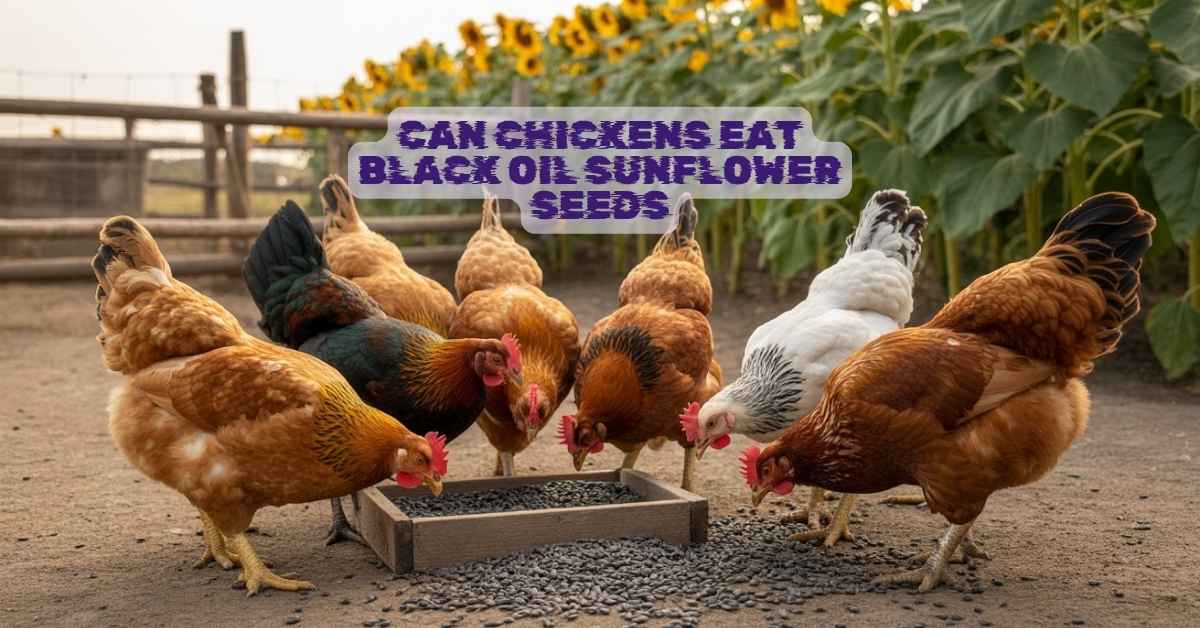
Can chickens eat black oil sunflower seeds? Yes—chickens can safely eat black oil sunflower seeds, and they’re actually one of the most nutrient-dense, energy-rich treats you can offer your flock.
However, they must be fed in moderation (no more than 5–10% of the total diet) because of their high fat content. When used correctly, these seeds support feather growth, egg quality, and winter energy needs, making them a valuable addition to a balanced poultry diet.
Can Chickens Eat Black Oil Sunflower Seeds Safely?
Black oil sunflower seeds are widely considered safe for chickens, but the safety depends on how much, how often, and how they are fed.
The reason they’re so popular among backyard chicken keepers is simple: they offer high protein (16–21%) and fat (40–50%), which makes them an excellent supplemental feed, especially during colder months or molting periods.
However, feeding too many sunflower seeds can lead to:
- Obesity
- Fatty liver syndrome
- Reduced egg production
So while the answer is yes, the real key is controlled feeding.
Why Black Oil Sunflower Seeds Are Different
Not all sunflower seeds are equal. Black oil sunflower seeds stand out because:
- They contain up to 50% oil, making them more energy-dense
- Their thin shells are easier for chickens to digest
- They have a higher linoleic acid content, supporting feather health
This makes them superior to striped sunflower seeds for poultry feeding.
Nutritional Value of Black Oil Sunflower Seeds for Chickens
Understanding the nutritional profile helps explain why these seeds are so beneficial.
Macronutrient Breakdown
| Nutrient | Value |
|---|---|
| Protein | 16–21% |
| Fat | 40–50% |
| Fiber | 8–10% |
| Calories | ~550–600 kcal per 100g |
Key Vitamins & Fatty Acids
- Vitamin E – boosts immune system
- Linoleic acid (60–70%) – supports feather and skin health
- Antioxidants – protect cells and improve overall health
Why These Nutrients Matter
These nutrients directly impact:
- Feather regeneration during molting
- Energy production in winter
- Egg quality and shell strength
- Immune system support
This is why black oil sunflower seeds are often considered a functional poultry treat, not just a snack.
Benefits of Feeding Black Oil Sunflower Seeds to Chickens
Supports Feather Growth and Molting
During molting, chickens need extra protein and fat. Sunflower seeds provide both, helping birds regrow feathers faster and healthier.
Boosts Energy in Cold Weather
The high fat content acts as a natural energy source, helping chickens maintain body heat during winter.
Improves Skin and Plumage Health
The presence of essential fatty acids enhances feather shine and reduces dryness.
Encourages Natural Foraging Behavior
Scatter-feeding seeds mimics natural feeding patterns, which:
- Reduces boredom
- Improves flock activity
- Promotes mental stimulation
Risks and Side Effects You Should Know
Even healthy foods can become harmful if overused.
Overfeeding and Obesity Risks
If sunflower seeds exceed 10% of the diet, chickens may:
- Gain excessive weight within 2–4 weeks
- Become less active
- Develop long-term health issues
Fatty Liver Syndrome Explained
Excess fat intake can lead to fat accumulation in the liver, affecting:
- Egg production
- Overall health
- Lifespan
Reduced Egg Production
Too many treats replace balanced feed, causing:
- Nutritional deficiencies
- Lower egg output
Salted or Processed Seeds Danger
Never feed:
- Salted seeds
- Flavored or roasted seeds with additives
These can harm your chickens’ kidneys and digestion.
How Much Black Oil Sunflower Seeds Should You Feed Chickens?
Getting the quantity right is critical.
Recommended Feeding Ratio
- 5–10% of total diet only
Daily Portion Guide
- 1–2 tablespoons per chicken
- Or a small handful per flock
Weekly Feeding Frequency
- 2–3 times per week is ideal
- Daily feeding should be limited and controlled
How to Feed Black Oil Sunflower Seeds (Step-by-Step)
Whole vs Shelled Seeds
- Whole seeds: safe and promote natural digestion
- Shelled seeds: easier but less beneficial for gizzard function
Mixing with Regular Feed
A common method:
- Mix 1 cup seeds with 5–6 cups feed
This ensures balanced intake.
Free Feeding vs Controlled Feeding
- Controlled feeding is better
- Prevents overeating and maintains balance
Using Seeds as Treats vs Supplements
Treat them as:
- Occasional nutritional boost, not main feed
Can Chickens Eat Sunflower Seed Shells?
Yes, chickens can eat shells, but there are conditions.
Digestive Role of Grit
Chickens use grit in their gizzard to:
- Grind food
- Break down tough materials like shells
When Shells Can Be Harmful
- If chickens lack grit
- If shells are too hard or in excess
Best Practice
- Provide access to grit
- Avoid excessive shell intake
Can Baby Chicks Eat Black Oil Sunflower Seeds?
Starter Phase (0–6 Weeks)
- Avoid seeds entirely
- Their digestive system is not ready
Grower Phase (6–12 Weeks)
- Introduce crushed seeds only
- Feed in very small amounts
Adult Chickens
- Safe with controlled feeding
Black Oil vs Striped Sunflower Seeds for Chickens
Nutritional Comparison
| Type | Fat Content | Digestibility |
|---|---|---|
| Black Oil | 40–50% | High |
| Striped | 25–30% | Moderate |
Digestibility Differences
Black oil seeds:
- Have thinner shells
- Are easier to digest
Which One Should You Choose?
Black oil sunflower seeds are the better option for:
- Energy
- Feather health
- Overall nutrition
Best Time to Feed Sunflower Seeds (Seasonal Strategy)
Winter Feeding
Increase intake slightly:
- Helps maintain body heat
- Provides extra energy
Summer Feeding
Reduce feeding:
- Prevents obesity
- Avoids overheating
Molting Season
Increase protein intake:
- Supports feather regrowth
Common Mistakes Chicken Owners Make
Many flock owners unknowingly reduce their chickens’ health by making simple mistakes.
Feeding Too Many Seeds Daily
Treats should never replace balanced feed.
Ignoring Balanced Diet Requirements
Chickens need:
- Protein
- Calcium
- Vitamins
Not just high-fat seeds.
Using Seeds as Main Feed
This leads to:
- Nutritional imbalance
- Poor egg production
Not Providing Grit
Without grit, digestion suffers.
Expert Feeding Tips for Maximum Benefits
Combine with High-Calcium Feed
This supports:
- Eggshell strength
- Bone health
Rotate Treats
Avoid feeding sunflower seeds alone—mix with:
- Greens
- Grains
Monitor Chicken Health
Watch for:
- Weight gain
- Egg production changes
Use Seeds Strategically
Best times:
- During stress
- Molting periods
- Cold weather
LEARN MORE: Can Chickens Eat Wild Grapes
Sunflower Seeds Feeding Chart for Chickens
| Chicken Type | Amount | Frequency |
|---|---|---|
| Chicks | Avoid | N/A |
| Growers | Small crushed amount | 1–2x/week |
| Adults | 1–2 tbsp | 2–3x/week |
Are Black Oil Sunflower Seeds Better Than Other Chicken Treats?
Comparison with Scratch Grains
- Sunflower seeds: higher fat and protein
- Scratch grains: mostly carbohydrates
Comparison with Corn and Mealworms
| Treat | Benefit |
|---|---|
| Corn | Energy |
| Mealworms | Protein |
| Sunflower Seeds | Balanced fat + protein |
When to Choose Sunflower Seeds
Use them when:
- Chickens need energy
- During molting
- In cold seasons
FAQs
Can chickens eat black oil sunflower seeds every day?
Yes, but only in small amounts. Daily feeding should not exceed 5–10% of the diet.
Are raw or roasted sunflower seeds better?
Raw seeds are best. Avoid salted or flavored varieties.
Can chickens eat sunflower seeds in summer?
Yes, but limit intake due to high fat content.
Do sunflower seeds increase egg production?
They can improve egg quality, but overfeeding may reduce production.
Are sunflower seeds safe without shells?
Yes, but whole seeds provide better digestive benefits.
Final Verdict: Should You Feed Black Oil Sunflower Seeds to Chickens?
Black oil sunflower seeds are a highly beneficial, nutrient-rich treat for chickens when used correctly. They support feather growth, energy levels, and overall health, but must be fed in moderation to avoid health risks.
The best approach is simple:
- Keep it under 10% of the diet
- Use them strategically during winter and molting
- Always maintain a balanced poultry diet
When used wisely, these seeds become one of the most effective natural supplements for a healthy and productive flock.