
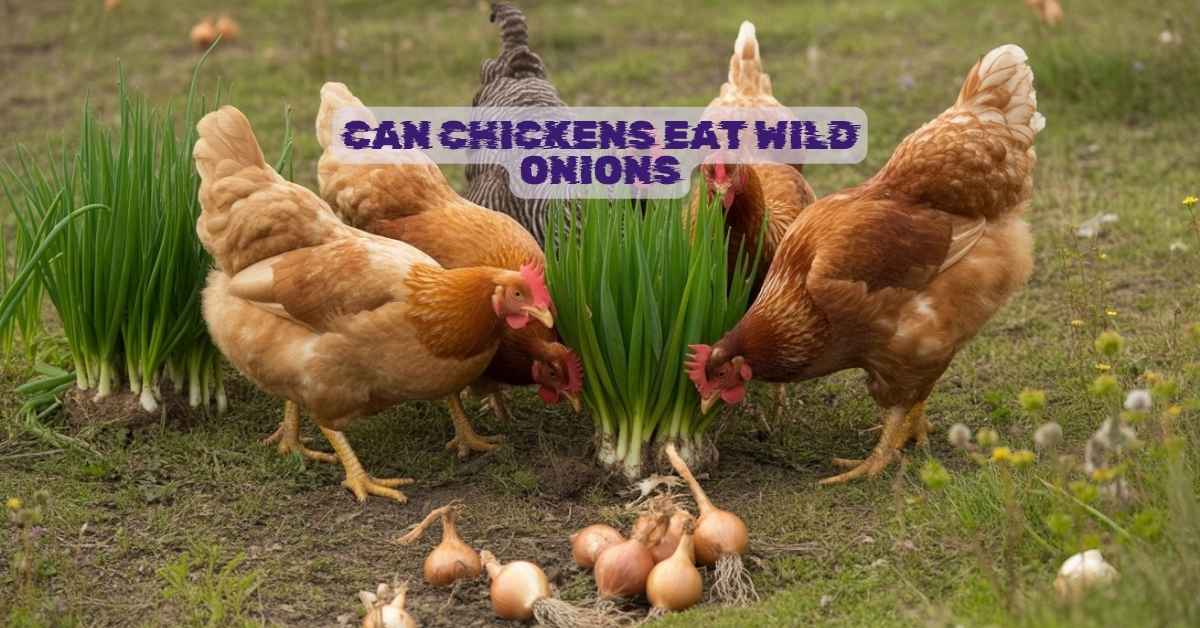
Can chickens eat wild onions? No—chickens should not eat wild onions, as they contain toxic sulfur compounds (thiosulfates) that can harm poultry health.
While a tiny accidental amount may not cause immediate damage, regular or moderate consumption can lead to red blood cell damage, anemia, digestive issues, and even changes in egg taste. For a safe and balanced poultry diet, wild onions are best completely avoided.
Are Wild Onions Toxic to Chickens?
Wild onions belong to the Allium family, which includes common onions, garlic, and chives. All of these contain compounds that can be problematic for chickens.
Wild Onions vs Regular Onions
| Type | Safety Level | Key Concern |
|---|---|---|
| Wild onions | Unsafe | Natural toxins |
| Cultivated onions | Unsafe | Same compounds |
| Garlic (small amounts) | Limited use | Lower toxicity |
Both wild and regular onions share similar chemical compositions, meaning they pose the same risks.
Why Onions Are Harmful to Poultry
Onions contain thiosulfates, a group of sulfur compounds that:
- Damage red blood cells
- Reduce oxygen transport in the body
- Lead to hemolytic anemia over time
This is why onions are listed among toxic foods for chickens.
What Happens If Chickens Eat Wild Onions?
The effects depend on quantity, frequency, and the chicken’s size.
Short-Term Effects
- Reduced appetite
- Mild digestive discomfort
- Slight behavioral changes
Long-Term Effects
- Anemia (due to red blood cell damage)
- Weakness and lethargy
- Reduced egg production
👉 Repeated exposure over several days or weeks increases risk significantly.
Symptoms of Onion Toxicity in Chickens (IMPORTANT)
Recognizing symptoms early can prevent serious issues.
Symptom Timeline
| Time After Consumption | Symptoms |
|---|---|
| 24–72 hours | Weakness, low appetite |
| 1–3 days | Lethargy, pale comb |
| Several days | Reduced egg production |
Advanced Warning Signs
- Pale or discolored comb
- Difficulty moving
- Drop in egg quality or quantity
If symptoms appear, immediate action is necessary.
How Much Onion Is Dangerous for Chickens?
Scientific and poultry data suggest:
- Toxic threshold: ~0.5% of body weight
- Effects increase with repeated exposure
- Safe level: avoid completely
Even though small amounts may not immediately harm chickens, the risk outweighs any benefit.
Can Chickens Eat Small Amounts of Wild Onions?
This is where confusion often arises.
The Reality
- A tiny accidental bite may not be fatal
- Chickens sometimes ignore onions naturally
- However, repeated feeding can cause harm
👉 The safest approach is simple: Do not intentionally feed wild onions at all.
Do Chickens Naturally Avoid Wild Onions? (Behavior Insight)
Chickens are selective eaters, but not always reliable.
In many backyard flocks:
- Some chickens avoid onions due to strong smell
- Others may peck out of curiosity
- Behavior varies by flock
A common observation:
“Chickens may avoid onions—but they don’t always know what’s safe.”
This makes relying on instinct risky.
Do Wild Onions Affect Egg Taste?
Yes, and this is one of the most overlooked issues.
Egg Quality Impact
| Feeding Pattern | Effect |
|---|---|
| Occasional intake | Minimal change |
| Repeated feeding | Onion-like taste |
| High exposure | Strong flavor change |
This happens because compounds from onions transfer into egg yolks, affecting taste.
Wild Onion Identification Guide (CRITICAL)
Proper identification helps prevent accidental exposure.
Key Features of Wild Onions
- Thin, hollow green leaves
- Strong onion smell when crushed
- Grows in clusters in fields or lawns
Wild Onion vs Garlic Chives
| Feature | Wild Onion | Garlic Chives |
|---|---|---|
| Smell | Onion-like | Garlic-like |
| Safety | Unsafe | Also risky |
| Appearance | Thin leaves | Flat leaves |
Both belong to the Allium family, so both should be treated as unsafe.
Safe Alternatives to Wild Onions for Chickens
Instead of risky foods, choose safe, nutrient-rich options.
Better Feeding Choices
| Food | Benefit |
|---|---|
| Leafy greens | High nutrients |
| Dandelions | Natural forage |
| Clover | Protein source |
| Lettuce | Hydration |
These options support a balanced poultry diet without risk.
Foods Chickens Should Avoid (Comparison Section)
Understanding unsafe foods improves flock safety.
| Food | Risk Level |
|---|---|
| Onions | High |
| Chocolate | Toxic |
| Avocado | Dangerous |
| Moldy food | Harmful |
👉 Always prioritize safe vs toxic food awareness.
Nutritional Perspective: Why Onions Don’t Fit a Chicken Diet
Onions provide:
- Some vitamins and minerals
- High water content (~84%)
However:
- Nutritional value is low compared to risk
- Toxic compounds outweigh benefits
This makes onions an unnecessary and unsafe addition.
Common Mistakes When Feeding Chickens Kitchen Scraps
Many chicken owners unknowingly make feeding errors.
Common Mistakes
- Feeding onion scraps
- Assuming all vegetables are safe
- Overfeeding kitchen waste
- Ignoring toxic food lists
Avoiding these mistakes protects your flock’s health.
What to Do If Chickens Eat Wild Onions
Quick action can prevent serious problems.
Immediate Steps
- Remove access to onions
- Provide clean water
- Offer regular balanced feed
Monitoring
Watch for symptoms within 24–72 hours:
- Weakness
- Pale comb
- Reduced activity
If symptoms worsen, veterinary advice may be needed.
Seasonal and Foraging Considerations
Wild onions commonly grow in:
- Lawns
- Fields
- Spring and early summer
Free-range chickens are more likely to encounter them, increasing risk.
LEARN MORE: Can Chickens Eat Whole Sunflower Seeds
Scientific Explanation: Thiosulfates and Poultry Health
Thiosulfates are the key toxic compounds in onions.
How They Affect Chickens
- Break down red blood cells
- Reduce oxygen supply
- Lead to anemia
This effect is cumulative, meaning repeated exposure is more dangerous than a single instance.
Case Study: Backyard Chicken Exposure to Wild Onions
A backyard flock was allowed to roam in a yard with wild onions.
Observations
- Chickens occasionally pecked at plants
- After repeated exposure, some birds showed:
- Reduced activity
- Slight drop in egg production
Once onions were removed:
- Birds recovered gradually
- Egg production normalized
👉 Lesson: Even small, repeated exposure can impact flock health.
FAQs
Are wild onions poisonous to chickens?
Yes, they are considered toxic and should be avoided.
Can chickens eat onion scraps?
It is not recommended, even in small amounts.
Why are onions bad for chickens?
They contain thiosulfates, which damage red blood cells.
Do onions affect egg taste?
Yes, repeated feeding can cause onion-flavored eggs.
What foods should chickens never eat?
Onions, chocolate, avocado, and moldy food are unsafe.
Final Verdict: Should You Feed Wild Onions to Chickens?
Wild onions pose more risks than benefits and should not be part of a chicken’s diet.
To summarize:
- ❌ Wild onions are unsafe for chickens
- ❌ Contain toxic compounds (thiosulfates)
- ❌ Can cause anemia and egg quality issues
- ✔ Safe alternatives are widely available
For optimal flock health, stick to a balanced diet of safe plants, grains, and formulated feed.
👉 In simple terms: Avoid wild onions completely and choose safer, nutrient-rich foods for your chickens.