
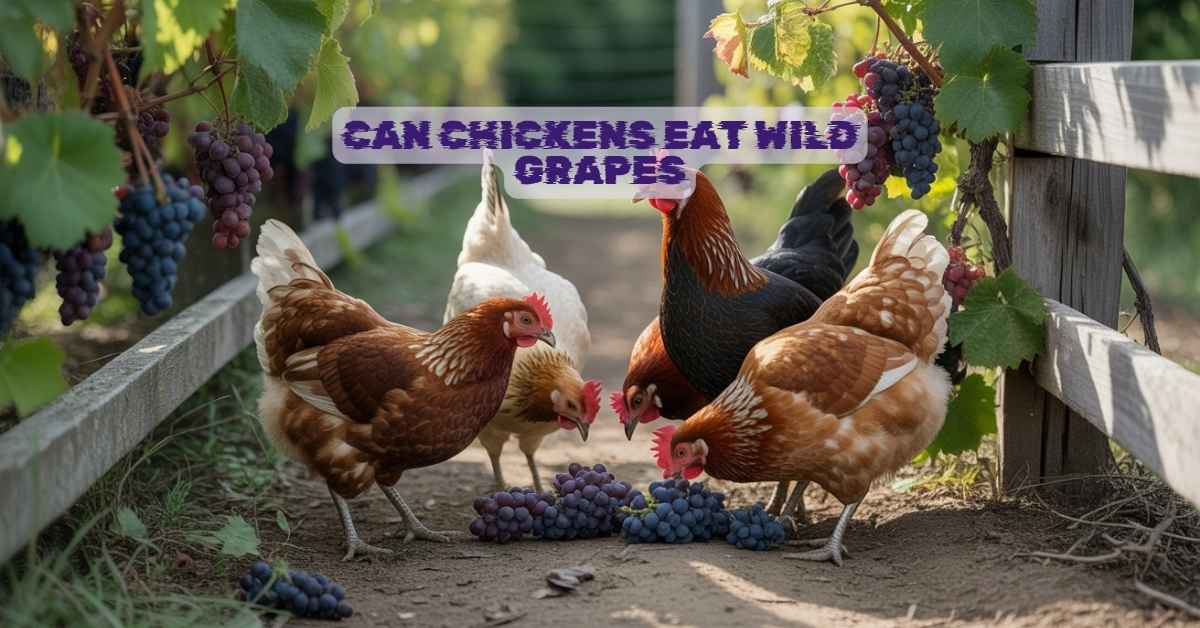
Can chickens eat wild grapes? Yes—chickens can eat wild grapes, but only when they are correctly identified and fed in moderation. True wild grapes are safe and nutritious, offering hydration and natural sugars.
However, the real danger lies in toxic lookalikes like moonseed, as well as overfeeding due to the fruit’s high sugar content. When handled properly, wild grapes can be a healthy, occasional treat in a balanced poultry diet.
Are Wild Grapes Safe for Chickens?
Wild grapes are generally considered a safe fruit for chickens, similar to store-bought grapes. They are not toxic and can provide natural forage nutrition for free-range flocks.
Are Wild Grapes Toxic or Dangerous?
True wild grapes are non-toxic and widely consumed by birds in natural environments. Chickens, being opportunistic foragers, will often eat them if available.
The important distinction is this:
- Wild grapes = safe
- Misidentified plants = dangerous
This makes identification the most critical step.
Why Misidentification Is the Real Risk
Many people confuse wild grapes with toxic plants like moonseed. While grapes grow in clusters, moonseed produces berries that look similar but are poisonous.
This is why experienced poultry keepers emphasize:
“It’s not the grape that’s dangerous—it’s the mistake.”
Wild Grapes vs Toxic Lookalikes (CRITICAL)
Correct identification can prevent serious health risks.
Wild Grapes vs Moonseed
| Feature | Wild Grapes | Moonseed (Toxic) |
|---|---|---|
| Seeds | Multiple seeds | Single crescent-shaped seed |
| Fruit clusters | Tight bunches | Loose clusters |
| Vine structure | Woody climbing vine | Similar but less robust |
| Safety | Safe for chickens | Toxic |
How to Identify Safe Wild Grapes
Look for these signs:
- Multiple seeds inside each fruit
- Hanging clusters similar to cultivated grapes
- Growth on woody vines
Avoid any plant you are unsure about. Proper identification is a non-negotiable safety step.
Nutritional Value of Wild Grapes for Chickens
Wild grapes are more than just a treat—they offer measurable nutritional benefits.
Key Nutrients (Per 100g)
| Nutrient | Amount | Benefit |
|---|---|---|
| Sugar | 15–16 g | Energy boost |
| Carbohydrates | 17–18 g | Quick fuel |
| Fiber | ~1 g | Digestive support |
| Vitamin C | ~10 mg | Immunity |
| Potassium | ~190 mg | Electrolyte balance |
Health Benefits for Chickens
When fed correctly, wild grapes can:
- Improve hydration during hot weather
- Provide natural antioxidants
- Deliver quick energy for active birds
They work best as a supplemental feed, not a primary food source.
How to Feed Wild Grapes to Chickens (Step-by-Step)
Feeding grapes properly reduces risk and improves digestion.
Preparing Grapes Safely
Always:
- Wash grapes to remove pesticide residue
- Cut them into halves or quarters
Cutting grapes reduces choking risk and makes them easier to eat.
Feeding Whole vs Cut Grapes
| Method | Risk Level | Recommendation |
|---|---|---|
| Whole grapes | Higher choking risk | Not recommended |
| Cut grapes | Safe | Best option |
This is especially important for smaller or younger chickens.
How Much Wild Grapes Can Chickens Eat?
Portion control is critical due to sugar content.
| Feeding Type | Amount |
|---|---|
| Per chicken | 2–5 grapes per serving |
| Diet percentage | 5–10% maximum |
Exceeding this can disrupt a balanced poultry diet.
How Often Can Chickens Eat Wild Grapes?
Frequency matters as much as quantity.
- Feed 2–3 times per week
- Introduce gradually over 3–5 days
- Avoid daily feeding
This prevents sugar overload and maintains proper nutrition.
Can Chickens Eat Grape Seeds, Leaves, and Vines?
Understanding each part of the plant is essential.
- Seeds: Safe in small amounts
- Leaves: Edible but should be limited
- Vines: Low nutritional value
While chickens may peck at all parts, the fruit remains the most beneficial.
Wild Grapes vs Store-Bought Grapes
There are subtle but important differences.
| Feature | Wild Grapes | Store-Bought Grapes |
|---|---|---|
| Sugar level | Slightly variable | Consistent |
| Pesticides | Low (natural) | Possible residue |
| Nutritional value | Natural variation | Standardized |
Wild grapes align better with a natural chicken diet, especially for free-range flocks.
Benefits of Feeding Wild Grapes to Chickens
Wild grapes offer several practical benefits:
- Provide natural foraging enrichment
- Support hydration in warm climates
- Deliver antioxidants and vitamins
They are especially useful for free-range and backyard chickens.
Risks and Side Effects of Wild Grapes
Despite their benefits, there are real risks if misused.
High Sugar Content
Too many grapes can:
- Lead to weight gain
- Reduce protein intake
- Disrupt nutritional balance
Choking Hazard
Whole grapes can cause choking, especially in smaller birds. Always cut them before feeding.
Mold and Spoilage Risks
Never feed moldy grapes.
- Mold exposure = zero tolerance
- Remove spoiled fruit immediately
Common Mistakes When Feeding Wild Grapes
Many poultry keepers unknowingly make these errors:
- Overfeeding fruit beyond 10% of diet
- Skipping identification of wild plants
- Feeding whole grapes
- Ignoring balanced feed requirements
Avoiding these ensures safe and effective feeding.
Can Baby Chicks Eat Wild Grapes?
Chicks require extra care.
Safe approach:
- Offer only small, cut pieces
- Feed in minimal quantities
- Avoid overfeeding
Their digestive systems are sensitive, so moderation is key.
Seasonal Feeding Guide for Wild Grapes
Wild grapes can be used strategically throughout the year.
- Summer: Excellent hydration source
- Autumn: Naturally abundant
- Winter: Avoid excess sugar
Seasonal feeding supports a balanced and natural poultry diet.
Foraging Safety Guide for Chickens
Foraging adds diversity but requires caution.
Follow these safety rules:
- Only feed properly identified plants
- Avoid polluted or roadside areas
- Ensure no chemical exposure
This ensures safe use of wild edible plants for poultry.
Sustainable Feeding: Using Wild Fruits
Wild grapes support sustainable poultry practices.
They:
- Reduce feed costs
- Encourage natural behavior
- Provide free nutrition
For homesteaders, this is a key part of eco-friendly chicken feeding.
LEARN MORE: Can Chickens Eat Sugar Beets
Scientific Perspective: Sugar in Poultry Diet
From a nutritional standpoint:
- Sugars provide quick energy
- Excess converts to fat storage
- Balanced intake supports optimal health
This explains why grapes must remain a controlled treat.
Case Study: Backyard Flock Example
A backyard chicken owner introduced wild grapes into their flock’s diet.
After one week:
- Chickens showed increased activity
- No digestive issues observed
- Birds eagerly consumed grapes
However, when overfed:
- Loose droppings appeared within 2–5 days
This confirms the importance of moderation and portion control.
FAQs
Are wild grapes poisonous to chickens?
No, true wild grapes are safe, but toxic lookalikes must be avoided.
Can chickens eat grapes every day?
No, limit to 2–3 times per week.
Can chickens eat grape seeds safely?
Yes, in small amounts they are safe.
What fruits are toxic to chickens?
Avoid unknown or misidentified wild fruits, especially toxic lookalikes.
How do you identify wild grapes safely?
Check for multiple seeds and clustered fruit growth.
Final Verdict: Should You Feed Wild Grapes to Chickens?
Wild grapes are a safe, nutritious, and natural treat when used correctly.
To summarize:
- ✔ Safe when properly identified
- ✔ Feed 2–5 grapes per serving
- ✔ Limit to 5–10% of total diet
- ✔ Always cut grapes to prevent choking
When combined with a balanced poultry diet, wild grapes can enhance both nutrition and natural foraging behavior—making them a valuable addition to your chicken feeding routine.