
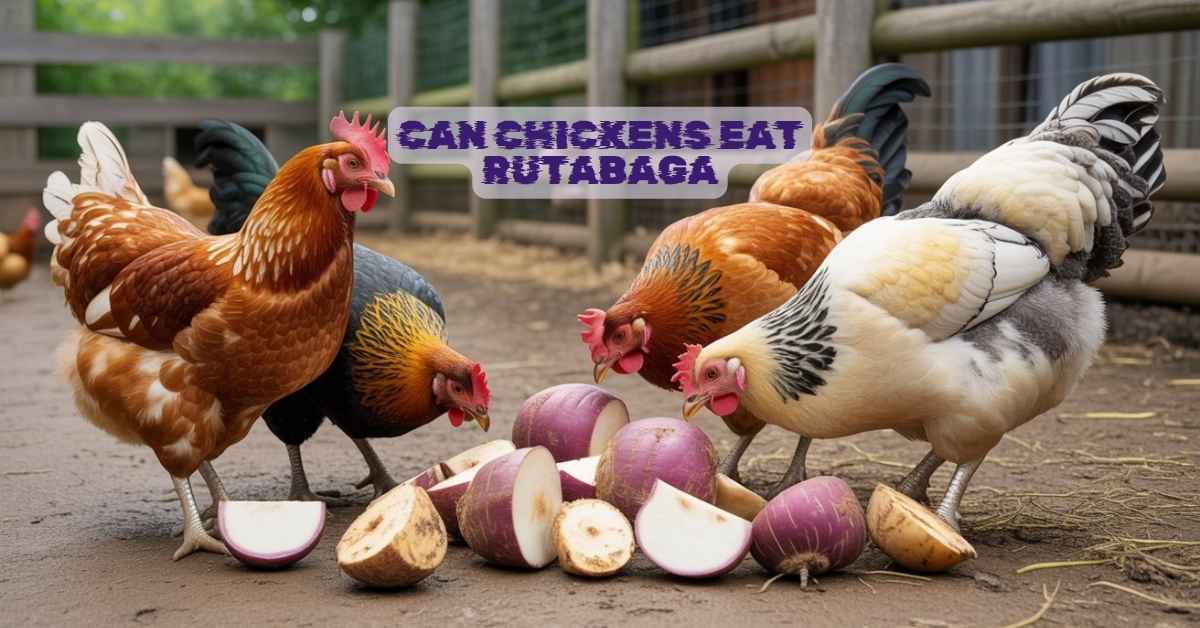
Can chickens eat rutabaga? Yes—chickens can eat rutabaga, including the root, greens, and even peels, as long as it is fed in moderation and properly prepared. Rutabaga is a low-calorie root vegetable (~37 kcal per 100g) rich in fiber (~2.3 g), vitamin C (~25 mg), and potassium (~305 mg), making it a healthy treat for backyard chickens. However, like all treats, it should follow the 10% rule, meaning no more than 10% of a chicken’s diet should come from vegetables like rutabaga.
This guide explains everything—from rutabaga leaves, peels, and skin safety to feeding methods, portion sizes, risks, and benefits—so you can feed your flock with confidence.
Are Rutabagas Safe for Chickens?
Rutabagas belong to the Brassica (cruciferous) vegetable family, which includes cabbage, turnips, and broccoli. These vegetables are generally safe for chickens, but they require balanced feeding.
Is Rutabaga Toxic to Chickens?
No, rutabaga is not toxic. Chickens can safely eat it in small amounts without harm.
Understanding Goitrogens in Rutabaga
Rutabaga contains natural compounds called goitrogens, which may affect thyroid function only if consumed in very large amounts. In normal feeding quantities, this is not a concern.
👉 The key is moderation, not avoidance.
Can Chickens Eat Different Parts of Rutabaga?
One major advantage of rutabaga is that almost the entire plant is edible for chickens.
Can Chickens Eat Rutabaga Root?
Yes, chickens can eat the rutabaga root, but preparation matters.
| Form | Suitability |
|---|---|
| Raw (whole) | Hard, not ideal |
| Chopped | Safe and recommended |
| Grated | Best for digestion |
| Cooked | Soft and easy to eat |
The root is firm and dense, so always chop or grate it to avoid choking risks.
Can Chickens Eat Rutabaga Leaves
Yes, chickens can eat rutabaga leaves, and they are actually the most nutritious part of the plant.
| Nutrient | Approx Value |
|---|---|
| Vitamin A | 6000+ IU |
| Vitamin C | ~60 mg |
| Calcium | ~190 mg |
| Iron | ~1.5 mg |
Rutabaga greens provide high levels of vitamins and minerals, supporting immunity, bone health, and egg production.
Can Chickens Eat Rutabaga Peels
Yes, can chickens eat rutabaga peels? Absolutely—but only if they are clean and chemical-free.
- Wash thoroughly
- Prefer organic rutabagas
- Avoid spoiled or moldy peels
Peels contain fiber and nutrients, making them a useful addition to a chicken’s diet.
Can Chickens Eat Rutabaga Skin
Yes, can chickens eat rutabaga skin? Chickens can eat the skin, but there is one important consideration.
Store-bought rutabagas are often coated with wax, which can be harmful. Always:
- Peel waxed rutabagas
- Or scrub thoroughly before feeding
👉 This is a critical safety step many overlook.
Nutritional Value of Rutabaga for Chickens
Rutabaga is a low-calorie, nutrient-rich vegetable that supports overall chicken health.
Nutritional Breakdown (Per 100g)
| Nutrient | Amount |
|---|---|
| Calories | ~37 kcal |
| Protein | ~1.1 g |
| Fiber | ~2.3 g |
| Vitamin C | ~25 mg |
| Potassium | ~305 mg |
| Water Content | ~85–90% |
Leaf vs Root Comparison
| Part | Nutritional Strength | Best Use |
|---|---|---|
| Leaves | High vitamins & minerals | Best option |
| Root | Fiber + hydration | Occasional treat |
| Peels/Skin | Fiber | Supplement only |
👉 Leaves outperform the root nutritionally, a key advantage for feeding.
Benefits of Feeding Rutabaga to Chickens
Supports Digestion
The fiber content (~2.3 g) helps maintain a healthy digestive system.
Boosts Immunity
Rutabaga is rich in vitamin C, which supports immune health and helps chickens resist disease.
Provides Hydration
With 85–90% water content, rutabaga helps keep chickens hydrated, especially in warmer weather.
Encourages Natural Behavior
Offering rutabaga (especially whole or hanging pieces) promotes pecking and foraging behavior, reducing boredom.
Risks of Feeding Rutabaga to Chickens
Overfeeding
Too much rutabaga can cause:
- Digestive upset
- Loose droppings
- Reduced intake of balanced feed
Hard Texture and Choking Risk
Large chunks of raw rutabaga can be difficult to eat. Always:
- Chop
- Grate
- Or cook
Goitrogen Effects
While safe in moderation, excessive intake of cruciferous vegetables may affect thyroid function.
Wax-Coated Rutabagas
Many store-bought rutabagas are coated with wax. This must be:
- Peeled
- Or thoroughly washed
How Much Rutabaga Can Chickens Eat?
The 10% Treat Rule
Rutabaga should make up:
- No more than 10% of the diet
- 90% should be balanced poultry feed
Portion Size Per Chicken
| Chicken Type | Amount |
|---|---|
| Adult hen | 1–2 tablespoons |
| Small breeds | 1 tablespoon |
| Large flock | Small handful scattered |
Feeding Frequency
- 2–3 times per week is ideal
- Occasional small daily portions are acceptable
How to Feed Rutabaga to Chickens (Step-by-Step)
Raw vs Cooked Rutabaga
| Type | Benefit |
|---|---|
| Raw | Retains nutrients |
| Cooked | Easier to eat and digest |
Preparation Methods
Effective methods include:
- Grating for easy digestion
- Chopping into small cubes
- Mashing cooked rutabaga
Hanging Whole Rutabaga
A unique method:
- Hang a whole rutabaga in the coop
- Chickens peck at it throughout the day
👉 This provides both nutrition and enrichment.
Mixing with Feed
Mix rutabaga pieces with regular feed to:
- Improve acceptance
- Maintain balanced nutrition
Can Baby Chicks Eat Rutabaga?
Age Restrictions
Avoid feeding rutabaga to chicks under 6 weeks old.
Why Chicks Need Softer Foods
Young chickens have sensitive digestive systems, so they require softer foods.
Safe Preparation for Chicks
- Finely mash cooked rutabaga
- Introduce gradually
Do Chickens Like Rutabaga?
Some chickens enjoy rutabaga, while others may hesitate.
Reasons Chickens May Refuse It
- Mild bitterness
- New food unfamiliarity
How to Encourage Eating
- Mix with grains
- Chop finely
- Introduce slowly
Rutabaga vs Other Vegetables for Chickens
Comparison Table
| Vegetable | Benefit | Best Use |
|---|---|---|
| Rutabaga | Fiber + hydration | Occasional |
| Turnip | Similar nutrients | Alternative |
| Carrot | Vitamin A | Frequent treat |
👉 Rutabaga is a good option but not the most nutrient-dense vegetable compared to leafy greens.
Common Mistakes When Feeding Rutabaga
- Feeding large chunks
- Not washing or peeling waxed skin
- Overfeeding vegetables
Avoiding these ensures safe feeding practices.
Signs You Are Overfeeding Rutabaga
Watch for:
- Loose droppings
- Reduced appetite
- Sluggish behavior
These indicate too much vegetable intake.
LEARN MORE: Can Chickens Eat Radish Leaves and Stems
Seasonal Feeding Tips for Rutabaga
Winter Feeding
Rutabaga works well as a winter vegetable, especially when:
- Hung in the coop
- Used for enrichment
Summer Feeding
Reduce quantity due to:
- High water content
- Lower energy density
Case Study: Backyard Chicken Feeding Experience
A backyard poultry keeper introduced rutabaga during winter:
“We hung a whole rutabaga in the coop, and within an hour, the chickens had pecked half of it. It kept them busy and active.”
This shows rutabaga’s value as both:
- Food
- Enrichment tool
FAQs About Chickens and Rutabaga
Can chickens eat rutabaga raw?
Yes, but it should be chopped or grated.
Can chickens eat rutabaga cooked?
Yes, cooking makes it softer and easier to digest.
Can chickens eat rutabaga leaves?
Yes, and they are the most nutritious part.
Can chickens eat rutabaga peels and skin?
Yes, but only if clean and free from wax.
How often can chickens eat rutabaga?
2–3 times per week is ideal.
Final Verdict: Should You Feed Rutabaga to Chickens?
Yes, chickens can eat rutabaga, including the root, leaves, peels, and skin, when prepared properly. It is a safe, nutritious, and hydrating treat that supports digestion and adds variety to their diet.
However, the key is moderation and preparation. Follow the 10% treat rule, avoid wax-coated skins, and always chop or cook tough pieces.
When used correctly, rutabaga becomes a simple, affordable, and beneficial addition to your chickens’ feeding routine.