
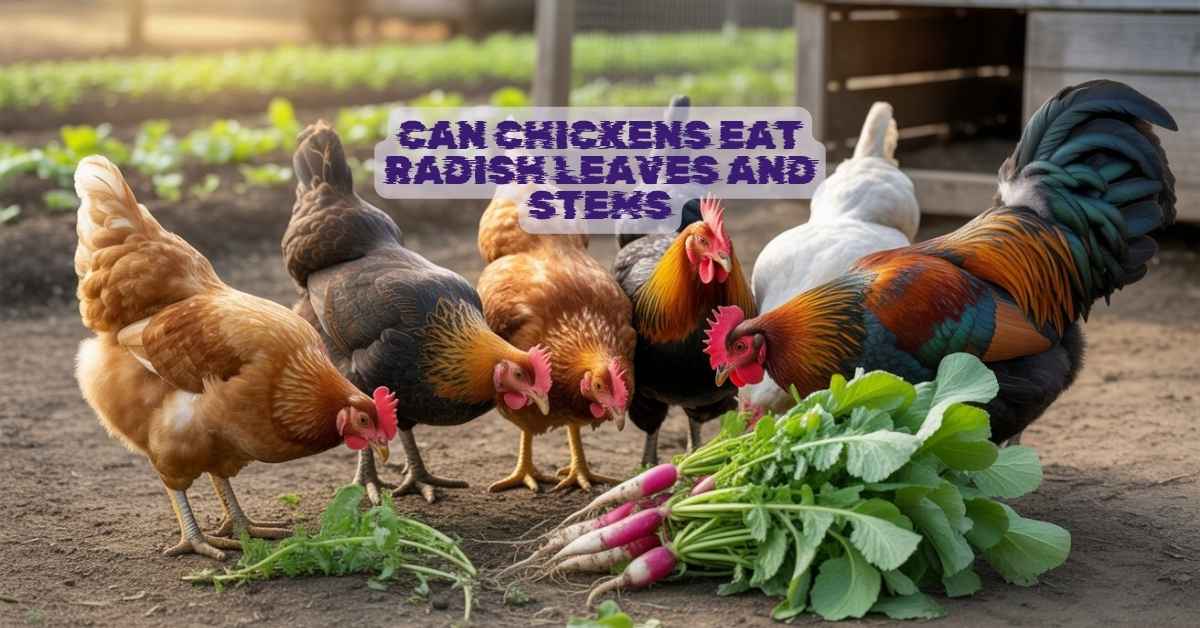
Can chickens eat radish leaves and stems? Yes—chickens can safely eat radish leaves and stems, and they can be a healthy addition to their diet when fed in moderation. Radish greens (leaves) are especially rich in nutrients like vitamin C, vitamin K, fiber, and antioxidants, while stems provide hydration and roughage. However, they should only be offered as a treat (no more than 10% of the diet) and properly prepared to avoid digestive issues.
This guide explains everything you need to know—from safety and nutrition to feeding methods, portion sizes, and risks—so you can confidently add radish scraps to your chickens’ diet.
Are Radish Leaves Safe for Chickens?
Radish leaves, also called radish greens or tops, are completely safe for chickens when fed correctly.
Nutritional Benefits of Radish Greens
Radish leaves are more nutrient-dense than the root itself. They contain:
| Nutrient | Approx Value | Benefit |
|---|---|---|
| Vitamin C | Up to 77% DV | Boosts immunity |
| Vitamin K | Up to 171% DV | Supports blood health |
| Fiber | ~2.3 g | Aids digestion |
| Protein | ~4.5 g | Supports feather growth |
| Magnesium | ~28% DV | Strengthens bones |
These nutrients make radish greens a valuable addition to a balanced chicken diet.
Are Radish Leaves Toxic to Chickens?
No, radish leaves are not toxic. However, like other leafy greens, they contain plant compounds such as glucosinolates, which are harmless in small amounts but can cause issues if overfed.
👉 This is why moderation is key.
Why Some Chickens Refuse Radish Leaves
Chickens may ignore radish greens due to their slightly bitter and peppery taste. This is normal behavior.
To overcome this:
- Mix leaves with regular feed
- Chop them into smaller pieces
- Combine with favorite treats
Can Chickens Eat Radish Stems?
Yes, chickens can eat radish stems, but they require more preparation.
Digestibility of Radish Stems
Stems are fibrous and slightly tough, making them harder to digest than leaves. Chickens can handle them, but only if they are cut into manageable pieces.
Should You Chop or Soften Stems?
Always:
- Chop stems into small pieces
- Or lightly soften them (optional cooking)
This improves digestion and prevents waste.
Choking Risks and Texture Concerns
Large, tough stems can pose a minor choking risk, especially in smaller birds. Proper preparation eliminates this issue completely.
Nutritional Value of Radish Leaves and Stems
Radishes and their greens provide a low-calorie, high-hydration food source.
Nutritional Breakdown (Radish Root + Greens)
| Component | Value per 100g |
|---|---|
| Calories | ~16 kcal |
| Protein | ~0.67 g |
| Fiber | ~1.6 g |
| Vitamin C | 14.8–28.9 mg |
| Potassium | ~233 mg |
Leaf vs Root vs Stem Comparison
| Part | Nutritional Strength | Best Use |
|---|---|---|
| Leaves | Highest vitamins | Best overall |
| Roots | Hydration + low calories | Occasional treat |
| Stems | Fiber | Use in small amounts |
👉 Leaves are the most beneficial part—a key insight many competitors miss.
Benefits of Feeding Radish Leaves and Stems to Chickens
Supports Digestion and Gut Health
The fiber content (1.6–2.3 g) helps maintain a healthy digestive system.
Boosts Immunity
High levels of vitamin C and antioxidants strengthen the immune system.
Adds Variety to Diet
Chickens thrive on variety. Adding radish greens prevents diet boredom.
Encourages Natural Foraging Behavior
Scatter feeding radish scraps promotes natural pecking and scratching habits.
Risks of Feeding Radish Greens and Stems
Even healthy foods can cause problems when overused.
Overfeeding and Digestive Upset
Too much fiber can lead to:
- Loose droppings
- Reduced appetite
Bitter Taste and Feed Refusal
Some chickens simply dislike the taste and may refuse to eat radish greens.
Pesticide and Chemical Residue
Always:
- Wash thoroughly
- Use organic produce when possible
Oxalates and Plant Compounds
Radish greens contain natural compounds that are safe in small amounts but should not be fed excessively.
How Much Radish Leaves and Stems Can Chickens Eat?
The 10% Treat Rule
Radish greens should make up no more than 10% of a chicken’s diet. The remaining 90% should be balanced poultry feed.
Portion Size Per Chicken
| Chicken Type | Amount |
|---|---|
| Adult chicken | Small handful (chopped) |
| Small breeds | 1–2 tablespoons |
| Large flock | Scatter evenly |
Feeding Frequency
- 2–3 times per week is ideal
- Can be given occasionally in small amounts daily
How to Feed Radish Leaves and Stems to Chickens
Raw vs Cooked Radish Greens
- Raw: Best for nutrient retention
- Cooked: Reduces bitterness and improves acceptance
Preparation Methods
Best practices include:
- Chopping into small pieces
- Mixing with feed
- Grating stems
Feeding Fresh vs Garden Scraps
Fresh greens are ideal, but leftover garden scraps are fine if:
- Clean
- Free from chemicals
Can Baby Chicks Eat Radish Leaves and Stems?
Age Restrictions
Avoid feeding until chicks are at least 6 weeks old.
Why Chicks Need Softer Foods
Young chicks have sensitive digestive systems and require easily digestible foods.
Safe Preparation for Chicks
- Finely chop or mash
- Introduce gradually
Radish Leaves and Stems vs Other Greens
Comparison Table
| Green | Benefit | Best Use |
|---|---|---|
| Radish leaves | High vitamins | Occasional treat |
| Spinach | Iron-rich | Limited use |
| Lettuce | Hydration | Frequent feeding |
👉 Radish greens are more nutrient-dense than lettuce but should still be fed in moderation.
Why Chickens May Not Eat Radish Leaves
Common Reasons
- Bitter taste
- New food unfamiliarity
- Preference for sweeter foods
How to Encourage Eating
- Mix with grains
- Chop finely
- Introduce slowly
Common Mistakes When Feeding Radish to Chickens
- Feeding too much at once
- Not washing vegetables
- Giving large or tough pieces
Avoiding these ensures safe feeding practices.
Signs You Are Overfeeding Radish Greens
Watch for:
- Loose droppings
- Reduced feed intake
- Mild digestive discomfort
If observed, reduce quantity immediately.
LEARN MORE: Can Chickens Eat Whole Sunflower Seeds
Seasonal Feeding Tips for Radish Greens
Summer Feeding
Radishes provide hydration due to high water content, making them useful in hot weather.
Winter Feeding
Reduce watery foods and focus on energy-rich feed.
Can Chickens Eat Other Parts of Radish?
Radish Roots
Safe and hydrating but low in nutrients.
Radish Sprouts and Seeds
Safe and nutritious when fed in moderation.
Cooked vs Raw Radishes
Both are safe, but raw retains more nutrients.
Case Study: Backyard Chicken Feeding Experience
A backyard poultry keeper introduced radish greens gradually:
“At first, the chickens ignored the leaves. But after mixing them with grains, they started eating them regularly. Within weeks, their activity levels improved.”
This shows how proper introduction matters.
FAQs About Chickens and Radish Leaves & Stems
Can chickens eat radish tops?
Yes, radish tops (leaves) are safe and nutritious.
Are radish leaves toxic to chickens?
No, but they should be fed in moderation.
Can chickens eat radish stems raw?
Yes, but they should be chopped into small pieces.
How often can chickens eat radish greens?
2–3 times per week is ideal.
Why don’t chickens like radish leaves?
Because of their bitter taste.
Final Verdict: Should You Feed Radish Leaves and Stems to Chickens?
Yes, chickens can eat radish leaves and stems, and they can be a healthy, nutrient-rich addition to their diet when fed correctly. The key is to focus on moderation, proper preparation, and balanced feeding.
Radish greens offer high levels of vitamins and antioxidants, while stems provide fiber and hydration. However, they should always remain a treat—not a staple.
When used properly, radish leaves and stems become a simple, cost-effective way to improve your chickens’ diet and overall health.