
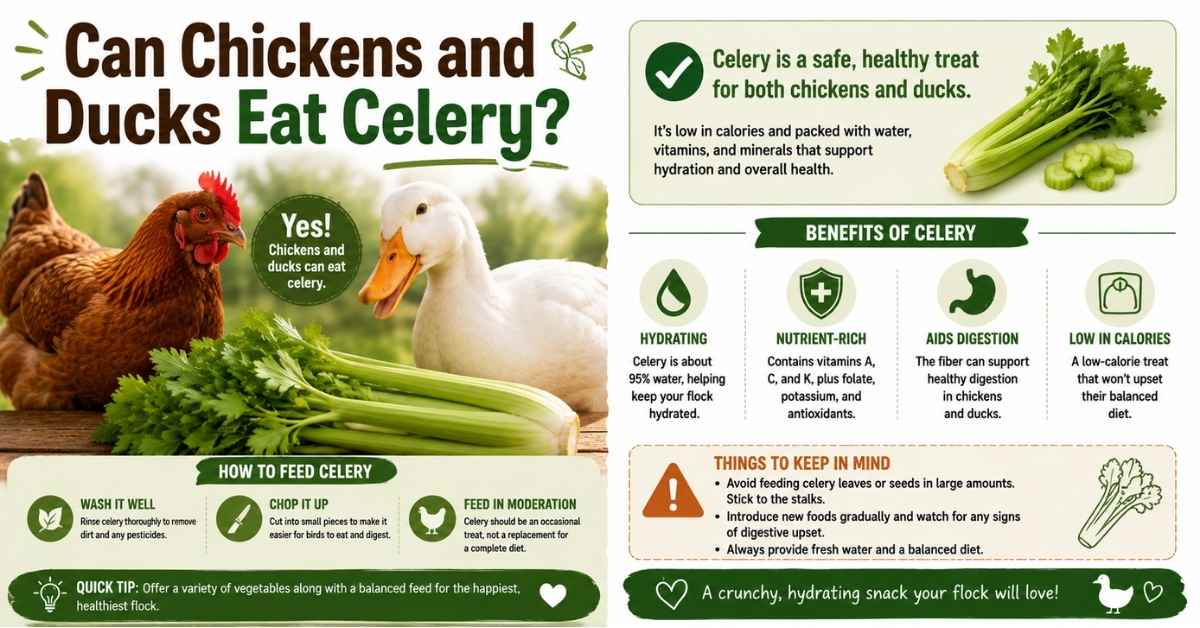
Can chickens and ducks eat celery? Yes, chickens and ducks can eat celery, and it can be a healthy occasional treat when prepared properly. Both celery stalks and celery leaves are generally safe for poultry, providing hydration, fiber, and small amounts of beneficial vitamins. However, because celery contains tough, stringy fibers, it should be chopped into manageable pieces before feeding it to your flock. When offered in moderation alongside a balanced diet, celery can be a nutritious addition to both chicken nutrition and duck nutrition programs.
If you have leftover celery from the kitchen, extra celery from your garden, or simply want healthy treats for your backyard flock, understanding how to feed celery safely can help keep your birds healthy and active.
Quick Answer: Is Celery Safe for Chickens and Ducks?
The short answer is yes.
Celery is considered a safe vegetable for:
- Adult chickens
- Adult ducks
- Most backyard flocks
However, preparation matters.
Celery Safety at a Glance
| Poultry Type | Can Eat Celery? | Best Preparation | Frequency |
|---|---|---|---|
| Adult Chickens | Yes | Chopped | Occasional Treat |
| Adult Ducks | Yes | Chopped | Occasional Treat |
| Chicks | Limited | Finely Chopped | Small Amounts |
| Ducklings | Limited | Finely Chopped | Small Amounts |
For best results, celery should be viewed as a healthy poultry treat rather than a replacement for complete poultry feed.
Why Poultry Owners Ask About Celery
Most people searching this topic already have celery available.
The Kitchen Scrap Dilemma
Backyard flock owners often look for ways to reduce waste.
Common situations include:
- Leftover celery from cooking
- Celery becoming soft in the refrigerator
- Garden-grown celery harvests
- Vegetable scraps from meal preparation
Instead of throwing it away, many owners wonder whether their birds can benefit from it.
What Most Flock Owners Are Really Worried About
The question isn’t usually:
“Can poultry physically eat celery?”
The real concern is:
“Will celery hurt my chickens or ducks?”
Common worries include:
- Choking hazards
- Digestive issues
- Crop blockages
- Unsafe vegetables
- Nutritional imbalances
These concerns are understandable because not all vegetables are equally suitable for poultry.
Why Safe Treat Choices Matter
Treats can be useful for:
- Enrichment
- Training
- Reducing boredom
- Encouraging natural foraging
But treats should never replace a balanced poultry diet.
What Makes Celery Different From Other Vegetables?
Celery looks simple, but its nutritional profile makes it different from many common poultry treats.
Understanding Celery’s Nutritional Profile
Celery contains:
- Water
- Fiber
- Antioxidants
- Vitamin K
- Small amounts of vitamin A
- Small amounts of vitamin C
One reason many poultry keepers feed celery is its high moisture content.
During warm weather, moisture-rich vegetables can provide additional hydration support.
Why Poultry React Differently to Celery Than Soft Vegetables
Vegetables such as:
- Cucumbers
- Lettuce
- Zucchini
are relatively soft.
Celery is different because its stalks contain long fibrous strands.
These strings are not dangerous in most situations, but they can make celery harder for birds to consume if served whole.
The Role of Fiber in Poultry Diets
Fiber plays a role in digestive health.
In moderate amounts, fibrous vegetables can:
- Encourage natural pecking behavior
- Promote activity
- Add dietary variety
However, poultry still require a balanced commercial feed as the foundation of their diet.
Which Parts of the Celery Plant Are Safe?
One of the biggest questions poultry owners have is whether certain parts of celery are safer than others.
Celery Stalks
Celery stalks are safe for both chickens and ducks.
Because stalks contain tough fibers, chopping them into small pieces is recommended.
Celery Leaves
Many birds actually prefer celery leaves over stalks.
The leaves are:
- Softer
- Easier to consume
- Rich in plant nutrients
Celery Tops
The leafy tops attached to celery stalks are also safe.
Many backyard flock owners feed these portions regularly.
Raw Celery
Raw celery is the most common option.
It retains its natural texture and nutritional value.
Cooked Celery
Plain cooked celery can also be offered.
However, avoid celery prepared with:
- Salt
- Butter
- Oils
- Seasonings
Kitchen Trimmings
Clean celery trimmings from food preparation can often be safely fed to poultry.
Always inspect scraps for spoilage before offering them.
Parts to Avoid
Avoid feeding:
- Moldy celery
- Rotting celery
- Heavily seasoned celery dishes
- Celery mixed with unsafe ingredients
Fresh produce is always the better choice.
The Celery String Issue Most Articles Ignore
One of the most overlooked topics in poultry feeding guides is celery’s stringy texture.
Why Celery Contains Tough Fibers
Celery stalks contain long strands of plant fiber that help support the plant’s structure.
These strings are completely natural.
Can Celery Strings Cause Problems?
The main concern is not toxicity.
The concern is practicality.
Long strands may:
- Be difficult to swallow
- Increase waste
- Make eating less efficient
How Chickens and Ducks Handle Fibrous Foods
Both chickens and ducks naturally consume fibrous plant material while foraging.
Their digestive systems are capable of processing plant matter, but smaller pieces are generally easier to manage.
The Best Way to Prepare Celery Safely
For most flocks:
- Wash the celery.
- Remove damaged portions.
- Chop into bite-sized pieces.
- Scatter or place in a feeder.
This simple preparation method greatly improves consumption.
Chopped vs Whole Celery
| Method | Recommended? |
|---|---|
| Whole Stalks | Less Ideal |
| Large Pieces | Moderate |
| Small Chopped Pieces | Best |
Most experienced poultry keepers choose chopped celery because it reduces waste and improves accessibility.
Can Chickens Eat Celery?
Nutritional Benefits for Chickens
For chickens, celery offers:
- Hydration
- Dietary variety
- Fiber
- Natural enrichment
While celery is not a major source of protein, it can complement a healthy feeding routine.
How Chickens Typically Eat Celery
Chickens often:
- Peck at chopped pieces
- Consume leaves first
- Ignore tougher sections initially
Individual preferences vary between flocks.
Best Serving Methods for Backyard Chickens
Popular options include:
- Finely chopped celery
- Hanging vegetable bundles
- Mixed vegetable trays
- Scatter feeding
These methods encourage natural foraging behavior.
Common Mistakes Chicken Owners Make
Common errors include:
- Offering oversized pieces
- Feeding spoiled celery
- Replacing feed with treats
- Providing too much at once
Can Ducks Eat Celery?
Why Ducks Usually Enjoy Moist Vegetables
Ducks can eat celery, and many ducks enjoy it even more than chickens. Because ducks naturally consume a variety of aquatic plants, grasses, and vegetation, they often show strong interest in moisture-rich vegetables.
Celery’s high water content can make it appealing, especially during warm weather when ducks are actively drinking and foraging.
Nutritional Benefits for Ducks
When fed as part of a balanced diet, celery may provide:
- Additional hydration
- Fiber
- Antioxidants
- Small amounts of vitamins
- Dietary enrichment
While celery should never replace a quality duck feed, it can be a healthy treat option.
Feeding Celery to Ducks Safely
The safest approach is to:
- Wash the celery thoroughly
- Chop stalks into small pieces
- Remove spoiled portions
- Serve fresh
Ducks can eat both:
- Celery stalks
- Celery leaves
Many ducks particularly enjoy the softer leafy portions.
Differences Between Feeding Ducks and Chickens
Although both species can eat celery safely, ducks often handle moist vegetables more enthusiastically than chickens.
Ducks may:
- Consume larger quantities
- Prefer softer leaves
- Eat celery more quickly
Chickens, on the other hand, sometimes pick selectively and leave tougher pieces behind.
Can Chicks and Ducklings Eat Celery?
When Young Birds Can Start Trying Vegetables
Young poultry should primarily consume:
- Chick starter feed
- Waterfowl starter feed
These feeds provide the balanced nutrition needed during rapid growth.
Fresh vegetables, including celery, should only be introduced as occasional treats once birds are developing well.
Why Preparation Matters More for Young Poultry
Young birds have smaller beaks and less experience handling fibrous foods.
Because of this, celery should be:
- Finely chopped
- Offered in very small amounts
- Introduced gradually
Safe Serving Sizes
For chicks and ducklings:
- Tiny chopped pieces work best
- Treats should remain minimal
- Commercial feed should remain the primary diet
Signs They Are Ready for Fresh Treats
Healthy young birds generally show:
- Good appetite
- Strong growth
- Active behavior
- Interest in exploring food
Even then, moderation remains important.
How Much Celery Should Chickens and Ducks Eat?
Treats vs Complete Feed
One of the most important poultry nutrition principles is:
Treats supplement feed. They do not replace feed.
A quality poultry feed should provide the majority of calories and nutrients.
Recommended Serving Frequency
Celery works best as an occasional treat.
Most flock owners successfully offer vegetables:
- Several times per week
- In moderate portions
- Alongside normal feed
How Much Is Too Much?
Excessive treats may:
- Reduce feed consumption
- Dilute nutrition
- Encourage picky eating habits
Celery should remain a small part of the overall diet.
Maintaining a Balanced Poultry Diet
A healthy feeding program focuses primarily on:
- Poultry feed
- Clean water
- Appropriate supplements when needed
Vegetables should enhance—not replace—this foundation.
Fresh, Raw, Cooked, or Frozen: Which Is Best?
Raw Celery
Raw celery is generally the preferred option.
Benefits include:
- Natural texture
- Minimal processing
- Convenient preparation
Cooked Celery
Plain cooked celery is also safe.
However, avoid celery prepared with:
- Salt
- Garlic-heavy seasonings
- Butter
- Oils
- Sauces
Frozen Celery
Frozen celery that has been thawed can often be fed safely.
The softer texture may even make it easier for poultry to consume.
Wilted Celery
Slightly wilted celery is often acceptable.
However, discard celery showing:
- Mold
- Rot
- Unpleasant odors
Celery Leftovers From Human Meals
Use caution with leftovers.
Many human dishes contain ingredients unsuitable for poultry.
Plain celery is always the safest option.
Real Backyard Flock Feeding Scenarios
You Have Leftover Celery in the Refrigerator
This is one of the most common situations.
Rather than discarding celery, many owners chop it and offer it as a healthy flock treat.
You Grow Celery in Your Garden
Homegrown celery can be an excellent source of fresh treats.
Always wash garden produce before feeding.
Your Birds Ignore Celery
Not every bird enjoys the same foods.
If poultry refuse celery:
- Mix it with favorite vegetables
- Chop it more finely
- Try leaves instead of stalks
Your Ducks Love Celery but Chickens Do Not
This is completely normal.
Ducks and chickens often have different food preferences.
You Keep Chickens and Ducks Together
Celery is one of the easier vegetables to share in a mixed flock because both species can safely consume it.
How Experienced Poultry Keepers Use Celery for Enrichment
Hanging Celery Bundles
Suspending celery from a string encourages:
- Pecking
- Exploration
- Activity
Treat Stations
Many flock owners create dedicated areas for vegetables and treats.
Foraging Areas
Scattering chopped celery promotes natural foraging behavior.
Mixing Celery With Other Vegetables
Celery can be combined with:
- Lettuce
- Cucumber
- Kale
- Spinach
- Zucchini
to create a varied vegetable mix.
Encouraging Natural Pecking Behavior
Providing different textures and vegetables helps reduce boredom and encourages mental stimulation.
Foods That Pair Well With Celery
Safe Vegetables
Many poultry keepers combine celery with:
- Cucumbers
- Carrots
- Lettuce
- Pumpkin
- Zucchini
Leafy Greens
Leafy greens are often highly appreciated by both chickens and ducks.
Examples include:
- Kale
- Swiss chard
- Romaine lettuce
Herbs
Some birds enjoy:
- Parsley
- Basil
- Cilantro
Fruits Offered in Moderation
Fruits can occasionally complement vegetables.
Examples include:
- Watermelon
- Strawberries
- Blueberries
Creating a Healthy Flock Treat Mix
The goal is variety rather than reliance on any single treat.
Common Mistakes When Feeding Celery
Offering Large Chunks
Large pieces increase waste and may be difficult to consume.
Feeding Too Many Treats
Treats should never become the primary diet.
Ignoring Stringy Fibers
Cutting celery into smaller pieces improves safety and consumption.
Feeding Spoiled Produce
Never feed:
- Moldy vegetables
- Rotting vegetables
- Contaminated scraps
Replacing Balanced Feed With Snacks
Commercial feed remains the nutritional foundation of a healthy flock.
Signs Your Flock Is Handling Celery Well
Healthy Digestion
Birds should continue displaying normal digestion and droppings.
Strong Appetite
Healthy poultry maintain consistent interest in feed.
Active Behavior
Alert, active birds generally indicate good overall health.
Good Feather Condition
Healthy feathers often reflect proper nutrition.
Normal Foraging Activity
Birds should remain curious and engaged.
LEARN MORE: Can 3 Month Old Chickens Eat Layer Feed?
When Celery Should Be Limited or Avoided
Very Young Chicks and Ducklings
Young birds should focus primarily on starter feed.
Birds With Existing Digestive Issues
Some birds may benefit from more cautious treat introduction.
Moldy or Spoiled Celery
Spoiled produce should always be discarded.
Heavily Seasoned Celery Dishes
Human foods containing:
- Salt
- Sauces
- Oils
- Excess spices
should be avoided.
Building a Healthy Treat Strategy for Chickens and Ducks
The 90/10 Feeding Principle
Many poultry keepers follow a simple guideline:
- Approximately 90% complete feed
- Approximately 10% treats and extras
Why Treats Should Never Replace Poultry Feed
Commercial feed is formulated to provide:
- Protein
- Vitamins
- Minerals
- Essential nutrients
Celery cannot provide complete nutrition.
Rotating Safe Vegetables
Rotating vegetables helps provide:
- Dietary variety
- Environmental enrichment
- Reduced boredom
Creating Variety Without Nutritional Imbalances
The best strategy is moderation.
Healthy treats should support—not replace—a balanced feeding program.
Frequently Asked Questions
Can chickens eat celery leaves?
Yes. Celery leaves are safe for chickens and are often easier to eat than stalks.
Can ducks eat celery leaves?
Yes. Ducks can safely eat celery leaves and may even prefer them.
Can chickens eat celery stalks?
Yes, provided the stalks are chopped into manageable pieces.
Can ducks eat celery stalks?
Yes. Chopped stalks are generally safe for ducks.
Can chicks eat celery?
Small amounts of finely chopped celery can be offered occasionally, but starter feed should remain the primary diet.
Can ducklings eat celery?
Yes, in very small amounts and only when properly chopped.
Is celery healthy for poultry?
Celery can be a healthy treat because it provides hydration, fiber, and vitamins.
Can chickens and ducks eat celery every day?
Occasional feeding is generally preferable to daily feeding.
Is cooked celery safe for poultry?
Plain cooked celery is usually safe. Avoid seasonings and additives.
Can celery cause choking?
Large pieces and long fibers may be harder to consume, which is why chopping is recommended.
Are celery strings dangerous?
They are not toxic, but smaller pieces are easier for poultry to handle.
What other vegetables can chickens and ducks eat?
Many flocks safely enjoy:
- Lettuce
- Cucumbers
- Kale
- Zucchini
- Pumpkin
Final Verdict: Should You Feed Celery to Chickens and Ducks?
Can chickens and ducks eat celery? Absolutely. Celery stalks, celery leaves, and celery tops are generally safe for both chickens and ducks when served fresh and properly prepared. The key is chopping celery into manageable pieces to reduce issues associated with its stringy fibers.
For most backyard flocks, celery works best as an occasional treat rather than a dietary staple. Whether you are using kitchen scraps, garden vegetables, or simply looking for healthy poultry treats, celery can provide enrichment, hydration, and dietary variety while supporting natural foraging behaviors.
The simplest approach is this: wash it, chop it, serve it in moderation, and continue relying on quality poultry feed as the foundation of your flock’s nutrition.