
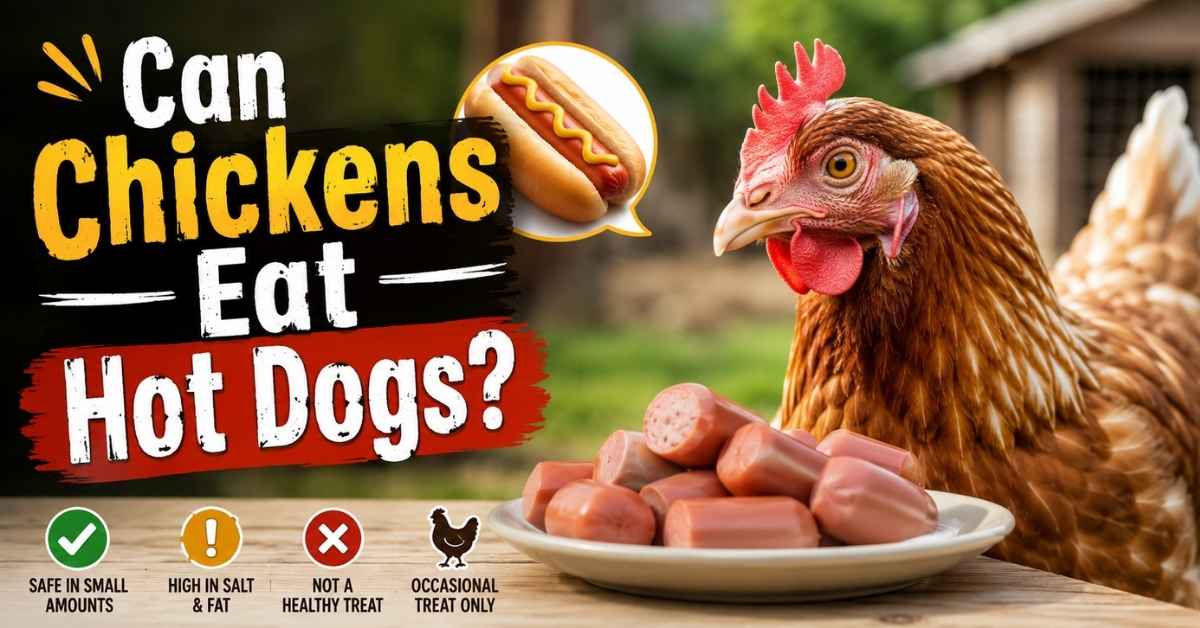
Can chickens eat hot dogs? Yes, chickens can eat small amounts of hot dogs occasionally, but they should never become a regular part of a healthy backyard chicken diet. Hot dogs are highly processed meat products loaded with sodium, preservatives, unhealthy fats, and artificial additives that may affect your flock’s long-term health. A tiny bite usually will not harm adult chickens, but frequent feeding can lead to nutritional imbalance, obesity, digestive problems, and reduced egg quality.
Many chicken owners search this question after tossing leftovers into the coop and suddenly wondering if they made a mistake. The good news is that one small piece of hot dog rarely causes serious problems. However, understanding how processed foods affect poultry nutrition is important if you want healthier hens, stronger egg production, and a longer-living flock.
Quick Answer
Here’s the short version most flock owners actually need:
| Question | Quick Answer |
|---|---|
| Can chickens eat hot dogs? | Yes, in tiny amounts occasionally |
| Are hot dogs healthy for chickens? | No, they lack balanced poultry nutrition |
| Can hot dogs hurt chickens? | Too much can cause health issues |
| Are hot dogs toxic? | Not usually toxic, but unhealthy |
| Can chicks eat hot dogs? | Best avoided completely |
| Best alternative treats? | Mealworms, eggs, vegetables, plain cooked meat |
If your chicken accidentally ate a small piece of hot dog, there is usually no reason to panic. Problems are more likely with frequent feeding, large portions, or heavily processed meats high in salt and preservatives.
Hot Dogs and Chickens: What Most Owners Get Wrong
One of the biggest misconceptions about feeding chickens is believing that anything chickens willingly eat must be safe. Chickens are curious omnivores and often peck at almost anything, including salty snacks, bread, processed foods, and meat scraps.
That does not mean those foods support good health.
Many flock owners see hot dogs as a quick protein source because chickens naturally enjoy meat. While hot dogs do contain protein, they also contain excessive sodium, saturated fat, preservatives, nitrates, and fillers that provide very little real nutritional value for poultry.
The issue is not usually the occasional bite. The problem starts when processed treats begin replacing a balanced commercial layer feed designed to meet poultry nutritional requirements.
What’s Actually Inside a Hot Dog?
Understanding the ingredients inside hot dogs explains why most poultry experts recommend moderation.
Processed Meat Ingredients That Matter for Chickens
Most commercial hot dogs contain:
- Processed beef, chicken, pork, or turkey
- Salt
- Sodium nitrite
- Preservatives
- Artificial flavors
- Saturated fat
- Fillers and starches
- Garlic or onion powder
Several of these ingredients can become problematic for chickens when consumed regularly.
Sodium Levels and Why Poultry Handle Salt Differently
Chickens are far more sensitive to excess sodium than humans. High salt intake may contribute to:
- Dehydration
- Kidney stress
- Excessive thirst
- Digestive imbalance
- Poor flock health
A single hot dog may contain more sodium than chickens should consume in a day from treats alone.
Preservatives, Nitrates, and Artificial Additives
Many hot dogs contain sodium nitrite, a preservative used in processed meats. While tiny occasional exposure is unlikely to cause immediate harm, regularly feeding processed foods may increase long-term health risks and nutritional imbalance.
This is one reason many experienced backyard chicken keepers avoid heavily processed table scraps.
Hidden Seasonings That May Irritate Chickens
Some flavored hot dogs contain onion powder, garlic powder, spicy seasoning blends, or excessive smoke flavoring. These ingredients can irritate a chicken’s digestive system, especially in young birds.
Are Hot Dogs Ever Safe for Chickens?
In small quantities, hot dogs are usually not dangerous for healthy adult chickens.
A tiny piece as an occasional treat is unlikely to cause serious issues. The risk increases when chickens consume:
- Large portions
- Frequent processed meat scraps
- Very salty hot dogs
- Fat-heavy leftovers
- Moldy or spoiled meat
Think of hot dogs as a rare junk-food snack rather than a healthy poultry treat.
Why Frequency Matters More Than One Bite
Many people panic after their chicken steals a hot dog from a plate or feeder area. In most cases, a single incident is not an emergency.
The bigger issue is repeated feeding over time. Constant exposure to processed foods may contribute to:
- Weight gain
- Poor feather condition
- Reduced egg quality
- Nutritional deficiencies
- Lower appetite for healthy feed
What Happens if Chickens Eat Too Much Hot Dog?
Overfeeding hot dogs can create several health concerns for backyard flocks.
Early Warning Signs Flock Owners Should Watch For
Watch for symptoms like:
- Loose droppings
- Excessive thirst
- Lethargy
- Swollen abdomen
- Reduced appetite
- Low egg production
Digestive Upset vs Serious Symptoms
Minor digestive upset may resolve naturally if chickens return to a healthy diet quickly. Severe symptoms like weakness, breathing difficulty, or inability to stand may indicate excessive sodium intake or another underlying issue.
How Excess Sodium Affects Chickens
Too much sodium can disrupt a chicken’s electrolyte balance and place stress on the kidneys. Poultry require carefully balanced nutrition, which is why commercial feed formulas contain controlled mineral levels.
What to Do Immediately After Overfeeding
If your chickens ate too much hot dog:
- Remove leftover processed foods immediately
- Provide fresh clean water
- Encourage normal feed consumption
- Monitor droppings and behavior
- Contact an avian veterinarian if symptoms worsen
Can Baby Chicks Eat Hot Dogs?
Baby chicks should not eat hot dogs.
Young chicks have delicate digestive systems and require carefully balanced chick starter feed for healthy growth. Processed meat introduces unnecessary sodium, fat, and additives that can interfere with proper development.
Better Protein Options for Chicks
If you want healthy protein treats for chicks, safer options include:
- Scrambled eggs
- Small insects
- Chick starter crumble
- Mealworms in moderation
These provide better nutritional value without processed ingredients.
How Hot Dogs Affect Egg-Laying Hens
Laying hens require consistent nutrition to maintain:
- Strong eggshells
- Healthy feathers
- Stable egg production
- Proper calcium balance
Too many unhealthy treats can dilute the nutrients hens receive from balanced feed.
Can Processed Foods Impact Egg Quality?
Yes, poor nutrition may affect:
- Shell thickness
- Egg consistency
- Egg production rates
- Overall flock condition
While occasional treats rarely cause immediate issues, long-term dependence on processed scraps may weaken nutritional quality.
The Real Problem With Feeding Processed Foods to Chickens
The biggest concern is not necessarily toxicity. It is nutritional imbalance.
Nutritional Dilution and Empty Calories
Chickens have limited dietary capacity. Every unhealthy treat replaces room for nutrient-rich foods that support:
- Bone health
- Feather growth
- Egg production
- Immune function
Obesity Risks in Backyard Flocks
Backyard chickens with frequent access to fatty scraps may become overweight. Obesity in chickens can lead to:
- Reduced laying performance
- Mobility problems
- Fatty liver disease
- Lower lifespan
Why Treat Overload Quietly Harms Chickens
Many owners underestimate how quickly treats add up. A flock receiving excessive table scraps often begins ignoring balanced poultry feed entirely.
That creates long-term health issues that develop slowly over time.
Safe Feeding Guidelines Backyard Chicken Owners Can Follow
If you decide to offer hot dogs occasionally, follow simple safety rules.
Recommended Serving Sizes
| Chicken Type | Recommended Amount |
|---|---|
| Adult hens | Tiny bite-sized pieces |
| Small bantams | Extremely limited |
| Chicks | Avoid |
| Overweight chickens | Avoid |
How Often Can Chickens Eat Hot Dogs?
Hot dogs should remain a rare treat only. Most poultry keepers follow a simple rule:
Treats should make up less than 10% of a chicken’s overall diet.
Best Preparation Methods
If feeding hot dogs:
- Serve fully cooked
- Cut into small pieces
- Avoid spicy varieties
- Skip heavily seasoned products
- Remove spoiled leftovers quickly
Are Certain Types of Hot Dogs Better Than Others?
Not all hot dogs are equally unhealthy.
Beef vs Turkey Hot Dogs
Turkey hot dogs sometimes contain less fat, but many still contain high sodium and preservatives.
Nitrate-Free Hot Dogs
Nitrate-free options may reduce some preservative exposure, although they still remain processed foods.
Low-Sodium Options
Low-sodium hot dogs are slightly better but still should not replace healthy poultry nutrition.
Plant-Based Hot Dogs
Plant-based alternatives often contain heavy seasoning, additives, oils, and processed ingredients unsuitable for chickens.
Better Protein Treats for Chickens
There are far healthier protein-rich treats than hot dogs.
Healthy Treat Alternatives
| Treat | Nutritional Benefit | Feeding Frequency |
|---|---|---|
| Mealworms | High-quality protein | Regular treat |
| Scrambled eggs | Excellent amino acids | Moderate |
| Plain cooked chicken | Lean protein | Occasional |
| Fish scraps | Omega-3 fats | Moderate |
| Vegetables | Vitamins and fiber | Frequent |
| Hot dogs | Processed protein | Rarely |
Mealworms and cooked eggs are especially popular among experienced flock owners because they support natural poultry nutrition without excess preservatives.
Foods Commonly Fed With Hot Dogs That Can Be Worse
Sometimes the side foods are even more problematic than the hot dog itself.
Onions and Garlic
Large amounts may irritate chickens and should remain limited.
Excess Bread and Buns
Hot dog buns contain refined carbohydrates with little nutritional value.
Sugary Sauces and Condiments
Avoid:
- Ketchup
- Spicy sauces
- Processed cheese sauces
- Sugary toppings
These ingredients increase unnecessary sugar and sodium intake.
What Experienced Chicken Keepers Usually Do Instead
Experienced flock owners usually focus on whole foods rather than processed scraps.
The 90/10 Feeding Rule
A healthy flock diet often follows:
- 90% balanced poultry feed
- 10% healthy treats
This keeps nutrition stable while still allowing occasional snacks.
Why Moderation Is Easier Than Recovery
Fixing poor flock nutrition takes far more effort than preventing it. Healthy feeding habits improve:
- Egg consistency
- Feather quality
- Energy levels
- Longevity
Signs Your Chickens Are Getting Too Many Unhealthy Treats
Poor diet often shows up gradually.
Common Warning Signs
- Chickens ignoring regular feed
- Weight gain
- Fewer eggs
- Soft shells
- Greasy feathers
- Reduced activity
- Loose droppings
These symptoms may indicate excessive treats or poor nutritional balance.
LEARN MORE: Can Chickens Eat Jalapeno Peppers?
Emergency Scenario: My Chicken Ate an Entire Hot Dog
Many people search this keyword in panic after a chicken steals food unexpectedly.
The good news is that one entire hot dog usually does not become a life-threatening emergency for a healthy adult chicken. However, it still requires monitoring.
What You Should Do
- Provide fresh water immediately
- Avoid additional treats
- Monitor droppings
- Watch for unusual behavior
- Encourage normal feed intake
When to Call a Vet
Contact a poultry veterinarian if you notice:
- Severe lethargy
- Difficulty breathing
- Inability to stand
- Extreme swelling
- Persistent diarrhea
What Veterinarians and Poultry Experts Generally Recommend
Most poultry experts agree on one principle:
Healthy chickens thrive on balanced nutrition, not processed human foods.
Commercial layer feed remains the safest nutritional foundation because it is formulated specifically for poultry needs.
Treats can enrich a flock’s environment, but they should never dominate the diet.
Backyard Chicken Feeding Framework for Healthier Flocks
A healthier feeding strategy includes:
Base Diet
High-quality commercial feed
Healthy Protein Sources
Mealworms, eggs, insects, fish scraps
Hydration Support
Fresh clean water daily
Seasonal Adjustments
Extra protein during molting season
Treat Control
Limit processed foods and salty leftovers
Safe and Unsafe Table Scraps for Chickens
| Safe Occasionally | Better in Moderation | Avoid |
|---|---|---|
| Vegetables | Bread | Processed meats |
| Fruits | Pasta | Salty snacks |
| Rice | Cheese | Moldy food |
| Oats | Corn chips | Sugary desserts |
| Eggs | Crackers | Raw beans |
Frequently Asked Questions About Can Chickens Eat Hot Dogs
Can chickens eat cooked hot dogs?
Yes, cooked hot dogs are safer than raw ones, but they still should only be occasional treats because of their sodium and preservative content.
Are turkey hot dogs safer for chickens?
Turkey hot dogs may contain less fat, but many still contain high sodium and processed additives.
Can chickens eat sausage or deli meat?
Small amounts occasionally are usually tolerated, but processed meats are not ideal for regular feeding.
Will one hot dog hurt a chicken?
One hot dog rarely harms a healthy adult chicken, though it may cause mild digestive upset in some birds.
Are nitrates dangerous for chickens?
Excessive processed meat consumption may expose chickens to unnecessary preservatives like nitrates and sodium nitrite.
Can chickens eat hot dog buns?
Small pieces are usually harmless, but buns provide little nutritional value and should remain limited.
Why do chickens love processed meat?
Chickens naturally seek protein and fat-rich foods, even when those foods are unhealthy.
What are the healthiest treats for backyard chickens?
Mealworms, vegetables, scrambled eggs, oats, and plain cooked meat are much healthier than processed foods.
Final Verdict About Can Chickens Eat Hot Dogs
Hot dogs are not toxic to chickens in tiny amounts, but they are far from an ideal poultry treat. Their high sodium, preservatives, processed fats, and artificial additives make them a poor long-term choice for flock nutrition.
If your chickens occasionally grab a small piece, there is usually no reason to panic. Still, healthier treats like mealworms, vegetables, eggs, and balanced poultry feed provide far better nutrition for egg production, feather health, and overall flock wellbeing.
The simplest rule is this:
If a food is heavily processed for humans, it probably should remain only a rare treat for chickens too.