
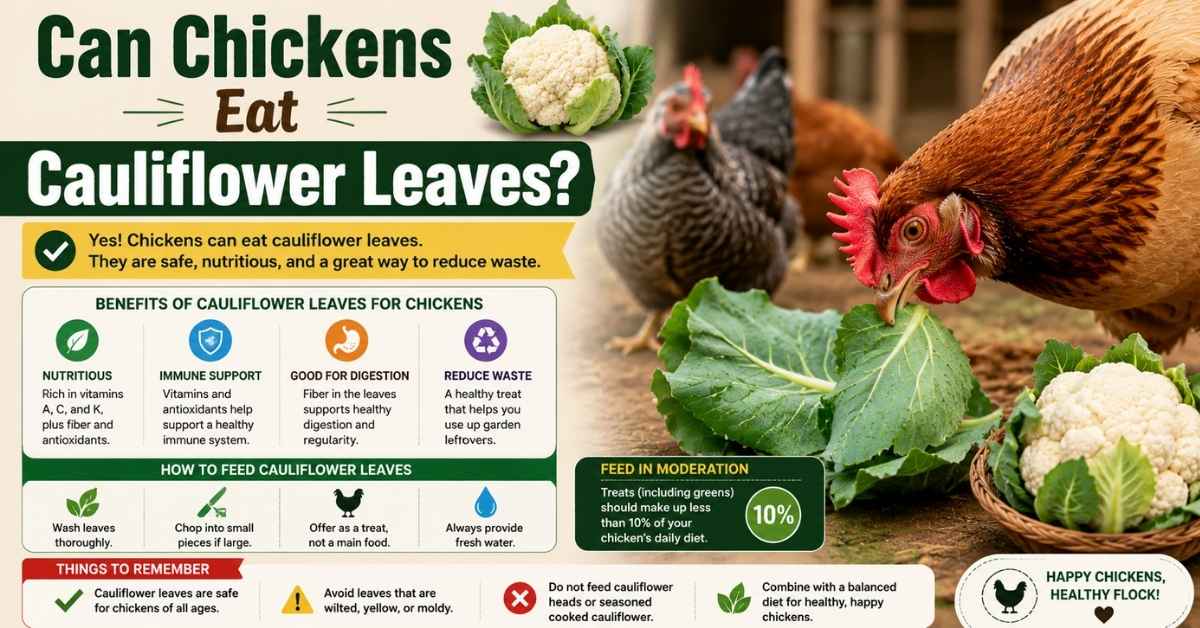
Can chickens eat cauliflower leaves? Yes, chickens can safely eat cauliflower leaves in moderation. These leafy greens are packed with fiber, antioxidants, vitamin C, and hydration, making them a healthy supplemental treat for backyard flocks.
However, cauliflower leaves should never replace a balanced poultry diet, and chicken owners should avoid feeding moldy, chemically treated, or excessive amounts of cruciferous vegetables. When served properly, cauliflower leaves can become a nutritious way to reduce kitchen waste while giving chickens healthy enrichment.
Many backyard chicken keepers search for safe vegetables for chickens because they want healthier birds, lower feed costs, and safer ways to use garden scraps. The problem is that many online articles provide vague answers without explaining the real risks, proper feeding methods, or how chickens actually respond to cauliflower greens. This guide covers everything from feeding frequency and digestive safety to practical flock-owner tips most websites completely ignore.
Quick Answer
| Question | Answer |
|---|---|
| Can chickens eat cauliflower leaves? | Yes, in moderation |
| Are cauliflower leaves toxic to chickens? | No |
| Can chickens eat raw cauliflower leaves? | Yes |
| Are cooked cauliflower leaves safe? | Yes, if plain and unseasoned |
| Can baby chicks eat cauliflower leaves? | Only in very small amounts |
| How often can chickens eat them? | Occasionally as a treat |
| Main risk | Overfeeding cruciferous vegetables |
Why Chicken Owners Ask About Cauliflower Leaves
Most people searching this question already have leftover cauliflower scraps, garden trimmings, or unused vegetable leaves sitting in the kitchen. Instead of throwing them away, they want to know whether chickens can safely turn those scraps into useful nutrition.
There is also a deeper concern behind this search. Chicken owners worry about accidentally feeding something harmful to their flock. Since birds often peck at almost anything, many beginners fear that the wrong food could cause digestive problems, lower egg production, or long-term health issues.
At the same time, experienced homesteaders see cauliflower leaves as part of a broader sustainable feeding system. Safe kitchen scraps help reduce food waste while adding dietary variety and enrichment to backyard chickens.
What Makes Cauliflower Leaves Safe for Chickens
Cauliflower leaves belong to the cruciferous vegetable family, the same group that includes broccoli, cabbage, kale, and Brussels sprouts. These vegetables contain several nutrients chickens can benefit from when offered responsibly.
Nutrients Chickens Benefit From
Cauliflower greens contain:
- Fiber for digestive support
- Vitamin C for immune function
- Antioxidants that help reduce cellular stress
- Hydration from natural moisture
- Small amounts of calcium and micronutrients
Although chickens mainly rely on complete poultry feed for balanced nutrition, leafy greens can provide additional variety and environmental enrichment.
Why Chickens Enjoy Leafy Greens
Chickens naturally love pecking and foraging. Hanging cauliflower leaves inside the coop or run gives birds something stimulating to investigate throughout the day. Many flock owners notice chickens peck at softer inner leaves first before touching thicker stems.
Leafy vegetables also help reduce boredom-related behaviors like:
- feather pecking
- excessive aggression
- stress pacing
How Cauliflower Leaves Compare to Other Chicken-Safe Greens
| Vegetable | Safety Level | Nutrition Value | Feeding Frequency |
|---|---|---|---|
| Cauliflower leaves | Safe | High fiber and antioxidants | Occasional |
| Broccoli leaves | Safe | Nutrient-dense | Occasional |
| Kale | Safe | Rich in vitamins | Moderate |
| Lettuce | Safe | Mostly hydration | Frequent in small amounts |
| Cabbage | Safe | Good enrichment | Occasional |
| Spinach | Limited | High oxalates | Rarely |
This comparison helps chicken owners rotate vegetables instead of relying on a single treat source.
The Important Risks Most Articles Ignore
Many websites simply say “feed in moderation” without explaining what moderation actually means or why it matters biologically.
Too Many Cruciferous Vegetables Can Cause Problems
Cauliflower leaves contain natural compounds called goitrogens, which are found in many brassica vegetables. In extremely high amounts, these compounds may interfere with iodine balance and thyroid function.
For backyard chickens, this usually becomes a problem only when:
- cruciferous vegetables are overfed daily
- balanced feed intake decreases
- chickens consume excessive scraps instead of proper nutrition
This is why cauliflower leaves should remain a supplemental treat, not a dietary staple.
Digestive Issues From Overfeeding
Large quantities of fibrous greens may lead to:
- loose droppings
- temporary digestive upset
- reduced appetite for balanced feed
Chickens process plant matter differently than mammals, and excessive leafy scraps can sometimes ferment in the digestive tract if overconsumed.
Pesticides Are a Bigger Risk Than the Leaves
One of the most overlooked dangers is pesticide residue on store-bought cauliflower leaves. Many outer leaves contain higher chemical exposure because they protect the vegetable during growth.
Before feeding:
- wash leaves thoroughly
- remove heavily damaged areas
- avoid chemically treated garden waste
Organic or homegrown cauliflower greens are usually safer.
Moldy Leaves Should Never Be Fed
Wet, slimy, or rotten vegetables may grow dangerous bacteria or mold toxins. In hot weather, uneaten greens spoil quickly inside a chicken coop.
Remove leftovers after a few hours to prevent contamination.
How to Feed Cauliflower Leaves Safely
Raw vs Cooked Cauliflower Leaves
Both raw and cooked cauliflower leaves are generally safe for chickens.
Raw Leaves
Benefits:
- retain more nutrients
- provide natural pecking enrichment
- encourage foraging behavior
Cooked Leaves
Benefits:
- softer texture
- easier for older birds to eat
- helpful during colder weather
Avoid:
- salted vegetables
- butter
- oils
- garlic seasoning
- spicy leftovers
Plain vegetables are always safest.
Best Preparation Methods
Experienced flock owners often use these methods:
Chopped Leaves
Cutting leaves into smaller pieces helps prevent large fibrous strands from becoming difficult to swallow.
Hanging Whole Leaves
Hanging cauliflower greens inside the coop encourages natural pecking instincts and keeps chickens active.
Mixed Scrap Bowls
Combining cauliflower leaves with pumpkin, cucumber, zucchini, or lettuce creates better dietary variety.
How Much Cauliflower Leaves Chickens Should Eat
| Chicken Type | Suggested Amount | Frequency |
|---|---|---|
| Adult hens | Small handful for flock | 1–2 times weekly |
| Free-range chickens | Supplemental only | Occasional |
| Baby chicks | Tiny pieces only | Rarely |
| Older chickens | Soft cooked leaves | Occasionally |
A good rule is the 10% treat guideline. Treat foods, including vegetables, should not exceed roughly 10% of a chicken’s overall diet.
Can Baby Chicks Eat Cauliflower Leaves?
Yes, but only carefully and in very small amounts.
Young chicks need highly balanced starter feed because their digestive systems are still developing. Too many treats too early may dilute important nutrients needed for growth.
If offering cauliflower leaves to chicks:
- chop them finely
- feed tiny amounts
- avoid tough stems
- monitor droppings afterward
Most experienced poultry keepers wait until chicks are older before introducing fibrous greens regularly.
Can Chickens Eat Other Parts of Cauliflower?
Cauliflower Florets
Yes. Chickens usually enjoy pecking soft florets and smaller pieces.
Cauliflower Stems
Safe in moderation, although thick stems may be harder to eat unless chopped.
Cauliflower Scraps
Most plain cauliflower scraps are safe as long as they are:
- fresh
- clean
- unseasoned
Cooked Cauliflower
Plain cooked cauliflower is fine. Avoid buttery or heavily seasoned leftovers.
Frozen Cauliflower
Thawed cauliflower scraps can work as occasional treats, but avoid freezer-burned or spoiled vegetables.
Real Backyard Flock Feeding Insights
Many chickens initially ignore cauliflower leaves because they are unfamiliar. Birds often learn feeding behavior from the rest of the flock. Once one hen starts pecking, others usually follow quickly.
Chicken owners also notice:
- softer leaves disappear first
- thick stalks are often left behind
- hanging greens create longer engagement
- bored chickens show greater interest in vegetables
These small behavioral observations are rarely mentioned in generic articles but make feeding much easier in practice.
Best Vegetables to Rotate With Cauliflower Leaves
Dietary diversity is healthier than relying on one vegetable repeatedly.
Excellent Vegetables for Chickens
| Vegetable | Main Benefit | Feeding Notes |
|---|---|---|
| Pumpkin | Digestive support | Great seasonal treat |
| Cucumber | Hydration | Excellent in summer |
| Kale | Nutrient-dense | Moderate amounts |
| Zucchini | Easy to digest | Beginner-friendly |
| Carrots | Vitamin-rich | Serve chopped |
| Lettuce | Hydration | Avoid iceberg excess |
Vegetables to Limit
Some vegetables should only be fed occasionally:
- spinach
- cabbage
- potatoes
- onion family vegetables
Moderation helps maintain balanced poultry nutrition.
LEARN MORE: Can Chickens Eat Frogs?
Common Myths About Feeding Chickens Vegetables
“All Kitchen Scraps Are Safe”
False. Some foods contain:
- excess salt
- mold toxins
- harmful additives
Always check whether scraps are chicken-safe.
“Healthy Vegetables Can Be Fed Unlimited”
Even healthy treats can cause imbalance when overfed.
“Chickens Instinctively Avoid Dangerous Foods”
Chickens frequently peck at harmful items out of curiosity.
“Leafy Greens Can Replace Feed”
Leafy vegetables are supplemental treats, not complete nutrition.
Mistakes That Can Quietly Harm Your Flock
Many feeding mistakes happen slowly over time.
Feeding Too Many Watery Vegetables
Excessive watery greens may contribute to messy droppings and lower nutrient intake.
Ignoring Feed Balance
Some owners accidentally reduce commercial feed too much while increasing scraps.
Using Treated Garden Waste
Pesticide-treated leaves can become dangerous for backyard chickens.
Leaving Greens Inside the Coop Too Long
Spoiled vegetables attract bacteria, insects, and rodents.
How Experienced Chicken Keepers Use Vegetable Scraps Strategically
Experienced flock owners often use a rotation system instead of random feeding.
This approach:
- improves dietary diversity
- reduces waste
- supports natural foraging
- keeps chickens mentally stimulated
Some homesteaders even create “garden-to-coop” systems where safe vegetable scraps move directly from the garden harvest to the flock before leftovers enter compost piles.
This creates a more sustainable backyard ecosystem while reducing feed waste.
Expert Tips for Healthier Chickens and Better Eggs
Variety Matters More Than One “Superfood”
No single vegetable provides everything chickens need. Rotating healthy treats supports better nutrient diversity.
Observe Droppings After New Foods
Droppings reveal how well chickens tolerate dietary changes. Loose stools may signal overfeeding.
Use Greens for Enrichment
Treat feeding works best when it encourages natural behavior rather than passive overeating.
Fresh Water Is Essential
Fibrous vegetables increase the importance of clean hydration.
Frequently Asked Questions
Can chickens eat cauliflower leaves every day?
It is better to feed cauliflower leaves occasionally rather than daily to maintain balanced nutrition.
Are cauliflower leaves toxic to chickens?
No, cauliflower leaves are not toxic when served fresh and in moderation.
Can laying hens eat cauliflower leaves?
Yes, laying hens can safely enjoy cauliflower greens as a supplemental treat.
Can chickens eat raw cauliflower?
Yes, chickens can eat raw cauliflower including florets and leaves.
Should cauliflower leaves be chopped first?
Chopping large leaves helps chickens eat them more easily.
Can chickens eat wilted cauliflower leaves?
Slightly wilted leaves may still be safe, but moldy or slimy greens should always be discarded.
Do cauliflower leaves affect egg taste?
Small amounts generally do not affect egg flavor.
Final Verdict
Cauliflower leaves are a safe and healthy occasional treat for chickens when fed properly. They provide useful nutrients, natural enrichment, and an excellent way to reduce kitchen waste for backyard flocks. The key is moderation, cleanliness, and maintaining a balanced poultry diet built around quality feed.
When served fresh, washed thoroughly, and rotated with other safe vegetables, cauliflower leaves can become a valuable addition to a healthy flock feeding routine.