
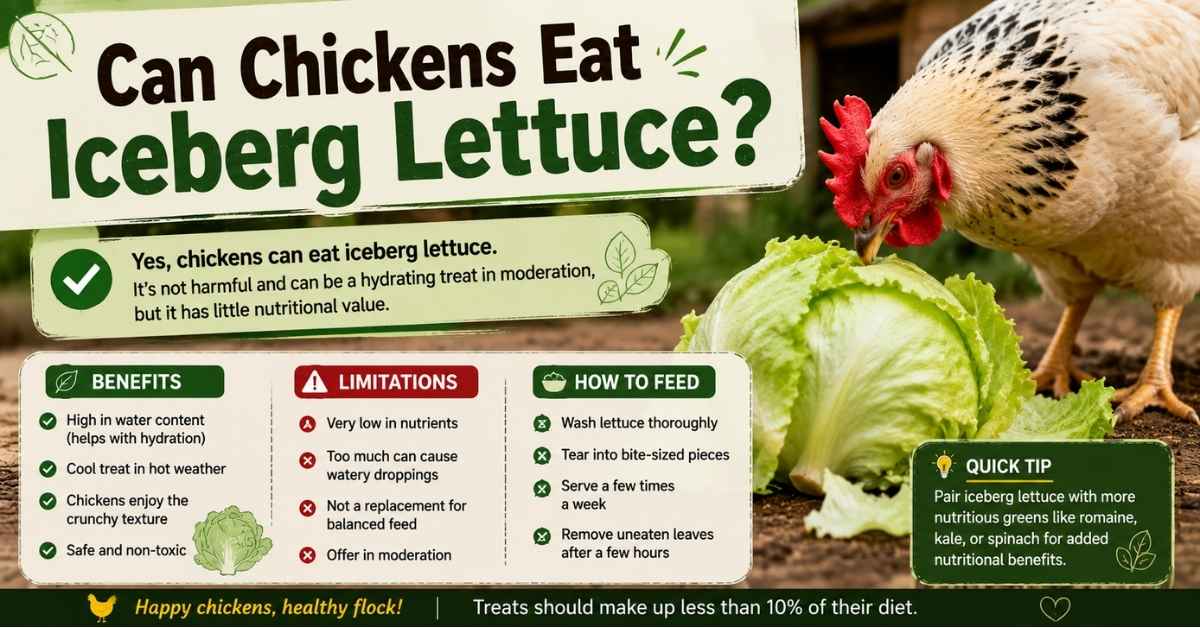
Can chickens eat iceberg lettuce? Yes, chickens can safely eat iceberg lettuce in moderation. While iceberg lettuce is not toxic to chickens, it contains mostly water and far fewer nutrients than darker leafy greens like kale or romaine lettuce. That means it works best as an occasional hydrating treat rather than a regular part of a balanced poultry diet. Feeding too much iceberg lettuce can sometimes lead to watery droppings, reduced nutritional intake, and poor diet balance in backyard flocks.
If you raise backyard chickens, chances are you’ve looked at leftover salad in the fridge and wondered whether your flock could eat it safely. The good news is that chickens usually enjoy crunchy lettuce leaves, especially during hot weather. However, experienced chicken keepers know there’s a major difference between a food being safe and being nutritionally beneficial.
This guide explains everything chicken owners need to know about feeding iceberg lettuce to chickens, including serving size, feeding frequency, digestive concerns, chick safety, healthier alternatives, and practical feeding tips used by real flock keepers.
Quick Answer
| Question | Quick Answer |
|---|---|
| Can chickens eat iceberg lettuce? | Yes, safely in moderation |
| Is iceberg lettuce toxic to chickens? | No |
| Is iceberg lettuce nutritious? | Low nutritional value |
| Can too much lettuce cause diarrhea? | Yes, due to high water content |
| Best way to feed it | Small chopped portions or hanging leaves |
| Better alternatives | Romaine, kale, spinach, collard greens |
Iceberg Lettuce and Chickens: What Actually Happens When They Eat It
Chickens naturally enjoy pecking at leafy greens because the texture keeps them engaged and curious. In free-range environments, chickens spend hours scratching and pecking through grass, weeds, seeds, and vegetables. Iceberg lettuce mimics part of that natural foraging behavior.
The reason chickens love iceberg lettuce is simple:
- it is crisp
- cool
- easy to peck
- highly hydrating
However, iceberg lettuce is made up of nearly 96% water, which is why many poultry experts consider it a “filler” food instead of a nutrient-dense vegetable.
Unlike darker greens, iceberg lettuce contains relatively low amounts of:
- vitamin A
- calcium
- iron
- fiber
- protein
That doesn’t mean iceberg lettuce is bad for chickens. It simply means it should never replace a complete layer feed or balanced chicken diet.
One of the biggest mistakes beginners make is assuming all greens provide equal nutrition. In reality, darker leafy vegetables like kale, romaine lettuce, and collard greens contain significantly more vitamins and minerals than iceberg lettuce.
Is Iceberg Lettuce Bad for Chickens?
No, iceberg lettuce is not bad for chickens when fed responsibly. The concern comes from overfeeding it.
Many online discussions exaggerate the dangers of iceberg lettuce, but the vegetable itself is not poisonous. The real issue is its high water content and low nutritional density.
Why Too Much Iceberg Lettuce Can Cause Problems
When chickens consume excessive watery foods, their digestive system can produce:
- loose stools
- watery droppings
- temporary digestive imbalance
This happens because excess water moves quickly through the digestive tract, diluting waste and reducing stool firmness.
In most cases, mild watery droppings after eating lettuce are harmless and temporary. However, if chickens regularly fill up on iceberg lettuce instead of balanced feed, nutritional deficiencies may develop over time.
Signs Your Chickens May Be Eating Too Many Watery Treats
Watch for:
- persistent watery poop
- reduced appetite for layer feed
- lower egg production
- lethargic behavior
- messy coop bedding
Experienced backyard flock owners usually rotate vegetables instead of feeding the same treat repeatedly.
How Much Iceberg Lettuce Can Chickens Eat?
Moderation is the key to feeding iceberg lettuce safely.
A good rule is:
Treats should make up no more than 10% of a chicken’s overall diet.
The remaining 90% should come from:
- balanced commercial feed
- quality grains
- nutritionally complete poultry feed
Recommended Serving Size
For a small backyard flock:
- a few chopped leaves
- or half a small lettuce head
- once or twice weekly
is usually more than enough.
Large amounts every day can dilute overall nutrition and reduce protein intake needed for healthy egg production.
Feeding Frequency
Iceberg lettuce works best as:
- a summer cooling treat
- occasional enrichment snack
- supplemental vegetable
It should not become a daily staple food.
Best Ways to Feed Iceberg Lettuce to Chickens
There are several safe and practical ways to serve iceberg lettuce to backyard chickens.
Chopped Lettuce
Cutting lettuce into smaller pieces helps:
- prevent waste
- reduce aggressive pecking
- improve sharing within the flock
Hanging Lettuce Heads
Many experienced flock keepers hang lettuce heads inside the coop or run.
This provides:
- boredom reduction
- enrichment feeding
- natural pecking behavior
- exercise stimulation
Chickens often enjoy pecking suspended lettuce for long periods.
Mixing With Healthier Greens
A smart strategy is mixing iceberg lettuce with:
- kale
- romaine lettuce
- spinach
- cabbage
- collard greens
This improves nutritional balance while still giving chickens the crunchy texture they enjoy.
Wash Lettuce Before Feeding
Always rinse lettuce thoroughly to remove:
- pesticides
- dirt
- chemical residue
Avoid feeding spoiled or moldy vegetables because mold can be dangerous for poultry digestion.
Can Baby Chicks Eat Iceberg Lettuce?
Baby chicks have very different nutritional requirements from adult hens.
Young chicks need:
- high protein intake
- balanced starter feed
- concentrated nutrients for growth
Because iceberg lettuce contains mostly water, feeding too much to chicks can interfere with proper nutrition.
When Can Chicks Eat Lettuce?
Small amounts of soft greens can usually be introduced after chicks are several weeks old, but treats should remain minimal.
For young birds, healthier options include:
- finely chopped romaine lettuce
- herbs
- tiny spinach pieces
- chick-safe greens
Always provide grit if chicks consume vegetables because grit helps chickens digest fibrous foods properly.
Iceberg Lettuce vs Other Greens for Chickens
| Green Vegetable | Nutritional Value | Hydration Level | Feeding Frequency | Best Use |
|---|---|---|---|---|
| Iceberg Lettuce | Low | Very High | Occasional | Cooling summer treat |
| Romaine Lettuce | Moderate | High | Frequent | Better daily lettuce |
| Kale | Very High | Moderate | Regularly | Nutrient-rich supplement |
| Spinach | Moderate | Moderate | Occasionally | Mineral support |
| Collard Greens | High | Moderate | Regularly | Balanced leafy green |
Romaine Lettuce vs Iceberg Lettuce
Romaine lettuce is generally healthier because it contains:
- more vitamins
- more fiber
- better mineral content
Many chicken owners prefer romaine as their primary lettuce choice.
Kale vs Iceberg Lettuce
Kale is far more nutrient-dense and supports:
- feather health
- immune function
- egg production
Spinach and Chickens
Spinach contains beneficial nutrients but should still be fed moderately because excessive amounts may affect calcium absorption.
What Most Chicken Owners Don’t Realize About Lettuce
One overlooked issue is nutrient displacement.
If chickens fill up on low-value treats like iceberg lettuce, they may consume less balanced feed afterward. Over time, this can affect:
- protein intake
- shell quality
- laying consistency
- overall flock health
Experienced poultry keepers often use vegetables as:
- enrichment tools
- boredom reducers
- hydration support
—not as major calorie sources.
This is especially important during summer months when chickens naturally seek cooling foods with high water content.
What To Do If Your Chickens Ate Too Much Iceberg Lettuce
If your flock overeats iceberg lettuce, don’t panic.
Most chickens recover quickly without problems.
Common Temporary Symptoms
You may notice:
- watery droppings
- softer stool
- reduced appetite for a few hours
How To Rebalance Their Diet
Simply:
- reduce treats temporarily
- provide balanced feed
- ensure clean water access
- avoid additional watery vegetables
Symptoms usually improve naturally.
However, if chickens appear:
- weak
- severely lethargic
- dehydrated
- uninterested in food
then further health evaluation may be necessary.
Can Chickens Eat Old, Wilted, or Refrigerated Lettuce?
Slightly wilted lettuce is generally safe if it:
- smells fresh
- shows no mold
- has no slimy texture
However, spoiled vegetables should never be fed to chickens.
Avoid Feeding:
- moldy lettuce
- rotten salad
- heavily dressed salad leftovers
- salty or seasoned vegetables
Excess salt, oils, or dressings can upset a chicken’s digestive system.
Plain refrigerated lettuce is usually fine if it remains fresh.
Best Healthy Alternatives to Iceberg Lettuce
If you want more nutritious greens for your flock, better options include:
- romaine lettuce
- kale
- collard greens
- mustard greens
- cabbage
- spinach
- watercress
These vegetables provide:
- more vitamins
- stronger mineral content
- better fiber
- improved nutritional support
Many experienced backyard chicken keepers rotate several greens weekly to create dietary variety.
Practical Feeding Routine Used by Experienced Chicken Keepers
A balanced feeding routine often looks like this:
| Day | Treat Option |
|---|---|
| Monday | Romaine lettuce |
| Wednesday | Kale scraps |
| Friday | Small iceberg lettuce portion |
| Weekend | Mixed vegetable scraps |
This prevents overreliance on one vegetable while improving nutrient diversity.
Summer Feeding Tip
During extreme heat, chilled lettuce can help chickens stay hydrated. Many flock owners use frozen or refrigerated greens as cooling treats during hot afternoons.
LEARN MORE: Can Chickens Eat Coffee Grounds?
Common Mistakes Chicken Owners Make With Vegetables
Feeding Too Many Treats
Too many snacks reduce consumption of balanced poultry feed.
Assuming All Lettuce Is Healthy
Iceberg lettuce is safe, but it is not the most nutritious option available.
Feeding Spoiled Scraps
Moldy vegetables can create serious digestive issues.
Ignoring Diet Balance
Healthy chickens need:
- protein
- calcium
- vitamins
- minerals
- complete feed support
Treats alone cannot meet those nutritional needs.
Expert Tips for Keeping Chickens Healthy With Treats
Experienced poultry keepers usually follow a simple philosophy:
Use treats for enrichment, not nutrition.
That means vegetables should support:
- natural foraging
- mental stimulation
- hydration
- flock engagement
—not replace core nutrition.
Easy Ways To Keep Treats Balanced
- Rotate vegetables weekly
- Prioritize nutrient-dense greens
- Keep treats under 10% of total intake
- Observe droppings for digestive changes
- Maintain consistent layer feed access
Small adjustments like these help maintain strong egg production and healthy flock behavior.
Frequently Asked Questions
Can chickens eat iceberg lettuce every day?
They can, but it is not ideal. Iceberg lettuce contains limited nutrients and works better as an occasional treat.
Why does iceberg lettuce cause watery poop in chickens?
Because iceberg lettuce contains very high water content, excess amounts may temporarily loosen droppings.
Is romaine lettuce healthier than iceberg for chickens?
Yes. Romaine lettuce contains more vitamins, minerals, and fiber.
Can chickens eat lettuce cores?
Yes, chickens can peck at lettuce cores safely.
Can chickens eat salad leftovers?
Only plain salad without dressing, salt, onions, or harmful ingredients.
Can chickens eat frozen lettuce?
Yes, slightly frozen lettuce can work as a cooling summer treat.
Is iceberg lettuce good during hot weather?
Yes. Its high water content helps support hydration during summer heat.
Can too much lettuce reduce egg production?
Indirectly, yes. Excess treats can reduce intake of balanced layer feed needed for egg production.
Final Verdict
Chickens can eat iceberg lettuce safely, but it should only be an occasional treat rather than a major food source. While iceberg lettuce provides hydration and enrichment, it lacks the nutrient density found in darker leafy greens like kale or romaine lettuce.
The healthiest approach is moderation.
Feed small portions occasionally, combine lettuce with more nutritious vegetables, and always prioritize balanced poultry feed for long-term flock health. Backyard chickens benefit most from dietary variety, proper nutrition, and practical feeding habits that support both hydration and egg production naturally.