
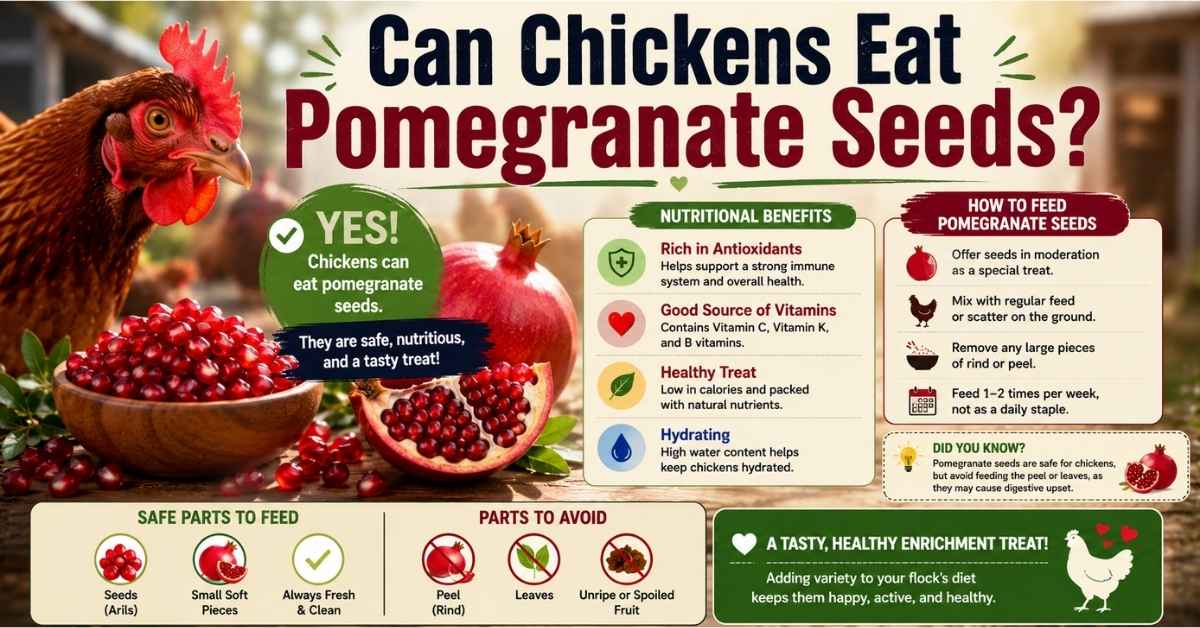
Can chickens eat pomegranate seeds? Yes, chickens can safely eat pomegranate seeds in moderation. The juicy red arils are non-toxic for backyard chickens and can provide antioxidants, fiber, hydration, and natural vitamins. However, too much pomegranate may cause digestive upset because of the fruit’s natural sugar content. Most hens enjoy pecking at fresh pomegranate as an occasional healthy treat, but the peel and rind should be limited because they are tougher to digest.
Many chicken owners search this question after tossing kitchen scraps into the run or noticing their flock pecking at fallen fruit. The good news is that pomegranate seeds are generally safe for laying hens and adult chickens when served properly. Like other healthy fruits for chickens, moderation matters more than the fruit itself.
Pomegranate Safety for Chickens at a Glance
| Pomegranate Part | Safe for Chickens? | Best Feeding Method | Main Concern |
|---|---|---|---|
| Seeds/Arils | Yes | Fresh and scattered | Too much sugar |
| Peel/Rind | Mostly avoid | Tiny occasional pieces only | Tough digestion |
| Juice | Limited | Diluted only | Sugar overload |
| Leaves/Stem | Not recommended | Avoid | Limited safety data |
Why Chickens Are Naturally Attracted to Pomegranate
Chickens are curious foragers by nature. Bright red pomegranate seeds trigger their instinct to peck at colorful foods, especially juicy fruits that resemble berries or insects in texture. Backyard chickens often become excited when they see scattered pomegranate arils because the fruit encourages natural scavenging behavior.
Pomegranate also works as environmental enrichment for chickens. During colder months or rainy days when hens spend more time inside the coop or run, hanging half a pomegranate can reduce boredom and encourage activity. Many flock owners notice that chickens spend longer pecking at pomegranate than softer fruits because the seeds create a rewarding texture.
This matters because behavioral enrichment supports healthier flocks. Chickens that stay mentally stimulated are less likely to develop pecking aggression or stress-related habits.
Are Pomegranate Seeds Actually Healthy for Chickens?
Pomegranate seeds contain several nutrients that may benefit poultry health when fed occasionally. The fruit is rich in antioxidants, vitamin C, potassium, and natural plant compounds that support immune function and hydration.
For laying hens, antioxidant-rich fruits may help reduce oxidative stress during hot weather or seasonal changes. Some poultry studies also connect plant antioxidants with improved gut microbiome balance and better digestive function.
The fiber inside pomegranate seeds can support digestion in small amounts. Chickens naturally consume fibrous foods while foraging, so occasional fruit treats fit well into a varied backyard poultry diet.
Still, pomegranate should remain a treat rather than a dietary staple. Chickens require balanced poultry feed for proper protein, calcium, and nutrient intake. Treats should generally stay below 10% of a chicken’s total diet.
What Happens If Chickens Eat Too Many Pomegranate Seeds?
The biggest concern with feeding too much pomegranate to chickens is excess sugar. While pomegranate contains natural sugars rather than processed sweeteners, overeating fruit may still upset a chicken’s digestive balance.
Signs of overfeeding may include:
- Loose droppings
- Sticky manure
- Reduced appetite for regular feed
- Mild digestive upset
- Temporary lethargy
In most cases, chickens recover quickly once fruit intake decreases. Serious problems are uncommon, especially in healthy adult hens.
If your chickens already ate a large amount of pomegranate seeds, there is usually no reason to panic. Monitor the flock for unusual symptoms such as persistent diarrhea, swelling of the crop, or refusal to eat. These symptoms are rare but worth watching carefully.
Backyard poultry owners sometimes worry that fruit seeds may cause crop impaction. Fortunately, pomegranate seeds are small and soft enough for most adult chickens to digest without trouble.
Can Baby Chicks Eat Pomegranate Seeds?
Baby chicks can technically eat tiny amounts of soft pomegranate arils, but fruit treats should remain very limited during early growth stages. Young chicks have developing digestive systems that process treats less efficiently than mature hens.
For chicks under 6–8 weeks old, chick starter feed should remain the primary nutrition source. Introducing too many fruits too early may dilute essential protein intake needed for healthy growth.
If you decide to offer pomegranate to chicks:
- Use very small pieces
- Avoid large hard seed clusters
- Offer only occasionally
- Monitor digestion afterward
Many experienced flock keepers wait until chicks mature before introducing sugary fruits regularly.
Can Chickens Eat Pomegranate Peel or Rind?
The pomegranate peel creates more debate than the seeds themselves. While small accidental bites are unlikely to harm chickens, the rind is not the best part of the fruit for poultry.
Pomegranate peel is:
- tougher
- more fibrous
- bitter
- harder to digest
Most chickens naturally ignore thick rind pieces once they realize the texture is unpleasant. Some hens may peck at leftover flesh attached to the peel, which is generally fine in moderation.
Large amounts of rind can increase the risk of digestive discomfort because chickens process soft foods more easily than dense fibrous material.
For safest feeding practices, focus on the fresh seeds and juicy arils rather than the peel.
Best Ways to Feed Pomegranate to Chickens
One of the easiest ways to feed pomegranate to backyard chickens is simply scattering fresh seeds across the run. This encourages natural foraging behavior and keeps dominant hens from controlling the entire treat.
Some flock owners also:
- hang halved pomegranates inside the run
- mix seeds with leafy greens
- freeze pomegranate into summer treats
- combine arils with oats or scratch grains
These methods turn feeding time into enrichment activity rather than simple snacking.
Safe Serving Sizes by Flock Size
| Flock Size | Suggested Amount | Frequency |
|---|---|---|
| 2–4 chickens | Small handful | 1–2 times weekly |
| 5–10 chickens | Half pomegranate | Occasional |
| Large flocks | Shared portions | Treat only |
Keeping portions moderate helps chickens maintain balanced nutrition while still enjoying healthy fruit treats.
Fresh vs Dried vs Frozen Pomegranate for Chickens
Fresh pomegranate seeds are the safest and healthiest option for chickens. They contain moisture, softer texture, and lower sugar concentration compared to dried fruit.
Fresh Pomegranate
Best overall choice because it provides:
- hydration
- natural texture
- easier digestion
- lower sugar density
Dried Pomegranate
Dried fruit contains concentrated sugars that may increase digestive imbalance if overfed. Some commercial dried products also contain preservatives or added sweeteners unsuitable for poultry.
Frozen Pomegranate
Frozen pomegranate seeds can work well during hot summer weather. Many chickens enjoy cold treats on extremely warm days, especially when temperatures stress the flock.
Avoid canned or heavily processed pomegranate products whenever possible.
Signs a Treat Is Becoming Unhealthy for Your Flock
Many chicken owners unintentionally overfeed treats because hens seem enthusiastic during snack time. However, excessive treats can reduce balanced feed intake over time.
Watch for:
- chickens ignoring layer feed
- rapid weight gain
- excessive soft droppings
- sluggish behavior
- nutrient imbalance
Healthy treats for chickens should supplement nutrition, not replace formulated poultry feed.
A good rule is simple: If treats start becoming the highlight of every feeding session, it may be time to reduce portions.
Foods That Pair Well With Pomegranate for Chickens
Pomegranate pairs well with several other safe fruits and vegetables for chickens.
Healthy combinations include:
- watermelon
- blueberries
- chopped lettuce
- cucumber
- pumpkin
- oats
- leafy greens
Low-sugar vegetables help balance sweeter fruits naturally. Many flock owners create mixed treat trays during summer months to increase dietary variety without overloading sugar intake.
Rotating healthy chicken snacks also keeps birds interested and mentally stimulated.
Common Feeding Mistakes Backyard Chicken Owners Make
One of the most common mistakes is assuming every natural food is automatically safe in unlimited amounts. Even healthy fruits for chickens require moderation.
Other common errors include:
Feeding too many sugary fruits
Natural sugars still affect digestion and feed balance.
Ignoring flock hierarchy
Dominant hens often consume most treats unless food is spread widely.
Leaving spoiled fruit in the coop
Rotting fruit attracts pests and harmful bacteria.
Replacing balanced feed with treats
Layer feed remains the foundation of poultry nutrition.
Assuming all fruit parts are safe
Seeds may be safe while peels or stems are less ideal.
Avoiding these mistakes helps maintain healthier backyard flocks long term.
What Poultry Nutrition Experts Say About Fruit Treats
Most poultry nutrition guidance agrees that treats should remain a small percentage of a chicken’s overall diet. Chickens thrive best on nutritionally balanced feed formulated specifically for poultry needs.
Fruits like pomegranate can provide:
- enrichment
- hydration
- antioxidants
- dietary variety
But they cannot replace:
- protein
- calcium
- amino acids
- balanced vitamins
Experienced poultry keepers often use fruits strategically during:
- extreme heat
- boredom periods
- seasonal enrichment
- bonding sessions with the flock
This balanced approach supports both nutrition and natural chicken behavior.
Can Pomegranate Improve Egg Quality or Chicken Health?
Some chicken owners believe antioxidant-rich fruits directly improve egg production or egg quality. While antioxidants may support overall health, pomegranate alone will not dramatically change egg production.
Healthy laying hens depend primarily on:
- quality feed
- proper calcium
- clean water
- low stress
- good flock management
That said, occasional nutrient-rich treats may contribute to overall wellness and behavioral enrichment, which indirectly supports healthier birds.
It is important to separate realistic benefits from exaggerated internet claims. Pomegranate is a healthy occasional treat, not a miracle poultry supplement.
LEARN MORE: Can Chickens Eat Dried Cranberries?
Safe Fruits Chickens Usually Enjoy
| Fruit | Safe? | Best Feeding Tip |
|---|---|---|
| Watermelon | Yes | Excellent summer hydration |
| Blueberries | Yes | Antioxidant-rich snack |
| Apples | Yes | Remove seeds first |
| Grapes | Yes | Feed sparingly |
| Bananas | Yes | Soft and easy to digest |
Offering varied fruits in moderation creates a more stimulating and natural feeding routine for backyard chickens.
Frequently Asked Questions
Can chickens digest pomegranate seeds completely?
Yes, adult chickens can usually digest pomegranate seeds without problems. The seeds are small enough for healthy hens to process naturally.
Are pomegranate seeds toxic to chickens?
No, pomegranate seeds are not toxic to chickens when fed in moderation.
Can chickens eat pomegranate every day?
It is better to offer pomegranate occasionally rather than daily because of the fruit’s natural sugar content.
What should I do if my chickens ate too much pomegranate?
Monitor the flock for digestive upset, loose droppings, or reduced appetite. Most chickens recover without treatment after overeating small amounts of fruit.
Is pomegranate safe for laying hens?
Yes, laying hens can safely eat pomegranate seeds as an occasional treat.
Can chickens eat store-bought pomegranate arils?
Yes, as long as they are plain and free from added sugar, preservatives, or artificial ingredients.
Why do chickens love pecking pomegranate?
The bright color, juicy texture, and natural foraging appeal make pomegranate highly attractive to chickens.
Can pomegranate change egg taste or color?
There is no strong evidence that occasional pomegranate treats noticeably change egg flavor or shell color.
Final Verdict About Can Chickens Eat Pomegranate Seeds
Chickens can safely eat pomegranate seeds as a healthy occasional treat. Fresh pomegranate arils provide antioxidants, hydration, and natural enrichment that many backyard chickens enjoy. The key is moderation. Too much fruit may upset digestion or reduce balanced feed intake, especially in smaller flocks or young chicks.
For best results, feed fresh seeds occasionally, avoid large amounts of peel or sugary processed products, and continue prioritizing high-quality poultry feed as the foundation of your flock’s nutrition.