
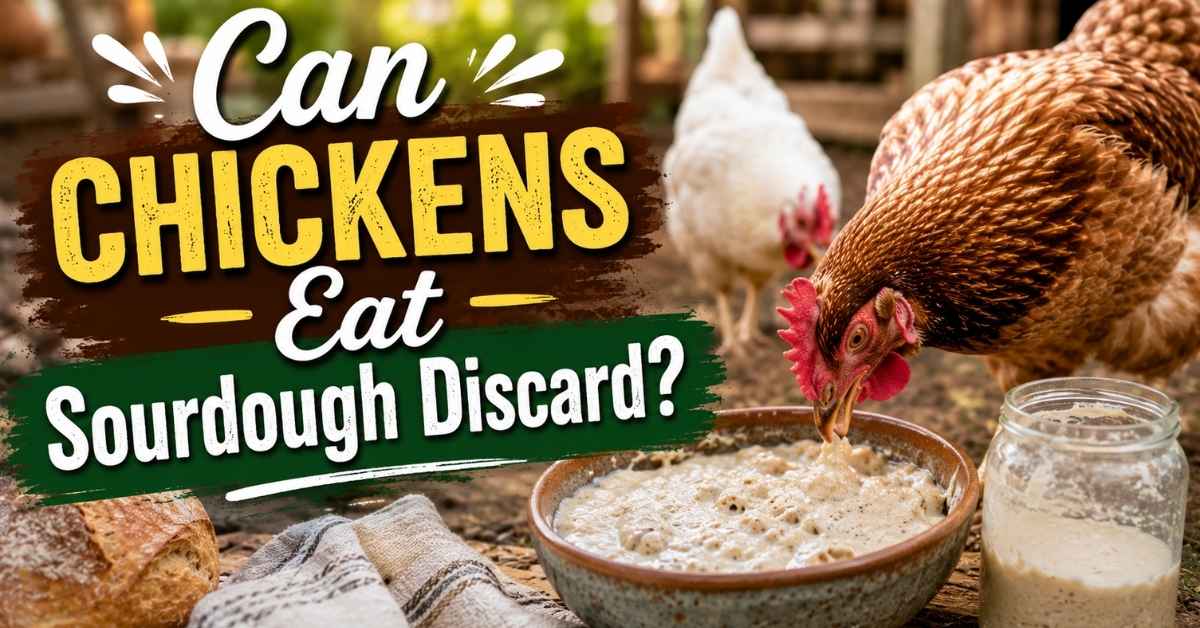
Can chickens eat sourdough discard? Yes, chickens can eat sourdough discard in small amounts, especially when it is inactive or cooked. Many backyard chicken owners use sourdough discard as an occasional treat because it contains fermented grains, beneficial bacteria, probiotics, and B vitamins. However, feeding raw active sourdough starter may create risks such as crop expansion, digestive upset, gas buildup, and sour crop due to active yeast fermentation. The safest approach is to feed sourdough discard only in moderation and avoid moldy, heavily salted, or actively rising dough.
Backyard flock owners are always searching for healthier kitchen scraps and homemade poultry treats. Since sourdough baking has become more popular, many people wonder whether sourdough starter discard can become part of a balanced poultry diet. While chickens can safely eat certain fermented foods, understanding the difference between active sourdough starter, inactive discard, cooked discard, and fermented feed is important for flock health.
Quick Answer: Is Sourdough Discard Safe for Chickens?
| Question | Quick Answer |
|---|---|
| Can chickens eat sourdough discard? | Yes, in moderation |
| Is cooked discard safer? | Yes |
| Can chickens eat active starter? | Small amounts may be risky |
| Main concern | Active yeast and expanding dough |
| Best feeding method | Cooked or inactive discard |
| Safe feeding amount | Under 5–10% of total diet |
What Is Sourdough Discard?
Sourdough discard is a mixture of flour and water removed from a sourdough starter during feeding. The starter contains wild yeast, beneficial bacteria, and microbial fermentation cultures that help bread rise naturally.
Unlike commercial yeast bread, sourdough relies on a natural fermentation process involving:
- Lactobacillus bacteria
- Wild yeast strains
- Fermented flour
- Organic acids
Many homesteaders and backyard chicken keepers feed sourdough discard to chickens because it reduces kitchen waste while adding a fermented food source to the flock’s diet.
However, there is an important difference between:
- Inactive discard
- Freshly fed active starter
- Raw rising dough
- Cooked sourdough products
That difference determines whether the discard is mostly safe or potentially problematic.
Can Chickens Eat Sourdough Discard Safely?
Yes, chickens can usually eat sourdough discard safely when fed as an occasional treat rather than a primary food source. Small amounts of inactive sourdough discard are generally considered safe for healthy adult chickens.
The main issue is active fermentation. When sourdough starter is freshly fed and actively rising, yeast produces:
- Carbon dioxide
- Fermentation gases
- Expanding dough structures
Inside a chicken’s crop, this expanding dough may continue fermenting. Excessive fermentation could potentially lead to:
- Crop expansion
- Digestive discomfort
- Gas buildup
- Sour crop
- Digestive blockage
This is why most experienced flock owners recommend:
“Feed sourdough discard in moderation and avoid active rising starter.”
A cautious, balanced approach is safer than assuming all fermented foods are harmless.
Can Chickens Eat Raw Sourdough Discard?
Raw sourdough discard is where most of the debate happens.
Some backyard chicken owners feed small amounts without issues. Others avoid raw discard entirely because of the risks associated with active yeast expansion and fermentation inside the digestive tract.
Why Active Yeast May Be Risky
When chickens eat active sourdough starter, yeast may continue producing gases inside the crop. This can create:
- Bloating
- Crop swelling
- Digestive imbalance
- Fermentation buildup
The risk becomes higher if chickens consume:
- Freshly fed starter
- Rising dough
- Large quantities
- Highly active discard
Can Raw Sourdough Cause Sour Crop?
Potentially, yes.
Sour crop is a digestive condition caused by yeast overgrowth and fermentation in the crop. Symptoms may include:
- Bad-smelling breath
- Puffy crop
- Reduced appetite
- Lethargy
- Regurgitation
Although small amounts of sourdough discard rarely cause serious issues in healthy adult hens, excessive raw discard may increase digestive stress.
Inactive Discard vs Active Starter
| Type | Safety Level |
|---|---|
| Inactive refrigerated discard | Generally safer |
| Cooked discard | Safest option |
| Freshly fed active starter | Higher risk |
| Rising sourdough dough | Avoid |
Is Cooked Sourdough Discard Better for Chickens?
Yes, cooked sourdough discard is usually much safer for chickens because heat destroys active yeast and stops fermentation activity.
Cooking helps reduce:
- Yeast expansion
- Gas buildup
- Fermentation risks
- Crop swelling concerns
Many flock owners turn discard into:
- Baked crackers
- Dry treats
- Homemade poultry snacks
- Fermented grain biscuits
Cooked discard still contains carbohydrates and some nutrients, but it no longer behaves like actively fermenting dough.
Best Ways to Cook Sourdough Discard for Chickens
| Feeding Method | Why It Works |
|---|---|
| Baked discard crackers | Removes active yeast |
| Dried discard chips | Easy occasional treat |
| Mixed grain bake | Adds texture and nutrients |
| Fermented mash bake | Easier digestion |
Nutritional Benefits of Sourdough Discard for Chickens
Sourdough discard contains several nutritional elements that may support poultry health when offered occasionally.
Potential Benefits Include:
- Beneficial bacteria
- Probiotics
- B vitamins
- Fermented grains
- Easier digestibility
- Natural yeast cultures
Fermentation may also improve nutrient availability by partially breaking down flour compounds.
Gut Health and Poultry Digestion
Many chicken keepers use fermented feeds because they believe they help:
- Gut microbiome balance
- Nutrient absorption
- Digestive efficiency
- Flock health
While scientific evidence specific to sourdough discard is limited, fermented foods have become increasingly popular in backyard poultry feeding.
Still, moderation matters. Sourdough discard should remain a supplemental treat, not a replacement for balanced layer feed.
Potential Risks of Feeding Sourdough Discard
Despite the potential benefits, sourdough discard also comes with important risks.
1. Active Fermentation Risks
Fresh active starter may continue expanding inside the crop.
This increases the risk of:
- Gas buildup
- Digestive blockage
- Crop impaction
- Sour crop
2. Mold Contamination
Never feed:
- Moldy discard
- Spoiled discard
- Rotten fermented mixtures
Mold contamination may expose chickens to dangerous toxins.
3. Excess Carbohydrates
Sourdough discard is still primarily flour-based. Feeding too much may contribute to:
- Obesity
- Poor nutrition balance
- Reduced protein intake
4. Harmful Additives
Avoid discard containing:
- Garlic
- Onion
- Excess salt
- Chocolate
- Raisins
- Artificial sweeteners
Some flavored sourdough products contain ingredients toxic to poultry.
How Much Sourdough Discard Can Chickens Eat?
Sourdough discard should stay below 5–10% of a chicken’s total diet.
Commercial layer feed or balanced poultry feed should always remain the flock’s primary nutrition source.
Safe Feeding Guidelines
| Chicken Type | Suggested Amount |
|---|---|
| Adult hens | Small occasional portions |
| Free-range chickens | Small treats 1–2 times weekly |
| Chicks | Usually avoid |
| Broilers | Limited supplemental feeding |
Overfeeding bread-based foods may dilute essential nutrients chickens need for:
- Egg production
- Feather health
- Growth
- Immune function
Best Ways to Feed Sourdough Discard to Chickens
The safest feeding methods focus on reducing active fermentation.
Recommended Feeding Methods
- Feed cooked or baked discard
- Mix small amounts into grains
- Dry discard into crunchy treats
- Add tiny amounts to fermented feed mixtures
- Use only as an occasional supplement
Many backyard flock owners mix discard with:
- Oats
- Scratch grains
- Corn
- Layer pellets
This prevents chickens from overeating concentrated dough mixtures.
Can Baby Chicks Eat Sourdough Discard?
Baby chicks have sensitive digestive systems, so sourdough discard is usually not recommended for young birds.
Their digestive tract is less equipped to handle:
- Active fermentation
- Expanding yeast
- Heavy carbohydrates
- Complex fermented foods
For chicks, safer treats include:
- Scrambled eggs
- Chick starter feed
- Small greens
- Oatmeal
Most poultry keepers wait until chickens mature before introducing fermented treats.
Fresh vs Old Sourdough Discard
Many people wonder whether older discard is safer.
Refrigerated Inactive Discard
Cold refrigerated discard is generally less active and therefore safer than freshly fed starter.
Spoiled Discard
Discard should never smell:
- Rotten
- Putrid
- Moldy
Visible mold means it should be discarded immediately.
Signs Discard Is Unsafe
- Pink streaks
- Fuzzy growth
- Green mold
- Alcohol-heavy smell
- Slimy texture
Does Fermented Feed Benefit Chickens?
Fermented feed has become increasingly popular among homesteaders because it may improve:
- Digestibility
- Nutrient absorption
- Hydration
- Gut bacteria balance
However, sourdough discard is not identical to traditional fermented poultry feed.
Fermented Feed vs Sourdough Discard
| Feature | Fermented Feed | Sourdough Discard |
|---|---|---|
| Made for poultry | Yes | |
| Controlled fermentation | Usually | |
| Flour-heavy | No | |
| Active bread yeast | Rarely | |
| Main purpose | Poultry nutrition |
This distinction matters because active bread fermentation behaves differently from grain fermentation.
Common Myths About Sourdough Discard for Chickens
Myth 1: All Fermented Foods Are Safe
Not always. Active fermentation can create digestive problems in excess.
Myth 2: Chickens Can Eat Unlimited Bread Products
Too many carbohydrates may reduce nutritional balance.
Myth 3: Raw Sourdough Is Harmless
Fresh rising dough may continue expanding inside the crop.
Myth 4: Probiotics Eliminate All Risks
Even beneficial fermented foods require moderation.
Expert Tips for Feeding Sourdough Discard Safely
“Treat sourdough discard like a supplement, not a complete feed.”
Helpful Feeding Practices
- Introduce slowly
- Watch for digestive changes
- Avoid large portions
- Use cooked discard when possible
- Monitor crop health
- Keep balanced layer feed as the main diet
Healthy flock management always prioritizes nutritional balance over trendy treats.
Signs Sourdough Discard Is Not Agreeing With Your Chickens
Watch for:
- Swollen crop
- Lethargy
- Loose droppings
- Reduced appetite
- Crop hardness
- Reduced egg laying
If symptoms appear, stop feeding discard immediately and monitor the flock carefully.
LEARN MORE: Can Chickens Eat Swiss Chard?
Safer Alternatives to Sourdough Discard
If you prefer safer supplemental foods, try:
- Fermented scratch grains
- Oats
- Cooked rice
- Leafy greens
- Pumpkin
- Mealworms
- Cooked vegetables
These options often provide better nutritional balance with fewer fermentation risks.
Can Chickens Eat Other Sourdough Products?
| Product | Safe? |
|---|---|
| Cooked sourdough bread | Small amounts |
| Sourdough crackers | Usually yes |
| Raw sourdough dough | Avoid |
| Sweetened sourdough | Not recommended |
| Rye sourdough starter | Small amounts only |
Frequently Asked Questions
Can chickens eat sourdough discard every day?
It is better to feed sourdough discard only occasionally. Daily feeding may add too many carbohydrates and increase digestive risks.
Is cooked sourdough discard safer?
Yes. Cooking destroys active yeast and reduces fermentation concerns.
Can sourdough discard cause sour crop?
Large amounts of active starter may increase the risk of sour crop and digestive imbalance.
Can chickens eat fermented dough?
Small amounts may be tolerated, but actively rising dough is generally not recommended.
How much sourdough discard can chickens eat?
Keep discard under 5–10% of the flock’s total diet.
Can baby chicks eat sourdough discard?
Most poultry keepers avoid feeding sourdough discard to young chicks because of digestive sensitivity.
Conclusion
Can chickens eat sourdough discard? Yes, chickens can safely eat sourdough discard in moderation, especially when it is inactive, cooked, or dried. Small amounts may provide beneficial bacteria, fermented grains, and probiotic support for backyard flocks. However, active sourdough starter and rising dough may create risks such as gas buildup, crop expansion, digestive upset, and sour crop.
The safest approach is simple:
- feed only small portions,
- avoid active fermentation,
- never use moldy discard,
- and keep balanced poultry feed as the flock’s primary nutrition source.
When used responsibly, sourdough discard can become a useful occasional treat for healthy backyard chickens without compromising flock health.