
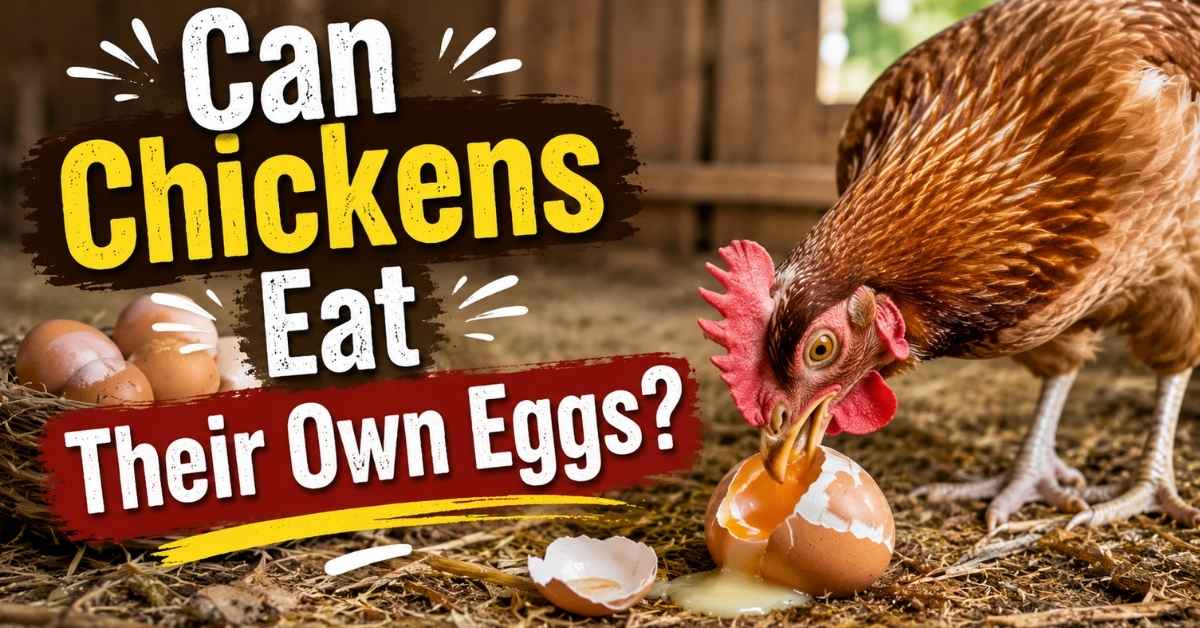
Can chickens eat their own eggs? Yes, chickens can eat their own eggs occasionally without health problems, especially when an egg accidentally breaks inside the nesting box. However, repeated egg eating usually signals boredom, stress, calcium deficiency, protein deficiency, or learned flock behavior that poultry owners should correct quickly. While occasional egg cleanup behavior is natural, habitual egg eating can become a difficult flock management problem if ignored.
Many backyard chicken keepers panic after discovering yolk-covered nesting boxes or missing eggs. In reality, chickens are opportunistic omnivores, and broken eggs naturally attract pecking behavior. The real concern begins when one hen repeatedly eats eggs and teaches the rest of the flock to copy the behavior.
Understanding the difference between accidental egg eating and habitual egg eating is the key to protecting egg production and stopping long-term flock problems.
Quick Answer
| Question | Answer |
|---|---|
| Can chickens eat their own eggs? | Yes, occasionally |
| Is occasional egg eating harmful? | Usually no |
| Why do chickens start eating eggs? | Stress, boredom, calcium deficiency, broken eggs |
| Can egg eating become a habit? | Yes, very quickly |
| Should you stop the behavior? | Yes, if it becomes repeated |
Important: Chickens naturally clean up broken eggs, but repeated egg eating often becomes a learned flock behavior that spreads quickly.
Why Chickens Eat Their Own Eggs
Chickens are naturally curious peckers. When an egg cracks accidentally, the smell and appearance of the yolk immediately attract attention.
Is Egg Eating Natural for Chickens?
Yes, to a degree.
Chickens are opportunistic feeders and naturally investigate:
- Broken eggs
- Spilled yolks
- Food scraps
- Soft protein-rich foods
This egg cleanup behavior is instinctive rather than malicious.
Why Broken Eggs Trigger Egg Eating
Eggs contain:
| Nutrient | Benefit |
|---|---|
| Protein | Muscle and feather support |
| Healthy fats | Energy |
| Calcium | Eggshell production |
| Amino acids | Overall nutrition |
When an egg breaks, chickens quickly recognize it as a high-value food source.
Accidental Egg Eating vs Habitual Egg Eating
| Accidental Egg Eating | Habitual Egg Eating |
|---|---|
| Common | Problematic |
| Triggered by broken eggs | Learned behavior |
| Temporary | Repeated habit |
| Usually harmless | Can spread through flock |
This distinction is one of the most important semantic relationships connected to the keyword.
Is Egg Eating Harmful for Chickens?
Occasional egg eating is usually not dangerous for healthy chickens.
Can Chickens Eat Their Own Eggs Safely?
Yes. Eggs are highly nutritious and safe for chickens in moderation.
Eggs provide:
- Protein
- Calcium
- Vitamins
- Healthy fats
- Essential amino acids
This is why many poultry keepers intentionally feed cooked eggs during molting or illness recovery.
Can Chickens Become Addicted to Eggs?
Not exactly addicted in the human sense, but chickens can develop a strong learned reward behavior.
Once hens discover:
- eggs taste good
- yolks are rewarding
- nesting boxes provide easy access
…the behavior may become reinforced.
This creates what poultry experts often describe as an egg eating habit.
“One hen discovering broken eggs can sometimes teach the entire flock to peck eggs regularly.”
Why Chickens Start Eating Eggs
Egg eating rarely starts randomly. There is usually an underlying trigger.
Calcium Deficiency and Thin Eggshells
One of the biggest causes is calcium deficiency.
Weak shell strength creates:
- Thin eggshells
- Fragile eggs
- More accidental breakage
Once eggs crack, yolk exposure encourages pecking behavior.
Best Calcium Sources
| Calcium Source | Benefit |
|---|---|
| Oyster shells | Excellent calcium supplementation |
| Crushed eggshells | Natural calcium recycling |
| Layer feed | Balanced nutrition |
Protein Deficiency and Hunger Signals
Protein deficiency may also encourage opportunistic feeding behavior.
Chickens lacking proper poultry nutrition may search for:
- Animal protein
- Egg yolks
- High-energy foods
Poor-quality diets increase behavioral problems.
Stress and Environmental Problems
Environmental stress strongly contributes to egg eating.
Common stress factors include:
- Overcrowding
- Loud noises
- Predator anxiety
- Nesting competition
- Poor coop management
Stress-induced pecking often escalates quickly inside crowded flocks.
Boredom and Pecking Behavior
Confined chickens without enrichment activities frequently develop:
- Boredom pecking
- Aggressive pecking
- Destructive flock behavior
Free-range chickens generally experience fewer egg-eating problems because they have more natural stimulation.
How Egg Eating Becomes a Habit
This is where occasional behavior becomes a flock-wide issue.
Learned Flock Behavior Explained
Chickens learn socially. If one hen repeatedly pecks eggs successfully, other hens often imitate the behavior.
This creates:
- Flock mimicry behavior
- Behavioral reinforcement cycles
- Chronic egg eating habits
Why One Hen Can Influence the Entire Coop
Dominant hens often shape flock behavior. Once repeated egg eating begins, chickens start associating nesting boxes with food rewards.
This is why prevention matters more than correction.
Chronic Egg Eating Problems
Habitual egg eating may cause:
- Reduced egg production
- Missing eggs
- Stress inside nesting areas
- Increased flock aggression
Signs Your Chickens Are Eating Eggs
Many backyard owners miss the early warning signs.
Common Signs
Watch for:
- Missing eggs
- Wet nesting boxes
- Eggshell fragments
- Sticky yolk residue
- Peck marks on eggs
Hidden Signs Owners Overlook
More subtle signs include:
- Nervous nesting behavior
- Sudden egg production drops
- Thin shell fragments
- Yolk-covered beaks
Early detection makes behavioral correction much easier.
Can Chickens Eat Their Own Eggs Raw?
Yes, can chickens eat their own eggs raw is a common question among backyard flock owners.
Are Raw Eggs Safe for Chickens?
Raw eggs are not toxic to chickens. In fact, they provide excellent protein and nutrients.
However, feeding raw eggs regularly may accidentally reinforce egg-eating behavior because hens begin recognizing:
- egg smell
- yolk texture
- shell appearance
Problems With Feeding Raw Eggs
Frequent raw egg feeding may:
- Encourage yolk attraction behavior
- Increase egg pecking
- Strengthen behavioral conditioning
This becomes especially risky in flocks already showing egg-eating tendencies.
When Raw Eggs May Be Helpful
Occasionally, raw eggs may support:
- Molting hens
- Weak chickens
- Protein supplementation during recovery
Moderation remains important.
Can Chickens Eat Their Own Eggs Cooked?
Yes, can chickens eat their own eggs cooked is another important feeding question.
Are Cooked Eggs Better for Chickens?
Cooked eggs are usually safer behaviorally because they reduce direct association with fresh nesting eggs.
Many poultry owners prefer:
- Scrambled eggs
- Boiled eggs
- Chopped cooked eggs
Cooked eggs provide:
- High-quality protein
- Easy digestion
- Nutritional support
Can Chickens Eat Cooked Eggshells?
Yes.
Cooked crushed eggshells are an excellent calcium source and help improve shell strength.
How To Prepare Eggshells Safely
| Preparation Method | Benefit |
|---|---|
| Bake eggshells | Reduces smell |
| Crush finely | Prevents egg recognition |
| Mix with feed | Safer supplementation |
Proper preparation lowers the chance of reinforcing egg-eating habits.
How To Stop Chickens From Eating Eggs
This is the most important practical section for most readers.
Best Prevention Strategies
| Prevention Method | Why It Works |
|---|---|
| Frequent egg collection | Reduces temptation |
| Roll-away nesting boxes | Hides eggs immediately |
| Fake eggs | Discourages pecking |
| More nesting material | Prevents egg breakage |
| Oyster shell supplements | Improves shell quality |
Use Roll-Away Nesting Boxes
Roll-away nesting boxes reduce egg visibility by moving eggs away after laying.
This helps prevent:
- Pecking opportunities
- Egg breakage
- Learned flock behavior
Reduce Stress and Boredom
Chicken enrichment activities help lower boredom pecking.
Good enrichment includes:
- Free-ranging
- Pecking toys
- Hanging vegetables
- Dust bathing areas
Improve Nesting Box Conditions
Dark quiet nesting environments encourage calmer laying behavior.
Helpful improvements include:
- Nesting box curtains
- Soft bedding
- Reduced lighting
- Better nesting privacy
Best Nesting Box Setup To Prevent Egg Eating
Proper nesting box design significantly reduces egg problems.
Ideal Nesting Box Features
Good nesting boxes should be:
- Dark
- Quiet
- Comfortable
- Spacious
- Softly bedded
How Many Nesting Boxes Do Chickens Need?
A common recommendation:
- 1 nesting box per 3–4 hens
This helps reduce:
- Nesting competition
- Stress
- Aggressive pecking
Best Bedding Materials
| Bedding Material | Benefit |
|---|---|
| Straw | Soft cushioning |
| Pine shavings | Absorbs moisture |
| Nesting pads | Protects eggs |
Soft nesting material lowers accidental egg breakage.
LEARN MORE: Can Chickens Eat Kidney Beans?
Nutritional Deficiencies Linked to Egg Eating
Nutrition plays a major role in flock behavior.
Does Calcium Deficiency Cause Egg Eating?
Yes. Thin eggshells crack more easily, exposing yolks and encouraging opportunistic feeding.
Importance of Balanced Poultry Nutrition
Good layer feed should provide:
- Protein
- Calcium
- Vitamins
- Minerals
Nutritional deficiencies increase:
- Stress
- Poor shell quality
- Behavioral issues
Should You Feed Eggshells Back to Chickens?
This topic creates strong SERP interest.
Are Eggshells Safe for Chickens?
Yes, crushed eggshells are safe and highly nutritious.
Raw vs Cooked Eggshells
| Raw Eggshells | Cooked Eggshells |
|---|---|
| Stronger smell | Reduced attraction |
| Higher recognition risk | Safer |
| More behavioral reinforcement | Better prevention |
Cooked crushed eggshells are generally the safer option.
Common Mistakes That Encourage Egg Eating
Small management mistakes often create bigger flock problems.
Common Errors
Avoid:
- Leaving eggs too long
- Dirty nesting boxes
- Bright coop lighting
- Overcrowding
- Poor bedding
Can Coop Lighting Affect Egg Eating?
Yes.
Bright lighting increases egg visibility, making eggs easier targets for curious hens.
Dark nesting environments help reduce pecking behavior.
Veterinary Perspective on Egg Eating
Most poultry experts agree:
- occasional egg eating is normal
- chronic egg eating requires intervention
When To Contact a Vet
Seek professional help if you notice:
- Severe nutritional deficiencies
- Weak hens
- Persistent stress symptoms
- Major egg production decline
Common Myths About Chickens Eating Eggs
Myth: Chickens Should Never Eat Eggs
False. Eggs are nutritious and safe occasionally.
Myth: Egg Eating Means Cannibalism
False. Egg eating is usually opportunistic feeding behavior.
Myth: Egg Eating Cannot Be Stopped
False. Early intervention often works very well.
Myth: Calcium Deficiency Is Always the Cause
False. Stress, boredom, and learned flock behavior also play major roles.
Frequently Asked Questions
Can chickens eat their own eggs safely?
Yes, occasional egg eating is usually harmless.
Why are my chickens eating eggs?
Common causes include calcium deficiency, boredom, stress, and broken eggs.
Can chickens eat their own eggs raw?
Yes, raw eggs are safe occasionally, but regular feeding may reinforce egg-eating habits.
Can chickens eat their own eggs cooked?
Yes, cooked eggs are generally safer behaviorally and provide excellent protein.
How do I stop chickens from eating eggs?
Frequent egg collection, better nesting boxes, oyster shell supplementation, and enrichment activities help prevent the behavior.
Do fake eggs stop egg eating?
Yes, fake eggs may discourage pecking and behavioral reinforcement.
Conclusion
Can chickens eat their own eggs? Yes, chickens can safely eat broken eggs occasionally, and this behavior is often natural cleanup behavior rather than a serious problem. However, repeated egg eating usually points to underlying issues such as calcium deficiency, stress, boredom, thin eggshells, poor nesting box conditions, or learned flock behavior.
The safest long-term approach includes:
- Frequent egg collection
- Better nesting box management
- Calcium supplementation
- Reduced stress
- More flock enrichment
When caught early, most egg-eating habits can be corrected before they spread through the entire flock.